










Vertex Hair Transplant Success Rate
A vertex hair transplant can achieve a high graft survival rate when healthy donor follicles are handled and implanted correctly, but there is no scientifically established success percentage that applies specifically to every crown transplant.

- Last updated
- 12 reads
- 10 min read
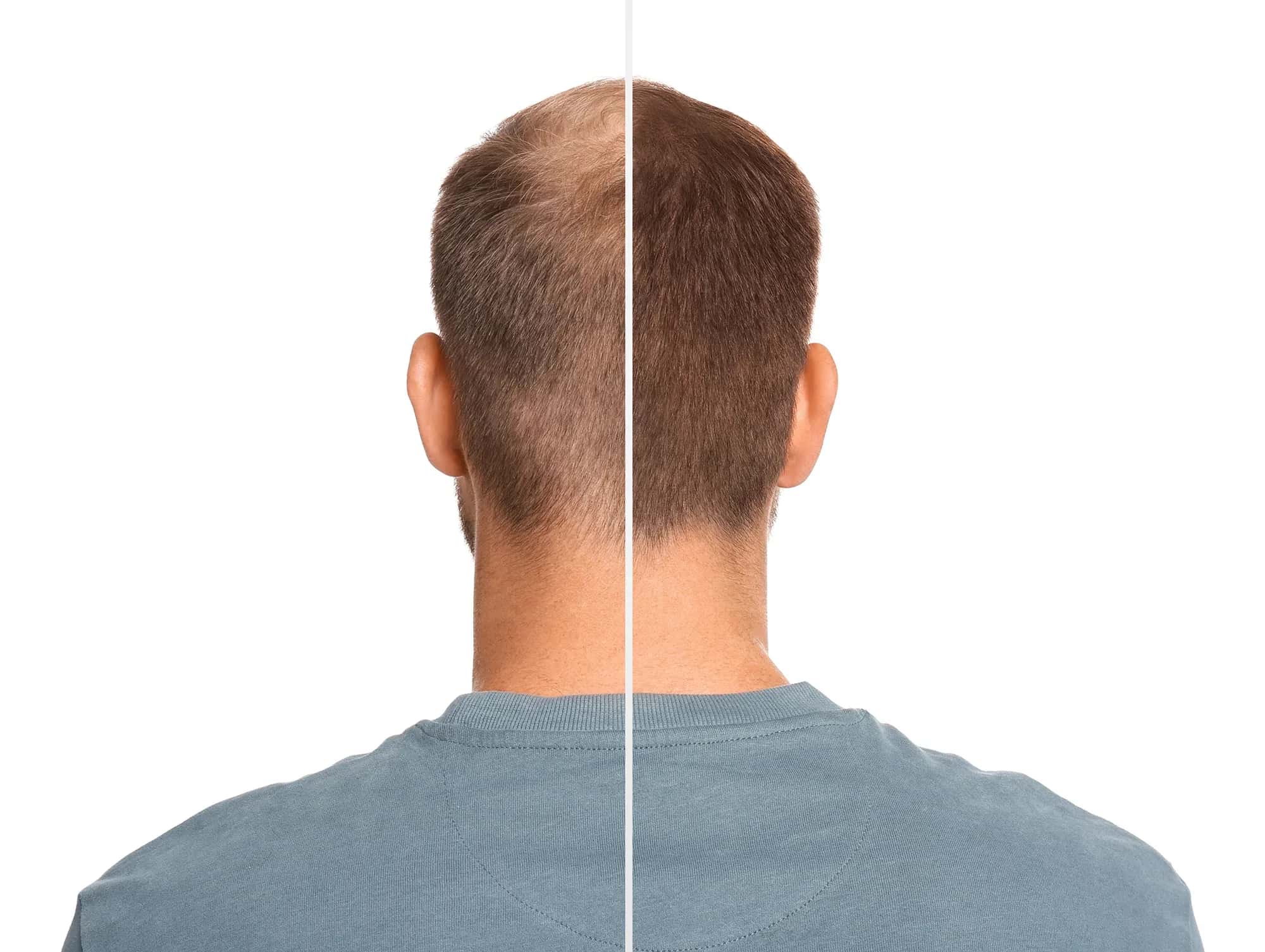


What Is the Success Rate of a Vertex Hair Transplant?
A well-performed vertex hair transplant can achieve high graft survival, but there is no reliable universal percentage that specifically represents crown transplantation.
Some controlled studies of modern hair transplantation have reported graft yields around the mid-90% range, although results differ according to extraction technique, graft handling, surgical experience and patient characteristics. Those figures should not be interpreted as a guaranteed 95% vertex success rate.
Crown restoration introduces another challenge: surviving grafts can grow normally while the finished area still looks less dense than expected. The vertex therefore needs to be judged by both follicle survival and cosmetic coverage rather than by one percentage alone.
What Does Success Actually Mean in Crown Hair Transplantation?
Success in a vertex hair transplant means more than simply proving that transplanted follicles produced new hairs. A strong result combines good graft growth with convincing coverage, a natural whorl pattern and responsible use of the donor supply.
This distinction matters because two patients can have similar follicle survival but very different cosmetic outcomes. One person with thick, wavy hair may obtain excellent coverage from moderate density, while another with fine straight hair can show more visible scalp despite having many healthy grafts.
Long-term stability matters as well. A crown that looks excellent at 12 months but becomes surrounded by progressive native hair loss several years later may require further treatment.
Why Is the Vertex More Difficult to Restore Than the Hairline?
The vertex is more difficult to restore because its hairs rotate around a central whorl and spread in several directions across a broad, curved surface.
Frontal hairs can often overlap backward, allowing carefully positioned grafts to create a strong impression of density. At the crown, hairs radiate away from the whorl instead of all covering the same direction.
Overhead lighting also exposes the scalp directly through this circular pattern.
As a result, a crown can consume surprisingly large numbers of grafts before it appears dense. This is one reason experienced planning sometimes prioritizes the frontal and mid-scalp areas when the available donor supply cannot densely restore the entire scalp.
How Much of the Result Depends on Graft Survival?
Graft survival is fundamental because follicles that do not survive cannot contribute to density, but survival alone cannot predict whether the vertex will look full.
Follicles face several potentially damaging stages before they begin growing in their new location. They must first be extracted without excessive transection, handled without crushing or dehydration and stored appropriately before implantation.
Recipient-site creation and placement also matter. A healthy graft placed too deeply, excessively compressed or at an unnatural angle can compromise the result even if the follicle remains viable.
This explains why advertising a clinic's claimed survival percentage tells patients relatively little without information about the appearance and long-term stability of actual crown results.
What Determines Vertex Hair Transplant Success?
Vertex hair transplant success depends on a combination of donor quality, surgical execution and realistic density planning rather than one particular transplant technique.
The most important factors include:
-
Stable and sufficiently dense donor hair
-
Low follicle transection during extraction
-
Careful graft handling and storage
-
Appropriate time outside the scalp
-
Correct recipient-site depth
-
Natural whorl direction
-
Realistic graft density
-
Thick or favourable hair characteristics
-
Adequate scalp healing
-
Protection against excessive early trauma
-
Appropriate management of ongoing native hair loss
-
Preservation of donor grafts for future procedures
A technically excellent transplant still has to work within the biological limitations of the individual patient's hair.
Why Does the Crown Whorl Matter?
The crown whorl matters because transplanted hairs must reproduce a pattern that constantly changes direction around a central point.
If grafts are implanted in straight parallel rows, the region can look artificial even when the hairs survive well. The surgeon must instead identify the existing or original whorl and gradually rotate recipient angles around it.
A whorl can also use grafts less efficiently from a visual perspective. Because the hairs spread outward, each follicle may cover less surrounding scalp than a frontally directed hair in the mid-scalp.
Some people naturally have two crown whorls, making the geometry even more complex. Success therefore requires directional planning as much as numerical graft survival.
How Does Graft Density Affect the Result?
Graft density strongly influences how successful a vertex transplant looks, but attempting the highest possible density is not automatically the safest strategy.
A completely bald crown may need considerably more grafts than a crown that still contains miniaturized native hair. The total surface area also matters more than a simple diameter measurement because larger crowns expand rapidly as the thinning circle becomes wider.
Surgeons often aim for strategic rather than original teenage density. Creating moderate coverage throughout the vertex can produce a better long-term balance than exhausting thousands of follicles to make one section extremely dense.
The goal is convincing scalp coverage while preserving enough donor hair to manage future loss elsewhere.
Why Is the Donor Area Critical for Crown Restoration?
The donor area determines how much vertex restoration is realistically possible because hair transplantation moves existing follicles rather than generating new ones.
The crown can be particularly demanding because a broad vertex may require thousands of grafts. If the frontal scalp is also thinning, using too many follicles in the crown can leave insufficient resources for areas that frame the face more visibly.
A proper hair transplant donor area assessment therefore considers density, hair caliber, follicular grouping, miniaturization and previous harvesting before deciding how aggressively to treat the vertex.
Successful crown transplantation is partly about knowing how many grafts not to use.
Is FUE Successful for Vertex Hair Transplants?
FUE can achieve successful vertex restoration when follicles are extracted carefully and implanted according to the crown's natural directional pattern.
FUE describes the way individual follicular units are removed from the donor region. It does not determine crown design by itself.
Modern FUE can provide excellent graft survival in experienced hands, but damaged extraction can reduce yield. Follicular transection, aggressive pulling or inadequate graft handling can affect any recipient area, including the crown.
FUE also allows extraction to be spread across the donor zone, avoiding a linear strip scar. However, taking too many follicles can leave visible donor thinning, so a large vertex should not automatically justify maximum harvesting.
Does DHI Have a Higher Success Rate for the Crown?
DHI does not have a proven universally higher success rate for vertex hair transplantation than well-performed conventional FUE implantation.
DHI commonly uses an implanter pen during graft placement, while other FUE procedures may create recipient sites first and place follicles afterward. In both cases, the grafts are often harvested through FUE.
An implanter can offer useful control during placement, but it cannot compensate for poor extraction, weak donor follicles or an unrealistic crown design.
Whorl direction remains particularly important in the vertex regardless of implantation tool. A skilled team can create natural crown growth through different methods when graft handling, angle and distribution are properly controlled.
How Long Does a Vertex Hair Transplant Take to Grow?
A vertex hair transplant normally requires many months before cosmetic density can be judged, and crown maturation may continue for 12 to 18 months.
During the first few weeks, many transplanted hair shafts shed while their follicles remain beneath the skin. This shedding can make the crown look almost as thin as it did before surgery.
New growth generally begins gradually after the dormant phase. By six months, visible improvement may have developed, but the result can still look sparse because many hairs remain short and fine.
The following months bring additional growth, thickening and overlap. This slow maturation is why judging vertex success at four or six months frequently leads to premature concern.
How Can You Tell Whether a Crown Transplant Is Working?
A successful crown transplant develops gradually, so progress should be judged over months rather than through daily inspection.
Signs of healthy progress can include:
-
Normal crusting and healing during the early period
-
Temporary shedding of transplanted shafts
-
Fine new hairs beginning to appear after the dormant phase
-
Increasing coverage through the middle months
-
New hairs becoming thicker with time
-
Growth following the planned whorl direction
-
Reduced scalp visibility under comparable lighting
-
Gradual blending between transplanted and native hair
-
Continued improvement beyond the first six months
-
A stable donor area without obvious overharvesting
Progress photographs taken under the same lighting, hair length and camera angle are generally more useful than checking the crown repeatedly in different mirrors.
Why Do Some Vertex Hair Transplants Look Thin?
A vertex transplant can look thin even when many grafts survive because crown coverage depends on the relationship between surface area, density and individual hair characteristics.
The most common problem is simply trying to cover too large an area with too few grafts. A wide vertex can require substantial donor resources, and spreading limited follicles across the whole region creates moderate rather than high density.
Fine hair also allows more light to reach the scalp. Straight hairs that lie flat may provide less visual coverage than coarse, wavy or curly strands.
Poor whorl design, low graft survival and continuing loss of surrounding native hairs can further reduce the visible result.
Can Native Hair Keep Falling Out Around Transplanted Grafts?
Native hair can continue thinning around successfully transplanted follicles because surgery does not stop androgenetic hair loss in untreated hairs.
This issue is especially important in the vertex, where the visible thinning zone can expand outward over time. A patient may receive a successful transplant into the centre of the crown and later develop lower density around its edges.
The transplanted follicles may still be growing normally.
Long-term planning therefore needs to consider the likely future pattern of hair loss rather than simply filling today's bald spot. The broader limitations of hair transplantation become particularly important when the crown, mid-scalp and frontal area are all affected.
Can a Failed Vertex Hair Transplant Be Repaired?
An unsatisfactory vertex transplant can sometimes be improved with another procedure, provided sufficient healthy donor hair remains.
The first step is determining why the original result looks weak. Low density caused by conservative graft numbers is different from poor graft survival, unnatural direction or continued loss of native hair.
A second session may add density between existing transplanted follicles. Directional problems can be more complicated because incorrectly angled hairs already occupy part of the recipient area.
Donor condition becomes especially important during revision surgery. If the first operation involved aggressive FUE harvesting, extracting another large number of grafts may create visible thinning at the back and sides.
How Do Hair Characteristics Affect Crown Coverage?
Hair characteristics can change the cosmetic success of crown transplantation even when patients receive identical graft numbers.
Coarse hairs create more shadow and block more scalp than fine hairs. Wavy and curly strands also occupy more visual space because they bend and overlap instead of lying flat.
Low colour contrast between hair and scalp can make thinning less noticeable, while dark straight hair against pale scalp often reveals gaps more easily.
Follicular-unit composition adds another layer. A graft containing three healthy hairs provides more total hair than a single-hair graft, although both count as one graft.
For that reason, comparing vertex results only by graft number can be highly misleading.
What Should You Check Before Choosing a Vertex Hair Transplant?
A good vertex consultation should explain whether the crown is the right area to treat now, not simply calculate the maximum number of grafts that can fit there.
Before surgery, important questions include:
-
How large is the actual thinning area?
-
Is the crown still expanding?
-
How many grafts are genuinely available?
-
How many follicles should be preserved for future loss?
-
Where is the centre of the natural whorl?
-
What implantation direction will be used?
-
What density can realistically be created?
-
Is the frontal scalp likely to need treatment later?
-
Who performs graft extraction?
-
Who creates the recipient sites?
-
How are grafts protected outside the body?
-
What happens if the final donor count is lower than expected?
-
How are postoperative results monitored?
-
When should the crown realistically be judged?
A provider willing to recommend postponing crown surgery can sometimes offer better long-term planning than one promising maximum density immediately.
When Should You Judge the Final Success of a Vertex Hair Transplant?
The final success of a vertex transplant should usually be judged around 12 months or later, with further thickening sometimes continuing toward 15 to 18 months.
Six-month photographs can demonstrate progress, but they do not reliably represent final density. Many transplanted hairs are still short, immature or continuing to increase in caliber at that stage.
Assessment should also use comparable conditions. Different hair lengths, strong overhead lighting, wet hair or flash photography can make the same crown appear dramatically fuller or thinner.
Ultimately, a successful vertex transplant is not defined by one advertised survival percentage. It combines healthy graft growth, convincing whorl direction, balanced density and enough preserved donor hair to remain natural as the surrounding scalp changes over time.
- Last updated
- Language
- English
How did you find this article?

Hiding a hair transplant during recovery requires balancing personal privacy with the need to protect newly implanted follicles.
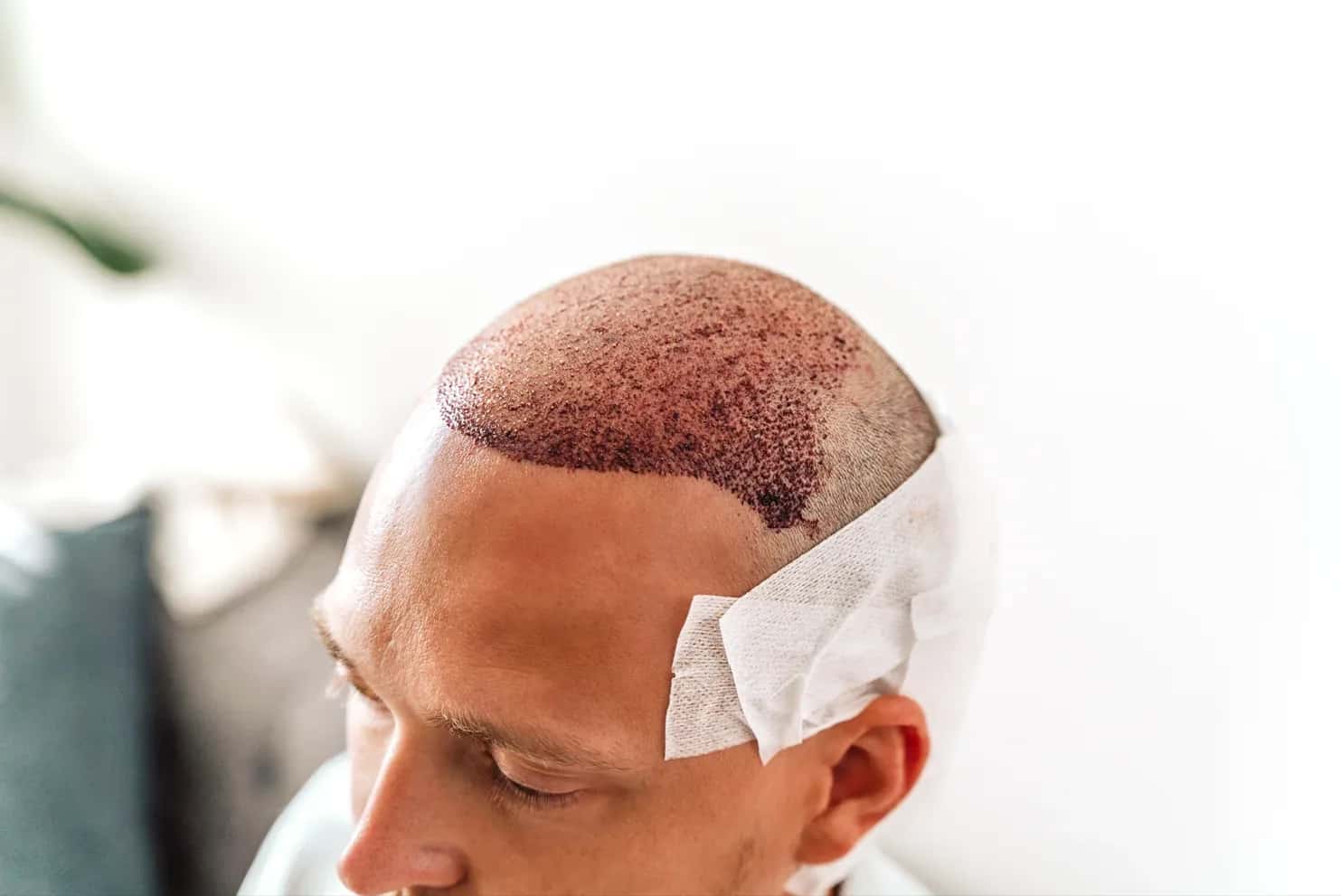
Returning to work after a hair transplant requires careful planning to protect newly implanted follicles while allowing the scalp to heal comfortably.


A hair transplant in Cancun offers an option for people seeking surgical hair restoration while traveling to Mexico for treatment. Understanding the available techniques, treatment costs, recovery requirements and travel arrangements helps patients prepare for the procedure.
Subscribe to the Medifinder newsletter and never miss our latest content.