










The Technology Behind Sapphire FUE
Sapphire FUE technology uses precision-cut synthetic sapphire blades to create the recipient sites where extracted hair follicles are implanted. The sapphire component does not usually extract the follicles; instead, it changes the instrument used during one of the most important stages of transplantation.

- Last updated
- 17 reads
- 10 min read
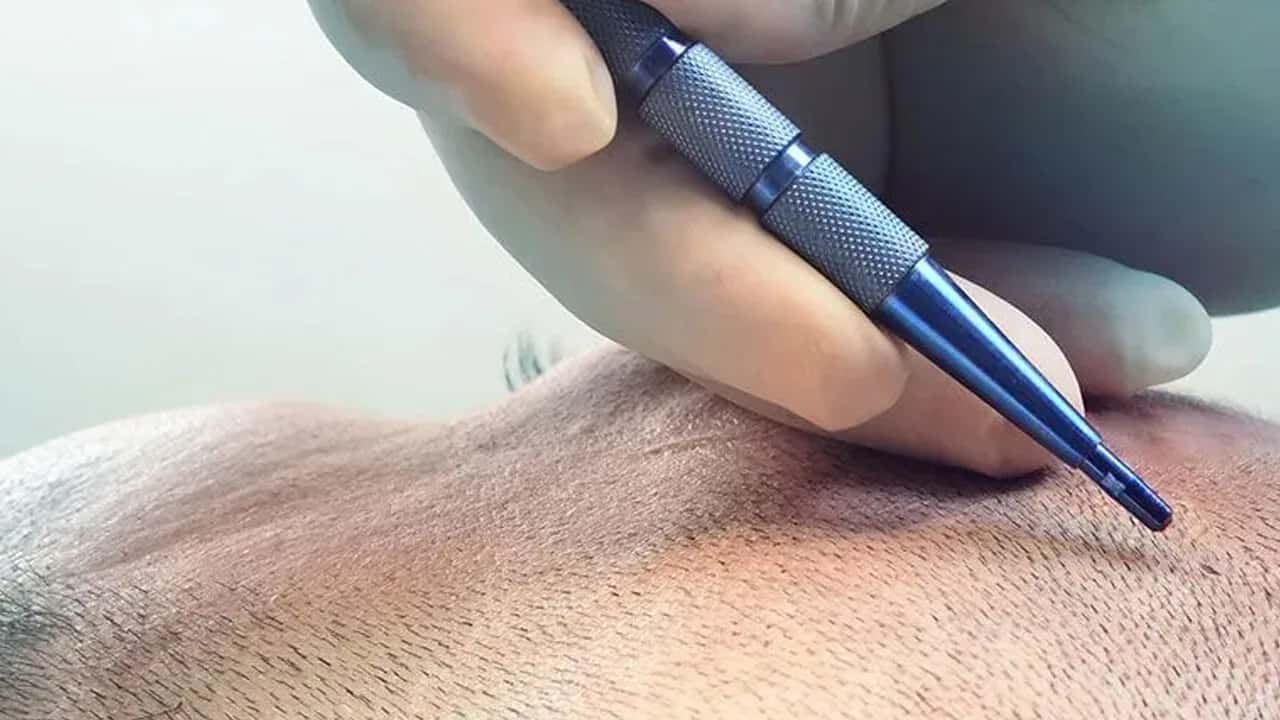


What Technology Is Used in Sapphire FUE?
Sapphire FUE combines individual follicular-unit extraction with recipient-site creation using blades manufactured from synthetic sapphire.
The procedure involves several separate technologies rather than one single device.
A manual or motorized FUE punch usually removes follicular units from the donor area. The surgical team then preserves and sorts those grafts before the surgeon creates recipient sites with sapphire blades.
The core technological components can include:
-
Manual or motorized FUE extraction punches
-
Magnification during follicle harvesting
-
Graft counting and sorting systems
-
Temperature-controlled graft preservation
-
Synthetic sapphire recipient blades
-
Different blade widths for different graft sizes
-
Hairline and density planning tools
-
Implantation forceps or other graft-placement instruments
-
Photography and donor-density assessment systems
-
Implanter devices in selected hybrid procedures
Sapphire therefore describes one important component of a larger surgical process.
What Is a Sapphire Hair Transplant Blade Made From?
A sapphire hair transplant blade is generally manufactured from synthetic sapphire, a crystalline form of aluminum oxide produced under controlled conditions.
Synthetic sapphire is extremely hard and can be shaped and polished into a precise cutting edge.
This property allows manufacturers to produce small surgical blades in multiple dimensions for recipient-site creation.
The material should not be confused with naturally mined jewellery gemstones. Surgical sapphire is manufactured specifically to create predictable dimensions and cutting surfaces.
Its usefulness comes primarily from hardness, edge stability and the ability to produce a finely finished blade.
These characteristics can help the surgeon create controlled incisions, but they do not independently determine whether transplanted follicles survive.
Why Is Synthetic Sapphire Used for Recipient-Site Creation?
Synthetic sapphire is used because it can maintain a sharp, smooth edge while creating thousands of small recipient incisions during a hair transplant.
Recipient-site creation requires consistency.
A surgeon may need to make several thousand openings while maintaining planned angles, depths and spacing across the scalp. A predictable cutting surface can make this stage easier to control.
The technology is particularly useful when the blade dimensions closely match the follicular units being implanted.
Smaller grafts should not automatically receive the same channel size as larger multi-hair grafts.
The objective is to create enough room for safe placement without unnecessarily enlarging the incision.
Accurate matching between graft and recipient site matters more than the prestige associated with the sapphire name.
How Does Sapphire FUE Technology Work Step by Step?
Sapphire FUE separates follicle extraction from recipient-site creation and implantation, with different tools performing each stage.
The process begins by examining the hair transplant donor area to estimate density, follicular-unit composition and safe extraction boundaries.
Local anesthesia is then applied before individual grafts are removed with an FUE punch.
The extracted follicles remain in an appropriate holding solution while the recipient area is prepared.
The surgeon uses sapphire blades to create channels according to the planned hairline, density and growth direction.
Finally, the grafts are inserted into these sites.
The sapphire technology therefore influences where and how grafts are placed rather than how follicles are initially removed.
Does the Sapphire Blade Extract Hair Follicles?
The sapphire blade usually does not extract hair follicles during Sapphire FUE.
Follicular-unit extraction is normally performed with a cylindrical FUE punch made from surgical metal rather than sapphire.
The punch surrounds the follicular unit and separates it from the surrounding tissue so it can be removed from the donor area.
Only after extraction does the sapphire blade become central to the procedure.
It creates the recipient openings where those grafts will later be implanted.
This distinction is important when evaluating claims that Sapphire FUE protects follicles during extraction.
A sapphire recipient blade cannot compensate for grafts damaged during harvesting. Extraction skill, punch selection and understanding follicular direction remain essential before recipient-site technology becomes relevant.
How Are Sapphire Blade Size and Incision Width Selected?
Sapphire blade dimensions should be selected according to the size and composition of the grafts rather than using one blade for every follicular unit.
A single-hair graft used near the front of the hairline may require a different recipient opening from a thicker three-hair follicular unit.
Important variables include:
-
Blade width
-
Blade thickness
-
Incision depth
-
Graft diameter
-
Number of hairs within the graft
-
Recipient skin thickness
-
Planned implantation density
-
Direction of native hair
-
Hair-shaft caliber
-
Treatment area
An opening that is unnecessarily large can create greater tissue disruption, while one that is too small can make implantation difficult or compress the graft.
The technology works best when surgical measurements guide blade selection.
Why Do Incision Angle and Depth Matter?
Incision angle and depth matter because they influence the direction of future hair growth and how securely the graft sits inside the recipient site.
Hair at the front usually emerges from the scalp at relatively shallow angles rather than standing vertically.
Temple hairs often require even more careful directional planning.
The crown presents another challenge because the angle changes continuously around the natural whorl.
Depth also requires control.
A recipient site that is too shallow may not accommodate the follicle correctly, while an unnecessarily deep incision creates avoidable tissue disruption.
Sapphire blades provide a precise instrument, but the surgeon still determines every angle, orientation and depth.
Technology cannot replace anatomical judgment.
Can Sapphire Technology Improve Density Planning?
Sapphire technology can support precise density planning because small blades allow recipient sites to be positioned closely when the scalp and donor supply can safely support the intended density.
However, smaller incisions do not mean unlimited graft density.
The scalp has a finite blood supply, and thousands of closely packed recipient sites still create tissue trauma.
Donor supply also limits the number of follicles available.
A patient with 2,500 usable grafts cannot obtain genuine 4,000-graft density simply because smaller sapphire blades are available.
The goal is strategic visual coverage rather than the maximum possible number of incisions.
Hair caliber, curl, graft composition and hair-to-scalp contrast can sometimes influence visible density more strongly than small differences in channel spacing.
How Does Sapphire FUE Differ From Steel-Blade FUE?
Sapphire FUE and conventional steel-blade FUE share the same fundamental transplantation process, with the main difference appearing in the material used to create recipient sites.
Both methods can use identical donor extraction systems.
Both can preserve grafts using similar solutions, follow the same hairline design and implant comparable follicular units.
Traditional FUE may create recipient sites with steel blades or needles, while Sapphire FUE uses synthetic sapphire instruments.
Sapphire blades can offer stable edges and precise dimensions, but this does not prove that every Sapphire FUE procedure will outperform every steel-blade transplant.
A carefully executed steel-blade operation can produce an excellent result.
The surgeon's technique remains more important than the material alone.
How Does Sapphire FUE Technology Differ From DHI?
Sapphire FUE usually creates recipient sites before graft placement, while DHI commonly uses an implanter pen to place follicles more directly.
Both approaches frequently rely on FUE extraction.
The difference therefore appears primarily during implantation rather than donor harvesting.
With Sapphire FUE, the surgeon first establishes the recipient-site pattern using sapphire blades. Another stage then places the grafts into these prepared openings.
DHI often loads grafts into implanter pens that create or enter recipient sites during implantation.
Neither method is universally superior.
Large bald areas may suit a channel-based workflow, while certain cases involving implantation among existing hair may benefit from an implanter approach.
The best method depends on anatomy and surgical planning.
Does Sapphire FUE Cause Less Tissue Trauma?
Sapphire blades may allow small and controlled incisions, but claims that Sapphire FUE always causes less tissue trauma than conventional FUE should be interpreted carefully.
Incision size certainly matters.
A blade matched closely to the graft can avoid unnecessary enlargement of the recipient opening.
However, total tissue trauma also depends on the number of incisions, their depth, surgeon technique and the density being attempted.
A technically poor transplant using sapphire can still traumatize the scalp.
Likewise, an experienced surgeon using an appropriately sized steel blade can create very controlled recipient sites.
Sapphire should therefore be understood as a precision instrument rather than a guarantee of minimal trauma.
Can Sapphire FUE Technology Accelerate Healing?
Sapphire FUE may support efficient healing when precise recipient sites limit unnecessary tissue disruption, but it does not bypass normal wound-healing biology.
Small recipient incisions begin healing immediately after surgery.
Redness, crusting and mild swelling can still develop, just as they can after other forms of FUE.
Most superficial crusts generally clear during the early postoperative period with appropriate washing.
The sapphire blade does not eliminate temporary shedding or make transplanted follicles begin growing immediately.
New growth still follows the normal hair cycle.
Claims of dramatically faster recovery should therefore be separated from more reasonable claims about controlled incision creation.
Patients still need to protect the scalp during the early healing period regardless of blade material.
How Does the Technology Affect Hairline Design?
Sapphire technology can help create precise recipient openings, but the natural appearance of a hairline still depends on design decisions made before the blade touches the scalp.
The first rows usually require carefully selected single-hair grafts.
The hairline should include subtle irregularity instead of forming a perfectly straight artificial border.
Angle also changes from the centre toward the temples.
Sapphire blades can create these openings precisely, but they cannot decide where the hairline should begin.
Understanding how a hair transplant works makes this distinction clearer: the instrument creates the site, while planning determines which graft belongs there and how it should emerge.
Can Sapphire FUE Be Used for Crown Restoration?
Sapphire FUE can be used for crown transplantation because recipient sites can be created at changing angles around the natural whorl.
The crown requires particularly careful geometry.
Hair does not point in one direction across the entire vertex. Instead, follicles rotate outward around one or sometimes multiple whorl centres.
The surgeon must reproduce that movement while avoiding excessive graft use.
Sapphire blades may help create consistent sites, but crown planning remains limited by donor supply and future hair-loss progression.
Using several thousand grafts simply to achieve high crown density can leave too little donor reserve for future frontal thinning.
Technology should support long-term planning rather than encourage maximum graft consumption.
Does Sapphire Technology Help With Curly Hair?
Sapphire blades can create recipient sites for curly hair, but they do not solve the main technical challenge associated with strongly curved follicles.
That challenge usually occurs during extraction.
A curly follicle can bend beneath the skin, increasing the risk that an FUE punch cuts across the follicular structure.
Once the graft has been extracted safely, a sapphire blade can create an appropriate recipient opening like it would for straighter hair.
The surgeon must still plan how each curl will behave above the scalp.
Correct direction becomes especially important because a poorly oriented curly graft can project away from surrounding hairs.
Experience with curved follicular anatomy therefore matters more than simply having sapphire blades available.
What Role Does Graft Handling Play?
Graft handling plays a central role because advanced recipient-site technology cannot rescue follicles that were damaged before implantation.
After extraction, grafts need careful handling to protect the follicular structures.
They should not remain unnecessarily exposed to dry air or excessive mechanical pressure.
The surgical team must also identify single-hair and multi-hair grafts so they can be distributed appropriately.
Single hairs often work best at the leading hairline, while larger follicular units can strengthen density behind it.
Time outside the body should also be managed efficiently.
Sapphire technology affects recipient-site creation, but graft survival depends on the entire chain of extraction, preservation, handling and implantation.
Every stage contributes to the final growth rate.
Is Sapphire FUE More Advanced Than Standard FUE?
Sapphire FUE uses a more specialized recipient-site instrument, but calling the entire procedure more advanced can oversimplify what determines surgical quality.
Technology evolves continuously in hair restoration.
Motorized punches, improved magnification, graft-storage methods, digital planning tools and specialized implantation devices can all refine different stages.
Sapphire blades are one part of that progression.
Their main contribution is providing a durable, precisely manufactured tool for channel creation.
A modern operation should still be judged by more than the presence of one instrument.
Donor preservation, low follicle transection, natural recipient angles and realistic long-term planning determine whether the technology produces a meaningful advantage for the patient.
What Should Patients Ask About Sapphire FUE Technology?
Patients should ask how the surgical team actually uses Sapphire FUE technology rather than treating the procedure name as evidence of quality.
Useful questions include:
-
Who performs donor extraction?
-
What punch system is used?
-
Who creates the sapphire recipient sites?
-
How are blade sizes selected?
-
Are different graft sizes matched with different channels?
-
How is recipient-site depth controlled?
-
How is the natural hair angle reproduced?
-
How is donor density measured?
-
How are grafts preserved after extraction?
-
How long do grafts remain outside the scalp?
-
Who implants the follicles?
-
How are single-hair grafts separated for the hairline?
-
How is overharvesting prevented?
-
How does the plan account for future hair loss?
Clear answers reveal much more about technical quality than the Sapphire FUE label alone.
Does Sapphire Technology Determine the Final Result?
Sapphire technology contributes to recipient-site precision, but it does not determine the final hair transplant result by itself.
A successful transplant begins with correct diagnosis and realistic candidate selection.
The donor area must provide enough stable follicles, extraction must preserve them, and grafts must remain healthy until implantation.
Recipient sites then need appropriate depth, angle, spacing and distribution.
After surgery, healing and the normal hair-growth cycle determine when visible density develops.
The sapphire blade participates in only one stage of this chain.
Its precision can be valuable, but the strongest technology still depends on the surgeon and surgical team using it intelligently.
In hair transplantation, a sophisticated instrument improves technique only when the entire procedure around it is equally well planned.
- Last updated
- Language
- English
How did you find this article?
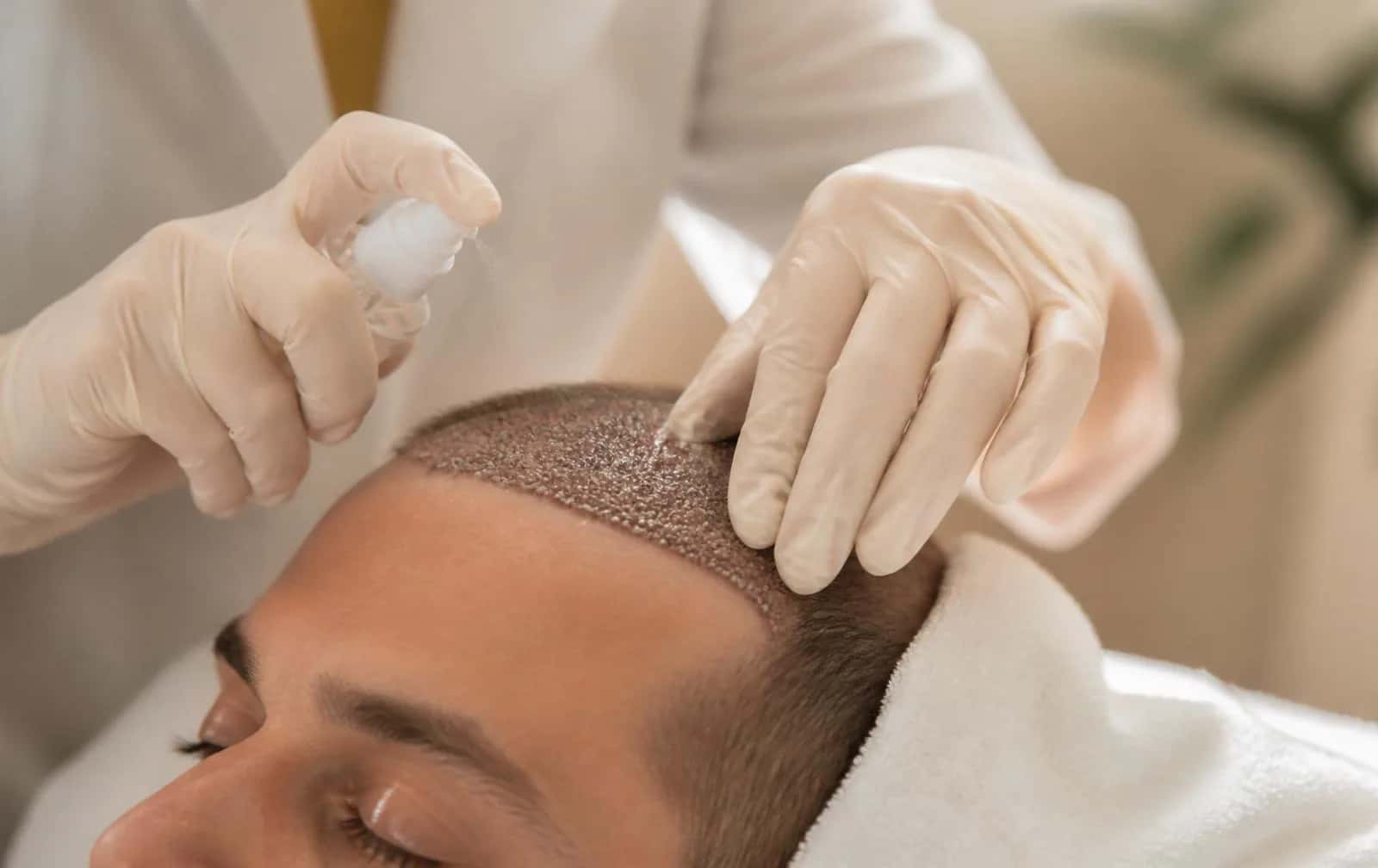
Hiding a hair transplant during recovery requires balancing personal privacy with the need to protect newly implanted follicles.
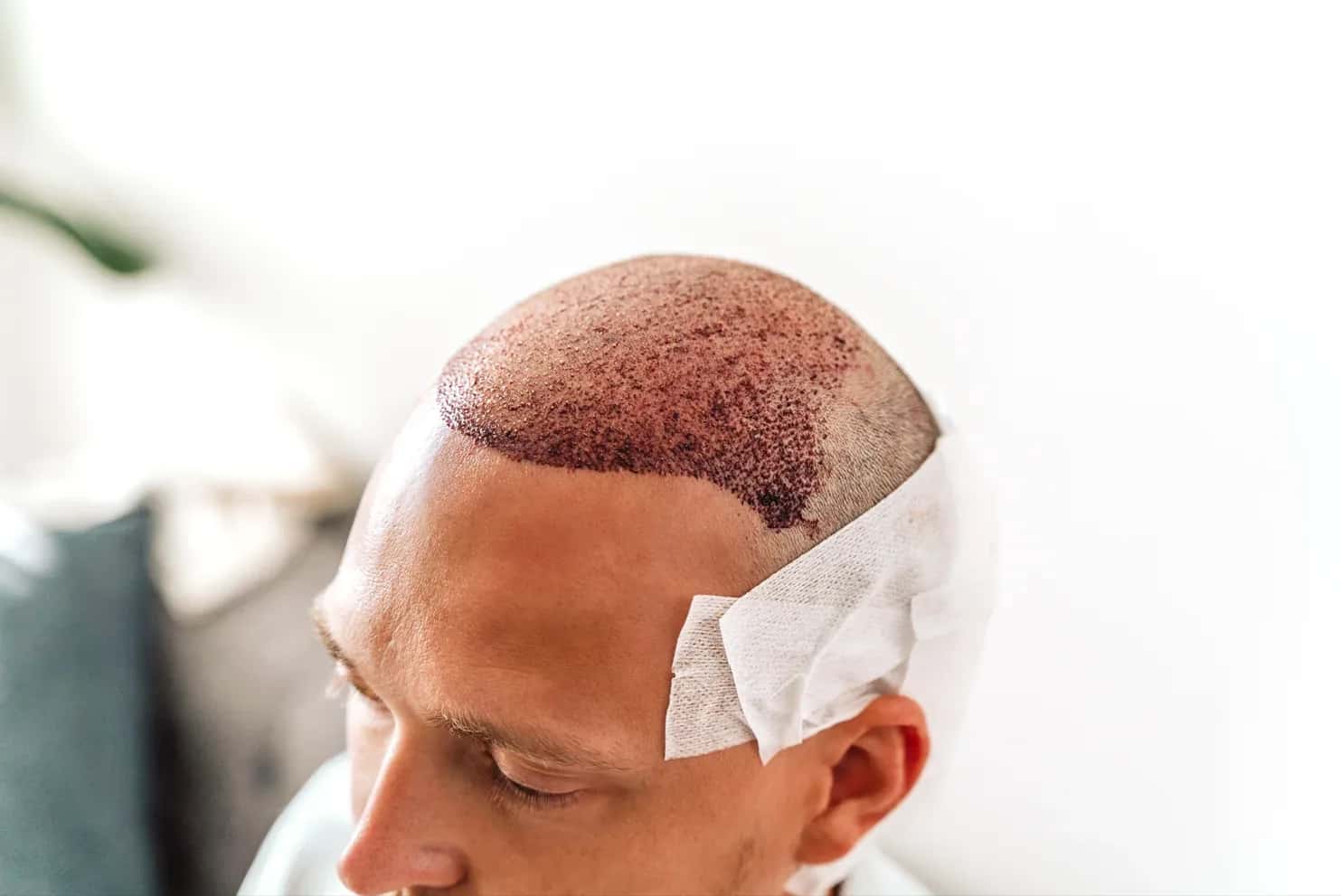
Returning to work after a hair transplant requires careful planning to protect newly implanted follicles while allowing the scalp to heal comfortably.


A hair transplant in Cancun offers an option for people seeking surgical hair restoration while traveling to Mexico for treatment. Understanding the available techniques, treatment costs, recovery requirements and travel arrangements helps patients prepare for the procedure.
Subscribe to the Medifinder newsletter and never miss our latest content.