










Sculptra for Collagen Stimulation
Sculptra for collagen stimulation is an injectable treatment that uses poly-L-lactic acid to encourage gradual collagen formation and improve selected facial wrinkles and areas of volume loss.

- Last updated
- 25 reads
- 14 min read
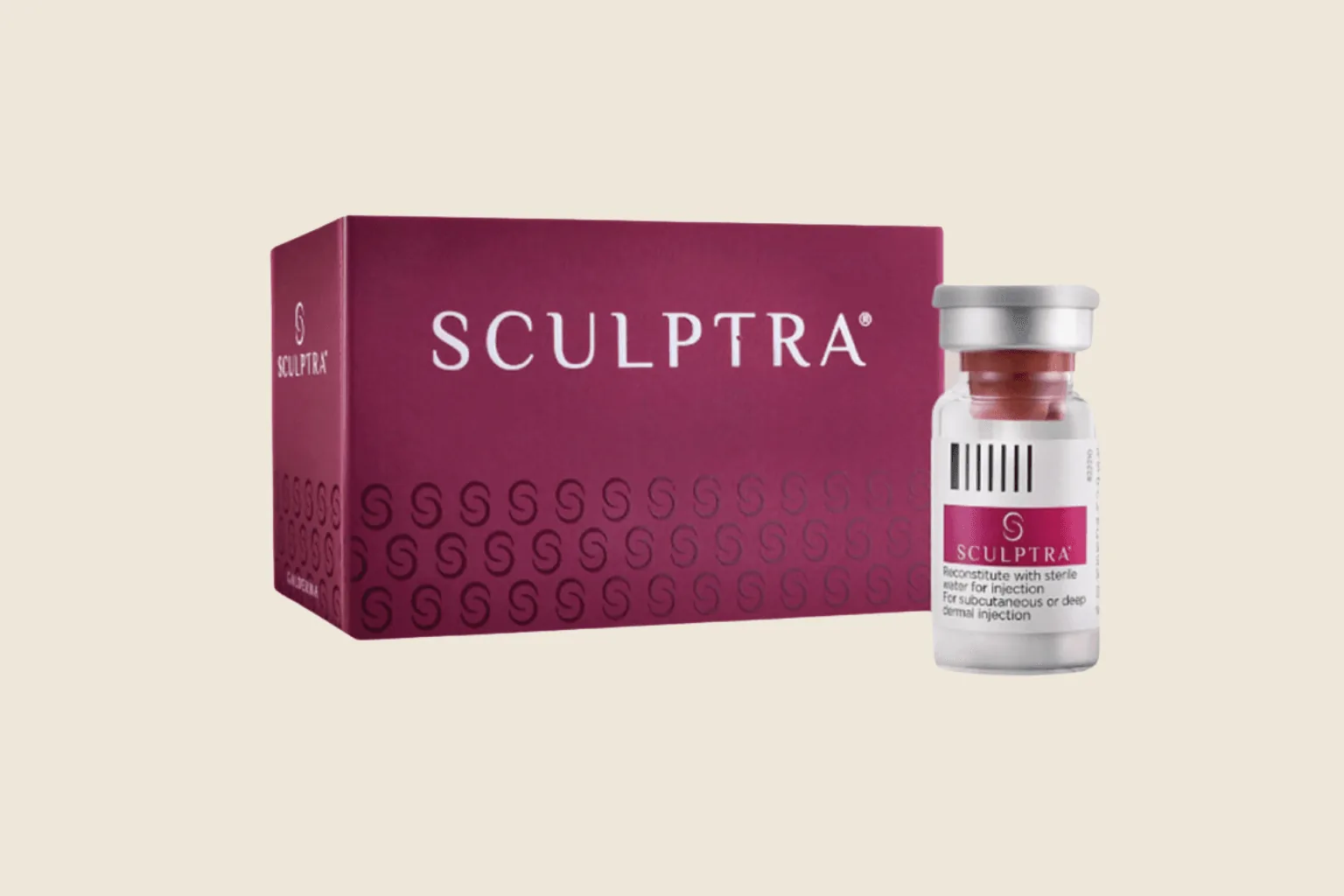


What Is Sculptra for Collagen Stimulation?
Sculptra is an injectable dermal filler containing poly-L-lactic acid, a biodegradable synthetic material that encourages the body to produce collagen around the injected particles. Rather than relying primarily on a gel to create immediate fullness, the treatment promotes a gradual response within the surrounding tissue.
Collagen provides structural support to the skin and contributes to facial firmness. As its organization changes with age and facial fat diminishes, wrinkles, folds and contour irregularities can become more noticeable.
Sculptra aims to improve selected facial concerns by encouraging new collagen formation over time. The resulting changes may include smoother wrinkles and improved fullness in areas affected by volume loss.
Its gradual action distinguishes it from injectable treatments designed to produce an immediately visible contour change.
What Is Poly-L-Lactic Acid?
Poly-L-lactic acid, commonly abbreviated as PLLA, is a synthetic polymer used in several medical applications because the body can gradually break it down.
In Sculptra, PLLA takes the form of small particles suspended in a prepared injectable solution. The formulation also includes substances that help suspend the particles and support administration.
PLLA is not collagen itself. Instead, its presence in the tissue initiates a controlled biological response associated with collagen formation.
The distinction matters because Sculptra does not transfer ready-made collagen into the face. It encourages the body to produce additional connective tissue around the treated areas.
Although PLLA is biodegradable, the tissue changes it stimulates can remain noticeable after the particles have begun breaking down.
How Does Sculptra Stimulate Collagen Production?
Sculptra stimulates collagen through a gradual tissue response to the injected PLLA particles. Once placed within the appropriate tissue layer, the particles interact with the surrounding cells and activate processes involved in connective tissue formation.
Fibroblasts play a central role in this process because they produce collagen and other components of the extracellular matrix.
As the tissue responds to PLLA, new collagen can develop around the treated areas, contributing to improved structural support and gradual changes in facial appearance.
This process is known as neocollagenesis, meaning the formation of new collagen.
However, collagen stimulation does not occur at an identical rate in every individual, and it does not guarantee complete restoration of youthful skin structure. The visible outcome depends on the existing facial anatomy and the extent of tissue response.
What Happens to Sculptra After Injection?
Immediately after Sculptra is injected, the treated area may look fuller because the prepared solution occupies space within the tissue. This initial appearance does not represent the final result.
As the fluid component is absorbed, some of the early fullness diminishes. The PLLA particles remain and continue interacting with the surrounding tissue.
Over subsequent weeks, the collagen response gradually develops. This explains why a person may initially notice a change, then see it soften before more lasting improvement becomes apparent.
The PLLA particles themselves gradually undergo biological degradation.
However, newly formed connective tissue may continue contributing to the result after the injected material has started breaking down.
The treatment therefore follows a different timeline from fillers that rely mainly on the immediate physical presence of a volumizing gel.
Is Sculptra a Dermal Filler or a Collagen Biostimulator?
Sculptra belongs to the dermal filler category from a medical and regulatory perspective, but its primary mode of action makes it a collagen biostimulator.
Traditional fillers often create volume through the material placed directly into the tissue. Sculptra, by comparison, produces much of its lasting cosmetic effect through the collagen response that follows injection.
This difference can influence both treatment planning and expectations.
An immediate change in cheek contour may be more predictable with an appropriately selected volumizing filler, while Sculptra is intended for gradual improvement.
Nevertheless, describing Sculptra as a biostimulator does not remove the risks associated with dermal filler injections. Accurate placement and careful treatment planning remain essential.
How Is Sculptra Different From Hyaluronic Acid Fillers?
Hyaluronic acid fillers and Sculptra both involve injections, but the materials interact with tissue differently.
Hyaluronic acid is a water-attracting substance that can provide physical volume shortly after placement. Depending on the formulation, it may improve facial contours, folds or selected areas of volume loss.
Sculptra works more gradually by stimulating collagen formation around PLLA particles.
Another important distinction concerns reversibility. Hyaluronic acid fillers can often be reduced using hyaluronidase, an enzyme that breaks down hyaluronic acid.
Sculptra does not respond to hyaluronidase in the same way.
Consequently, correcting an undesirable result can be more complicated and may require time or additional medical intervention.
Which Skin and Facial Concerns Can Sculptra Improve?
Sculptra may improve selected changes associated with facial aging, particularly when reduced connective tissue support contributes to the appearance.
-
Facial volume loss: Gradual collagen formation may restore some fullness to areas where facial contours have become flatter or less supported over time.
-
Nasolabial folds: Sculptra can improve selected contour deficiencies around the folds extending from the nose toward the corners of the mouth.
-
Cheek wrinkles: Clinical research supports its ability to improve certain fine lines and wrinkles across the cheeks, including changes visible when the face is at rest.
-
Reduced facial firmness: Collagen stimulation may contribute to better tissue support and a smoother appearance, although significant sagging requires a different level of correction.
Can Sculptra Restore Lost Facial Volume?
Facial volume loss develops through several processes, including changes in fat compartments, connective tissue and underlying skeletal support.
Sculptra may improve selected areas of lost fullness by stimulating collagen formation within the treated tissue. Instead of creating a pronounced volume increase immediately, the face can develop greater fullness gradually over several weeks or months.
This may be useful when a person wants to soften age-related contour changes without an abrupt difference in appearance.
However, collagen formation cannot replace every component of lost facial structure.
Pronounced fat loss, substantial hollowing or changes in bone support may require different interventions.
Sculptra is therefore better understood as a method of gradually improving selected volume-related concerns rather than rebuilding every facial structure affected by aging.
Does Sculptra Tighten Sagging Skin?
Sculptra may improve the appearance of mild skin looseness when collagen loss contributes to reduced tissue support.
By encouraging connective tissue formation, the treatment can make certain areas appear fuller and more supported. This may soften the visual impression of early facial laxity.
However, significant sagging involves more than collagen decline. Changes in facial fat compartments, skin elasticity, retaining ligaments and skeletal structure also influence how tissues descend.
Sculptra does not physically lift the skin in the same way as surgery.
It also cannot reliably correct prominent jowls or substantial neck laxity.
The most realistic expectation involves gradual improvement in tissue support rather than a dramatic tightening or lifting effect.
Can Sculptra Improve Fine Lines and Skin Texture?
Sculptra has demonstrated improvements in selected facial wrinkles, particularly within the cheek region.
In controlled clinical research, improvements in cheek wrinkle severity became measurable over the months following treatment and remained evident during later follow-up assessments.
The collagen response may also contribute to a smoother appearance in some treated areas.
However, Sculptra is not primarily a hydration treatment or a superficial resurfacing procedure.
Skin roughness caused by pigmentation, active acne, enlarged pores or significant sun damage may not improve simply because collagen formation increases beneath the surface.
Fine wrinkles related to structural support may respond differently from movement-related wrinkles or superficial dehydration lines.
Treatment planning should distinguish these concerns rather than grouping every visible skin irregularity under collagen loss.
Which Areas Can Be Treated With Sculptra?
Sculptra has established uses for selected facial wrinkles and contour deficiencies, including nasolabial folds and wrinkles in the cheek region.
The cheeks are particularly relevant because age-related changes in volume and connective tissue support can influence both surface wrinkles and facial contours.
However, Sculptra should not be treated as a universal injectable suitable for every facial or body area.
The lips and delicate tissues around the eyes require particular caution, and use in these regions is not supported by the same approved indications.
Treatments promoted for the buttocks, hips or other body-contouring purposes also fall outside its established United States facial indications.
For each proposed area, the exact product instructions and anatomical risks must be considered before injection.
Who Is a Suitable Candidate for Sculptra?
Sculptra may be considered for selected adults who want gradual improvement in facial wrinkles or volume-related changes and who understand that collagen formation takes time.
-
Adults with age-related facial volume changes: People experiencing moderate flattening or loss of facial support may benefit from gradual improvement rather than immediate augmentation.
-
Individuals with selected cheek wrinkles or facial folds: Sculptra may be relevant when the concern falls within an established treatment indication and collagen stimulation offers an appropriate approach.
-
People comfortable with progressive results: Suitable candidates recognize that the final appearance develops over weeks or months and may require a treatment series.
-
Individuals without important contraindications: A history of abnormal scarring, significant ingredient allergies, active infection or certain inflammatory conditions can make treatment unsuitable or require additional assessment.
How Is a Sculptra Treatment Performed?
A Sculptra appointment begins with an assessment of facial contours, tissue quality, existing wrinkles and relevant medical history.
The product is prepared by mixing it with sterile water to create an injectable suspension. Lidocaine may also be added when appropriate to reduce discomfort.
After the skin is cleaned, the prepared material is placed into the intended tissue layer using a suitable needle or cannula technique.
Correct injection depth matters because superficial placement can increase the likelihood of visible irregularities or nodules.
The treated area may appear temporarily fuller immediately after the procedure, and mild swelling or tenderness can develop.
The initial appearance should not be used to judge the final result because the treatment relies on collagen formation that takes place after the injection.
How Many Sculptra Sessions Are Needed?
Sculptra often involves a series of treatments rather than a single appointment. A common approach includes approximately two or three sessions distributed across several months.
Product instructions allow treatment plans that may involve up to four sessions, with minimum intervals determined by the approved indication.
For cheek wrinkles, the recommended minimum interval between sessions is four weeks.
Spacing matters because the collagen response requires time to develop. Repeating injections too quickly can make it difficult to assess the developing result and increase the risk of unnecessary correction.
The appropriate number of sessions should reflect the existing facial changes and the improvement already achieved.
More injections do not automatically produce a better outcome, particularly when gradual volume formation can continue after the previous treatment.
When Do Sculptra Results Become Visible?
Sculptra results develop gradually, which distinguishes the treatment from fillers that provide immediate physical volume.
The first visible fullness after injection largely reflects the fluid used to prepare and administer the product. As this temporary effect diminishes, the treated area may appear closer to its previous condition.
Collagen-related improvement then becomes progressively noticeable over subsequent weeks.
Clinical research has documented visible results beginning around one month, with improvement continuing as treatment progresses.
Because the change is gradual, some people recognize the difference more clearly when comparing photographs taken several weeks apart.
The most meaningful assessment occurs after the initial treatment response has developed, rather than immediately following the first appointment.
How Long Does Sculptra Last?
Sculptra can provide relatively long-lasting results compared with many conventional temporary fillers.
Clinical evidence indicates that improvements associated with PLLA may remain visible for up to two years following treatment. However, this does not guarantee that every person will maintain the same degree of improvement for that entire period.
Collagen formation, tissue remodeling and natural facial aging continue to influence appearance after the treatment course.
Some individuals notice a gradual reduction in fullness over time, while others retain visible improvement for a longer period.
The result is not permanent because both the injected material and the surrounding tissue continue undergoing biological changes.
Maintenance should be considered according to the actual appearance and previous treatment response rather than an automatic schedule.
Does Sculptra Produce Natural-Looking Results?
Sculptra's gradual action may appeal to people who want their facial appearance to change progressively rather than immediately after an injection.
When collagen formation develops evenly, the resulting improvement can soften wrinkles and restore selected contours without creating a sudden change in facial proportions.
However, gradual results are not automatically natural-looking results.
Excessive treatment, uneven product distribution or unnecessary correction can produce unwanted fullness and irregular contours.
The possibility of continued collagen formation after injection also makes conservative planning important.
A successful aesthetic result should respect the person's natural facial structure rather than attempting to create fullness in every area that has changed with age.
What Are the Risks and Side Effects of Sculptra?
Sculptra involves medical injections and carries both common temporary side effects and less frequent complications that may require treatment.
-
Injection-site reactions: Swelling, redness, bruising, tenderness and temporary discomfort may occur after the procedure. These effects often improve during the initial recovery period.
-
Lumps and nodules: Small palpable or visible irregularities can develop, sometimes appearing weeks or months after treatment. Persistent nodules and inflammatory granulomas may require medical management.
-
Uneven volume or contour changes: As collagen develops, excessive or irregular stimulation can produce unwanted fullness, asymmetry or an appearance that does not match the intended result.
-
Serious injection complications: Accidental injection into a blood vessel can cause vascular obstruction and tissue injury. Rare but severe consequences associated with dermal filler injections include skin necrosis, visual impairment, blindness and stroke.
What Should You Do After Sculptra Injections?
Sculptra aftercare differs from the instructions commonly given after some other injectable treatments because controlled massage may help distribute the suspension evenly.
The established product guidance commonly recommends the 5-5-5 approach: gently massage the treated area for five minutes, five times daily, for five consecutive days.
Massage should follow the precise instructions provided for the treatment, rather than involving aggressive pressure or unapproved facial devices.
Temporary swelling and bruising can occur, so avoiding unnecessary irritation and limiting activities that worsen inflammation may improve comfort.
Cold compresses may be appropriate when used according to the supplied instructions.
Increasing pain, unusual discoloration, persistent lumps or changes in vision should never be treated as ordinary recovery symptoms.
Can Sculptra Be Reversed or Dissolved?
Sculptra cannot be predictably dissolved using hyaluronidase, the enzyme commonly employed to break down hyaluronic acid fillers.
This difference is important because an unwanted Sculptra result may be considerably more difficult to correct than excess volume caused by certain hyaluronic acid products.
The PLLA particles gradually degrade, but the associated collagen response may remain noticeable after the material begins breaking down.
Managing nodules or excessive correction may require assessment, observation or additional treatment, depending on the underlying problem.
The possibility of delayed collagen formation also makes immediate correction decisions more complicated.
For additional context, the guide to ultrasound-guided filler dissolving explains why different injectable materials cannot all be removed through the same method.
Is Sculptra FDA Approved?
Sculptra has FDA approval for specific facial indications in the United States.
Its established uses include correction of selected nasolabial fold contour deficiencies and other appropriate facial wrinkles in immunocompetent adults.
On April 25, 2023, its approval was expanded to include correction of fine lines and wrinkles in the cheek region.
This regulatory status distinguishes Sculptra from injectable collagen-stimulation products that have not received authorization for comparable indications.
However, FDA approval for selected facial concerns does not mean every proposed treatment area is approved.
Injecting Sculptra around the eyes, into the lips or for cosmetic body augmentation should not be described as equivalent to its established facial indications.
Product-specific restrictions and instructions remain important for safe use.
Can Sculptra Be Combined With Other Treatments?
Sculptra may be considered alongside other aesthetic procedures when facial concerns arise from different underlying causes.
Botulinum toxin, for example, reduces selected muscle contractions and may address expression-related wrinkles that collagen stimulation alone cannot adequately improve.
Hyaluronic acid fillers may provide more immediate structural volume when a particular facial contour requires direct support.
Another collagen-stimulating injectable, Radiesse, uses calcium hydroxylapatite rather than PLLA and has distinct physical properties and treatment considerations. The comparison with Radiesse filler and its collagen-related effects helps clarify how different biostimulators work.
However, combining multiple treatments without a clear objective can increase cost and complicate the assessment of results.
The sequence of procedures should allow adequate healing and account for the gradual collagen response created by Sculptra.
How Much Does Sculptra Cost?
Sculptra pricing is influenced by the amount of product required, the number of treatment sessions and the extent of the facial area being addressed.
Because the procedure often involves a course of injections, the price of one appointment may not represent the complete treatment cost.
A person seeking mild correction of selected facial wrinkles may require a different treatment volume from someone addressing more extensive changes in facial fullness.
Maintenance costs should also be considered, although the relatively long duration of possible results may reduce the frequency of repeat treatment compared with some shorter-lasting injectables.
The total expense should be weighed against the expected improvement and the risks associated with a product that cannot be readily dissolved.
Product authenticity, appropriate medical qualifications and careful attention to facial anatomy remain more important than a low advertised price.
Is Sculptra Worth Considering for Collagen Stimulation?
Sculptra may be worth considering for adults seeking gradual improvement in selected facial wrinkles and volume-related changes through collagen stimulation.
Its PLLA formulation offers a different approach from hyaluronic acid fillers because much of its lasting cosmetic effect develops through the body's own connective tissue response.
Clinical research supports improvements in specific facial concerns, with results that may remain visible for up to two years. However, treatment outcomes develop gradually and cannot be predicted with complete certainty.
Sculptra does not eliminate every wrinkle, reverse advanced sagging or replace the structural changes associated with facial aging.
Its limited reversibility and the possibility of delayed nodules also deserve careful consideration before treatment.
The most appropriate goal is balanced improvement rather than maximum collagen stimulation. When the procedure is matched to a suitable facial concern, its gradual action may offer a meaningful way to restore selected aspects of facial support while preserving natural proportions.
- Last updated
- Language
- English
How did you find this article?
Many singers, actors, reality stars and influencers have talked openly about getting lip filler, and a growing number have also shared why they later had it dissolved. This guide looks at what 20 of these public figures said about their own lip treatments and what their experiences can teach anyone considering filler.

Filler fatigue describes the point where repeated dermal filler treatments leave a face looking heavier, puffier or less like itself, and it is pushing many people to rethink how they approach injectables. This guide explains what causes it, how to recognize an overfilled face.

Overfilled faces develop when injectable treatments add more volume than the facial anatomy can accommodate naturally, altering contours, proportions and sometimes facial expression.
Subscribe to the Medifinder newsletter and never miss our latest content.