










Ultrasound-Guided Filler Dissolving
Ultrasound-guided filler dissolving uses high-frequency facial ultrasound imaging to locate suspected dermal filler and precisely guide the injection of hyaluronidase. It is important to understand that ultrasound equipment does not dissolve the filler itself; rather, it provides a visual map to help your practitioner

- Last updated
- 229 reads
- 20 min read


What Is Ultrasound-Guided Filler Dissolving?
Ultrasound-guided filler dissolving is a medical procedure consisting of three key components: clinical assessment, ultrasound imaging, and targeted hyaluronidase injection. Each component plays a distinct role in correcting unwanted filler.
First, your practitioner performs a clinical assessment to evaluate your cosmetic concerns and medical history. Next, they use high-frequency ultrasound to confirm whether a visible or palpable lump corresponds to filler, estimate its depth, evaluate its distribution, and identify relevant blood vessels. Finally, the practitioner uses the live ultrasound image to guide the treatment instrument, delivering hyaluronidase directly into or near the targeted filler. Ultrasound enhances visibility, but it never replaces the practitioner's fundamental clinical judgment.
Does Ultrasound Actually Dissolve Dermal Filler?
No. Ultrasound is purely a diagnostic imaging tool. Diagnostic ultrasound does not melt, heat, burn, or destroy dermal filler.
Hyaluronidase is the active agent that performs the enzymatic breakdown of hyaluronic acid filler. The ultrasound image simply helps the practitioner guide where that enzyme is delivered beneath the skin. No filler should ever be expected to disappear from ultrasound exposure alone.
Clarification: Ultrasound locates and guides. Hyaluronidase performs the dissolving action.
How Does Hyaluronidase Dissolve Filler?
Hyaluronidase is an enzyme that temporarily breaks down hyaluronic acid molecules into smaller fragments that the body can naturally absorb. When injected into the skin, it targets the hyaluronic acid base of the dermal filler.
However, cross-linked filler products—which are manufactured to last longer in the body—may respond differently to the enzyme. Product characteristics, such as the degree of cross-linking and particle size, can affect the speed and extent of the breakdown. The clinical response may not be uniform across the treated area. Furthermore, swelling immediately after treatment can make early visual assessment difficult, and more than one session may be required to achieve the desired result.
Which Types of Filler Can Be Dissolved?
| Filler Type | Can Hyaluronidase Directly Dissolve It? | Role of Ultrasound | Important Limitation |
| Hyaluronic acid (HA) filler | Yes, hyaluronidase may reduce or remove HA filler. | Helps locate deposits and guide enzyme placement. | Response varies by filler brand and cross-linking. |
| Calcium hydroxylapatite (CaHA) | No. Hyaluronidase does not directly dissolve CaHA. | Can identify its location and relationship to vessels. | Cannot be enzymatically reversed like HA filler. |
| Poly-L-lactic acid (PLLA) | No. PLLA is a biostimulator. | Can identify tissue changes and nodules. | Not reversed with hyaluronidase in the same manner. |
| PMMA | No. PMMA is a long-lasting or permanent filler. | Can map the location of the permanent implant. | Cannot be predictably dissolved with hyaluronidase. |
| Silicone | No. Injectable silicone is permanent. | Helps map the extent of the silicone spread. | May require specialist surgical management. |
| Fat transfer | No. Transferred fat is living tissue. | Can differentiate fat from HA filler or edema. | Not dissolved using hyaluronidase. |
| Unknown filler | Unpredictable. | May reveal patterns consistent with certain materials. | Ultrasound may not always determine the exact chemical makeup. |
What Can Ultrasound Show Before Filler Dissolving?
A high-frequency facial ultrasound may provide a detailed view of the soft tissues beneath your skin. It may help assess the presence of suspected filler, its anatomical layer, and whether it was placed superficially or deeply.
The imaging can distinguish between localized deposits and diffuse product distribution. It can also help identify product migration, fluid collections, inflammation, fibrosis, edema, and nodules. Crucially, color or power Doppler modes allow the practitioner to map the relationship between the filler and relevant blood vessels, muscles, or glands. However, ultrasound findings must always be interpreted together with your medical history, treatment records, and clinical examination.
Can Ultrasound Identify the Filler Brand?
Ultrasound may reveal visual patterns consistent with certain filler categories or tissue responses, but it usually cannot reliably confirm the exact manufacturer, brand, product line, or injection date.
While ultrasound is a powerful mapping tool, an implant or treatment record remains highly valuable for treatment planning. When attending a dissolving consultation, you should bring any previous treatment invoices, product stickers, implant cards, or clinic records. Photographs, the names of previous practitioners, and approximate treatment dates also help your new practitioner formulate a safe treatment plan.
When May Ultrasound-Guided Dissolving Be Considered?
Ultrasound is not automatically necessary for every routine filler-dissolving procedure. However, ultrasound-guided hyaluronidase treatment may be considered in situations including:
- Suspected filler migration
- Unwanted overfilling or persistent asymmetry
- Palpable lumps, visible nodules, or the Tyndall effect (a bluish tint under the skin)
- Residual filler from old treatments that cannot be located confidently by touch
- Previous unsuccessful non-guided dissolving attempts
- Multiple filler treatments layered in the same area over time
- Treatment near complex anatomy or important blood vessels
- Unknown or incomplete treatment history
- The need for partial, highly targeted reduction rather than broad dissolution
- Assessment before corrective aesthetic filler treatment
When Might Ultrasound Be Especially Useful?
Ultrasound guidance may be especially useful in areas with delicate anatomy or where filler behaves unpredictably. This includes under-eye filler, nose filler, temple filler, and deep cheek, chin, or jawline filler.
It is also highly beneficial for longstanding filler that has integrated deeply into the tissue, or areas that have been previously dissolved but still exhibit fullness. When evaluating suspected migration, multiple product layers, or nodules with an uncertain cause, ultrasound provides clarity. However, while ultrasound improves visualization in areas close to important blood vessels, it does not make high-risk facial areas entirely risk-free.
Ultrasound-Guided vs Non-Guided Filler Dissolving
| Consideration | Ultrasound-Guided Treatment | Non-Guided Treatment | Important Qualification |
| Filler localization | Visualized via imaging | Relies on touch and visual assessment | Ultrasound improves objective anatomical visibility |
| Depth assessment | Can measure exact tissue layers | Estimated by the practitioner | Ultrasound provides precise depth data |
| Vessel visualization | Doppler modes can map blood flow | Blind to underlying vascular structures | Non-guided relies entirely on anatomical knowledge |
| Targeted treatment | Allows visually guided needle/cannula placement | Relies on anatomical landmarks | Targeted placement may reduce collateral enzyme spread |
| Equipment requirements | Requires high-frequency ultrasound machine | Requires standard clinic supplies | Ultrasound equipment carries high capital costs |
| Practitioner expertise | Requires specialized sonography training | Requires standard injection training | Owning an ultrasound does not guarantee competence |
| Cost | Generally more expensive | Generally less expensive | Extra cost covers imaging time and equipment |
Both methods carry the risk of incomplete treatment and may require multiple sessions. Ultrasound provides more informed localization, but it does not guarantee complete resolution and is not a replacement for emergency clinical competence.
Does Ultrasound Guidance Mean Less Hyaluronidase Is Needed?
Targeted placement via ultrasound may allow some practitioners to use a more localized approach, and small clinical studies or case series may report lower overall treatment quantities.
However, you should not assume that ultrasound guarantees a significantly lower dose of hyaluronidase. The necessary treatment quantity depends heavily on the specific filler characteristics, the indication, the location, and whether the situation is an emergency. Elective correction and vascular emergencies follow entirely different clinical priorities. The treatment dose should always be determined by the responsible medical professional, as evidence is not sufficient to establish one universal minimum-dose protocol.
Can Only Part of the Filler Be Dissolved?
Targeted reduction may sometimes be attempted when the goal is to correct a localized lump, a contour irregularity, minor migration, asymmetry, or a small residual deposit. Ultrasound can help the practitioner precisely target these isolated areas.
However, enzyme diffusion cannot be controlled with absolute precision. Once injected, hyaluronidase can spread through the tissue, meaning adjacent filler you wish to keep may also be affected. Furthermore, immediate swelling can temporarily distort the result, making exact volume reduction impossible to guarantee. In elective cases, multiple staged sessions may be preferable to avoid over-dissolving.
Can Ultrasound Confirm That All Filler Is Gone?
Not always. While an ultrasound scan can show a significant reduction in visible product, it cannot definitively prove that 100% of the filler has been removed.
Residual filler may be highly diffuse or thoroughly integrated with the surrounding tissue, making it difficult to distinguish on a scan. Edema (fluid) and fibrosis (scar tissue) may also coexist with residual product, further complicating the image. Clinical improvement in your facial contour may occur even if trace material remains visible on imaging. There are no universally accepted ultrasound criteria for "complete" filler resolution; the goal is usually symptom or contour improvement rather than absolute elimination.
Can Old Filler Still Be Seen on Ultrasound?
Yes, filler may sometimes remain visible on an ultrasound scan much longer than the patient expected or the manufacturer advertised.
Product longevity depends on repeated treatments, whether the placement was deep or superficial, and how the specific product integrates with the tissue. Product characteristics, treatment location, and your individual metabolism all influence how long the gel persists. Do not assume that the manufacturer’s advertised duration determines exactly when the product disappears entirely from your anatomy.
Can Ultrasound Help With Filler Migration?
Ultrasound may help determine whether a visible contour concern corresponds to actual filler located outside its intended area. It can differentiate migrated HA filler from diffuse filler distribution, edema, fibrosis, muscle, fat, or natural anatomy.
The term "migration" is often used loosely online to describe any unwanted volume. You should not self-diagnose migration from appearance alone. If confirmed or suspected displaced HA filler is contributing to the problem, targeted hyaluronidase may be considered.
Can Ultrasound Help With Filler Lumps or Nodules?
Not all lumps have the same cause, and ultrasound can help differentiate between them. A visible or palpable lump may be caused by product accumulation, superficial filler placement, an inflammatory nodule, an infection, a granulomatous reaction, fibrosis, edema, scar tissue, or another unrelated mass.
Treatment depends entirely on the cause. Not every nodule should immediately receive hyaluronidase. Suspected infection or inflammatory complications may require a completely different medical evaluation and management plan, such as antibiotics or steroids prescribed by a physician.
Ultrasound-Guided Under-Eye Filler Dissolving
Under-eye assessment is notoriously complex due to the extremely thin skin, delicate tear-trough anatomy, orbital fat pads, and complex lymphatic drainage. Swelling in this area may be caused by superficial filler, deep filler, the Tyndall effect, malar edema, or festoons. Puffiness under the eyes is not always caused solely by filler.
Ultrasound may help identify whether filler is present and exactly where it lies. However, because under-eye tissues stretch and age, dissolving the filler cannot guarantee that your under-eye area will return perfectly to its pre-filler appearance, nor does it correct every aesthetic concern.
Ultrasound-Guided Lip Filler Dissolving
The lips are highly dynamic, and movement, coupled with natural swelling, can affect visual assessment. Patients often seek dissolving for filler migration above the lip border, asymmetry, overfilling, nodules, or multiple layers of old filler.
Ultrasound can help visualize old product pathways and map the natural lip anatomy. However, because the lips are dense with blood vessels and prone to scar tissue from repeated injections, ultrasound-guided dissolution does not guarantee perfectly symmetrical lips after treatment.
Ultrasound-Guided Nose Filler Dissolving
The nose contains clinically important blood vessels, and filler-related vascular complications in this area can be exceptionally serious. Ultrasound-guided nose filler dissolving is not a routine beauty correction; it requires high-level medical management.
Ultrasound can help identify the previous filler location, residual product, compression of tissues, contour irregularities, and high-risk vascular anatomy. Pain, blanching, skin discoloration, or visual symptoms after nose filler require urgent medical assessment, as they may indicate a vascular emergency.
Elective Filler Dissolving vs Emergency Treatment
| Clinical Scenario | Evaluation and Timing | Ultrasound Role |
| Elective Dissolving | Routine appointment for unwanted appearance, migration, old filler, or localized lumps. | Allows time for detailed records review, ultrasound mapping, and staged treatment planning. |
| Emergency Treatment | Time-sensitive response to suspected vascular occlusion, severe pain, blanching, dusky skin, or visual/neurological symptoms. | May support emergency assessment if immediately available, but treatment must never be delayed solely to arrange a routine ultrasound scan. |
Visual symptoms or signs of skin ischemia require immediate emergency assessment. Do not delay emergency care to find an ultrasound clinic, and do not attempt a patient self-treatment protocol at home.
What Happens During an Ultrasound-Guided Dissolving Appointment?
The appointment typically begins with a thorough medical history, a review of your previous filler treatments, and a discussion of your symptoms and aesthetic concerns. The practitioner will perform a clinical examination, followed by a facial ultrasound scan.
You will discuss whether the imaging suggests the material is likely HA filler and identify your treatment goals. After securing your informed consent, the practitioner will use the live ultrasound image to perform targeted hyaluronidase treatment where appropriate. The appointment concludes with a period of post-treatment observation and the scheduling of follow-up or repeat imaging where required.
How Many Sessions Are Needed?
You should not expect a guaranteed one-session solution. The number of required sessions may depend on:
- The amount of filler present
- The filler type and degree of cross-linking
- The location and depth of the product
- The age of the filler and its tissue integration
- Your specific treatment objective (partial vs. broad reduction)
- Previous dissolving attempts
- The presence of swelling or inflammatory changes
Requiring multiple sessions is a common aspect of safe, staged elective dissolving; it does not necessarily mean the initial treatment failed.
How Quickly Does Hyaluronidase Work?
The enzymatic action of hyaluronidase begins relatively quickly, often within minutes to hours. However, the visible cosmetic result cannot always be assessed immediately.
Post-injection swelling, redness, bruising, and temporary asymmetry obscure the underlying changes. Tissue fluid rushes to the area, and continued product breakdown occurs over the following days. You must allow time for the tissue appearance to settle before judging the outcome. The appropriate interval before reassessment or adding further filler should be determined by the treating practitioner.
Will Your Face Return to Exactly How It Looked Before Filler?
Not necessarily. While dissolving removes the HA filler volume, your appearance afterward may be affected by natural aging that occurred since the original filler was placed.
Repeated filler treatments can cause tissue stretching, and weight changes, swelling, fibrosis, and scar tissue all alter the skin's baseline. Underlying anatomy, previous surgery, diffuse residual filler, and partial rather than complete dissolution also play a role. You should not expect filler dissolving to act as an exact reset or perfect reversal of time.
What Are the Risks of Hyaluronidase Treatment?
Hyaluronidase treatment carries its own set of medical risks, which vary according to the patient, product, treatment area, and clinical context. Potential effects and risks may include:
- Pain, stinging, or burning during the injection
- Swelling, redness, bruising, and tenderness
- Temporary or prolonged asymmetry
- Incomplete or uneven filler reduction
- More filler dissolving than intended
- The need for repeat treatment sessions
- Allergic reactions, including rare severe hypersensitivity (anaphylaxis)
- Infection related to the injection
- Dissatisfaction with the post-treatment appearance
Ultrasound guidance may support targeted placement, but it does not remove these hyaluronidase-related risks.
Does Hyaluronidase Dissolve the Body’s Natural Hyaluronic Acid?
Hyaluronidase can act on natural hyaluronic acid in your local extracellular environment as well as the cross-linked HA filler. Because of this, patients often notice temporary volume loss or tissue laxity immediately following treatment.
However, the enzyme does not permanently destroy all natural hyaluronic acid. Naturally occurring HA turns over rapidly; it is continually produced and broken down by the body within days. While established clinical evidence shows that native HA replenishes, it is also true that overfilled, stretched, or repeatedly treated tissue may not return to its original taut appearance even after filler reduction.
Can Ultrasound Prevent Hyaluronidase From Affecting Nearby Tissue?
While ultrasound may support more targeted enzyme placement, it cannot create an absolute boundary around the injection site. Hyaluronidase is a spreading agent that diffuses naturally through soft tissue.
Adjacent HA filler that you may wish to keep could still be affected by the enzyme. The exact spread of the treatment cannot be guaranteed, and ultrasound does not make the procedure perfectly selective. For this reason, staged treatment may be considered in elective cases to carefully monitor the degree of dissolution.
What Are the Warning Signs After Treatment?
You should seek prompt medical contact or emergency care if you experience symptoms such as:
- Increasing rather than improving pain
- Significant skin-color change, such as blanching, mottled, or dusky skin
- Blistering or spreading redness
- Marked, rapidly worsening facial or throat swelling
- Difficulty breathing or generalized hives
- Fever, pus, or discharge from the injection site
- Sudden visual disturbances or severe headaches
- Weakness or neurological symptoms
Severe allergic symptoms, visual changes, neurological symptoms, or rapidly worsening skin changes require emergency medical care. Do not attempt to manage these symptoms at home.
Is Ultrasound-Guided Filler Dissolving Safer?
Ultrasound may improve anatomical visualization and support more targeted treatment, but the evidence does not justify calling it completely risk-free.
Ultrasound does not eliminate the inherent risks of injections or the side effects of hyaluronidase. It does not replace a deep, fundamental knowledge of facial anatomy, nor does it replace the clinical competence required to manage filler complications. Results depend heavily on operator training; a practitioner must understand both ultrasound imaging and aesthetic medicine. The availability of an ultrasound machine alone does not prove clinical quality or guarantee safety.
How Should You Choose a Practitioner?
Choosing a practitioner requires verifying both their medical credentials and their specific ultrasound training. Use this practical checklist:
- Recognized medical qualification and active professional license.
- Legal authority to prescribe and administer hyaluronidase.
- Extensive experience managing dermal filler complications.
- Specific training in high-frequency facial ultrasound and Doppler modes.
- Experience interpreting filler ultrasound scans, not just general medical sonography.
- The ability to distinguish between elective cosmetic correction and emergency indications.
- Access to appropriate high-frequency ultrasound equipment on-site.
- Immediate access to emergency medication, equipment, and an allergy-management protocol.
- A written vascular-occlusion protocol and a referral pathway for visual complications.
- A sterile clinical environment and comprehensive written informed consent.
- Professional indemnity coverage where applicable.
What Should You Ask Before Treatment?
- What do you believe is causing the visible or palpable concern?
- Can ultrasound confirm that filler is present in that specific area?
- Can you identify whether the filler is likely to be hyaluronic acid?
- Can the exact filler brand be determined from the scan?
- Is this dissolving treatment medically necessary, or mainly cosmetic?
- Is observation a reasonable alternative to hyaluronidase?
- Could the problem actually be edema, fibrosis, or natural anatomy rather than filler?
- What is the goal of today's session: partial reduction or broader dissolution?
- Can adjacent filler I want to keep also be affected?
- How many sessions may be needed to reach the goal?
- What happens if the filler does not respond to the enzyme?
- What are the specific risks of hyaluronidase for my anatomy?
- What allergy history is relevant before we proceed?
- What medical qualifications and specific ultrasound training do you hold?
- How often do you manage filler complications in your practice?
- Do you have an emergency vascular-occlusion protocol in place?
- What happens if visual symptoms develop during or after treatment?
- Is a follow-up ultrasound scan included in my care plan?
- What does the total price include?
- When should the result be reassessed?
- What happens if I am dissatisfied with my appearance afterward?
How Much Does Ultrasound-Guided Filler Dissolving Cost?
Pricing varies widely based on the complexity of the case and the provider. When reviewing quotes, check whether the ultrasound diagnostic assessment is charged separately from the hyaluronidase injection. Identify whether the pricing is calculated per facial area, per appointment, or per total treatment plan.
Check whether a follow-up ultrasound, repeat dissolving sessions, or complication treatments cost extra. Be aware that emergency vascular assessment often uses a completely different fee structure than elective cosmetic correction. Do not calculate an average from vastly different treatment scopes, and distinguish starting prices from expected total costs.
What Affects the Cost?
The final cost of your treatment may be influenced by:
- The city and country where the clinic is located
- The medical qualifications and specialized ultrasound training of the practitioner
- The time required for the diagnostic ultrasound assessment
- The number of facial areas requiring treatment
- The complexity and depth of the filler distribution
- The amount of hyaluronidase enzyme required
- The number of sessions needed to achieve the desired reduction
- Whether the treatment is an elective cosmetic correction or an urgent emergency intervention
- Inclusions such as follow-up ultrasound scans or additional diagnostic testing
- Whether the procedure takes place in a private aesthetic clinic or a hospital setting
Frequently Asked Questions
Can ultrasound dissolve dermal filler?
No. Ultrasound is a diagnostic imaging tool that uses sound waves to visualize structures beneath the skin. Hyaluronidase is the injectable enzyme that breaks down hyaluronic acid filler. Ultrasound simply guides the practitioner to deliver the enzyme more accurately.
Which filler can be dissolved with hyaluronidase?
Hyaluronidase is used primarily to reduce or dissolve hyaluronic acid (HA) fillers. Biostimulatory fillers (like PLLA), calcium hydroxylapatite (CaHA), PMMA, silicone, and fat transfers are not directly dissolved by hyaluronidase in the same way.
Can ultrasound identify old filler?
Yes. High-frequency facial ultrasound may locate longstanding filler that has integrated deeply into the tissue or migrated over time. However, the visibility of old filler depends on its depth, the product characteristics, and the resolution of the ultrasound equipment.
Can ultrasound identify the exact filler brand?
Usually not. While ultrasound may reveal patterns suggesting whether a substance is HA filler or a biostimulator, it cannot reliably confirm the exact manufacturer, brand name, or injection date. Patient treatment records remain highly valuable.
Can ultrasound find migrated filler?
Yes. Ultrasound may help determine whether a visible lump or puffiness corresponds to displaced HA filler or if it is actually caused by natural anatomy, muscle, fluid (edema), or scar tissue (fibrosis).
Can ultrasound-guided treatment dissolve only part of the filler?
Targeted reduction can be attempted, but absolute precision is not guaranteed. Hyaluronidase diffuses through soft tissue, meaning adjacent filler you wish to retain may also be reduced. Exact volume reduction is difficult to predict.
Is ultrasound-guided filler dissolving safer?
It may support safety and precision by improving anatomical visualization and highlighting relevant blood vessels. However, it does not eliminate injection risks, the potential side effects of hyaluronidase, or the need for deep anatomical knowledge and complication-management skills.
Is ultrasound necessary for every filler-dissolving procedure?
No. Routine dissolving of easily palpable, superficial HA filler may often be performed safely without ultrasound. Ultrasound is especially useful for complex cases involving migration, longstanding filler, previous unsuccessful dissolving attempts, or high-risk vascular areas.
Can ultrasound-guided treatment dissolve under-eye filler?
Yes, it can guide hyaluronidase into the complex under-eye area. However, it cannot guarantee the complete restoration of your pre-filler appearance, as under-eye puffiness may also involve malar edema, natural fat pads, or tissue laxity.
Can nose filler be dissolved under ultrasound guidance?
Yes. Because the nose has a complex and high-risk blood supply, ultrasound may help a qualified practitioner visualize vessels and target residual filler safely. This requires advanced medical management, especially if vascular occlusion is suspected.
Can permanent filler be dissolved with hyaluronidase?
No. Permanent fillers, such as PMMA or injectable silicone, are not made of hyaluronic acid and cannot be predictably dissolved with hyaluronidase. Managing permanent filler complications often requires specialist surgical evaluation.
How many dissolving sessions are needed?
The number of sessions depends on the amount of filler, its depth, the degree of cross-linking, the presence of swelling, and the patient's aesthetic goals. Elective dissolving often requires multiple staged sessions for safe, gradual reduction.
How quickly does hyaluronidase work?
The enzymatic breakdown begins within minutes to hours. However, post-injection swelling, tissue fluid, and bruising obscure the underlying changes. It usually takes several days to a few weeks for the tissue to settle so the true result can be assessed.
Can ultrasound confirm that all filler is gone?
Not always. Residual filler may be too diffuse to visualize clearly, or it may be obscured by coexisting edema and fibrosis. Imaging findings may improve without proving the absolute, 100% elimination of all product.
Can filler remain visible years later?
Yes. Depending on the product, injection depth, individual metabolism, and tissue integration, some dermal fillers may remain visible on an ultrasound scan much longer than their advertised longevity.
Does hyaluronidase damage natural tissue?
Hyaluronidase temporarily breaks down naturally occurring hyaluronic acid in the local area, but the body continually replenishes native HA within days. However, repeatedly overfilled or stretched tissue may remain lax even after the filler is successfully dissolved.
Will the face return to its original appearance?
Not necessarily. Aging, tissue stretching from the filler, weight changes, and underlying scar tissue all alter your baseline appearance over time. Dissolving removes the filler volume, but it is not an exact time machine for your skin.
What if I do not know which filler was injected?
If your records are missing, ultrasound may help the practitioner assess the material's location and characteristics. They will evaluate your clinical history to determine if a trial of hyaluronidase is a reasonable and safe approach.
What are the signs of an allergic reaction?
Signs of a severe allergic reaction (anaphylaxis) include rapidly spreading redness, marked facial or throat swelling, difficulty breathing, generalized hives, and weakness. These require immediate emergency medical care.
Is vascular occlusion an emergency?
Yes. A suspected vascular occlusion—indicated by severe pain, skin blanching, mottled discoloration, blistering, or visual symptoms—is a time-sensitive medical emergency requiring immediate treatment. Do not delay emergency care to arrange a routine ultrasound scan.
Conclusion
Ultrasound-guided filler dissolving utilizes high-frequency imaging to locate unwanted dermal filler and precisely guide the injection of hyaluronidase. It is crucial to understand that ultrasound provides imaging and treatment guidance; it does not dissolve the filler itself. While hyaluronidase is primarily used to reduce hyaluronic acid filler, other filler types cannot be predictably dissolved in the same way.
Ultrasound may help localize old, migrated, or difficult-to-identify filler, but the guidance does not guarantee complete removal, perfect selectivity, or zero risk. Clinical examination and treatment records remain vital to the process. Elective cosmetic correction and vascular emergencies require entirely different clinical approaches; severe pain, skin-color changes, or visual symptoms require urgent medical assessment without delay. When seeking treatment, always verify your practitioner's medical qualifications and their specific experience with facial ultrasound interpretation. Use MediFinder to research appropriately qualified medical practitioners and clinics equipped to manage complex filler concerns safely.
- Last updated
- Language
- English
How did you find this article?
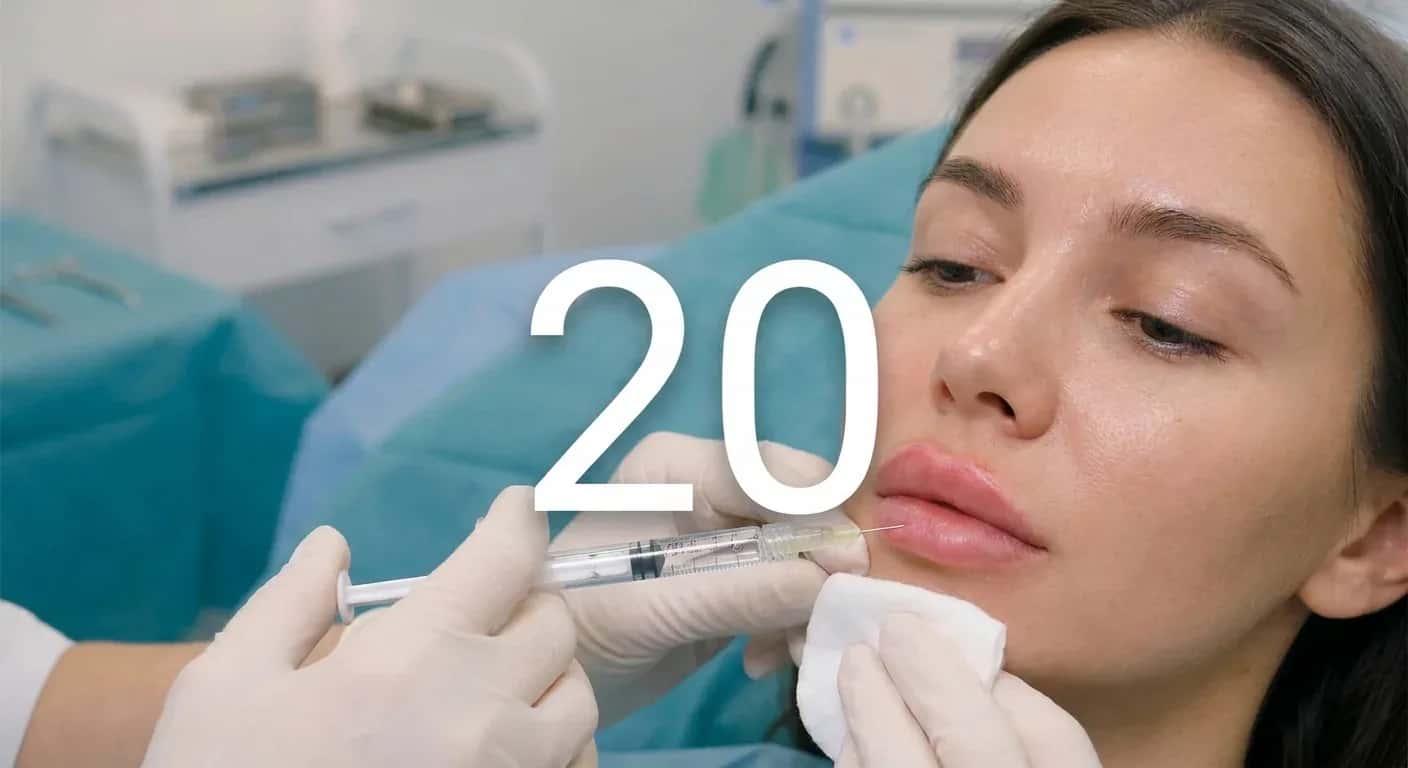
Many singers, actors, reality stars and influencers have talked openly about getting lip filler, and a growing number have also shared why they later had it dissolved. This guide looks at what 20 of these public figures said about their own lip treatments and what their experiences can teach anyone considering filler.


Filler fatigue describes the point where repeated dermal filler treatments leave a face looking heavier, puffier or less like itself, and it is pushing many people to rethink how they approach injectables. This guide explains what causes it, how to recognize an overfilled face.

Overfilled faces develop when injectable treatments add more volume than the facial anatomy can accommodate naturally, altering contours, proportions and sometimes facial expression.
Subscribe to the Medifinder newsletter and never miss our latest content.