










Lip Flip vs Lip Filler: Differences
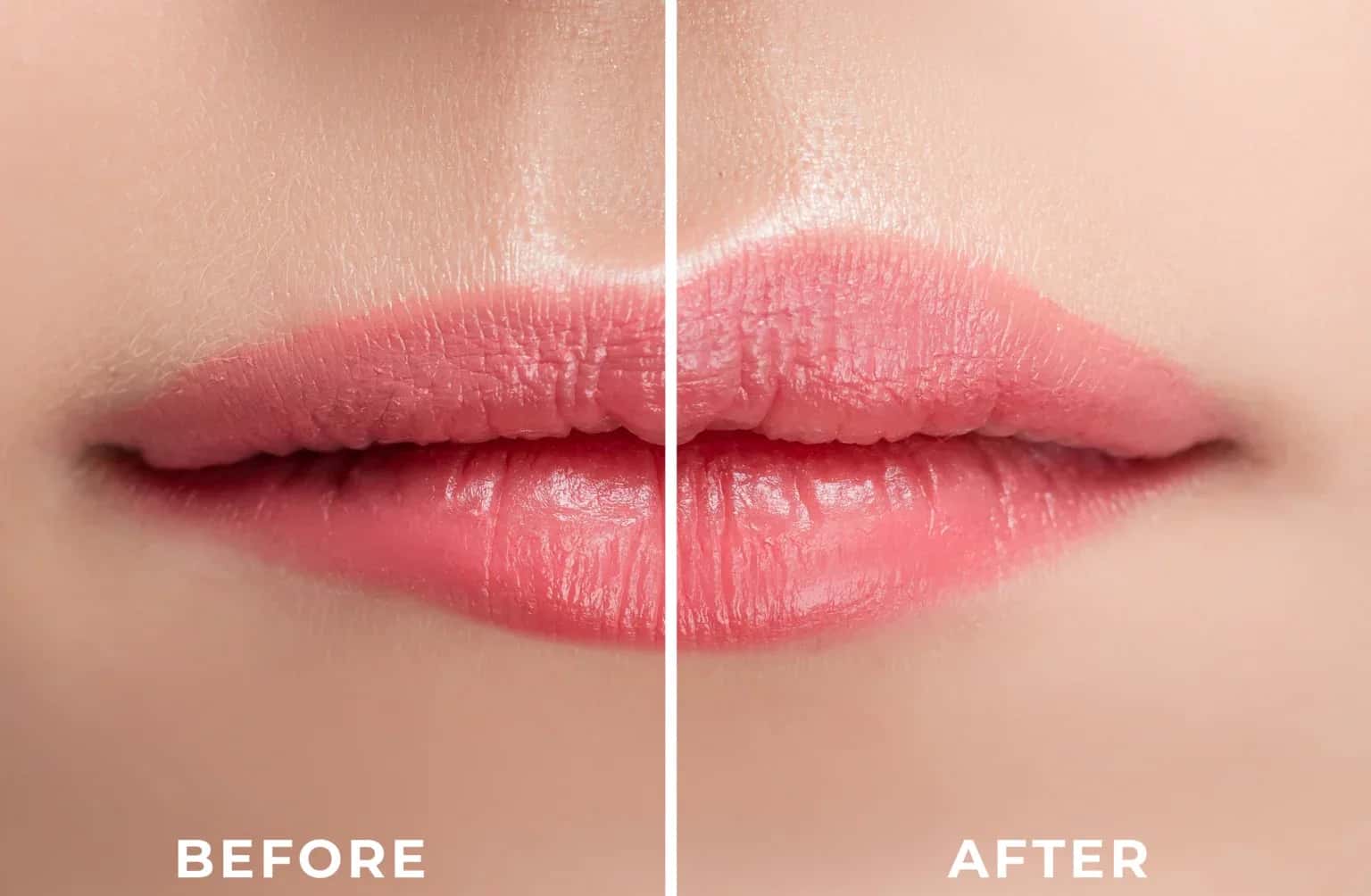
Lip flip and lip filler are injectable treatments that can make the lips appear fuller, but they achieve this effect in different ways. A lip flip relaxes selected muscles around the upper lip to reveal more of its natural shape, while lip filler adds volume and definition directly to the lip tissue.

- Last updated
- 22 reads
- 14 min read


What Is a Lip Flip?
A lip flip is a non-surgical cosmetic procedure that uses small amounts of botulinum toxin to relax selected fibers of the orbicularis oris, the circular muscle surrounding the mouth. This muscle helps control lip movements during speaking, smiling, eating and drinking.
When the upper portion of the muscle relaxes, the upper lip may roll slightly outward, revealing more of its pink surface. The result is an appearance of greater fullness without physically increasing the amount of tissue inside the lip.
This distinction makes a lip flip particularly relevant for people whose upper lip appears to disappear or turn inward when they smile. Rather than adding volume, the treatment changes how the existing lip is positioned.
Lip flips generally produce subtle results and require precise injection placement because the muscles surrounding the mouth perform essential everyday functions. Cosmetic lip flip injections are also considered an off-label use of botulinum toxin in some countries.
What Is Lip Filler?
Lip filler is an injectable cosmetic treatment designed to add physical volume, improve lip contours or adjust the balance between the upper and lower lips. Most contemporary lip augmentation procedures use hyaluronic acid, a substance that naturally occurs in the body and helps tissues retain moisture.
The filler is placed directly into selected areas of the lips, where it adds structure and increases fullness. Depending on the placement and amount used, treatment may emphasize the Cupid's bow, define the lip border or improve areas that appear uneven.
Unlike a lip flip, filler can enhance both the upper and lower lips. It may also increase forward projection, making the lips more prominent when viewed from the side.
The objective does not have to be dramatic enlargement. Small, carefully distributed amounts can produce relatively modest changes, although adding material always alters the physical volume of the treated tissue.
The product used, its placement and the natural capacity of the lips all influence the final appearance.
How Do Lip Flip and Lip Filler Change the Appearance of the Lips?
Although both treatments can make lips look fuller, the mechanism behind each result is fundamentally different.
A lip flip reduces muscle activity around the upper lip. By allowing part of the lip border to turn outward, it exposes more of the existing lip surface, particularly during certain facial expressions. Someone with an upper lip that curls inward while smiling may notice an improved appearance without receiving additional volume.
Lip filler works by occupying space within the lip tissue. Hyaluronic acid gel adds fullness and attracts water, creating changes that can be appreciated both when the mouth is relaxed and during movement.
This difference also determines what each procedure cannot achieve. A lip flip does not build a significantly larger lower lip or create substantial forward projection. Filler, meanwhile, cannot reproduce the muscle-relaxing effect of botulinum toxin.
Understanding whether the concern involves lip movement, insufficient volume or uneven contours provides a clearer basis for comparing the two treatments.
What Are the Main Differences Between Lip Flip and Lip Filler?
The main differences between lip flip and lip filler concern the substance injected, the type of enhancement created and the duration of visible results.
-
Treatment mechanism: A lip flip uses botulinum toxin to reduce selected upper-lip muscle contractions, while lip filler uses an injectable gel, usually hyaluronic acid, to add physical volume and support.
-
Appearance and volume: A lip flip creates a modest outward rotation of the upper lip without adding tissue volume. Filler can enlarge either lip, strengthen the border and change the overall proportions of the mouth.
-
Onset and longevity: Lip flip results emerge gradually over several days and often last approximately two to three months. Filler creates immediate physical fullness, although swelling temporarily affects the appearance, and its visible results commonly last six to twelve months or longer.
-
Recovery and risks: Lip flips generally involve less swelling but can interfere with certain mouth movements. Fillers more commonly cause noticeable swelling and bruising and carry additional risks associated with injecting gel into an area containing blood vessels.
Which Treatment Creates More Natural-Looking Lips?
Natural-looking results are possible with either procedure, but a lip flip and lip filler create different kinds of subtlety.
A lip flip can preserve the existing lip proportions while revealing slightly more of the upper lip. When the main concern involves inward rolling during smiling, this limited change may be sufficient to create a more balanced appearance.
Lip filler can also look understated when the added volume respects the person's facial proportions. A carefully planned enhancement may improve definition or restore modest fullness without making the lips appear excessively projected.
An unnatural appearance is not an unavoidable consequence of filler, just as a lip flip does not guarantee perfect facial movement. Excessive filler can distort the lip border, while poorly positioned botulinum toxin may make the mouth feel weak or affect the smile.
The most convincing results come from identifying the actual reason the lips appear thin rather than assuming that one technique always looks more natural.
Can a Lip Flip Improve a Thin Upper Lip or Gummy Smile?
A lip flip may improve the appearance of a thin upper lip when enough natural lip tissue is present but becomes less visible during facial expressions. Its effect is usually most noticeable when the upper lip curls inward or appears to narrow considerably during smiling.
By relaxing selected muscle fibers, treatment can allow more of the upper lip to remain visible. However, people with very little underlying lip volume may see only a small improvement because the procedure cannot create additional tissue.
A gummy smile presents a related but distinct concern. Excessive gum visibility can result from several anatomical factors, including upper-lip movement, dental positioning and jaw structure.
Botulinum toxin may reduce gum exposure when excessive elevation of the upper lip contributes to the smile, but the injection targets used for gummy smile treatment are not necessarily identical to those used for a standard lip flip.
Consequently, the two procedures should not be treated as interchangeable simply because both involve the upper lip.
Which Treatment Is Better for Lip Shape and Asymmetry?
Lip filler generally offers greater flexibility for adjusting shape because the injected material can be placed in selected regions to improve volume distribution and contour.
For example, a relatively thin upper lip may benefit from carefully distributed filler that improves its relationship with the lower lip. Filler can also emphasize the Cupid's bow or soften minor differences between the right and left sides.
A lip flip has a more limited shaping ability. Its primary effect comes from reducing muscle tension rather than placing structural support into a particular area.
When asymmetry results from differences in muscle movement, botulinum toxin may help in selected circumstances. However, asymmetry associated with lip volume, dental positioning or skeletal anatomy will not necessarily improve with a standard lip flip.
Perfect symmetry is rarely achievable or even desirable, since natural faces contain small differences between sides.
A balanced result should improve the overall relationship between the lips rather than attempt to remove every natural variation.
Who Is a Suitable Candidate for Lip Flip or Lip Filler?
The choice between lip flip and lip filler should reflect the appearance of the lips at rest and during movement, alongside the type of enhancement the person wants.
-
People whose upper lip curls inward when smiling: A lip flip may reveal more of the natural upper lip when excessive muscle movement causes it to appear unusually thin during expressions.
-
People seeking greater lip volume: Lip filler is generally more suitable when the goal involves noticeable enlargement, improved forward projection or additional fullness in both lips.
-
Adults wanting more defined lip contours: Filler may offer greater control over the Cupid's bow, lip border and selected areas of mild volume-related asymmetry.
-
People considering a restrained initial change: A lip flip may appeal to those who prefer an enhancement without added gel, while a conservative amount of filler may suit someone who wants subtle but genuine volume.
Neither treatment is appropriate for every person. Active infections around the mouth, relevant medical conditions, previous reactions to injectable products and certain medications must be considered before proceeding.
What Happens During Each Lip Enhancement Procedure?
Both procedures begin with an assessment of the lips, facial proportions and the person's preferred result. The mouth should be observed at rest and during smiling because lip movement can reveal concerns that remain less noticeable in a relaxed expression.
During a lip flip, a small amount of botulinum toxin is injected into carefully selected points around the upper lip. The procedure usually requires only a few injections and does not involve placing filler inside the lip tissue.
Lip filler treatment involves injecting hyaluronic acid gel directly into chosen areas of the lips using a needle or cannula. Numbing products may be used to improve comfort, and the practitioner evaluates the developing shape while distributing the material.
Both treatments are typically completed without surgery or general anesthesia.
Lip filler commonly produces more immediate swelling because the tissue receives both an injected substance and the physical effects of needle or cannula placement.
When Do Lip Flip and Lip Filler Results Become Visible?
Lip flip results take time to emerge because botulinum toxin must begin reducing the activity of the treated muscles. Initial changes may become apparent within three to seven days, with the full effect generally easier to assess after approximately one to two weeks.
Lip filler produces an immediate increase in volume, but the initial appearance is not necessarily the finished result. Swelling can make the lips temporarily larger, firmer or less symmetrical than they will appear after recovery.
Much of the early swelling typically improves during the first week, while the contour may continue settling over the following weeks.
The article on how long lip filler takes to settle explains why early photographs should not be used to judge the final shape.
Patience is particularly important when comparing the two procedures. One depends on a gradually developing muscle effect, while the other begins with immediate volume followed by temporary changes in tissue swelling.
How Long Does Lip Flip Last Compared With Lip Filler?
A lip flip usually has a shorter cosmetic lifespan than hyaluronic acid lip filler because botulinum toxin temporarily changes muscle activity rather than leaving volume-enhancing material within the tissue.
Visible lip flip results often last approximately two to three months, although some people notice effects for a shorter or longer period. As normal muscle function returns, the upper lip gradually resumes its original movement.
Hyaluronic acid filler generally remains visible for longer, commonly around six to twelve months. Certain formulations or individual responses can extend the apparent duration beyond this period.
Filler does not necessarily disappear at the exact moment the visible enhancement fades. Some material may remain even after the lips look closer to their original size.
These differences matter for maintenance planning. A lip flip may require more frequent appointments, while filler tends to provide a longer interval between treatments.
Repeated injections of either product should be based on reassessment rather than an automatic schedule.
Which Treatment Involves More Pain and Recovery?
A lip flip generally involves a small number of injections around the upper lip and typically causes limited temporary redness, tenderness or minor bruising. Because no gel is introduced to enlarge the lip tissue, substantial swelling is less common.
Lip filler involves a greater degree of physical manipulation within the lips, which contain numerous sensitive nerve endings and blood vessels. Even when numbing is used, temporary tenderness and pressure may be more noticeable.
Swelling after filler treatment often peaks during the first few days and gradually improves. Bruising and mild firmness can also occur, making it sensible to avoid scheduling treatment immediately before an important event.
A lip flip may allow a quicker return to an unchanged outward appearance, but changes in mouth function can become noticeable as the toxin takes effect.
Recovery should therefore be assessed in terms of both visible swelling and everyday activities such as drinking, speaking and eating.
What Are the Risks and Side Effects of Lip Flip and Lip Filler?
Both procedures involve medical injections, but the possible complications differ because one reduces muscle activity while the other introduces material into the lips.
-
Lip flip side effects: Temporary bruising, tenderness and changes in lip movement may occur. Excessive relaxation can make it difficult to purse the lips, drink through a straw, pronounce certain sounds or maintain a firm seal around the mouth, sometimes causing drooling.
-
Common lip filler reactions: Swelling, bruising, discomfort and temporary unevenness are possible after injection. Less common problems include persistent lumps, infection, filler migration and unwanted changes to the lip contour.
-
Serious filler complications: Accidental injection into or compression of a blood vessel can interrupt circulation and damage tissue. Severe or worsening pain, unusual blanching, dusky discoloration or visual disturbances require immediate emergency assessment.
-
Other medical considerations: Botulinum toxin can rarely produce serious effects beyond the treated area, including swallowing or breathing difficulties. Both treatments require assessment of medical history, and elective cosmetic injections are generally avoided during pregnancy or breastfeeding because safety evidence is insufficient.
Can Lip Filler Be Dissolved or a Lip Flip Reversed?
Reversibility is an important difference between the two treatments.
Hyaluronic acid fillers can often be reduced or dissolved using hyaluronidase, an enzyme administered by a qualified medical professional. This may be considered when filler creates unwanted volume, irregular contours or certain complications.
However, dissolving is a medical procedure with its own risks and does not guarantee that every concern can be corrected immediately. In some circumstances, more than one assessment or treatment may be necessary.
Filler also undergoes gradual natural breakdown. The discussion of whether lip filler dissolves on its own helps explain why visible fullness can decrease before every trace of injected material has disappeared.
A lip flip cannot be reversed with hyaluronidase because botulinum toxin is not a filler. If the result feels uncomfortable or affects movement, the effect generally needs to diminish naturally over time.
What Should You Avoid After Lip Flip or Lip Filler?
Appropriate aftercare helps reduce avoidable irritation while the injection sites recover. Although both procedures allow a relatively quick return to daily activities, their early effects require slightly different considerations.
After a lip flip, avoid forcefully rubbing the treated region immediately after injections. It is also sensible to wait until the effect has developed before deciding whether the upper lip requires further treatment.
Following lip filler, avoid unnecessary pressure, aggressive massage and repeated manipulation of swollen tissue unless a medical professional specifically recommends an intervention. Heavy exercise and activities that increase swelling may need to be limited temporarily.
Patients with a history of cold sores should discuss this before filler treatment because injections around the lips can occasionally trigger an outbreak.
Unexpected symptoms should never be managed solely through general aftercare advice. Increasing pain, unusual discoloration or signs of impaired circulation after filler require immediate medical attention rather than observation at home.
Can Lip Flip and Lip Filler Be Combined?
Lip flip and lip filler can sometimes complement each other because they address different aspects of lip appearance.
Filler may add modest volume or definition, while a lip flip can change how the upper lip moves during facial expressions. A person who wants slightly fuller lips but also experiences inward rolling of the upper lip when smiling may have concerns that involve both tissue volume and muscle activity.
However, combining treatments is not automatically better than choosing one. Excessive volume alongside excessive muscle relaxation could create an appearance or level of mouth movement that feels unnatural.
The order and timing of procedures also deserve consideration. Allowing the initial effects to develop before adding further treatment can make the outcome easier to evaluate.
Using both products introduces the potential risks of each procedure, so combination treatment requires careful anatomical assessment and informed consent.
The aim should remain a proportionate improvement rather than adding interventions simply because they can be performed together.
How Much Does Lip Flip Cost Compared With Lip Filler?
A lip flip commonly has a lower upfront cost than lip filler because it uses a relatively small amount of botulinum toxin and generally requires fewer injections.
Lip filler pricing usually reflects the product selected, the volume administered and the complexity of the intended enhancement. Treatments designed to improve both upper and lower lip fullness may involve a larger quantity of material than a subtle contour adjustment.
The initial price, however, does not tell the whole story. Lip flip results tend to fade sooner, potentially requiring more frequent maintenance to preserve the effect.
Lip filler usually costs more per appointment but provides a longer-lasting visible enhancement. This can make the difference in annual expenditure less straightforward than the first treatment price suggests.
Additional expenses may arise from follow-up assessments, adjustments or managing complications.
When comparing costs, the relevant question is not simply which treatment is cheaper, but what each procedure can achieve and how often it may need to be repeated.
How Should You Choose Between Lip Flip and Lip Filler?
Choosing between lip flip and lip filler begins with identifying whether the main concern is lip volume, upper-lip movement or the overall shape of the mouth.
If the upper lip already has reasonable fullness but becomes less visible when smiling, a lip flip may offer the subtle adjustment being sought. Its effect is limited, temporary and primarily related to muscle movement.
When the lips appear thin both at rest and during smiling, filler may provide a more noticeable improvement because it adds physical volume. It also offers greater flexibility for defining contours and adjusting upper-to-lower lip proportions.
The decision should also account for recovery, potential changes in mouth function, maintenance requirements and the different risks associated with each substance.
A qualified medical professional should assess lip anatomy, review relevant medical conditions and explain which changes can realistically be achieved without compromising normal function.
Ultimately, lip flip and lip filler are not interchangeable treatments. The better choice is the one that addresses the specific reason the lips appear thin while preserving comfortable movement and balanced facial proportions.
- Last updated
- Language
- English
How did you find this article?
Many singers, actors, reality stars and influencers have talked openly about getting lip filler, and a growing number have also shared why they later had it dissolved. This guide looks at what 20 of these public figures said about their own lip treatments and what their experiences can teach anyone considering filler.

Filler fatigue describes the point where repeated dermal filler treatments leave a face looking heavier, puffier or less like itself, and it is pushing many people to rethink how they approach injectables. This guide explains what causes it, how to recognize an overfilled face.

Overfilled faces develop when injectable treatments add more volume than the facial anatomy can accommodate naturally, altering contours, proportions and sometimes facial expression.
Subscribe to the Medifinder newsletter and never miss our latest content.