










Does a Dermaroller Help Hair Grow?
This guide explains whether a dermaroller can support hair growth, how scalp microneedling works, who may benefit, and what results can realistically be expected.

- Last updated
- 37 reads
- 10 min read
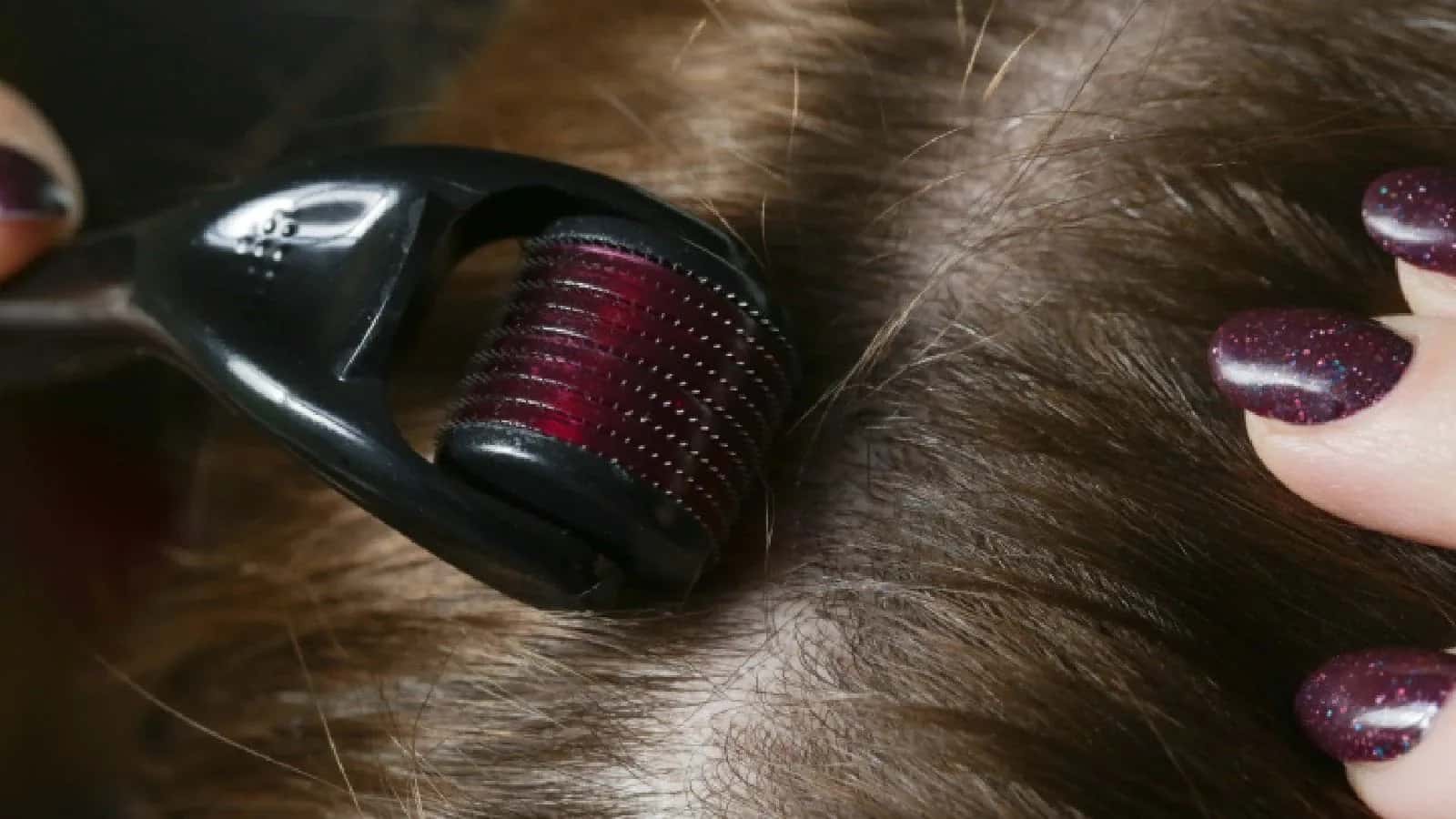


What Is a Dermaroller for Hair?
A dermaroller is a handheld microneedling device designed to create tiny controlled punctures across the scalp surface.
The roller contains multiple small needles that pass over the skin and trigger a localized healing response. This process may support signaling around existing hair follicles and improve the scalp environment. Dermarolling is commonly discussed as an additional method for people with thinning hair, especially pattern hair loss. It is not a replacement for every established hair treatment. The main purpose is to stimulate the scalp while preserving the surrounding tissue and existing follicles.
Can a Dermaroller Actually Grow Hair?
A dermaroller can support hair growth in some people, particularly when living but weakened follicles are still present in the thinning area.
Microneedling may encourage biological signals linked to tissue repair and follicle activity. This can help miniaturized hairs become stronger in suitable cases. However, a dermaroller cannot create entirely new hair follicles where follicles have permanently disappeared. Long-standing smooth bald areas therefore respond less predictably. The best potential is usually found in regions containing fine, weak, or miniaturized hairs. Results also require time because hair follicles respond through gradual growth cycles rather than immediate visible change.
How Does a Dermaroller Support Hair Growth?
A dermaroller may support hair growth by creating controlled micro-injuries that activate repair processes around the scalp and existing follicles.
The healing response can increase local signaling involved in tissue renewal. Microneedling may also influence pathways associated with follicle activity and the growth phase of hair. Another benefit is increased temporary skin permeability, which can affect how topical products are absorbed. However, stronger absorption is not always safer. The main objective is controlled stimulation rather than causing visible injury. Excessive pressure, frequent treatment, or long needles can turn a potentially useful technique into unnecessary scalp trauma.
Does a Dermaroller Work for Male Pattern Hair Loss?
Dermarolling may help support hair density in male pattern hair loss when miniaturized follicles remain active within thinning areas.
Male pattern hair loss gradually shortens the growth phase and reduces follicle size in genetically sensitive regions. Microneedling does not remove the underlying androgen sensitivity. Instead, it may provide additional stimulation around weakened follicles. This makes it more suitable as a supportive strategy than a complete standalone solution. Early thinning areas generally offer more biological potential than long-standing bald zones. Consistent progress should be judged over months rather than expecting rapid hairline restoration after several sessions.
Does a Dermaroller Work for Female Pattern Hair Loss?
Dermarolling may support hair growth in female pattern hair loss when diffuse thinning involves follicles that are weakened but still functioning.
Female pattern thinning often affects the central scalp and part line rather than creating completely bald areas. This distribution can leave many miniaturized follicles available for stimulation. Microneedling may therefore be useful as part of a broader hair-loss routine. However, diffuse shedding can also have nutritional, hormonal, medical, or stress-related causes. A dermaroller does not correct those underlying triggers. Its potential benefit is mainly linked to stimulating existing follicles within appropriate thinning patterns.
Can a Dermaroller Regrow Hair on Bald Areas?
A dermaroller is less likely to regrow meaningful hair on long-standing bald areas where functioning follicles are no longer present.
Microneedling works by influencing the tissue and follicles already located beneath the scalp. It does not manufacture new follicular units. Areas that still contain fine, short, or barely visible hairs may have greater potential. Completely smooth regions that have remained bald for many years tend to respond less strongly. This distinction is important because visible baldness can represent different stages of follicle loss. Dermarolling is therefore more realistic for thinning and miniaturization than for recreating hair in areas with advanced permanent loss.
Can a Dermaroller Make Thin Hair Thicker?
A dermaroller may help some thin hairs become stronger and more visible when the follicles are miniaturized rather than permanently inactive.
The improvement usually develops gradually as follicles move through repeated growth cycles. Hair may first appear slightly darker, longer, or more noticeable before density changes become obvious. Not every thin strand will respond in the same way. Genetic sensitivity, scalp health, and the stage of miniaturization all influence the result. Microneedling should therefore be judged by overall density and strand quality over time. A single thicker hair does not indicate complete reversal of the underlying thinning process.
How Long Does a Dermaroller Take to Show Hair Growth?
Dermarolling usually requires several months before meaningful hair growth changes can be evaluated.
Hair follicles move slowly through growth, transition, and resting phases. This means visible improvement does not occur immediately after scalp stimulation. Early changes may include reduced appearance of thinning or slightly stronger existing hairs. More noticeable density often takes longer. Monthly photographs taken under similar lighting can help track progress objectively. Daily mirror checks are less useful because small changes are difficult to detect. A very short trial of only several weeks is usually insufficient for judging whether microneedling is providing a meaningful benefit.
What Needle Length Is Used for Hair Growth?
Dermaroller needle length should be selected cautiously because longer needles create deeper scalp injury and increase the risk of bleeding, irritation, and infection.
Shorter needles are generally used for superficial scalp stimulation and product-related routines. Longer needles reach deeper tissue and require more recovery time. Home users should avoid assuming that deeper always means more effective. Aggressive microneedling can inflame the scalp and damage the skin barrier. Needle length should therefore match the intended purpose rather than being chosen for maximum penetration. Excessive depth can reduce consistency by making each session painful and difficult to repeat safely.
How Often Should You Use a Dermaroller on the Scalp?
Dermarolling frequency should allow the scalp enough time to recover between sessions rather than repeatedly injuring the same area.
The appropriate interval depends on needle length and how strongly the scalp reacts. Shorter needles generally require less recovery than deeper microneedling. Redness, tenderness, or irritation should settle before another session is performed. Rolling over an inflamed scalp can prolong irritation and increase infection risk. More frequent use does not automatically produce faster hair growth. Consistency combined with adequate healing is more useful than aggressive treatment. The scalp should feel normal again before another deeper session is considered.
Can You Use a Dermaroller With Minoxidil?
Dermarolling and minoxidil can be used within the same hair-growth routine, and the combination may provide stronger stimulation than either approach alone.
Microneedling temporarily changes the skin barrier and may increase topical absorption. This is one reason the combination attracts interest. However, increased absorption can also increase irritation and systemic exposure. The two treatments therefore need sensible timing rather than immediate layering after aggressive microneedling. The scalp should not be excessively red, bleeding, or damaged when minoxidil is applied. A combined routine should prioritize tolerability because persistent irritation can make long-term treatment difficult to maintain.
Should Minoxidil Be Applied Immediately After Dermarolling?
Minoxidil should generally not be applied immediately after deeper dermarolling because the temporary skin openings can increase irritation and absorption.
Applying a topical treatment onto freshly microneedled skin may cause stronger burning, redness, or discomfort. It can also increase the amount of medication entering the bloodstream. The risk becomes greater when longer needles have been used. Allowing the scalp barrier time to recover reduces unnecessary exposure. The exact waiting period depends on the intensity of microneedling and product instructions. The main principle is simple: visible irritation and fresh punctures should not be treated as an opportunity for maximum product absorption.
Can a Dermaroller Cause Hair Shedding?
Dermarolling can sometimes coincide with temporary shedding, but significant new hair loss should not automatically be considered a normal response.
Some hairs may already be near the end of their natural growth cycle when microneedling begins. Existing hair-loss conditions can also continue during treatment. Aggressive rolling may increase breakage if the device repeatedly catches longer hair. Excessive inflammation can create another source of stress for the scalp. Mild short-term shedding may occur, but persistent worsening deserves attention. The technique should support the scalp rather than repeatedly leaving it sore, inflamed, or visibly damaged.
Can a Dermaroller Damage Hair Follicles?
A dermaroller can damage the scalp when used too aggressively, although correct superficial microneedling is designed to avoid destroying hair follicles.
Problems are more likely with excessive needle length, heavy pressure, repeated passes, or very frequent sessions. Improper technique can cause bleeding, prolonged inflammation, and unnecessary tissue injury. Rolling directly through dense long hair can also pull or break strands. The device should move across exposed scalp rather than drag through tangled hair. More pain does not mean better follicle stimulation. Controlled treatment is the goal because the benefit comes from a measured healing response, not from severe injury.
What Are the Side Effects of Dermarolling the Scalp?
The most common dermaroller side effects are temporary redness, tenderness, dryness, mild swelling, and sensitivity after microneedling.
Other possible effects include:
-
Mild pinpoint bleeding
-
Scalp itching
-
Temporary flaking
-
Burning or stinging
-
Hair breakage from poor technique
-
Follicle irritation
-
Infection if hygiene is poor
-
Increased product sensitivity
Most mild reactions should settle as the scalp heals. Persistent swelling, pus, severe pain, spreading redness, or significant crusting should not be treated as ordinary recovery. These symptoms can indicate infection or excessive scalp injury.
Can a Dermaroller Cause Scalp Infection?
A dermaroller can cause scalp infection when needles are contaminated or used on skin that is already damaged, inflamed, or infected.
Microneedling temporarily creates small openings in the skin barrier. This makes cleanliness essential before and after each session. A dirty roller can transfer microorganisms directly onto vulnerable skin. Sharing a dermaroller also creates an unnecessary infection risk. The device should never be rolled across active folliculitis, open wounds, or significant dermatitis. Increasing redness, warmth, swelling, pain, pus, or fever after treatment requires prompt medical evaluation rather than another microneedling session.
Can You Use a Dermaroller on a Sensitive Scalp?
A dermaroller can be difficult to tolerate on a sensitive scalp, especially when redness, eczema, dermatitis, or active irritation is already present.
Microneedling intentionally stimulates the skin, so an already reactive scalp may respond with stronger burning or inflammation. Starting aggressively can worsen the existing barrier problem. Fragranced or alcohol-based products applied afterward may increase discomfort further. Sensitive scalps need a more cautious approach, with close attention to recovery between sessions. Active scalp disease should not be repeatedly microneedled. The skin should first be calm enough to tolerate controlled stimulation without developing prolonged inflammation.
Does a Dermaroller Work Better Than Hair Serums Alone?
A dermaroller may provide more stimulation than cosmetic hair serums alone, but its value depends on the cause of thinning and the active treatment being used.
Many hair serums mainly support scalp conditioning or provide cosmetic ingredients with limited evidence for substantial regrowth. Microneedling adds a physical stimulation mechanism that may influence follicle activity. However, combining two weak approaches does not automatically create strong results. The underlying hair-loss pattern remains important. Proven hair-growth treatments generally have a more established role than cosmetic serums. Dermarolling is best viewed as a supportive method rather than a replacement for every evidence-based option.
Who Should Avoid Using a Dermaroller?
Dermarolling should be avoided when the scalp has active infection, open wounds, severe inflammation, uncontrolled dermatitis, or another condition that impairs safe healing.
People using treatments that affect bleeding or wound healing also need additional caution. A dermaroller should not be used over painful folliculitis or infected lesions. The same applies to recently injured or severely sunburned skin. Good candidates should have an intact scalp barrier between sessions. Microneedling works by triggering controlled repair, so the skin must be capable of healing normally. Treating already compromised tissue can turn a cosmetic procedure into a source of prolonged irritation.
How Can You Tell If Dermarolling Is Working?
Dermarolling is working when consistent photographs show gradual improvements in density, hair thickness, or scalp coverage over several months.
Progress should be measured under the same lighting, hair length, angle, and styling conditions. Early changes can be subtle, especially in diffuse thinning. Useful signs include stronger short hairs, reduced scalp visibility, and better coverage around previously weak areas. Hairline changes should also be judged slowly because growth cycles require time. If the scalp is becoming increasingly irritated while density remains unchanged, more frequent treatment is unlikely to solve the problem. Improvement should involve healthier growth, not simply stronger skin reactions.
Is a Dermaroller Worth Using for Hair Growth?
A dermaroller can be worth using as a supportive hair-growth method when thinning follicles remain active and microneedling can be performed safely and consistently.
Its strongest role is usually in early or moderate thinning rather than completely bald areas. It may also complement established topical treatments when timing and scalp tolerance are managed carefully. Expectations should remain realistic because dermarolling cannot create new follicles or reverse every cause of hair loss. Results develop gradually and depend on the underlying condition. The technique is most useful when it becomes part of a sensible long-term strategy rather than an aggressive attempt to force rapid regrowth.
- Last updated
- Language
- English
How did you find this article?
This guide explains issues associated with Procapil use, such as scalp irritation, dryness, itching, redness, concerns about hair shedding, allergic reactions, and long-term use.

This guide explains how Nizoral shampoo works, what it is used for, how often it can be applied, and what to expect from ketoconazole scalp care.
This guide explains how minoxidil beard serum may affect facial hair growth, including expected results, application, side effects, shedding, patchy areas, and long-term use.
Subscribe to the Medifinder newsletter and never miss our latest content.