










Cicatricial Alopecia: Symptoms, Causes, Diagnosis and Treatment
This guide explains cicatricial alopecia, including its symptoms, causes, types, diagnosis, permanent hair loss risk, treatment options, and relationship with hair transplantation.

- Last updated
- 38 reads
- 8 min read


What Is Cicatricial Alopecia?
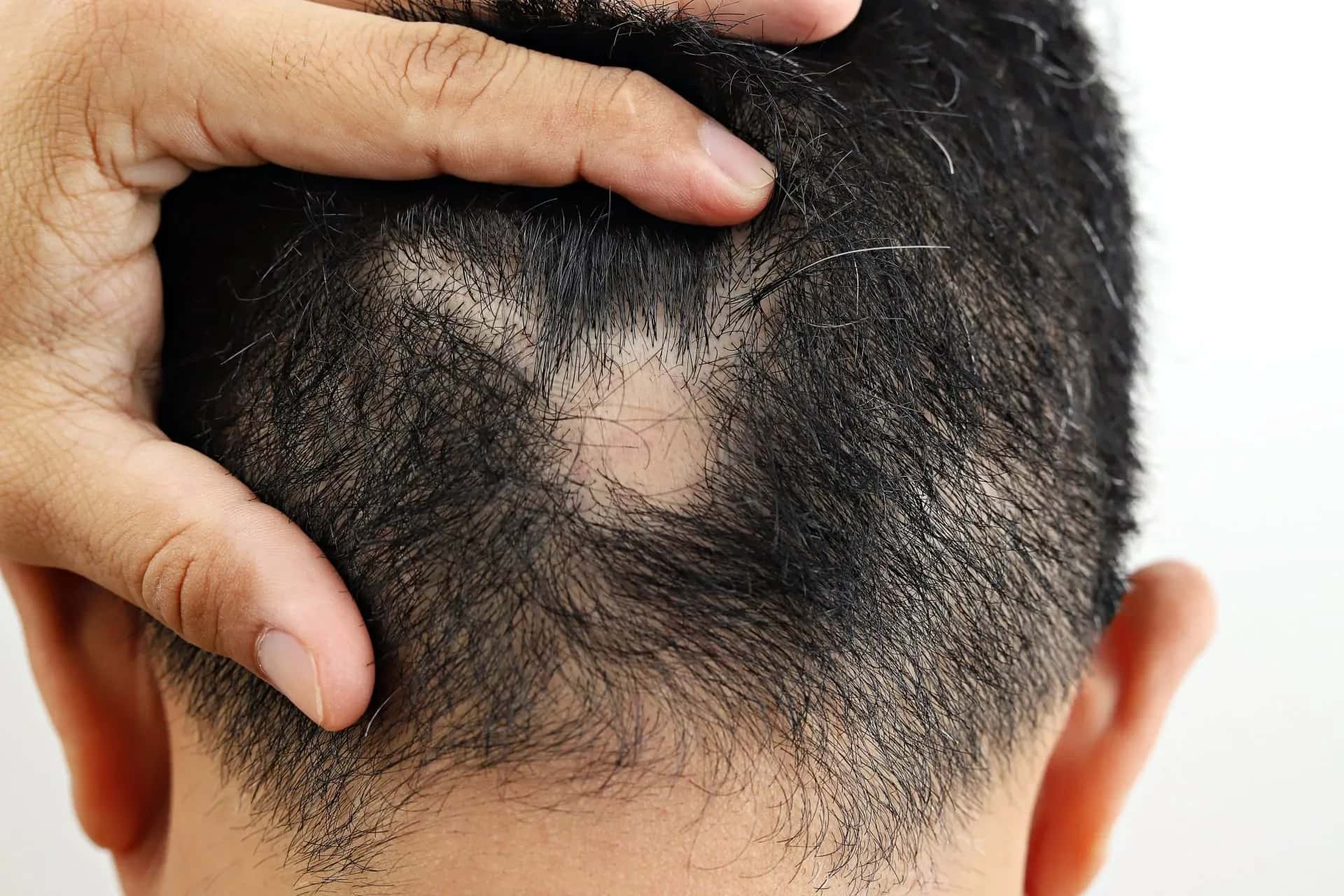
Cicatricial alopecia is a group of hair loss disorders in which inflammation permanently damages hair follicles and replaces them with scar tissue.
The condition is also known as scarring alopecia. Unlike many non-scarring forms of hair loss, destroyed follicles cannot normally produce new hairs.
Cicatricial alopecia can affect small isolated areas or gradually involve larger sections of the scalp.
Some forms primarily attack the hair follicle itself. Others develop after burns, injuries, infections, or other destructive processes affecting the skin.
Early recognition is important because treatment focuses on protecting follicles that remain intact rather than restoring follicles already destroyed by scarring.
What Are the Symptoms of Cicatricial Alopecia?
Cicatricial alopecia can cause permanent patches of hair loss alongside redness, scaling, itching, tenderness, burning, or changes in the surface of the scalp.
Common signs can include:
-
Smooth areas where normal follicular openings are difficult to see
-
Gradually expanding patches of permanent hair loss
-
Redness surrounding individual hair follicles
-
Scaling or crusting around remaining hairs
-
Persistent scalp itching or burning
-
Tenderness or discomfort in active areas
-
Pustules or drainage in some inflammatory forms
-
Areas of shiny or scar-like scalp
-
Broken hairs around the margins of active disease
Symptoms depend on the specific type and may range from almost unnoticed progression to clearly inflamed scalp lesions.
What Causes Cicatricial Alopecia?
Cicatricial alopecia develops when inflammation, injury, infection, or another destructive process permanently damages the structures required for normal hair growth.
In primary cicatricial alopecia, inflammation directly targets important parts of the hair follicle. Damage to follicular stem cells can prevent the follicle from regenerating.
The exact trigger behind this immune response is not fully understood in several primary forms.
Secondary cicatricial alopecia develops when follicles are destroyed as part of another process affecting the skin.
Burns, physical trauma, severe infections, radiation, and certain inflammatory disorders can produce this pattern.
The underlying cause therefore differs considerably between primary and secondary scarring alopecia.
What Is the Difference Between Primary and Secondary Cicatricial Alopecia?
Primary cicatricial alopecia directly targets hair follicles, while secondary cicatricial alopecia destroys follicles because surrounding skin has been damaged by another process.
In primary forms, inflammatory cells attack structures within or around the follicular unit.
Examples include lichen planopilaris, frontal fibrosing alopecia, central centrifugal cicatricial alopecia, and folliculitis decalvans.
Secondary scarring can develop after burns, traumatic injuries, severe infections, radiation, or other conditions that permanently damage hair-bearing skin.
Both groups can lead to permanent hair loss.
However, identifying which category is responsible matters because disease behavior, treatment goals, progression, and suitability for future hair restoration can differ substantially.
What Are the Main Types of Primary Cicatricial Alopecia?
Primary cicatricial alopecia includes several inflammatory disorders that damage follicles through different patterns of immune activity.
Lichen planopilaris can produce irregular patches with perifollicular redness and scaling.
Frontal fibrosing alopecia usually causes progressive recession around the frontal and temporal hairline.
Central centrifugal cicatricial alopecia commonly begins near the central scalp and gradually expands outward.
Folliculitis decalvans can involve pustules, crusting, and groups of hairs emerging together.
Dissecting cellulitis may produce painful inflammatory nodules and draining areas.
These conditions share permanent follicular destruction, but their clinical appearance, progression pattern, and treatment requirements are not identical.
How Does Cicatricial Alopecia Cause Permanent Hair Loss?
Cicatricial alopecia causes permanent hair loss when inflammation destroys the follicular structures responsible for generating and renewing new hair.
An important target in several primary forms is the follicular stem cell region.
Once these regenerative cells are irreversibly damaged, the follicle loses its ability to rebuild itself normally.
Scar tissue gradually replaces the original follicular structures.
This explains why the affected skin may eventually appear smooth or shiny without normal follicular openings.
Treatment can often reduce inflammation and slow additional damage, but it cannot reliably recreate a follicle that has already been replaced by scar tissue.
Protecting remaining follicles is therefore the central objective of early management.
What Does Cicatricial Alopecia Look Like?
Cicatricial alopecia commonly appears as areas of reduced hair density where normal follicular openings gradually disappear and the scalp develops a smoother surface.
The exact appearance depends on the underlying type.
Some forms create irregular patches surrounded by redness and scaling. Others produce a widening frontal hairline or expanding thinning from the center of the scalp.
Inflammatory types may include pustules, crusts, tenderness, or visible irritation around remaining follicles.
Long-standing areas can become pale, shiny, or scar-like.
The edge of the affected area is particularly important because signs of active inflammation may be more visible there while central regions already contain established scar tissue.
How Is Cicatricial Alopecia Diagnosed?
Cicatricial alopecia is diagnosed by combining the pattern of hair loss with scalp examination, magnified assessment, medical history, and sometimes a scalp biopsy.
The absence of normal follicular openings can strongly suggest established scarring.
Magnified scalp examination can reveal inflammation, scaling, altered follicular structures, broken hairs, pustules, or other features that help distinguish different forms.
The distribution of hair loss also provides useful information.
Frontal recession, central scalp involvement, or irregular inflammatory patches may point toward different diagnoses.
Because several types can look similar during early stages, physical appearance alone may not always identify the exact disease.
Accurate classification helps determine which treatment approach is appropriate.
Is a Scalp Biopsy Needed for Cicatricial Alopecia?
A scalp biopsy is often useful when the exact type of cicatricial alopecia cannot be identified confidently from examination alone.
A small tissue sample allows the follicle and surrounding inflammatory pattern to be examined microscopically.
The location of the biopsy matters because completely scarred areas may contain little active disease information.
Sampling near an active margin can reveal which inflammatory cells are involved and where follicular damage is occurring.
These findings can help separate lymphocytic, neutrophilic, mixed, and secondary forms of scarring alopecia.
A biopsy is not simply used to confirm hair loss.
Its main value is identifying the underlying process so treatment can target ongoing follicular destruction more appropriately.
Can Hair Grow Back After Cicatricial Alopecia?
Hair generally cannot regrow from follicles permanently destroyed by cicatricial alopecia, although hairs can remain or recover where follicular damage is incomplete.
This distinction makes early treatment especially important.
Active inflammation can exist around follicles that have not yet been completely destroyed.
Reducing that inflammation may preserve existing hairs and prevent the affected area from expanding.
Hair appearing within an area does not necessarily mean every follicle remains healthy.
Some damaged follicles can produce finer or weaker hairs before becoming completely inactive.
Once scar tissue replaces the follicular structure, spontaneous regrowth is unlikely.
Management therefore focuses primarily on preserving viable follicles and stopping additional permanent loss rather than reversing established scarring.
How Is Cicatricial Alopecia Treated?
Cicatricial alopecia is treated by controlling the underlying inflammatory or destructive process before additional hair follicles become permanently damaged.
Treatment depends on the specific type of scarring alopecia.
Primary inflammatory forms may require topical, injected, or systemic anti-inflammatory treatment.
Some conditions also respond to medications that influence immune activity.
Neutrophilic disorders may require antimicrobial and anti-inflammatory approaches when pustules and bacterial involvement contribute to the disease pattern.
Secondary cicatricial alopecia requires management of its underlying cause when that process remains active.
Treatment usually cannot regenerate follicles already replaced by scar tissue.
Its main purpose is stopping or slowing progression while preserving unaffected and partially affected follicles.
Can Cicatricial Alopecia Be Stopped?
Cicatricial alopecia can often be stabilized or slowed when the specific condition is identified early and active inflammation responds to treatment.
Successful control means preventing additional follicles from being destroyed.
It does not mean that established bald areas will automatically regain their original hair density.
Disease activity can be monitored through symptoms and changes around affected follicles.
Reduced redness, scaling, itching, tenderness, pustules, and expansion can indicate greater stability.
Some forms may remain inactive for long periods, while others can follow a more unpredictable course.
Because permanent follicular destruction cannot be reversed easily, early control remains important even when the initial area of hair loss appears relatively small.
Can Cicatricial Alopecia Return After Treatment?
Cicatricial alopecia can become active again after a period of stability because several primary forms follow a chronic or relapsing inflammatory course.
Treatment can suppress disease activity without permanently eliminating the underlying tendency in every case.
Recurrence may appear as new redness, scaling, itching, tenderness, pustules, or gradual enlargement of the hair loss area.
Changes can sometimes begin subtly around remaining follicles.
Long periods without obvious symptoms therefore do not always prove that the condition can never return.
Monitoring is particularly important before considering procedures that involve the affected scalp.
A stable appearance over time provides more useful information than a short period without itching or visible inflammation.
Can You Have a Hair Transplant With Cicatricial Alopecia?
Hair transplantation may be considered for selected cases of cicatricial alopecia when the disease is inactive and sufficient healthy donor hair is available.
The main challenge is the recipient tissue.
Scarred skin can have altered blood supply and tissue characteristics, potentially reducing graft survival compared with non-scarring hair loss.
Primary inflammatory cicatricial alopecia also carries the possibility of renewed disease activity after transplantation.
Published outcomes therefore vary considerably between different conditions.
Hair transplantation does not treat the underlying inflammatory disease.
Its purpose is cosmetic restoration after stability has been established.
Active redness, scaling, symptoms, or continuing expansion make transplantation less appropriate until disease activity has been controlled.
When Can Hair Transplantation Be Considered for Cicatricial Alopecia?
Hair transplantation can be considered after cicatricial alopecia has remained clinically inactive for a sustained period and the recipient area appears stable.
There is no single waiting period that guarantees the disease will never return.
Previous reviews have emphasized prolonged stability because inflammatory recurrence can threaten newly transplanted follicles.
Assessment focuses on whether hair loss has stopped expanding and whether redness, scaling, tenderness, pustules, or other active signs have disappeared.
Donor hair availability and the quality of scarred recipient tissue must also be considered.
Some secondary scars caused by isolated injuries behave differently from recurrent inflammatory diseases.
For this reason, transplantation planning depends heavily on identifying whether the scarring process is genuinely stable.
- Last updated
- Language
- English
How did you find this article?
Washing simply releases many of these loose hairs at the same time, which can make normal shedding appear more dramatic than it really is. So, how much hair loss in the shower is normal, and when does the amount suggest excessive shedding or another form of hair loss?


This guide explains what sudden hair loss means, which conditions commonly trigger rapid shedding, and how different patterns can point toward different underlying causes.
This guide explains how iron deficiency can contribute to hair loss, which blood tests matter, how ferritin relates to shedding, and when hair may begin recovering.
Subscribe to the Medifinder newsletter and never miss our latest content.