










Can You Get a Hair Transplant With Seborrheic Dermatitis?
This guide explains whether hair transplantation is possible with seborrheic dermatitis and why controlling scalp inflammation matters before and after the procedure.

- Last updated
- 62 reads
- 8 min read


Can You Get a Hair Transplant With Seborrheic Dermatitis?
A hair transplant can be performed in someone with seborrheic dermatitis when the condition is well controlled and the scalp is not experiencing significant active inflammation.
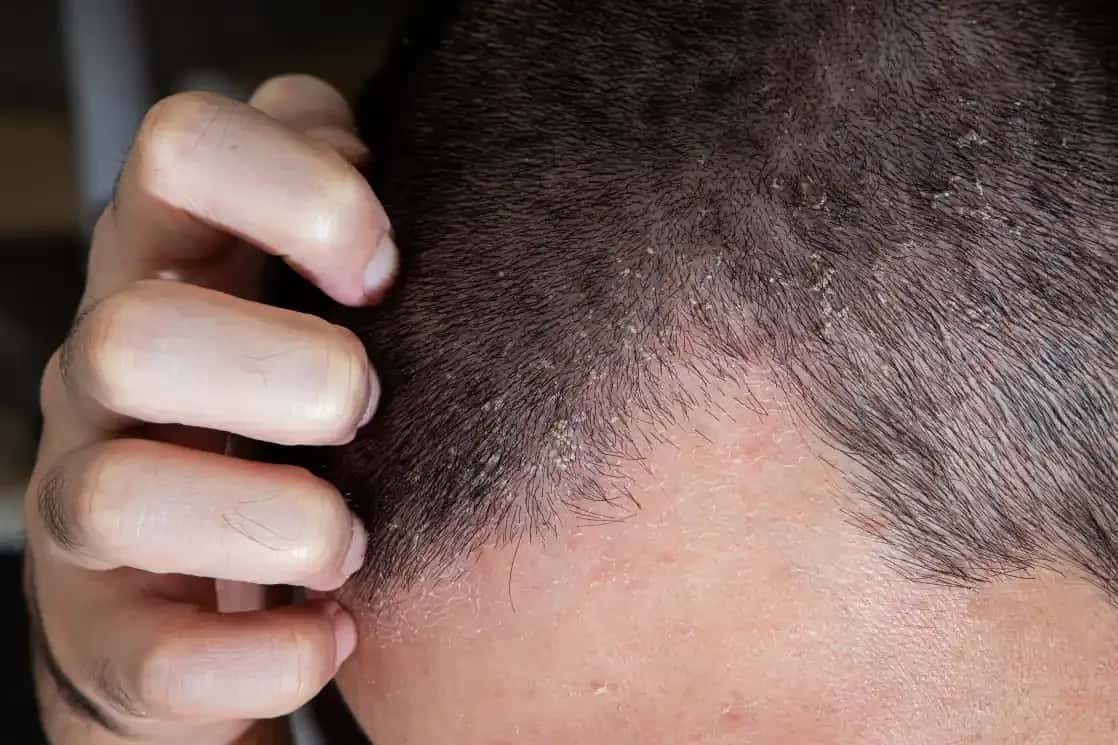
Seborrheic dermatitis is a chronic inflammatory scalp condition associated with scaling, itching, redness, and oily skin. It does not automatically prevent follicular unit transplantation.
The main concern is the condition of the scalp when surgery takes place. Active redness, heavy scaling, irritation, or scratching can make postoperative care more difficult.
Controlling these symptoms before surgery creates a calmer scalp environment. It also makes postoperative redness, itching, and crusting easier to evaluate during the early healing period.
Does Seborrheic Dermatitis Affect Hair Transplant Eligibility?
Seborrheic dermatitis does not automatically make someone unsuitable for hair transplantation because it is generally managed as a chronic inflammatory scalp disorder.
Eligibility depends more on whether the scalp is sufficiently stable for surgery than on the diagnosis itself.
Seborrheic dermatitis commonly causes itching, scaling, redness, and inflammation. These symptoms can repeatedly improve and return because the condition usually follows a relapsing pattern.
A quiet scalp provides more favorable conditions for planning and postoperative care.
Another important consideration is confirming that scaling and redness actually represent seborrheic dermatitis. Some inflammatory hair disorders can produce similar symptoms but have different implications for transplantation.
Should Seborrheic Dermatitis Be Treated Before a Hair Transplant?
Seborrheic dermatitis should be brought under control before hair transplantation when the scalp has active redness, itching, inflammation, or substantial scaling.
Treatment aims to reduce rash, scales, itching, and swelling while helping prevent repeated flare-ups.
This preparation matters because hair transplantation creates thousands of small treatment points across donor and recipient areas.
An already irritated scalp may become more uncomfortable during healing and can complicate the interpretation of postoperative symptoms.
Preoperative control does not mean seborrheic dermatitis must permanently disappear. The condition is often chronic and recurrent.
Instead, the practical goal is a stable scalp with minimal active inflammation at the time of transplantation.
Can You Have a Hair Transplant During a Seborrheic Dermatitis Flare-Up?
Hair transplantation is generally better postponed during a significant seborrheic dermatitis flare because surgery adds temporary trauma to an already inflamed scalp.
A flare may involve redness, greasy or dry scales, itching, burning, and considerable irritation.
Hair transplantation also produces temporary redness, crusting, itching, and inflammation during normal healing. Performing both processes simultaneously can make postoperative assessment and scalp care more difficult.
Preexisting seborrheic dermatitis has also been associated with more pronounced itching after FUE procedures.
For these reasons, reducing active inflammation before transplantation provides a more predictable baseline from which normal postoperative healing can be monitored.
Why Does Scalp Inflammation Matter Before Hair Transplantation?
Scalp inflammation matters because hair transplantation places both donor and recipient skin through controlled surgical trauma followed by a structured healing process.
Seborrheic dermatitis creates inflammation alongside scaling, redness, and itching. These changes commonly affect areas of the scalp where hair transplantation may also be performed.
After surgery, temporary inflammation occurs naturally around extraction and implantation sites.
Starting with an already irritated scalp may increase discomfort and make persistent redness or itching more difficult to interpret.
Inflammation can also encourage scratching, which is particularly undesirable while newly implanted grafts are settling.
Therefore, establishing a calm scalp before surgery supports easier postoperative care and clearer monitoring of the healing process.
Can Seborrheic Dermatitis Affect Hair Graft Survival?
Controlled seborrheic dermatitis has not been established as a direct cause of transplanted graft failure, but significant scalp inflammation is undesirable during transplantation.
Successful graft growth depends on several factors, including graft handling, blood supply, implantation technique, tissue trauma, and postoperative healing.
Research on hair transplantation shows that inflammation around follicles can influence hair growth under certain circumstances. However, this evidence should not be interpreted as proving that ordinary seborrheic dermatitis destroys transplanted grafts.
The more practical concern is uncontrolled inflammation, scratching, heavy scaling, and difficult postoperative scalp care.
Keeping seborrheic dermatitis stable reduces these avoidable problems without suggesting that the condition itself automatically causes graft loss.
Does Seborrheic Dermatitis Increase Infection Risk After a Hair Transplant?
Seborrheic dermatitis itself is not a bacterial infection, so having the condition does not automatically mean a hair transplant will become infected.
The disorder involves inflammation and is associated with interactions between skin oils, microorganisms naturally present on the skin, and immune responses.
Infections after hair transplantation are considered uncommon, although they can occur in donor or recipient areas. Excessive crusting and inadequate postoperative hygiene can contribute to infection risk.
Active dermatitis may make the scalp itchy and encourage scratching, which can interfere with careful wound care.
Controlling the condition therefore supports hygiene and healing rather than treating seborrheic dermatitis as an infection itself.
Can FUE Be Performed With Seborrheic Dermatitis?
FUE can be performed in people with seborrheic dermatitis when active scalp inflammation has been sufficiently controlled before follicular unit extraction begins.
During FUE, individual follicular units are removed through small extraction openings in the donor area. Additional openings are created when grafts are placed into the recipient area.
Because both regions undergo temporary tissue trauma, significant preexisting irritation is undesirable.
Postoperative itching can occur normally after FUE due to crusting, dryness, and skin regeneration. Evidence suggests this itching may be more noticeable in people with preexisting seborrheic dermatitis.
A stable scalp therefore provides a more comfortable starting point for FUE healing and postoperative cleansing.
Can DHI Be Performed With Seborrheic Dermatitis?
DHI can be considered with controlled seborrheic dermatitis because the underlying concern is scalp inflammation rather than the specific graft implantation method.
DHI still requires follicular units to be removed from the donor region before they are implanted into thinning areas.
Therefore, both the donor scalp and the recipient scalp participate in the healing process.
Active scaling, redness, severe itching, or irritated skin should be controlled before these areas undergo repeated extraction and implantation.
Changing the implantation method does not remove the effects of an active inflammatory scalp condition.
The same practical principle applies across modern transplantation approaches: transplantation is better planned when seborrheic dermatitis is stable rather than during a noticeable flare.
What Seborrheic Dermatitis Symptoms Should Be Controlled Before Hair Transplantation?
Visible inflammation and symptoms that encourage scratching should be minimized before a hair transplant because they can complicate early postoperative scalp care.
Important signs to assess include:
-
Persistent scalp redness that indicates active irritation or inflammation
-
Heavy greasy or dry scaling across donor or recipient areas
-
Frequent itching that causes repeated touching or scratching
-
Burning or tenderness involving areas planned for treatment
-
Thick crusting that makes normal scalp cleansing difficult
-
Oozing, pustules, or unusual lesions that may suggest another scalp condition
Seborrheic dermatitis commonly presents with scaling, redness, itching, and sometimes burning.
Reducing these signs creates a clearer baseline before surgical redness and crusting begin.
Can Seborrheic Dermatitis Return After a Hair Transplant?
Seborrheic dermatitis can return after hair transplantation because the procedure does not remove the biological tendency that causes recurring scalp inflammation.
The condition is chronic and relapsing, meaning symptoms can improve for long periods and later return.
Hair transplantation relocates follicles but does not permanently alter oil production, skin sensitivity, or the scalp environment associated with seborrheic dermatitis.
Therefore, successful transplantation should not be expected to cure the condition.
Long-term scalp care may still be needed after grafts have healed.
A future recurrence also does not automatically mean that the transplant has failed. Seborrheic dermatitis and transplanted hair growth are separate issues that can exist on the same scalp.
Can a Hair Transplant Make Seborrheic Dermatitis Worse?
Hair transplantation may temporarily aggravate scalp irritation because surgery, crust formation, cleansing changes, and postoperative products can affect sensitive skin.
Seborrheic dermatitis skin is easily irritated, and irritation can contribute to a flare. Harsh cleansers and certain hair products can also trigger symptoms.
Hair transplantation naturally causes temporary redness and crusting, while early healing can also produce itching.
These effects do not mean transplantation permanently worsens seborrheic dermatitis.
Instead, the early recovery period may temporarily overlap with familiar dermatitis symptoms.
Gentle scalp care becomes especially important because scratching newly treated areas or using irritating products can make both postoperative discomfort and dermatitis symptoms more difficult to manage.
How Is Seborrheic Dermatitis Managed Before Hair Transplantation?
Seborrheic dermatitis is generally managed before transplantation by reducing scalp yeast activity, inflammation, itching, and excess scaling until the scalp becomes stable.
Common management approaches include medicated shampoos and topical treatments directed at inflammation or the microorganisms associated with the condition.
Antifungal shampoos are frequently used for scalp seborrheic dermatitis. Anti-inflammatory treatments may also be used when redness and itching are more pronounced.
The objective before transplantation is not to permanently cure a relapsing condition.
Instead, treatment aims to reduce active symptoms enough to create a calm scalp environment.
Once heavy scaling, marked redness, and significant itching are controlled, surgical planning becomes more straightforward.
How Should the Scalp Be Washed After Hair Transplantation With Seborrheic Dermatitis?
The scalp should be washed gently after hair transplantation because aggressive rubbing can irritate seborrheic dermatitis and disturb recently treated skin.
Early postoperative washing also helps manage crust formation around transplanted follicles. Evidence on FUE complications supports gentle cleansing during the first postoperative days rather than allowing excessive crust accumulation.
Seborrheic dermatitis also benefits from appropriate scalp cleansing because accumulated scale and oil can worsen visible symptoms.
However, ordinary vigorous shampooing is unsuitable immediately after transplantation.
The early goal is to remove residue without scratching, rubbing, or picking at grafts.
As the implantation sites heal, scalp cleansing can gradually return toward the routine used to control seborrheic dermatitis.
Can Medicated Shampoo Be Used After a Hair Transplant?
Medicated seborrheic dermatitis shampoo can usually be reintroduced after the scalp has healed sufficiently, rather than being applied aggressively to fresh implantation sites.
These shampoos may contain active ingredients designed to reduce yeast, scaling, oil, or inflammation. They can also produce irritation in sensitive skin.
Fresh graft sites are temporarily more delicate than an intact scalp.
For that reason, immediate postoperative cleansing generally focuses on gentle products and careful washing rather than strong anti-dandruff treatment.
Once crusts resolve and the scalp surface recovers, ongoing seborrheic dermatitis management can become important again.
The aim is to balance graft protection during early healing with long-term control of recurrent scalp inflammation.
When Is the Scalp Ready for Hair Transplantation After Seborrheic Dermatitis?
The scalp is better prepared for hair transplantation when significant redness, heavy scaling, persistent itching, burning, and active irritation have been brought under control.
There is no single waiting period that defines readiness for every episode of seborrheic dermatitis.
The more useful indicator is whether the scalp has returned to a stable condition without an obvious active flare.
This distinction is important because seborrheic dermatitis is naturally recurrent and does not need to disappear permanently before transplantation.
Persistent or unusual redness and scaling also deserve careful evaluation because inflammatory scarring disorders can sometimes resemble seborrheic dermatitis.
A correctly identified and controlled scalp condition creates a safer basis for transplantation.
- Last updated
- Language
- English
How did you find this article?
This guide explains whether a dermaroller can support hair growth, how scalp microneedling works, who may benefit, and what results can realistically be expected.

This guide explains issues associated with Procapil use, such as scalp irritation, dryness, itching, redness, concerns about hair shedding, allergic reactions, and long-term use.
This guide explains how Nizoral shampoo works, what it is used for, how often it can be applied, and what to expect from ketoconazole scalp care.
Subscribe to the Medifinder newsletter and never miss our latest content.