










6mm Endometrial Lining for IVF: Is It Enough?
A 6mm endometrial lining for IVF is considered thin in many settings, but implantation also depends on pattern, timing, uterine health and embryo factors.

- Last updated
- 7 reads
- 6 min read
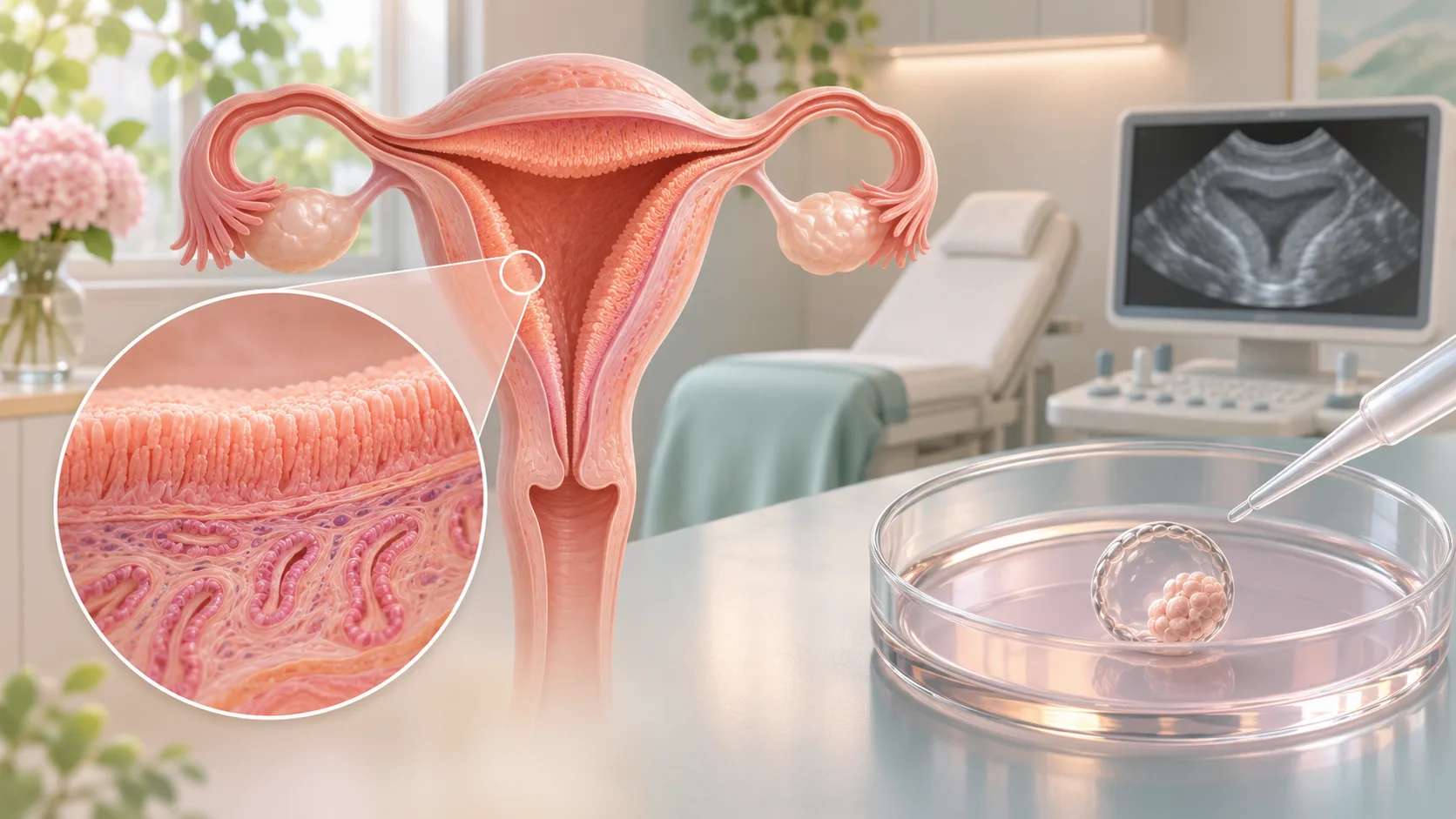


A 6mm endometrial lining before an IVF transfer can raise an immediate question: is it enough for implantation? Thickness is one part of the uterine picture, but it is not a pass or fail measurement on its own. The pattern of the lining, the timing of progesterone, blood flow, uterine health and embryo factors all contribute to how a transfer is planned.
What Is the Endometrial Lining?
The endometrium is the inner layer of the uterus. It grows under estrogen and then changes under progesterone so it can support implantation. During an IVF cycle, ultrasound measures the lining in millimetres and also describes its appearance. A lining that looks layered and appropriately timed may provide useful information beyond the thickness number alone.
Is 6mm Enough for IVF?
A 6mm lining is considered thin in many IVF settings, but it does not automatically make pregnancy impossible. Some pregnancies occur with a lining around this measurement, especially when the pattern, hormone timing and uterine cavity are favourable. The result is interpreted in context rather than as an isolated cutoff.
- Thickness is measured by ultrasound and can vary slightly between scans.
- The trilaminar or layered appearance may add information.
- Estrogen exposure and progesterone timing affect lining development.
- Embryo quality and uterine factors also influence implantation.
Why Might the Lining Measure 6mm?
Limited Estrogen Response
Estrogen stimulates the lining to grow during the first part of a prepared cycle. If the response is slower, the measurement may remain near 6mm when transfer planning begins. Absorption of medication, dose timing and individual endometrial sensitivity can all influence the response.
Previous Procedures
Procedures involving the uterine cavity, including curettage, polyp removal or treatment for adhesions, can alter the endometrium. Scar tissue may reduce the area that responds normally to hormones. The history of previous surgery helps explain why one cycle produces a thinner lining than another.
Blood Flow and Uterine Conditions
Fibroids, polyps, adenomyosis and intrauterine adhesions can affect the cavity or blood supply. Chronic inflammation may also interfere with normal development. A thin measurement without a visible cavity problem has a different meaning from a thin lining accompanied by a structural finding.
Natural Cycle Variation
The endometrium does not grow at exactly the same speed in every cycle. A scan taken one day earlier can show a different thickness from a later scan. This is why monitoring is often repeated before a final transfer decision is made.
Does the Lining Pattern Matter?
Ultrasound may show a layered pattern with a brighter central line and distinct tissue bands. This appearance often reflects estrogenic development, but it is not a guarantee of implantation. A uniform lining can also support pregnancy in some circumstances. The sonographic pattern, thickness and timing are reviewed together.
Can a 6mm Lining Become Thicker?
Sometimes the lining continues to grow with additional estrogen exposure. A repeat scan may show improvement over several days. Other cycles remain stable despite medication changes. The direction of change, hormone level and progesterone start date are more useful than assuming that every lining should reach one exact number.
What Can Be Done Before Transfer?
When the lining is thinner than preferred, the preparation may be adjusted. Options can include allowing more time for estrogen, changing the route of administration, reviewing the uterine cavity or postponing transfer to a later cycle. The goal is to identify a reason for limited growth rather than adding treatments without a clear purpose.
- Repeat ultrasound after additional estrogen exposure.
- Review the medication route, timing and absorption.
- Check for polyps, fibroids, adhesions or fluid in the cavity.
- Confirm that progesterone begins at the correct time for the embryo age.
Does Estrogen Dose Always Fix a Thin Lining?
More estrogen is not automatically better. The response depends on endometrial sensitivity, medication absorption and uterine health. Increasing the dose without understanding the reason for a thin measurement may add side effects without changing the lining. A documented response across cycles can show whether the endometrium benefits from a longer or different preparation.
What Is the Role of Progesterone Timing?
The endometrium must be exposed to progesterone for the right length of time before an embryo is transferred. Even a good thickness can be mistimed if progesterone starts too early or too late. A 6mm lining is therefore considered alongside the exact progesterone schedule and the developmental age of the embryo.
Can Embryo Quality Balance a Thin Lining?
Embryo quality and lining quality are separate parts of implantation. A strong embryo may implant in a thinner lining, but embryo quality does not erase uterine factors. The transfer decision considers both sides of the process, as well as the history of previous cycles and the condition of the cavity.
What If Fluid Is Seen in the Uterus?
Fluid can temporarily reduce the apparent quality of the cavity and may interfere with the contact between embryo and lining. The reason for the fluid matters. It can be related to the cervix, the fallopian tubes, inflammation or hormone changes. A repeat scan may show whether it resolves before transfer.
Can Lifestyle Changes Increase Endometrial Thickness?
Healthy sleep, regular meals, movement and avoiding tobacco support general circulation and reproductive health. These habits cannot guarantee a thicker lining, and extreme exercise or rapid weight loss may have the opposite effect. Supplements should be reviewed carefully because natural products can interact with medications or create false confidence.
When Is a Thin Lining Reviewed Further?
Further evaluation is useful when the lining remains near 6mm across more than one carefully prepared cycle, when implantation has repeatedly failed or when ultrasound shows a cavity concern. A saline scan, hysteroscopy or other assessment may be considered when the history suggests adhesions, a polyp or another structural issue.
Frequently Asked Questions About a 6mm Endometrial Lining for IVF
Can you get pregnant with a 6mm lining?
Pregnancy can occur with a 6mm lining, although the measurement is thinner than many clinics prefer. The pattern, hormone timing, embryo and uterine cavity are all part of the assessment.
Should IVF transfer be cancelled at 6mm?
A 6mm result does not create one universal rule. The decision depends on whether the lining is growing, how it looks, the transfer timing and the wider cycle history.
Can estrogen make a 6mm lining thicker?
Additional or differently administered estrogen may help when the endometrium is still responding. Some linings grow with more time, while others remain stable despite medication changes.
Does a trilaminar pattern make 6mm enough?
A layered pattern can be reassuring, but it does not guarantee implantation. Thickness and appearance are considered together with progesterone exposure and embryo development.
What happens if the lining stays thin?
The preparation may be reviewed, the uterine cavity evaluated and transfer timing reconsidered. A later cycle can behave differently, especially when a contributing factor is identified.
Why One Scan Does Not Tell the Whole Story
Ultrasound measurements have a small technical margin of variation. The angle of the scan, the sonographer technique, bladder filling and the exact day of estrogen exposure can influence the number. A difference of a few tenths of a millimetre may not represent a real biological change. Comparing scans from the same cycle and looking at the trend is more useful than treating one measurement as permanent.
The clinical picture also includes symptoms such as unexpected bleeding, pelvic pain or unusual discharge. These findings do not explain every thin lining, but they may signal a cavity issue that deserves attention. A calm review of the images and cycle record helps separate a measurement question from a structural problem.
How Previous Transfer History Helps
If a prior transfer occurred with a similar lining and implantation did not happen, that history may influence the next preparation. It does not prove the lining caused the outcome, but repeated patterns can guide a more focused review. Details such as progesterone levels, embryo stage and whether the lining changed after transfer are worth recording.
A written timeline makes those comparisons clearer across cycles and reduces guesswork during planning.
Putting the Measurement in Context
A 6mm endometrial lining for IVF is a meaningful finding, but it is not the entire story. The scan should be read with the lining pattern, estrogen response, progesterone timing, uterine cavity, blood flow and embryo details. Careful monitoring can show whether the endometrium is still developing or whether a different preparation is needed before transfer.
- Last updated
- Language
- English
How did you find this article?

Low AMH with regular periods does not automatically rule out pregnancy. Learn what AMH measures, how ovulation fits in, and which factors matter next.
Learn when a period may start after egg retrieval, why timing varies, how progesterone and transfer affect bleeding, and which warning signs need attention.
Empty follicles during IVF can relate to trigger timing, follicle maturity, retrieval factors or ovarian biology, and one cycle does not define future results.
Subscribe to the Medifinder newsletter and never miss our latest content.