








Why Is My Nose Still Crooked After Rhinoplasty?
A crooked-looking nose after rhinoplasty may reflect swelling, scar tissue, cartilage memory, or septal changes. Learn what to watch for during healing.

- Last updated
- 17 reads
- 7 min read
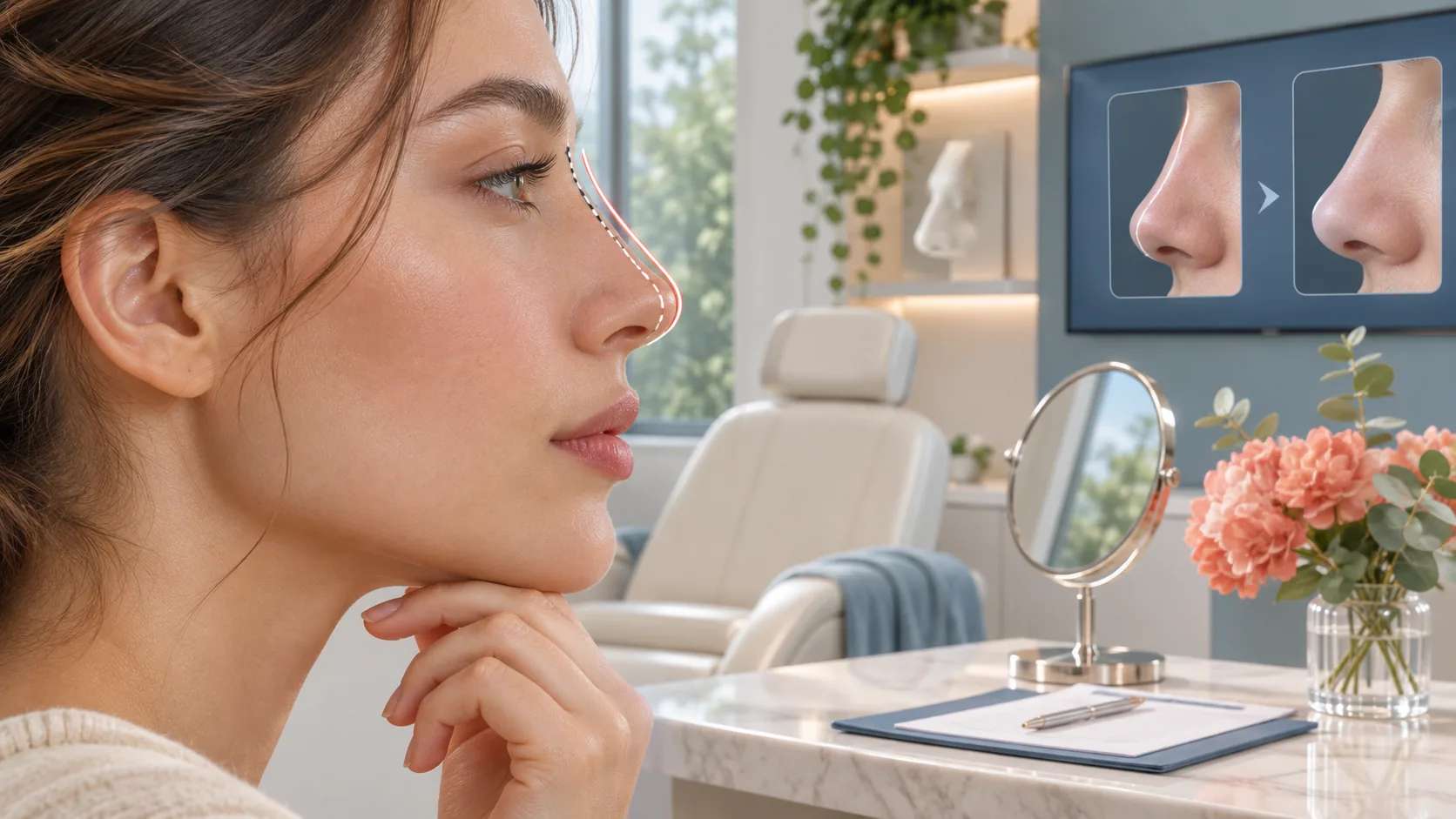


Seeing a nose that still looks crooked after rhinoplasty can be unsettling, especially when the early result seemed promising. The nose is a delicate three dimensional structure, and healing does not happen evenly on every side. Swelling, scar tissue, cartilage memory, and the changing position of the skin can all influence how straight the nose appears during recovery.
Why Can the Nose Look Crooked After Rhinoplasty?
Uneven Postoperative Swelling
Swelling rarely distributes itself symmetrically. One side may stay fuller along the bridge, tip, or nostril rim, creating a temporary tilt. This can be particularly noticeable in photographs, where lighting and shadows exaggerate small differences.
Healing Scar Tissue
As the tissues repair, internal scar bands can pull gently in one direction. Firmness at the tip or along the sidewall may make the nose look off centre before the scar tissue softens. The surface can appear uneven even when the underlying framework is stable.
Cartilage Memory
Nasal cartilage has natural elasticity. When cartilage has been straightened or reshaped, it may exert a small tendency to return toward its original curve. Surgeons account for this tendency, yet the healing framework can still settle gradually.
Pre Existing Asymmetry
Many noses are not perfectly straight before surgery. Facial bones, cheek position, the septum, and the skin can create asymmetry that remains partly visible after refinement. Rhinoplasty improves balance, but it cannot make every face mathematically symmetrical.
Septal Alignment and Breathing
If the septum remains deviated or shifts during healing, the nose may look uneven from the front and feel blocked on one side. Breathing symptoms, recurrent crusting, or a persistent sense of collapse should be mentioned during review.
- Early swelling can make a straight nose appear tilted.
- Tip stiffness may alter the visible centre line.
- Photos taken from below or with a wide angle lens can exaggerate asymmetry.
- A new breathing problem deserves attention rather than cosmetic observation alone.
How Long Does It Take for a Nose to Look Straight?
The bridge often settles sooner than the tip. In the first weeks, the nose may look broader, firmer, or slightly shifted from one angle to another. Tip swelling can persist for many months because the skin and soft tissues there are thicker and less mobile.
Progress is best judged over time, not from a single morning in the mirror. Use the same lighting, camera distance, and neutral facial expression when taking comparison photographs. A gradual improvement is reassuring, while a sudden new bend or worsening obstruction should be reviewed.
Can Taping or Massage Correct a Crooked Nose?
Taping may reduce superficial swelling when used as part of an aftercare plan, but it cannot reshape a healed cartilage framework by force. Massage is also not a universal solution. Pressing firmly on a healing nose can irritate tissues, increase swelling, or disturb a delicate area.
Follow the specific care instructions given after surgery and avoid copying techniques from social media. The correct pressure, timing, and duration depend on what was done inside the nose. If a splint or tape becomes loose, replace it only as instructed rather than improvising a tighter application.
When Is Crookedness a Normal Part of Healing?
A mild change in the centre line during the early healing period can be related to fluid, stiffness, or changing skin tension. The nose may look straighter in the morning and more uneven later in the day as activity and swelling increase. Tenderness and numbness can also alter how the shape is perceived.
Normal healing should generally move toward greater softness and stability. A firm area that slowly becomes less prominent is different from a new deformity that appears suddenly. Keep scheduled reviews even when the appearance is improving, because subtle internal changes are not always visible in a mirror.
Signs That Need Prompt Assessment
Contact the surgical team promptly if the nose becomes increasingly painful, red, hot, or swollen. Fever, foul drainage, active bleeding, or a rapidly changing shape also deserves quick attention. Difficulty breathing through the nose that is getting worse should not be dismissed as a cosmetic concern.
Seek urgent care for severe bleeding, sudden vision symptoms, facial weakness, or a rapidly expanding swelling. These are not routine signs of ordinary recovery. Do not wait for a routine appointment if a serious symptom appears.
- Sudden severe pain or rapidly increasing swelling.
- Fever, spreading redness, or foul smelling discharge.
- New major obstruction on one side.
- Repeated bleeding that does not settle with the advised measures.
How the Cause of a Crooked Nose Is Evaluated
An assessment compares the bridge, tip, nostrils, septum, and facial midline. Front, profile, and base views help separate true structural deviation from the visual effect of swelling. The inside of the nose is examined for septal position, crusting, valve narrowing, and signs of infection.
Bring photographs from before surgery and from different stages of recovery. Note when the bend became noticeable, whether it changes during the day, and whether breathing has changed. This timeline can be more informative than a single current image.
What Treatment Options May Be Considered?
If swelling is the main cause, observation and gentle aftercare may be enough while the tissues mature. In selected situations, a carefully planned injection can reduce a localized scar or swelling pattern, but it is not appropriate for every nose. A small residual contour issue may sometimes be softened with a non surgical adjustment after healing is stable.
When the framework or septum is genuinely displaced, revision rhinoplasty may be discussed after the tissues have matured. Revision planning involves the bridge, tip support, septum, skin thickness, breathing, and the amount of available cartilage. Acting too early can make the assessment less reliable because the nose is still changing.
How to Protect the Result During Recovery
Protect the nose from pressure, accidental bumps, and tight glasses until cleared. Sleep with the head elevated if advised, avoid heavy exertion during the initial period, and use sun protection once the skin can tolerate it. Do not pick crusts or insert cotton swabs deeply into the nostrils.
- Follow the prescribed cleaning and spray routine.
- Keep pets, children, and crowded activities from striking the nose.
- Avoid smoking because it can slow tissue repair.
- Use only approved pain relief and nasal products.
- Attend every planned review, even if the nose looks acceptable.
Frequently Asked Questions About a Crooked Nose After Rhinoplasty
Is it normal for the nose to look crooked after rhinoplasty?
Mild asymmetry can occur while swelling and scar tissue settle. A steady trend toward improvement is reassuring, whereas a sudden change, increasing pain, or worsening blockage needs prompt review.
How long should I wait before judging the final shape?
The final contour develops gradually, with the tip often taking longer than the bridge. Early photographs are useful for tracking change but are not a reliable measure of the finished result.
Can swelling make a straight nose appear crooked?
Yes. Uneven fluid and tissue firmness can shift shadows and make one side look fuller. The apparent bend may lessen as swelling resolves.
Will massage straighten my nose after rhinoplasty?
Massage cannot reliably correct structural deviation and may irritate healing tissues. Use pressure or taping only when it is specifically included in your aftercare plan.
When should I call about a crooked nose?
Call promptly for a sudden bend, severe pain, fever, spreading redness, foul drainage, persistent bleeding, or a new breathing problem that is getting worse.
Reading the Result With Patience
A nose can look temporarily crooked for reasons that have little to do with the final surgical result. Healing is influenced by swelling, skin thickness, cartilage behaviour, scar formation, and the original facial midline. Consistent care, realistic observation, and timely assessment provide a clearer picture than constant touching or comparing the nose with edited images online.
Daily habits can change how the nose looks without changing its structure. Warm showers, exercise, salty food, poor sleep, and prolonged bending may temporarily increase facial fullness. A dry room can also make the inside feel tighter and one sided, which may be interpreted as a shift. Observe the nose under similar conditions before deciding that the shape has changed.
Emotional reactions are part of recovery too. Small irregularities stand out when attention is focused on them, while friends may notice only a natural face. Use objective markers such as breathing, pain, swelling, and consistent photographs. If those markers are improving, the healing process may still be unfolding even when the mirror feels discouraging.
Do not attempt to force the bridge or tip into place with fingers, clips, or homemade supports. Such pressure can injure delicate tissues and make swelling last longer. A calm, protected recovery gives the nose the best chance to settle along its intended lines.
- Last updated
- Language
- English
How did you find this article?
A seroma after tummy tuck can cause soft swelling or a fluid pocket. Learn the symptoms, causes, diagnosis, treatment options, and warning signs.

What causes breast enlargement in men? Discover the causes of gynecomastia, how it differs from excess chest fat, and the treatment options available, including surgery.

How should you sleep after breast surgery, and how long should you wear a sports bra? Learn about sleep, movement and returning to daily life during recovery.
Subscribe to the Medifinder newsletter and never miss our latest content.