










Seroma After Tummy Tuck: Symptoms, Causes and Treatment
A seroma after tummy tuck can cause soft swelling or a fluid pocket. Learn the symptoms, causes, diagnosis, treatment options, and warning signs.

- Last updated
- 11 reads
- 6 min read
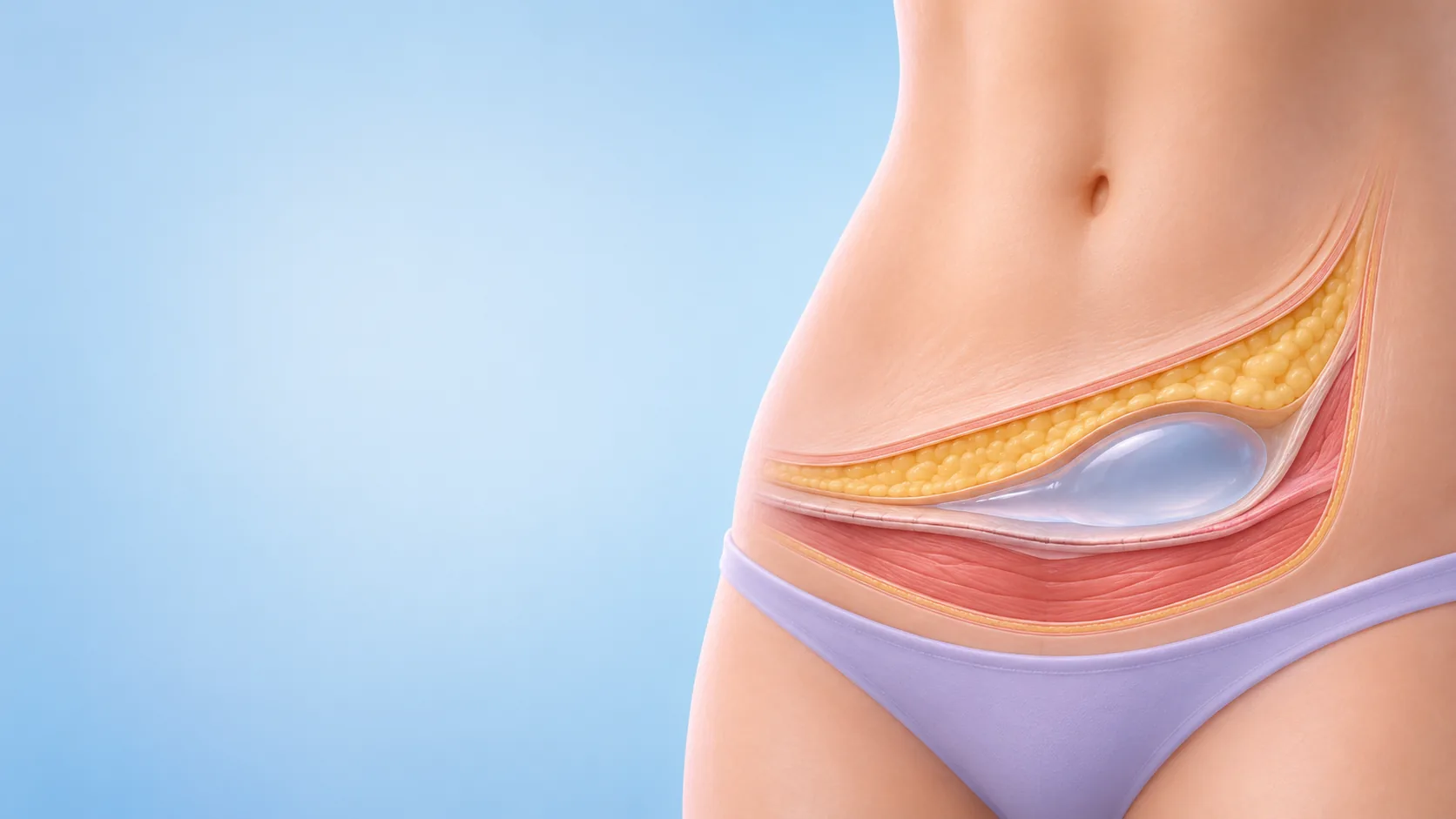


A soft swelling or fluid pocket after a tummy tuck can be alarming, especially when the abdomen had started to look flatter. One possible explanation is a seroma, a collection of clear fluid that forms between tissue layers after surgery. Seromas are common postoperative findings, but their size, timing, symptoms, and response to care determine how they should be managed.
What Is a Seroma After Tummy Tuck?
A seroma is a pocket of clear or pale yellow fluid that collects in the space created when tissue is lifted or separated during abdominoplasty. The fluid comes from small blood vessels and lymphatic channels that are temporarily disrupted by surgery.
The collection may feel soft, mobile, or fluctuant. Some people notice a visible bulge, while others feel movement or a sloshing sensation when changing position. A small seroma may be found only during an examination or ultrasound.
What Causes a Seroma?
Normal Tissue Response
Surgery creates a healing space between layers that normally move together. The body sends fluid and inflammatory cells into that space as part of repair. When the fluid accumulates faster than it can be reabsorbed, a seroma develops.
Lymphatic Disruption
The lower abdominal skin contains lymphatic channels that help drain tissue fluid. During a tummy tuck, some of these channels are divided or slowed. The drainage network usually adapts, but the transition can allow fluid to collect.
Movement and Shear
Excess movement between tissue layers can keep the space open. Heavy lifting, vigorous exercise, repeated bending, or poor compression may increase shear during the early healing period and make fluid more likely to persist.
Large Surgical Dissection
A wider area of tissue separation creates a larger potential space. Extensive skin removal, muscle repair, and combined procedures can increase the amount of surface that needs to seal and reattach.
What Are the Symptoms of a Seroma?
Seroma symptoms often appear after the initial swelling has begun to decrease. The abdomen may look uneven, with one side fuller than the other. The swelling can feel soft and may shift when standing, lying down, or pressing gently near the edge.
- A smooth or fluid-like bulge under the skin.
- A feeling of movement or pressure.
- Mild tightness without severe pain.
- Swelling that returns after compression is removed.
- Uneven contour along the lower abdomen.
Skin over a seroma may look normal. Significant redness, heat, worsening tenderness, or foul drainage suggests another problem and needs prompt assessment.
When Does a Seroma Usually Appear?
A seroma may develop several days or weeks after surgery, often as the early bruising and firm swelling settle. Some are recognized at a routine follow-up, while others become obvious when a drain is removed and fluid begins to accumulate.
Late swelling should not automatically be blamed on normal healing. A new or enlarging pocket after a period of improvement is a reason to contact the surgical team and clarify whether imaging or aspiration is needed.
How Is a Seroma Diagnosed?
The diagnosis often begins with a physical examination. A fluid pocket may feel different from a solid area of swelling or a firm healing ridge. Ultrasound can confirm the size and location of the collection and help distinguish fluid from a hematoma, scar tissue, or an abscess.
The colour and appearance of any drained fluid also provide clues. Clear or straw-coloured fluid is typical of a simple seroma, while cloudy, foul-smelling, or bloody fluid may require additional evaluation.
Can a Small Seroma Resolve on Its Own?
Many small seromas are gradually reabsorbed as lymphatic drainage improves and the tissue layers adhere. Observation may be appropriate when the collection is stable, painless, and not putting tension on the incision or surrounding skin.
During this period, the contour may change from day to day. A small pocket can feel more prominent after activity or at the end of the day and less noticeable after rest and compression.
What Treatments Are Used?
Compression and Activity Control
Compression garments can reduce movement between layers and support tissue adherence. They should fit comfortably and should not create pressure points, numbness, or breathing restriction. Activity is usually increased gradually to reduce shear.
Needle Aspiration
If a seroma is large, uncomfortable, or persistent, fluid may be removed with a sterile needle. Aspiration can relieve pressure and improve the contour, but some collections refill and need repeat treatment.
Drainage
A temporary drain may be placed when fluid continues to accumulate. The drainage system allows the space to empty while the tissue seals. Careful handling reduces the risk of introducing bacteria.
Additional Procedures
Rarely, a long-standing capsule forms around the fluid and prevents resolution. Persistent cases may require a more involved procedure to remove the capsule and close the space. This is considered when simpler measures have not worked.
How Can You Reduce the Risk of a Seroma?
Postoperative instructions are designed to limit fluid accumulation and protect the healing layers. Wear compression as directed, avoid lifting and strenuous exercise until cleared, and keep the incision clean and dry according to the care plan.
- Walk gently to support circulation without overexertion.
- Avoid sudden stretching or deep bending.
- Do not massage a new swelling unless specifically instructed.
- Attend scheduled wound and drain checks.
- Report changes in size, pain, colour, or drainage promptly.
Good nutrition, adequate protein, and avoiding nicotine support tissue repair, but no home measure can guarantee that a seroma will not occur.
How Is a Seroma Different From an Infection?
A simple seroma is often soft and only mildly uncomfortable. Infection is more likely to cause increasing pain, warmth, redness, fever, foul-smelling drainage, or a general feeling of illness. A hematoma may appear darker, feel firmer, and develop with more bruising.
Because these problems can overlap, a change in the skin or the character of the fluid should not be ignored. Early review makes it easier to treat infection or bleeding before the wound is placed under greater tension.
Can a Seroma Affect the Final Tummy Tuck Result?
A small seroma that resolves usually has little effect on the final contour. A large or prolonged collection can stretch the skin, delay healing, increase scar formation, or create a persistent fluid cavity. Prompt management protects the shape and reduces the chance of a chronic problem.
Temporary asymmetry is common while fluid levels change. The final abdominal contour should be judged after swelling has settled and the tissue has matured.
Frequently Asked Questions About Seroma After Tummy Tuck
Is a seroma painful after abdominoplasty?
Many seromas cause pressure, tightness, or mild tenderness rather than severe pain. Increasing pain or pain with redness and heat needs prompt assessment.
Can I massage a seroma away?
Do not massage a new fluid pocket without specific instructions. Pressure can irritate healing tissue, move fluid, or disturb the incision.
How long can a seroma last?
Small collections may resolve over days or weeks. Larger or recurrent pockets can persist longer and may need aspiration, drainage, or further treatment.
Can a seroma come back after aspiration?
It can refill while the tissue space remains open. Compression, activity control, and repeat assessment help determine whether additional drainage is needed.
When should I seek urgent help?
Seek urgent care for fever, rapidly spreading redness, severe pain, foul drainage, sudden swelling, heavy bleeding, breathing difficulty, or marked weakness.
Supporting a Smooth Recovery
A seroma after tummy tuck is a fluid collection caused by the normal healing space and temporary changes in lymphatic drainage. It may present as a soft bulge, pressure, or fluctuating abdominal swelling. Small stable collections can resolve, while persistent or symptomatic ones may need aspiration or drainage. Monitoring changes, protecting the incision, limiting strain, and reporting warning signs early help preserve healing and the final contour.
- Last updated
- Language
- English
How did you find this article?

A crooked-looking nose after rhinoplasty may reflect swelling, scar tissue, cartilage memory, or septal changes. Learn what to watch for during healing.

What causes breast enlargement in men? Discover the causes of gynecomastia, how it differs from excess chest fat, and the treatment options available, including surgery.

How should you sleep after breast surgery, and how long should you wear a sports bra? Learn about sleep, movement and returning to daily life during recovery.
Subscribe to the Medifinder newsletter and never miss our latest content.