










PRF in Dental Implant Surgery
Platelet-rich fibrin, known as PRF, is a natural material that surgeons prepare from a small sample of the patient's own blood and use to support soft tissue and bone healing around dental implants.

- Last updated
- 26 reads
- 9 min read


What Is PRF in Dental Implant Surgery?
PRF in dental implant surgery is a concentrate of platelets and white blood cells held within a natural fibrin network, which the surgeon places at the surgical site to support the body's own healing response. Because the material comes entirely from the patient's blood, it contains no synthetic additives or donor tissue.
Platelets play a central role in wound healing. When tissue is injured, they release growth factors that attract repair cells, encourage new blood vessels to form and help regenerate soft tissue and bone. PRF gathers a high concentration of these platelets into one place and keeps them inside a fibrin matrix, a mesh-like structure that the body normally forms when blood clots.
Implant surgeons use PRF to support healing after tooth extraction, during bone grafting, in sinus lifts and around implants placed in areas with thin or fragile tissue. It works as an addition to standard surgical techniques rather than as a treatment on its own.
How Is PRF Prepared From Your Own Blood?
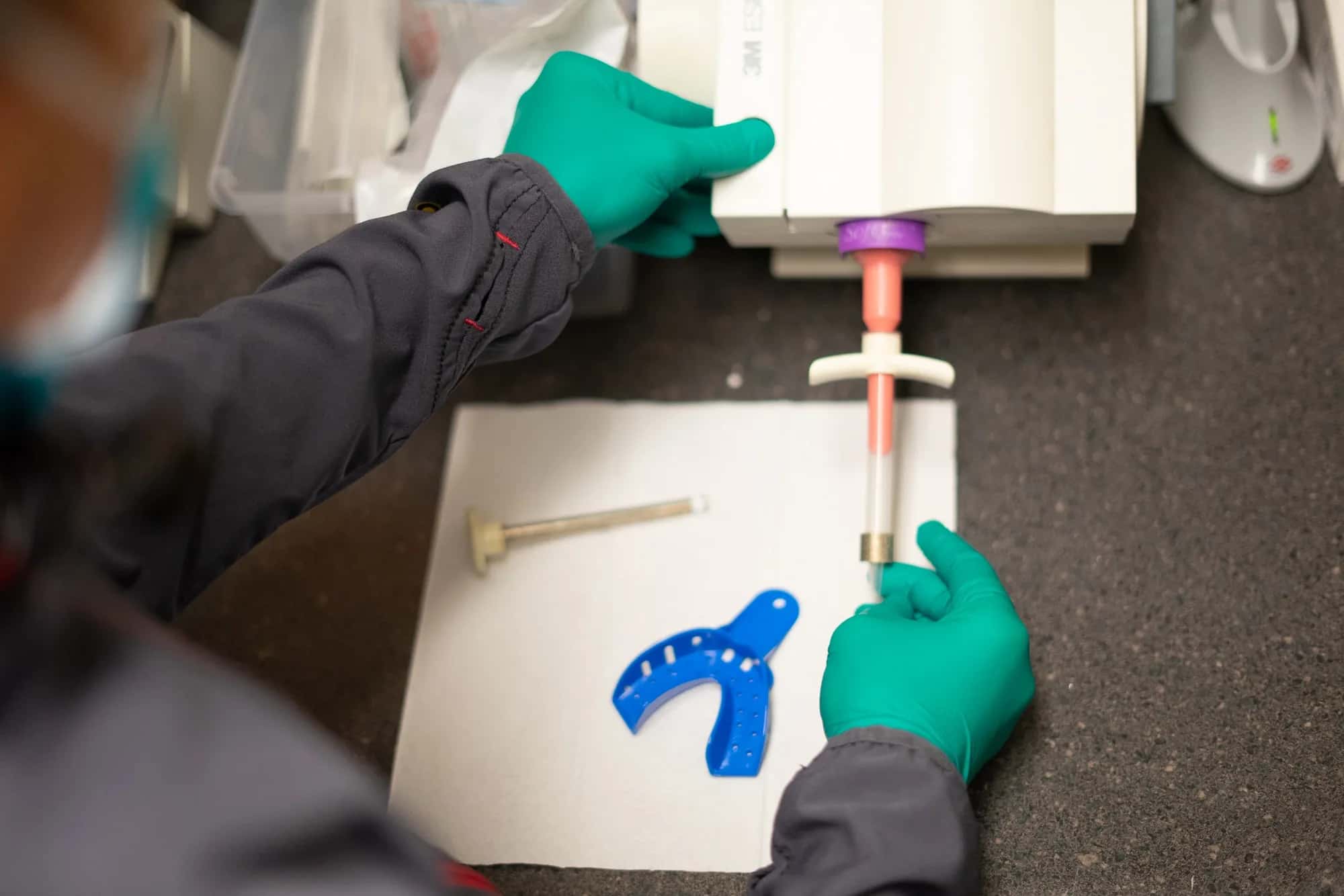
The surgical team prepares PRF by drawing a small amount of blood from your arm and spinning it in a centrifuge, usually during the same appointment as the implant surgery. The process takes place chairside, so the material is ready within minutes and goes straight into the surgical site.
The centrifuge separates the blood into layers according to density. Red blood cells settle at the bottom, while a fibrin clot rich in platelets and white blood cells forms in the middle or upper part of the tube. The team removes this clot and either uses it as it is, presses it into a thin membrane or mixes it with graft material.
Unlike some older platelet concentrates, PRF does not require anticoagulants or other additives. The blood begins to clot naturally during spinning, which is why the team processes it immediately after the draw. Different centrifuge speeds and times produce slightly different forms of PRF, each suited to particular tasks in implant surgery.
How Does PRF Work in the Healing Process?
PRF works by releasing growth factors gradually into the surrounding tissue while its fibrin structure gives new cells a scaffold to grow along. The fibrin matrix traps platelets and white blood cells and lets their growth factors seep out over several days instead of releasing them all at once.
This slower release keeps healing signals active during the early phase of recovery, when the gum and bone begin to repair themselves. The growth factors encourage the formation of new blood vessels, which bring oxygen and nutrients to the site, and they attract the cells that build soft tissue and bone.
The white blood cells within PRF also contribute to the body's natural defense against infection at the wound site. The fibrin itself acts as a biological dressing that helps stabilize the blood clot and protects the area while the gum closes over it. Over time, the body breaks down the PRF and replaces it with its own tissue.
What Is the Difference Between PRF and PRP?
The main difference between PRF and PRP is that PRF forms a solid fibrin matrix without additives, while PRP, or platelet-rich plasma, is a liquid concentrate that usually requires anticoagulants and activating agents. PRP was one of the first platelet concentrates used in oral surgery, and PRF developed later as a simpler, fully natural alternative.
Because PRP is a liquid, it releases most of its growth factors quickly after application. PRF holds its growth factors within the fibrin network and releases them more slowly, which many surgeons consider better suited to the extended healing period after implant and grafting procedures.
PRF also offers practical advantages in the operating room. Its solid or gel-like consistency makes it easier to handle, shape into membranes and combine with bone graft material. Some forms of PRF are produced as a liquid for injection, but they still form a fibrin clot shortly after placement.
Which Forms of PRF Do Surgeons Use?
Surgeons can produce several forms of PRF by adjusting how they spin the blood, and each form suits a different task during implant treatment:
- L-PRF (leukocyte and platelet-rich fibrin): The original form, which produces a firm fibrin clot that the team can press into durable membranes or plugs for extraction sockets and graft coverage.
- A-PRF (advanced PRF): A version made with a lower centrifuge speed, which aims to keep more cells and growth factors within a softer, more flexible fibrin clot.
- i-PRF (injectable PRF): A liquid form collected after a short, slow spin, which the surgeon can inject into soft tissue or mix with graft particles before it clots.
- Sticky bone: A mixture of liquid PRF and bone graft particles that sets into a moldable, cohesive mass, making the graft easier to shape and keep in place.
- PRF membranes: Clots compressed into thin, flat sheets that cover grafts, protect wounds or support gum healing around implants.
Where Do Surgeons Use PRF During Implant Treatment?
PRF can play a role at several stages of implant treatment, mostly in procedures where soft tissue or bone needs extra support to heal:
- Extraction sockets: Filling the socket with PRF after a tooth is removed can support healing and, often together with graft material, help preserve the ridge for a future implant.
- Bone grafting and ridge augmentation: Surgeons mix PRF with graft material or place PRF membranes over the graft to support stability and soft tissue closure.
- Sinus lift procedures: PRF can help fill the space beneath the lifted sinus membrane or cover small tears in the membrane during surgery.
- Around implants at placement: Surgeons may place PRF around the implant neck or over the site to support gum healing, especially when the tissue is thin.
- Soft tissue and gum defects: PRF membranes can help manage gum recession or improve tissue thickness around implants in aesthetic areas.
PRF With Bone Grafts and Sticky Bone
When surgeons rebuild missing bone, they often face a practical challenge: loose graft particles can shift before the area heals. Mixing the particles with liquid PRF creates sticky bone, which holds together, adapts closely to the defect and stays in place more reliably under the gum. Surgeons also value the growth factors PRF brings to the graft, though they still rely on the graft material itself to provide the main framework for new bone.
PRF in Sinus Lift Procedures
During a sinus lift, the surgeon raises the thin membrane lining the floor of the maxillary sinus to create room for graft material and implants. This membrane can tear, and PRF membranes offer a natural way to cover small perforations and protect the area. Some surgeons also place PRF alone or combined with graft material beneath the lifted membrane, although the best approach for each case remains an active area of research.
What Benefits Can PRF Offer Patients?
PRF can offer patients a natural way to support healing after implant and grafting procedures, with potential benefits for soft tissue closure, comfort and recovery. Many surgeons observe that wounds treated with PRF close well and that the gum heals with healthy, stable tissue.
Some studies have reported less swelling and discomfort after procedures such as extractions when PRF was used, which can make the early recovery period more comfortable. The material may also support graft handling and soft tissue coverage, which helps protect the underlying bone while it matures.
Because PRF comes from your own blood, it avoids the use of donor or animal-derived materials for the part it plays in healing. It is also relatively simple and quick to prepare during the same visit, which makes it easy to add to standard implant workflows when the surgeon considers it helpful.
What Are the Limitations of PRF?
PRF has clear limitations, and its effect on bone regeneration in particular remains a subject of ongoing research with mixed results. Some studies show improved healing or bone formation, while others find little measurable difference compared with standard techniques. For this reason, PRF works best as a supporting tool rather than as a substitute for proven methods such as bone grafting.
The fibrin matrix breaks down relatively quickly in the body, so PRF membranes cannot provide the long-lasting barrier function of collagen or other dedicated membranes in larger grafting procedures. Surgeons often combine PRF with these materials instead of relying on it alone.
The quality of PRF also depends on careful preparation. The team must process the blood promptly, use appropriate centrifuge settings and handle the material correctly, since delays or errors can reduce the quality of the fibrin clot.
Is PRF Safe?
PRF is considered a safe material for most patients, because it comes from the patient's own blood and contains no foreign substances. The risk of an allergic reaction or disease transmission is extremely low, since the body recognizes the material as its own.
The main side effects come from the blood draw itself, which may leave minor bruising or tenderness at the needle site. As with any blood collection, a few people feel lightheaded during or after the draw, so the team usually takes the sample while you are seated or reclining.
The implant or grafting procedure still carries its usual surgical risks, including swelling, discomfort and infection. PRF does not remove these risks, and following your aftercare instructions remains essential for a smooth recovery.
Who May Not Be a Suitable Candidate for PRF?
Most patients can receive PRF, but certain health conditions and medications may reduce its quality or make the blood draw less advisable. People with blood disorders that affect platelet number or function may not produce an effective fibrin clot, which limits the benefit of the material.
Patients who take anticoagulant or antiplatelet medications should discuss these with their surgeon, since these drugs can affect clot formation and bleeding. You should never stop or change a prescribed medication on your own, and any adjustment needs to involve the doctor who prescribed it.
Other factors, such as severe anemia, certain systemic illnesses or difficulty with blood draws, also deserve attention during planning. Sharing your full medical history at the first consultation helps the surgical team decide whether PRF is appropriate for you.
What Should You Ask Your Surgeon About PRF?
A few focused questions help you understand why your surgeon recommends PRF and what role it will play in your treatment:
- What purpose will PRF serve in my procedure, and how does it fit with the graft materials, membranes or implants in my plan?
- Which form of PRF will you use, such as membranes, sticky bone or injectable PRF, and why does that form suit my case?
- How will PRF affect my recovery, and what should I realistically expect in terms of swelling, comfort and healing time?
- Do any of my medications or health conditions affect PRF, and do I need to prepare in any way before the blood draw?
- Is PRF included in my treatment plan and estimate, or does it appear as a separate item?
Finding an Implant Team Experienced With PRF
PRF gives implant surgeons a practical, natural way to support healing, but its value depends on using it in the right situations and preparing it carefully. Look for a qualified oral surgeon, periodontist or implant dentist who explains clearly where PRF fits into your plan, discusses its limitations openly and uses it alongside established techniques such as grafting and 3D planning.
MediFinder lets you browse dental clinics and doctor profiles, compare the implant and regenerative treatments they list and send an appointment request when you find a team that suits your needs. A thorough consultation will show whether PRF can add value to your treatment and how it supports the healing of your new implant.
- Last updated
- Language
- English
How did you find this article?
Teeth whitening costs around the world vary substantially, with professional treatment generally costing less in countries such as Turkey, Mexico and India than in the United States or United Kingdom.
Zirconium crown costs around the world vary significantly, from approximately €180–€400 per tooth in Turkey to $1,000–$2,500 in the United States, based on published 2026 private-treatment prices.
E-Max costs around the world differ significantly, with ceramic veneers and crowns available at lower published prices in countries such as Turkey, Mexico and Hungary than in the United States or United Kingdom.
Subscribe to the Medifinder newsletter and never miss our latest content.