










What Is Preservé Breast Augmentation? Procedure, Candidates, Recovery and Risks
Preservé® breast augmentation is a branded tissue-preserving surgical program associated with Motiva and its breast implants. People may also search for “preserve breast augmentation” without the accent, but Preservé® refers specifically to Motiva’s program rather than every operation designed to conserve breast tissue

- Last updated
- 318 reads
- 32 min read
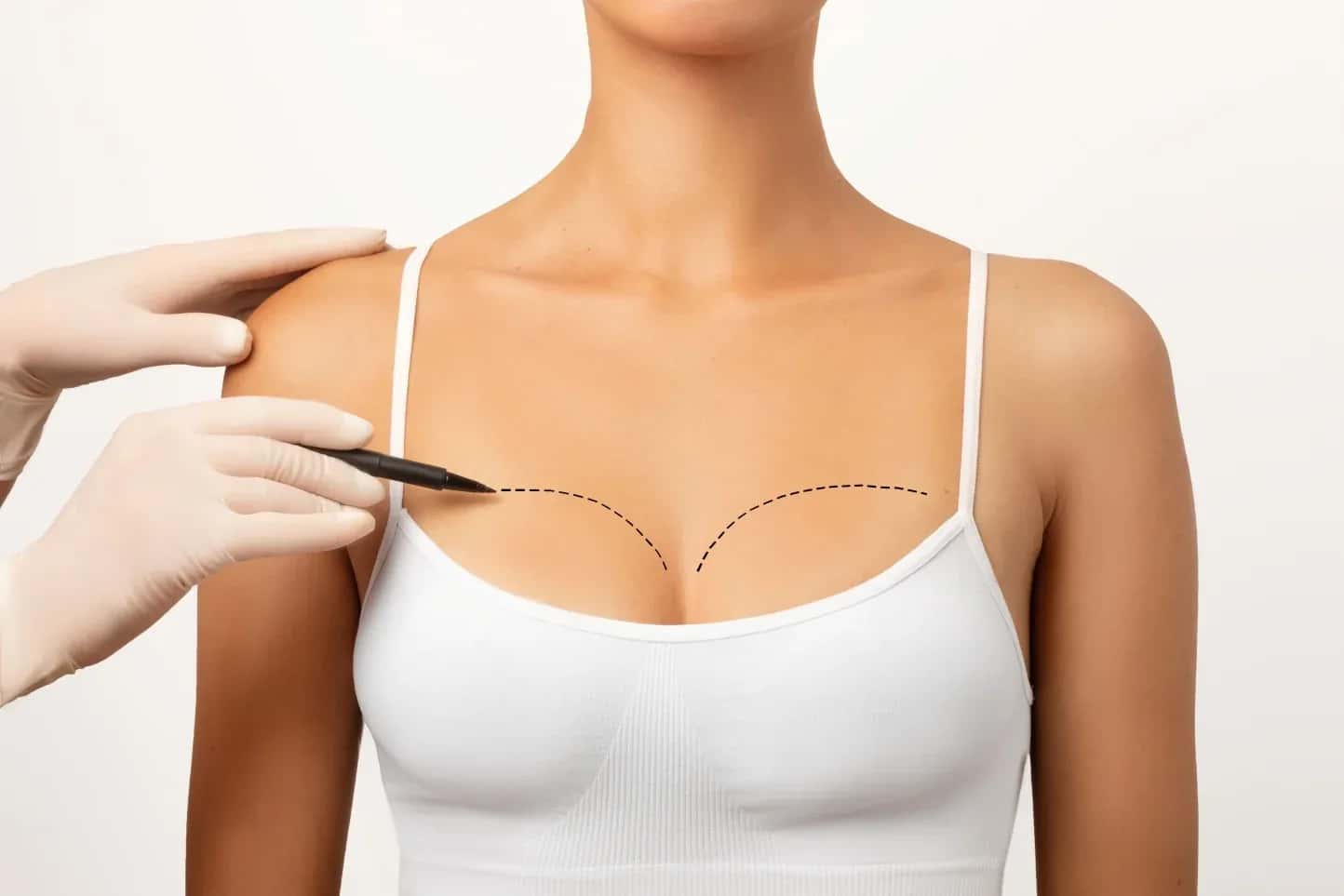


What Is Preservé Breast Augmentation?
Preservé® is a branded breast augmentation program developed by Establishment Labs, the company behind Motiva breast implants. The manufacturer describes it as a less-invasive, tissue-preserving approach that uses proprietary planning, instruments and compatible implants.
The operative concept differs from breast augmentation that creates an implant pocket through wider sharp or electrosurgical dissection. Under the published tissue-preserving protocol, the surgeon creates a limited access channel and expands a prepectoral pocket using specialized instruments and an inflatable balloon.
Prepectoral means that the implant sits in front of the pectoralis major chest muscle. Depending on the precise tissue layer, clinicians may also describe an over-the-muscle pocket as subglandular or subfascial.
Preservé should not be used as a generic name for all prepectoral or minimally invasive augmentation procedures. A surgeon may preserve tissue while using another implant system, and a surgeon may use Motiva implants without following the complete Preservé protocol.
“Preservation” describes an operative goal. It does not mean that breast tissue, ligaments, nerves and blood vessels remain completely untouched or that no structure can be injured.
How Does Preservé Breast Augmentation Work?
The exact plan depends on your anatomy, implant selection, surgeon training, anesthesia requirements and the device regulations in the country where surgery takes place. A typical evaluation and procedure may involve the following stages.
1. Consultation and medical history
The surgeon reviews your reasons for considering augmentation, previous operations, pregnancies, breastfeeding plans, medications, allergies, smoking, medical conditions and family or personal breast history.
The consultation should also consider whether implants, fat transfer, a breast lift or no surgery would better address your concern.
2. Breast and chest-wall measurements
The surgeon measures the breast base, breast height, tissue thickness, inframammary fold, nipple position and chest-wall dimensions.
Preservé planning emphasizes selecting an implant and pocket that remain within the patient’s existing breast boundaries. Measurements still require clinical judgment and do not guarantee a particular appearance.
3. Assessment of tissue and asymmetry
The surgeon evaluates the amount and distribution of breast tissue, skin elasticity, existing sagging and natural differences between the breasts.
An implant can improve volume and shape, but it may not correct substantial skin excess, a low nipple position or complex asymmetry.
4. Implant selection
The surgeon considers implant width, height, volume, profile, projection, gel characteristics and tissue coverage. Implant selection should follow anatomy and long-term tissue support rather than a requested cup size alone.
5. Anesthesia planning
Published tissue-preserving procedures have used local anesthesia with or without sedation as well as general anesthesia. The appropriate option depends on the operation, associated procedures, patient health, local rules and anesthesia team.
Preservé should not be described as a procedure that never requires general anesthesia.
6. Inframammary incision
The published protocol uses an incision in or near the inframammary fold, the natural crease under the breast. The planned incision length may change according to implant dimensions, implant flexibility and the instruments required.
7. Channel and pocket creation
According to Motiva’s description, the surgeon uses a blunt channel-separating instrument to access the intended pocket. A specially sized inflatable balloon then expands the space for the implant.
The objective is to separate and stretch tissue planes in a controlled manner rather than create the entire pocket through wider cutting dissection. Blunt or balloon expansion still applies mechanical force to tissues and should not be characterized as producing no trauma.
8. Implant insertion
The surgeon inserts the compatible breast implant through the incision, often with an insertion sleeve intended to reduce direct handling.
The surgeon remains responsible for confirming implant orientation, position, pocket dimensions and symmetry.
9. Closure
The surgeon closes the incision in layers and applies the chosen dressing or support garment. Every incision forms a scar, although the scar may become less conspicuous as it matures.
10. Postoperative monitoring
The surgical team monitors the patient after anesthesia and provides instructions covering incision care, activity, warning symptoms, medication and follow-up.
Remote advice cannot replace examination when a patient develops significant pain, increasing swelling, redness, fever, drainage, shortness of breath or a sudden change in breast shape.
What Does Tissue Preservation Mean in Breast Surgery?
The breast contains glandular tissue, fat, connective tissue, ducts, nerves, lymphatic vessels and blood vessels. These components sit over the pectoralis major muscle and its fascia, a layer of connective tissue covering the muscle.
Breast parenchyma
Breast parenchyma refers mainly to the glandular and ductal portions of the breast, together with the tissue supporting those structures. It contributes to breast volume and may have a role in lactation.
A tissue-preserving operation aims to avoid unnecessary disturbance of this tissue. No surgical approach can guarantee that every microscopic structure remains unchanged.
Cooper’s ligaments
Cooper’s ligaments are connective-tissue bands that help link the breast tissue, skin and deeper supporting structures. They contribute to the internal support and shape of the breast.
Preservé planning aims to retain more of this supportive network instead of widely dividing it while creating the implant pocket.
Circummammary support structures
The circummammary ligament or supporting fascial structures help define the perimeter of the breast mound and the inframammary fold.
The published tissue-preserving technique attempts to keep the implant within these natural boundaries. Implant displacement can still occur if anatomy, pocket creation, implant selection, healing or later tissue changes affect support.
Fascia
Fascia is connective tissue that surrounds and separates anatomical structures. In subfascial augmentation, the implant sits over the pectoralis muscle but beneath part of its fascial covering.
The exact distinction between subglandular, prepectoral and subfascial placement should appear in your operative plan rather than being inferred from marketing terminology.
Pectoralis muscle
Preservé procedures are generally described as prepectoral and therefore aim to avoid detaching or cutting the pectoralis major muscle to create a submuscular pocket.
That may avoid muscle-related effects such as implant movement during chest-muscle contraction. However, prepectoral placement can introduce other considerations, including tissue coverage, implant visibility, palpability and rippling.
Nerves and blood vessels
Nerves and blood vessels travel through breast and chest-wall tissues. Limiting dissection may reduce the number of structures directly divided, but it cannot guarantee that nerves or vessels will never be stretched, compressed or injured.
Inframammary fold
The inframammary fold marks the lower boundary where the breast meets the chest wall. Surgeons may use this fold for the incision and as an anatomical reference for implant position.
The technique aims to respect the fold, but the fold may still require adjustment in some augmentation plans. Altering it can affect scar position and lower-pole support.
Preservation should therefore be understood as a surgical strategy, not an assurance of zero structural change.
Which Implants Are Used With Preservé?
Preservé® combines a surgical protocol with particular Motiva implants and proprietary instruments. It is not an implant brand by itself.
Official information currently differs by market. Motiva’s United States Preservé page features Motiva SmoothSilk Ergonomix® implants, while global Preservé pages describe use of SmoothSilk Ergonomix2® devices. This difference makes country-specific verification important.
Implant shell
A breast implant has an outer silicone-elastomer shell. Shell design, manufacturing and surface characteristics vary by product and model.
A product name such as SmoothSilk should not be interpreted as proof that all implant-associated risks are absent.
Silicone gel
The Motiva devices promoted for Preservé contain silicone gel. Gel cohesivity and flexibility can affect implant shape, feel and insertion characteristics, but no material guarantees a particular aesthetic result.
Dimensions, profile and projection
Implants with the same volume can have different widths and projections. A narrower implant may project farther forward, while a wider implant may distribute volume across more of the chest.
The surgeon should provide the exact implant model, width, height where applicable, projection and volume.
Surface characteristics
Implant-surface terminology can be complex and does not always correspond neatly across regulators, manufacturers and scientific publications.
Ask the surgeon to show you the official device labeling for the exact implant rather than relying on broad descriptions such as smooth, nano-surface or low inflammatory.
Device identification and traceability
You should receive documentation identifying the implant manufacturer, model, volume, serial or lot information, placement date and implant position.
Current U.S. Motiva patient labeling states that each implant comes with a patient device implant card. The card should remain in your records for future imaging, consultations or surgery.
Country-specific approval
A device permitted in one country may have a different indication, model range, age restriction or labeling elsewhere.
In the United States, the FDA approved Motiva SmoothSilk Round and SmoothSilk Round Ergonomix silicone gel-filled breast implants in 2024 for breast augmentation in women aged 22 or older. That approval applies to the named implant devices and their labeled indication. It should not be represented as FDA approval or endorsement of the entire Preservé surgical program.
Confirm the current authorization of the exact implant, instruments and intended use with the regulator in the country where treatment will occur.
Is Preservé the Same as Traditional Breast Augmentation?
No. Preservé is a defined branded program, while conventional breast augmentation includes multiple established surgical approaches.
| Feature | Preservé Breast Augmentation | Conventional Breast Augmentation | Important Qualification |
|---|---|---|---|
| Surgical concept | Branded tissue-preserving program associated with Motiva | Broad category of implant-based augmentation methods | Conventional surgery is not one uniform operation |
| Pocket creation | Limited access channel and balloon-assisted pocket expansion under the published protocol | May use blunt, sharp, electrosurgical or combined dissection | Techniques vary considerably among surgeons |
| Tissue dissection | Designed to reduce wider disruption of supporting structures | May involve limited or more extensive dissection depending on plane and anatomy | Reduced dissection does not mean zero disruption |
| Implant position | Published protocol uses a prepectoral pocket | May be subglandular, subfascial, dual plane or submuscular | The correct plane depends on tissue coverage and goals |
| Incision | Usually described through an inframammary incision | Inframammary, periareolar and selected other approaches may be used | Every surgical incision produces a scar |
| Implant compatibility | Uses selected Motiva implants according to market and protocol | Can use authorized implants from several manufacturers | Using Motiva implants alone does not make a procedure Preservé |
| Anesthesia | May use local anesthesia, sedation or general anesthesia | Commonly general anesthesia, but other options may be used | Anesthesia choice must be individualized |
| Degree of enlargement | May suit proportionate enlargement within available tissue boundaries | Can accommodate a wide range of goals and implant choices | Larger change may require another approach |
| Recovery | Marketed as supporting faster recovery | Varies by plane, dissection, anesthesia and patient | Strong comparative recovery evidence remains limited |
| Surgeon training | Requires training in the proprietary system | Requires recognized plastic-surgery training and technique-specific competence | Manufacturer training does not replace specialty qualification |
| Evidence maturity | Emerging evidence with limited follow-up and no established randomized superiority evidence | Decades of literature across several techniques and devices | Older evidence is also heterogeneous |
| Risks | Standard surgical and implant risks remain | Standard surgical and implant risks remain | No approach eliminates implant complications |
| Revision potential | Removal, replacement or pocket revision may be required | Removal, replacement or pocket revision may be required | Smaller initial dissection does not prevent future surgery |
Conventional augmentation may place the implant:
- Directly beneath breast tissue in a subglandular pocket
- Beneath fascia in a subfascial pocket
- Partly beneath the pectoralis muscle using a dual-plane technique
- More completely beneath muscle in selected cases
Each approach has potential advantages and disadvantages. A qualified plastic surgeon should explain why a particular plane, implant and incision fit your anatomy rather than presenting one technique as universally superior.
Is Preservé Really Less Invasive?
Motiva markets Preservé as less invasive than conventional breast augmentation because the program uses a limited access channel, balloon-assisted pocket expansion and prepectoral implant placement.
These steps are designed to reduce wider dissection and avoid creating a pocket under the pectoralis muscle. The published protocol also uses a relatively short inframammary incision and emphasizes remaining within existing breast-support boundaries.
However, “less invasive” does not have one standardized meaning across every breast augmentation study. It may refer to:
- A shorter incision
- Less sharp or electrosurgical dissection
- Avoidance of muscle elevation
- Reduced operative time
- Local rather than general anesthesia
- Limited postoperative restrictions
- A combination of these factors
A smaller incision alone does not establish a lower total complication risk. Implant position, tissue thickness, implant dimensions, pocket control, sterility, anesthesia, surgeon skill and patient health can all influence the result.
Pain and recovery claims also require direct comparative evidence. Reports from selected patients, trained surgeons or manufacturer-supported programs cannot show how every patient will recover.
The most accurate current conclusion is that Preservé is designed to reduce certain forms of tissue disruption. Available observational evidence is encouraging but does not yet prove long-term superiority over the full range of conventional augmentation techniques.
What Does Current Research Say About Preservé?
The most directly relevant published study available at the time of writing evaluated tissue-preserving inframammary fold breast augmentation rather than every commercial component or marketing claim of the Preservé program.
Study design
The 2026 Aesthetic Surgery Journal paper was a two-center, multi-surgeon retrospective observational study. It was classified as Level 4 therapeutic evidence rather than a randomized controlled trial.
The study included 330 consecutive patients and 660 implants treated between December 2022 and June 2025. Of these procedures, 313 were primary breast augmentations and 17 were primary augmentation-mastopexy operations.
All procedures used an inframammary incision and balloon-expanded prepectoral pocket. Revision procedures were excluded.
Follow-up
Mean follow-up was 18 months, with a range of 3 to 33 months. Assessments were reported at intervals including two weeks, six months, 12 months and 24 months.
Although the title refers to a three-year clinical experience, the mean patient follow-up did not reach three years. The results therefore should not be interpreted as long-term or lifetime evidence.
Reported outcomes
The authors reported an overall complication rate of 0.9% in their principal table. One patient experienced postoperative bleeding, and two developed a high-riding implant that required surgical correction.
The report separately noted visible implant rippling in three patients. During the available follow-up, the investigators reported no detected infections, significant capsular contracture, implant rupture, lateralization, symmastia or inferior malposition.
These findings describe this selected cohort, these surgeons, one implant manufacturer and the recorded follow-up period. They do not establish a universal Preservé complication rate.
Study limitations
Important limitations include:
- Retrospective rather than randomized design
- No direct conventional-augmentation control group
- Mean follow-up of 18 months
- Some patients followed for only three months
- Use of implants from one manufacturer
- Exclusion of revision procedures
- Treatment by surgeons experienced with the technique
- Limited ability to assess uncommon or late complications
- No proof of lifetime implant stability
- No conclusive comparative demonstration of preserved breastfeeding or sensation
The paper itself identified follow-up duration and use of one implant manufacturer as limitations.
Conflicts of interest
Two authors disclosed consulting or clinical-investigator relationships with Establishment Labs. One was also a primary investigator in the U.S. Motiva implant clinical trial, and another was a sub-investigator. The authors stated that the research received no direct financial support.
A separate review promoting the broader breast-tissue-preservation concept disclosed that its author was an Establishment Labs consultant, held an equity interest and participated in development of the concept and related procedures.
Conflicts do not automatically invalidate research. They make independent replication, transparent methodology and longer comparative follow-up particularly important.
Manufacturer evidence
Motiva’s professional Preservé page cites peer-reviewed implant research but also relies on internal feasibility reports, post-market surveillance summaries, device descriptions and testing reports labeled “data on file.”
Internal data may support product development or regulatory submissions, but readers cannot evaluate it as fully as a publicly available peer-reviewed study. Implant-specific research should also not be assumed to prove the clinical performance of the entire surgical program.
Current evidence supports describing Preservé as an emerging, structured tissue-preserving approach. It does not yet justify claims that the technique eliminates complications or is conclusively safer than established alternatives.
Who May Be a Candidate for Preservé Breast Augmentation?
General considerations may include:
- Adults considering primary breast augmentation: The strongest published evidence currently concerns patients undergoing their first augmentation rather than complex implant revision.
- Patients seeking a proportionate volume increase: The procedure emphasizes matching implant dimensions to existing breast boundaries and tissue support.
- Patients with adequate tissue coverage: A prepectoral implant requires enough suitable soft tissue to cover and conceal the device.
- Patients whose breast dimensions fit compatible implants: Implant width and profile must suit the available breast base and skin envelope.
- Patients without active infection: Untreated infection can increase surgical and implant-related risks.
- Patients without an unexplained breast abnormality: A new lump, nipple discharge, skin change or abnormal imaging finding may require evaluation before cosmetic surgery.
- Patients with realistic expectations: Surgery can increase volume and modify shape, but it cannot guarantee symmetry, sensation, breastfeeding or a particular cup size.
- Patients who understand implant monitoring: Breast implants are not lifetime devices and may require future imaging, revision, removal or replacement.
- Nonsmokers or patients able to follow smoking-related instructions: Nicotine exposure can impair wound healing and may change surgical planning.
- Patients able to attend follow-up: Early reviews and long-term implant surveillance remain important even when recovery appears uncomplicated.
These points are not personal eligibility criteria. Only a qualified plastic surgeon who has examined you can determine whether Preservé, another augmentation technique or no surgery is appropriate.
Who May Not Be Suitable for Preservé?
Preservé may not provide the most appropriate solution when a patient has significant skin excess, limited tissue coverage or requirements that fall outside the available protocol.
Further assessment or another approach may be needed for:
- Significant breast sagging or a low nipple position
- A need for substantial skin removal
- A desired enlargement that exceeds safe tissue dimensions
- Very thin soft-tissue coverage
- Severe stretch marks or weak connective-tissue support
- Complex chest-wall or breast asymmetry
- Previous implant surgery
- Capsular contracture, rupture or implant malposition
- Active breast, skin or systemic infection
- An untreated or unexplained breast abnormality
- Pregnancy or current breastfeeding
- Medical conditions that affect anesthesia, bleeding or healing
- Medications that may alter surgical risk
- Inability to comply with follow-up or implant monitoring
- Expectations that surgery cannot reasonably meet
- Significant body-image distress that warrants further psychological assessment
One factor does not automatically approve or exclude a patient. A surgeon may adapt the plan, recommend additional imaging, delay treatment, combine procedures or advise against surgery.
Can Preservé Be Combined With a Breast Lift?
Breast augmentation and breast lift surgery address different anatomical concerns.
An implant primarily adds volume and changes breast contour. A mastopexy, or breast lift, removes or reshapes skin, changes breast position and may move the nipple and areola.
A lift may be considered when you have:
- Significant skin excess
- A nipple positioned below the inframammary fold
- A downward-pointing nipple
- Marked lower-pole stretching
- Volume loss combined with sagging
- Asymmetry that cannot be addressed by implants alone
The published tissue-preserving study included 17 primary augmentation-mastopexy procedures, showing that the concepts can be combined in selected patients. That does not establish that every Preservé candidate can undergo a simultaneous lift.
Adding mastopexy generally creates additional scars and increases operative complexity. It can also change blood-supply considerations, wound-healing risk, recovery and revision planning.
The surgeon should explain whether an implant alone, a lift alone, a combined operation or staged treatment offers the most appropriate balance.
What Implant Sizes Can Be Used?
There is no universally appropriate Preservé implant volume.
Implant selection should consider:
- Breast base width
- Breast height
- Existing breast volume
- Tissue thickness
- Skin elasticity
- Inframammary fold position
- Chest-wall shape
- Natural asymmetry
- Implant projection
- Implant weight
- Available soft-tissue support
- Desired degree of change
- Long-term effects on the tissue envelope
The 2026 observational study used implant volumes ranging from 95 cc to 475 cc, with a mean of 300 cc. That range describes the study cohort, not a recommended Preservé range for every patient.
Official implant options can also differ between countries. A model available on a global Motiva page may not have the same regulatory status or dimensions in the United States or another market.
Cup size is not standardized among bra manufacturers and cannot be predicted precisely from implant volume. The surgeon should explain the expected change through measurements, implant samples and appropriately qualified imaging or simulation without guaranteeing the result.
What Type of Anesthesia Is Used?
Preservé may be performed with:
- General anesthesia
- Local anesthesia with intravenous or oral sedation
- Local anesthesia without deeper sedation in selected circumstances
In the published tissue-preserving study, most augmentation-only procedures used local anesthesia with or without light sedation. All augmentation-mastopexy procedures used general anesthesia.
The choice depends on:
- Extent of surgery
- Whether a breast lift is added
- Patient health and anxiety
- Airway and anesthesia assessment
- Surgeon and anesthesia-provider preference
- Surgical setting
- Local law and professional standards
- Patient comfort and ability to remain still
Local anesthesia or sedation should not automatically be described as safer. Each method has distinct risks, monitoring requirements and limitations.
Ask who will administer and monitor the anesthesia, what qualifications that person holds and how emergencies are managed.
What Is Recovery Like After Preservé Breast Augmentation?
Recovery varies even when the surgeon limits dissection. You may experience swelling, bruising, pressure, tightness, soreness, temporary breast firmness and changes in nipple or skin sensation.
The breasts may initially appear higher, firmer or less symmetrical while swelling resolves and the tissues adapt. An early appearance does not establish the final position.
Your postoperative plan may cover:
Support garments
The surgeon may recommend a surgical bra or another support garment. The required design and duration depend on implant position, pocket stability and surgeon preference.
Incision care
Instructions may address dressings, showering, adhesive strips, scar care and warning signs. Do not apply products to the incision unless the surgical team has approved them.
Sleeping position
Some surgeons advise sleeping on your back with the upper body elevated during early recovery. The duration varies, and the operating surgeon’s instructions take priority.
Driving
You should not drive while using impairing medication or when arm movement, discomfort or reaction time prevents safe vehicle control.
Desk work
Some patients return to light work relatively early, while others need more time because of pain, fatigue, swelling or job demands. No branded procedure can guarantee a return-to-work date.
Exercise and lifting
The surgeon may restrict strenuous upper-body activity, heavy lifting and impact exercise during healing. Returning too quickly can increase discomfort or place stress on the incision and implant pocket.
Follow-up
Follow-up allows the surgeon to assess wound healing, implant position, swelling, sensation and possible complications.
Motiva and clinics may market Preservé as enabling faster recovery. Current comparative evidence is not strong enough to promise that every Preservé patient will experience less pain or resume normal activity within a fixed number of days.
Does Preservé Leave a Smaller Scar?
Preservé is designed to place a compatible implant through a relatively short inframammary incision. Specialized insertion instruments and flexible implant characteristics may help reduce the incision required for selected devices.
In the 2026 observational study, the planned incision measured approximately 2.5 to 3.5 centimeters, depending on the implant type and size. This measurement applies to that protocol and cohort. It should not be promised before the surgeon selects the implant and confirms the operative plan.
Scar appearance depends on:
- Incision length
- Incision location
- Closure technique
- Skin tension
- Infection
- Delayed wound healing
- Skin pigmentation and type
- Personal scar biology
- Smoking and nicotine exposure
- Postoperative care
- Sun exposure
- Time allowed for scar maturation
A short incision still creates a permanent scar. The scar can widen, darken, become raised or remain visible.
A surgeon should never compromise implant integrity, tissue safety or visibility merely to meet an advertised incision length.
Does Preservé Preserve Nipple Sensation?
The procedure is designed to limit disruption of breast structures that carry nerves and blood vessels. Motiva specifically markets nipple-sensation preservation as a feature of the program.
That objective does not guarantee normal sensation. Breast surgery can stretch, compress, irritate or injure sensory nerves. Swelling and pressure from the implant may also temporarily alter sensation.
Possible outcomes include:
- Temporary numbness
- Increased sensitivity
- Tingling
- Unequal sensation between the breasts
- Reduced sensation
- Persistent or permanent sensory change
The available tissue-preserving study did not provide a randomized comparison proving superior long-term nipple sensation over conventional techniques. Manufacturer statements also cite internal data that are not fully available for independent assessment.
You should ask how the surgeon records sensation before surgery and how sensory changes are evaluated during follow-up.
Can You Breastfeed After Preservé Breast Augmentation?
Some people can breastfeed after implant-based breast augmentation, but no procedure can guarantee future milk production or successful breastfeeding.
Preservé aims to limit disruption of glandular breast tissue, ducts and nerve pathways. The commonly described inframammary approach also avoids making the skin incision around the nipple.
Breastfeeding ability can still depend on:
- Breast development and existing glandular tissue
- Previous ability to produce milk
- Incision and implant-pocket location
- Surgical dissection
- Nerve function
- Implant pressure on surrounding tissue
- Previous breast operations
- Pregnancy-related breast changes
- Hormonal and medical factors
- Infant feeding factors unrelated to surgery
Current FDA Motiva patient labeling states that breast implants and breast surgery may interfere with breastfeeding. It also notes that sensory changes can affect breastfeeding ability.
Discuss future pregnancy and breastfeeding plans before selecting the procedure. Pregnancy can also stretch the skin and change breast volume or implant appearance, even when breastfeeding remains possible.
Is Preservé Breast Augmentation Reversible?
The implants can generally be removed, but removal is not the same as restoring the breasts to their exact preoperative anatomy.
After augmentation, the breast may have:
- A permanent incision scar
- A capsule of scar tissue around the implant
- Stretched skin
- Changes in breast-tissue distribution
- Changes in the inframammary fold
- Reduced or increased sensation
- Volume loss or deflation
- Sagging
- Asymmetry
- Irregularities after implant removal
The degree of change can depend on implant size, duration of implantation, pregnancies, weight changes, aging, tissue quality and complications.
Some patients need no additional cosmetic procedure after removal. Others may consider a breast lift, fat transfer, capsule surgery or implant replacement.
Motiva offers a financial-support or warranty program associated with removal in certain markets. Warranty coverage concerns financial or product terms. It does not prove that the biological or visual effects of surgery are completely reversible.
What Are the Risks of Preservé Breast Augmentation?
Preservé remains breast implant surgery. Its tissue-preserving objective does not remove the risks associated with surgery, anesthesia or an implanted medical device.
Potential risks include:
- Bleeding: Bleeding can occur during or after surgery and may produce swelling or require another operation.
- Hematoma: A collection of blood can cause pain, pressure, asymmetry or delayed healing.
- Infection: Infection may require antibiotics, drainage or temporary or permanent implant removal.
- Seroma: Fluid can collect around the implant or within the surgical pocket.
- Poor wound healing: The incision can separate, heal slowly or develop tissue damage.
- Scarring: Scars may remain visible, widen, become raised or change pigmentation.
- Pain: Pain can be temporary or persistent. Reduced initial dissection does not guarantee a pain-free recovery.
- Sensation changes: Nipple or breast sensation may become reduced, increased, uneven or permanently altered.
- Breast asymmetry: Natural asymmetry may remain, and new differences may develop after surgery.
- Implant malposition: An implant can sit too high, too low, too far toward the side or too close to the center of the chest.
- Rippling: Folds in the implant may become visible or palpable, particularly when tissue coverage is thin.
- Implant visibility or palpability: The implant edge may be seen or felt through the skin.
- Capsular contracture: Scar tissue around the implant can tighten, causing firmness, distortion or pain.
- Implant rupture: A silicone implant shell can tear. Rupture may be silent and detected only through imaging.
- Need for revision surgery: Implant exchange, pocket correction, scar revision, capsule surgery or implant removal may become necessary.
- Anesthesia-related complications: Sedation and general anesthesia can cause respiratory, cardiovascular, allergic or other complications.
- Unsatisfactory appearance: Size, shape, cleavage, symmetry or implant position may not match expectations.
- Changes with aging, pregnancy or weight: Breast tissue and skin continue to change after augmentation.
- Breast-imaging considerations: Implants can make some breast imaging more technically complex. Inform the imaging center and show the implant card.
- Breast implant-associated anaplastic large cell lymphoma: BIA-ALCL is a rare lymphoma associated with the capsule and fluid around breast implants. FDA information states that it has occurred more frequently in patients with textured implant histories.
- Other rare capsule-associated malignancies: Rare reports include squamous cell carcinoma and other lymphomas in the scar capsule surrounding breast implants.
- Systemic symptoms reported by some implant patients: Some patients report fatigue, cognitive symptoms, joint or muscle pain, rash, anxiety and other symptoms collectively referred to by some as breast implant illness. Their causes and individual risk remain incompletely understood.
Smooth or comparatively low-roughness implant surfaces should not be described as producing zero risk of implant-associated disease.
The risk profile can vary according to implant surface, device, implant plane, surgical technique, previous implants, health, smoking, tissue thickness and follow-up duration.
How Long Do Preservé Breast Implants Last?
Breast implants are not lifetime devices. No surgeon or manufacturer can guarantee how long an individual implant will remain free of complications.
Some implants remain in place for many years without an immediate clinical problem. Others require earlier removal or replacement because of rupture, capsular contracture, malposition, discomfort, infection, aesthetic changes or patient preference.
The likelihood of complications and additional surgery generally increases with time. A warranty period does not represent an implant’s expected biological lifespan.
Long-term monitoring may include:
- Clinical breast examination
- Routine breast-cancer screening appropriate for age and risk
- Imaging to assess implant integrity
- Evaluation of new pain, swelling, firmness or asymmetry
- Review of implant position
- Discussion of changes in personal health or preferences
Current U.S. labeling for silicone gel-filled Motiva implants recommends ultrasound or MRI screening for silent rupture beginning five to six years after implantation and every two to three years afterward for asymptomatic patients. MRI is recommended when symptoms occur or ultrasound findings remain uncertain.
Recommendations can differ by country, implant and evolving regulatory guidance. Follow the current labeling supplied with your exact device and the advice of your healthcare professionals.
How Should Patients Compare Preservé Surgeons?
Use verifiable professional and clinical criteria rather than social-media visibility or manufacturer branding alone.
Recognized plastic-surgery qualifications
Confirm that the surgeon holds recognized specialist training and active professional registration in the country where they practice.
In the United States, relevant verification includes American Board of Plastic Surgery certification. Other countries have their own recognized specialist registers and professional boards.
Breast-augmentation experience
Ask how frequently the surgeon performs primary augmentation, revision, mastopexy and prepectoral implant surgery.
Experience with one branded protocol does not necessarily demonstrate competence in handling every breast shape or complication.
Preservé-specific training
Ask what formal training the surgeon completed in the proprietary instruments, planning and implant system.
A Motiva training certificate demonstrates participation in manufacturer training. It does not replace recognized plastic-surgery certification.
Experience with alternatives
A surgeon should be able to offer and explain conventional subglandular, subfascial, dual-plane, submuscular, fat-transfer and mastopexy options where appropriate.
Be cautious when every patient receives the same branded procedure regardless of anatomy.
Accredited or appropriately licensed facility
Verify the facility’s licensing or accreditation, emergency equipment and transfer arrangements.
Qualified anesthesia provider
Ask who will administer sedation or general anesthesia and how that person’s credentials can be verified.
Transparent implant documentation
The surgeon should identify the manufacturer, model, dimensions, profile, volume and regulatory status. You should receive an implant card or equivalent traceability record after surgery.
Written informed consent
Consent should cover procedure-specific limitations, alternatives, scars, sensation, breastfeeding, implant surveillance, rare malignancies, systemic symptoms and future surgery.
Complication management
Ask who handles infection, bleeding, implant displacement, wound problems and suspected rupture.
Revision policy
A written policy should distinguish manufacturer device replacement from surgeon, facility, anesthesia, imaging, hospital and travel costs.
Emergency contact
Confirm who you can contact outside normal clinic hours and what symptoms require urgent assessment.
Long-term follow-up
A responsible plan should extend beyond photographs taken shortly after surgery.
Financial relationships
Ask whether the surgeon receives consulting fees, research support, honoraria, royalties, travel support, implants, instruments or other benefits from the manufacturer.
A financial relationship does not automatically mean the recommendation is inappropriate. Transparent disclosure helps you evaluate the advice.
MediFinder can help you research plastic surgeons and clinics offering breast procedures. You should still verify professional registration, facility standards, implant authorization and treatment responsibility directly.
What Questions Should You Ask During a Consultation?
- Is Preservé appropriate for my anatomy and goals?
- Which alternative procedures should I consider?
- Are you recognized as a plastic-surgery specialist in this country?
- Where can I verify your active professional registration?
- What Preservé-specific training have you completed?
- How many tissue-preserving and conventional augmentations do you perform?
- Which implant model, dimensions, profile and volume do you recommend?
- Why does that implant fit my tissue measurements?
- Is the implant authorized for this indication in this country?
- Will the implant sit in a prepectoral, subglandular or subfascial plane?
- Why do you recommend that implant position?
- Which breast structures will the procedure aim to preserve?
- Which structures can still be stretched or injured?
- What type of anesthesia will be used?
- Who will administer and monitor the anesthesia?
- Where will the operation take place, and is the facility appropriately accredited or licensed?
- What scar length and location do you expect for the selected implant?
- What complications have you personally encountered with this approach?
- What happens if the implant pocket becomes too large or the implant moves?
- How will you record and monitor nipple sensation?
- How could surgery affect breastfeeding?
- What follow-up imaging will this implant require?
- Will I receive an implant card and complete device information?
- What does the manufacturer’s warranty cover?
- Which surgeon, facility, anesthesia, imaging and travel costs are excluded?
- Who pays if I need revision surgery?
- What happens if I later want the implants removed?
- Could removal leave sagging, asymmetry or contour changes?
- Do you or the clinic have a financial relationship with Establishment Labs or Motiva?
- Who will manage an urgent complication after I leave the clinic or return home?
Preservé vs Fat Transfer Breast Augmentation
Preservé uses silicone breast implants. Fat-transfer augmentation uses liposuction to collect the patient’s own fat, processes that fat and injects it into the breasts.
| Feature | Preservé | Fat Transfer |
|---|---|---|
| Volume source | Silicone implant | Patient’s own fat |
| Foreign implant | Yes | No breast implant, although surgery and transferred tissue remain involved |
| Expected volume change | More predictable implant volume | Usually more limited and influenced by fat survival |
| Additional procedure | Implant-pocket surgery | Liposuction and fat injection |
| Donor-site requirement | No | Requires adequate harvestable fat |
| Volume stability | Implant volume remains, although tissues change | Some transferred fat may not survive |
| Implant risks | Rupture, capsular contracture, malposition and implant-associated conditions | No implant rupture or capsular contracture |
| Fat-transfer risks | Not applicable | Cysts, fat necrosis, calcification, infection and contour irregularity |
| Scars | Inframammary surgical scar | Multiple small liposuction and injection access scars |
| Revision | Implant exchange, removal or pocket revision may be required | Additional fat-transfer sessions may be needed |
| Monitoring | Implant integrity and breast screening | Routine breast screening, with disclosure of prior fat transfer |
| Suitability | Depends on tissue coverage and implant goals | Depends on available fat, desired enlargement and health |
Neither method is universally safer or more appropriate. Fat transfer avoids an implant but introduces liposuction, variable fat retention and fat-grafting risks. Preservé offers a defined implant volume but retains the long-term responsibilities associated with breast implants.
Preservé vs Motiva MinimalScar
Preservé® and Motiva MinimalScar® are separate branded Motiva programs, although they overlap in their use of Motiva implants, specialized instruments and relatively short incisions.
Primary objective
Preservé emphasizes preserving breast-support structures while creating a controlled implant pocket.
MinimalScar primarily emphasizes inserting a compatible Motiva implant through a reduced incision.
Instruments
Official Preservé descriptions include:
- Motiva Channel Separator
- Motiva Inflatable Balloon
- Motiva Insertion Sleeve
Official MinimalScar descriptions emphasize:
- Motiva Insertion Sleeve
- Specialized retractor
- A reduced-incision implant-insertion protocol
Pocket creation
Preservé includes a defined channel and balloon-assisted pocket-creation concept.
MinimalScar materials focus mainly on incision length and implant insertion. They do not establish that every MinimalScar operation follows the Preservé tissue-preservation protocol.
Implant compatibility
Official global MinimalScar pages mention several Motiva implant families. Preservé pages identify more specific implant compatibility that varies by market.
Marketing terminology
“Minimal scar” describes the incision-focused objective. “Tissue preservation” describes the broader objective of limiting disturbance to internal supporting structures.
A surgeon might use a short incision without performing Preservé. A surgeon might use Motiva implants without performing either branded program.
Ask for the exact protocol, instruments, pocket plane and implant model rather than relying on the label alone.
Frequently Asked Questions
Is Preservé breast augmentation the same as Motiva implants?
No. Motiva implants are medical devices, while Preservé is a branded surgical program that combines planning, specialized instruments, pocket creation and compatible Motiva implants. A surgeon can use a Motiva implant in conventional augmentation without following the Preservé protocol.
Is Preservé breast augmentation FDA approved?
The FDA approved specified Motiva SmoothSilk Round and Round Ergonomix silicone gel-filled implants for breast augmentation in women aged 22 or older in 2024. That device approval should not be described as separate FDA approval or endorsement of the Preservé surgical technique as a complete branded procedure.
Is Preservé safer than traditional breast augmentation?
Current evidence does not prove that Preservé is universally safer. A retrospective 330-patient study reported encouraging short- to medium-term findings, but it lacked a randomized conventional-surgery comparison and had a mean follow-up of 18 months. Standard surgical and implant risks remain relevant.
Does Preservé use silicone implants?
Yes. Current official Preservé materials describe use of compatible Motiva silicone gel-filled implants. The exact implant family differs by market, so you should confirm the model, dimensions, regulatory status and official patient labeling before surgery.
Does Preservé go over or under the muscle?
The published tissue-preserving protocol uses a prepectoral pocket, meaning that the implant sits in front of the pectoralis major muscle. The surgeon should clarify whether the exact pocket is subglandular or subfascial and explain whether your tissue provides sufficient coverage.
Can Preservé preserve nipple sensation?
Preserving sensory structures is an objective of the procedure, but normal nipple sensation cannot be guaranteed. Temporary or permanent numbness, increased sensitivity or unequal sensation can occur after any breast implant operation. Comparative long-term sensory evidence for Preservé remains limited.
Can you breastfeed after Preservé breast augmentation?
Some patients can breastfeed after augmentation, but Preservé cannot guarantee future milk production. Breastfeeding depends on glandular tissue, ducts, nerve function, surgical changes, previous breast history and individual milk supply. Discuss future pregnancy and feeding plans with the surgeon.
Does Preservé leave a scar?
Yes. Preservé usually uses an incision in the inframammary fold. Specialized instruments may permit a relatively short incision for selected implants, but the procedure is not scarless. Scar visibility depends on incision length, healing, skin characteristics, tension, infection and scar biology.
Is Preservé breast augmentation painful?
It remains surgery, so discomfort, pressure, tightness and soreness can occur. The technique is designed to limit wider dissection, but current comparative evidence does not support promising a pain-free procedure. Pain intensity and duration vary by patient, implant, anesthesia and operative plan.
How long is recovery after Preservé?
There is no universal recovery timeline. Some patients may resume light activities relatively early, while driving, lifting and exercise may remain restricted. Recovery depends on tissue response, anesthesia, implant size, associated procedures, occupation and complications. Follow the operating surgeon’s instructions.
Can Preservé correct sagging breasts?
An implant may improve mild volume loss but does not necessarily correct substantial sagging, low nipple position or excess skin. Some patients need a breast lift, another augmentation approach or no implant. A clinical examination is required to distinguish volume loss from true ptosis.
Can Preservé implants be removed?
Yes, breast implants can be removed. Removal does not guarantee restoration of the original breast shape. Stretched skin, scars, sagging, asymmetry and tissue changes may remain, and some patients later consider a lift, fat transfer or implant replacement.
Are Preservé breast implants permanent?
No. Breast implants are not lifetime devices. They do not require automatic replacement on one fixed date, but rupture, capsular contracture, malposition, cosmetic changes or personal preference can lead to later surgery. Clinical and imaging follow-up may be needed.
What are the main risks of Preservé?
Risks include bleeding, hematoma, infection, seroma, scarring, pain, sensation changes, asymmetry, rippling, implant visibility, malposition, capsular contracture, rupture, anesthesia complications and revision surgery. Rare implant-associated malignancies and systemic symptoms reported by some implant patients also require informed discussion.
Conclusion
Preservé® is a branded tissue-preserving breast augmentation program associated with Motiva. It combines anatomical planning, specialized pocket-creation instruments and compatible breast implants while aiming to reduce disruption of native support structures.
It still involves breast surgery and an implanted medical device. It cannot guarantee preserved sensation, breastfeeding, a scarless recovery, complete reversibility or freedom from implant complications.
Early observational research reports encouraging outcomes, but limited follow-up, lack of randomized comparison and relevant author-industry relationships prevent conclusions about long-term superiority.
Suitability depends on breast dimensions, tissue coverage, skin quality, sagging, desired enlargement, health and expectations. Before choosing the procedure, compare it with established implant planes, fat transfer and breast lift options, and review the official labeling for the exact implant.
MediFinder can help you research plastic surgeons and cosmetic-surgery clinics. Verify each surgeon’s professional registration, relevant breast-surgery experience, facility standards and financial relationships before making a treatment decision.
References
- Motiva USA. Preservé patient and procedure information.
- Motiva and Establishment Labs. Preservé professional and global patient information.
- Randquist C, Gahm J, Wongkietkachorn A, Jaeger M. Tissue-Preserving Inframammary Fold Breast Augmentation: A 3-Year Clinical Experience. Aesthetic Surgery Journal. 2026.
- Chacón-Quirós M. Breast Tissue Preservation: A Paradigm Shift in Aesthetic Breast Surgery. Clinics in Plastic Surgery. 2026.
- U.S. Food and Drug Administration. Motiva SmoothSilk Round and SmoothSilk Round Ergonomix approval records, patient labeling and safety information.
- U.S. Food and Drug Administration. Risks and Complications of Breast Implants; Things to Consider Before Getting Breast Implants.
- American Society of Plastic Surgeons. Breast Augmentation Risks, Recovery and Surgeon-Selection Resources.
- National Cancer Institute. Breast Anatomy.
- Motiva. Motiva MinimalScar patient and professional information.
- American Society of Plastic Surgeons. Fat Transfer Breast Augmentation.
- American Society of Plastic Surgeons. Breast Implant Removal.
- Last updated
- Language
- English
How did you find this article?
Liposuction has become part of a more open conversation about cosmetic surgery, with celebrities discussing everything from subtle body contouring to difficult recoveries and results they later regretted. These 20 public figures have personally acknowledged undergoing liposuction, offering different perspectives.
Many actors, models, musicians and television personalities have spoken openly about having rhinoplasty, some for cosmetic reasons and others to repair an injury or improve their breathing. This guide looks at what 20 of these celebrities said about their own nose surgery and what their experiences can teach anyone.
Several well-known musicians, reality stars and influencers have spoken openly about having a Brazilian butt lift, and many of them have also shared regret, reduction surgery or difficult recoveries. This guide looks at what these celebrities said about their own procedures and what their experiences can teach anyone.
Subscribe to the Medifinder newsletter and never miss our latest content.