










Limb Lengthening Surgery: What Is It and How Much Does It Cost?
This guide explains limb lengthening surgery, how the procedure works, expected height gain, costs, recovery, risks, and the role of rehabilitation.

- Last updated
- 120 reads
- 8 min read


What Is Limb Lengthening Surgery?
Limb lengthening surgery is an orthopedic procedure that gradually increases the length of a bone by stimulating new bone growth between two separated bone segments.
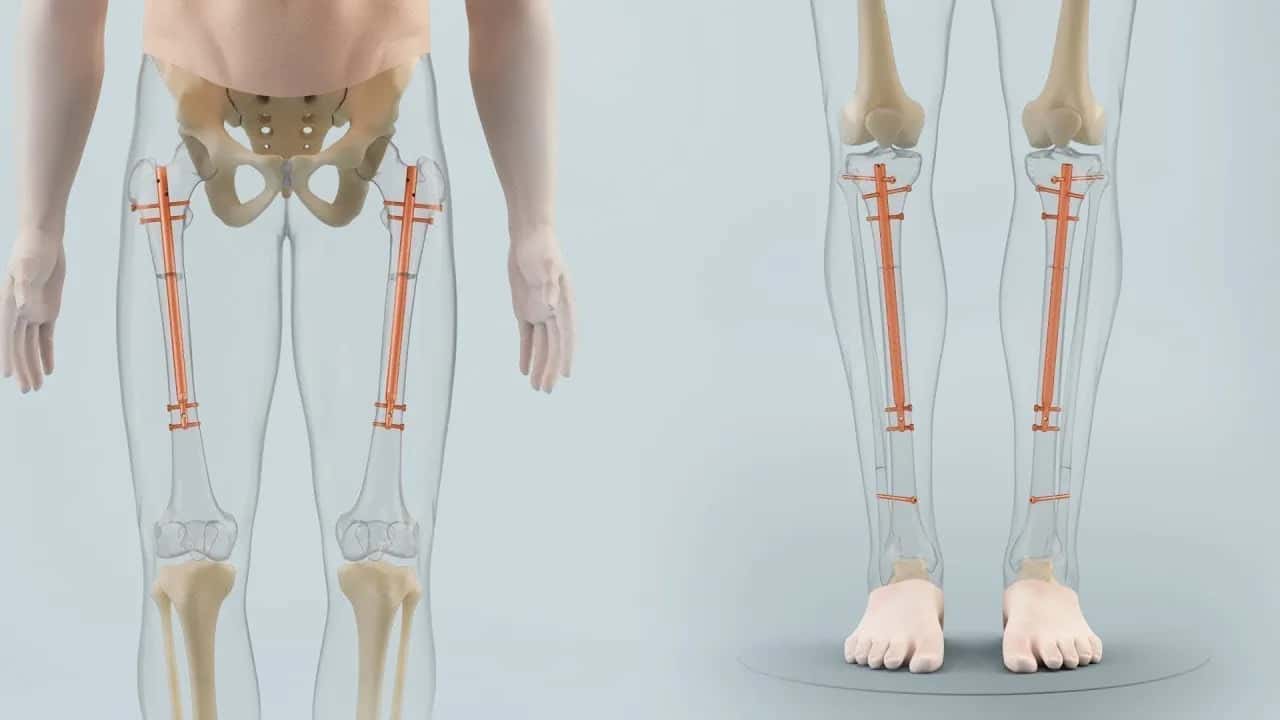
The process begins with a controlled bone cut known as an osteotomy. A lengthening device then stabilizes both sections while gradually creating a small space between them. New bone naturally develops inside this expanding gap through a process called distraction osteogenesis. The surrounding muscles, nerves, blood vessels, and other tissues also adapt gradually. Limb lengthening may correct differences between limb lengths or increase height through bilateral leg lengthening.
Why Is Limb Lengthening Surgery Performed?
Limb lengthening surgery is performed to correct significant limb length differences, address certain skeletal conditions, or increase height through elective stature lengthening.
A leg length discrepancy can develop because of congenital conditions, growth plate injuries, infections, trauma, or abnormal bone development. Lengthening the shorter bone can improve symmetry and create a more balanced walking pattern. In elective height surgery, both legs are lengthened in a controlled and symmetrical manner. The procedure uses the same biological principle of gradual new bone formation. However, treatment goals differ because reconstructive lengthening addresses a functional problem, while cosmetic stature lengthening aims to increase overall height.
How Does Limb Lengthening Surgery Work?
Limb lengthening surgery works by slowly separating two surgically divided bone segments so the body produces new bone tissue within the developing gap.
After the osteotomy, an internal nail or external fixation system keeps the bone properly aligned. Lengthening usually begins after a short initial healing period. The device then separates the bone in very small increments each day. A commonly used rate is approximately one millimeter daily. New tissue develops continuously between both segments as the space expands. Once the desired length is reached, distraction stops. The new bone then enters the consolidation phase, during which it gradually mineralizes and becomes stronger.
Which Bones Can Be Lengthened?
Limb lengthening can be performed on several long bones, including the femur, tibia, humerus, radius, and ulna.
For height increase, treatment usually focuses on the femur or tibia because these bones determine a substantial portion of leg length. Femur lengthening extends the thigh bone, while tibial lengthening increases the length of the lower leg. In reconstructive cases, upper-limb bones may also require treatment when a significant length difference affects function. The chosen bone determines the surrounding muscles and joints that must adapt during lengthening. Each segment therefore creates different rehabilitation demands while using the same underlying process of distraction osteogenesis.
How Much Taller Can Limb Lengthening Surgery Make You?
Stature lengthening surgery commonly adds around 8 centimeters through femur lengthening, while additional tibial lengthening can provide further height increase.
Internal femoral lengthening systems commonly allow approximately 3 inches, or about 8 centimeters, of additional height during one treatment cycle. Tibial lengthening can add roughly another 2 to 3 inches when performed as a separate procedure. Combined treatment can therefore produce a total increase of approximately 5 to 6 inches in selected cases. Greater lengthening also creates greater demands on muscles, tendons, nerves, and joints. For this reason, height gain develops gradually rather than through one immediate surgical change.
How Long Does Limb Lengthening Surgery Take?
The complete limb lengthening process usually takes several months because the bone must first lengthen gradually and then become strong enough for normal activity.
For an 8-centimeter height increase, the distraction period commonly continues for approximately three to four months. The bone is generally lengthened by less than one millimeter each day. After reaching the planned length, several additional weeks are required for consolidation and strengthening. Many people reach major recovery milestones around six months, although deeper bone remodeling continues beyond that point. Internal rods may remain inside the bones for approximately one year before removal becomes appropriate.
How Much Does Limb Lengthening Surgery Cost?
Cosmetic limb lengthening surgery in the United States can exceed $100,000, with current 2026 femur procedures commonly priced around $114,500 to $125,000.
Current published pricing also places bilateral tibial lengthening around $125,000 to $135,000 in major U.S. treatment programs. Combined femur and tibia procedures can exceed $200,000 because they involve additional surgery, implants, imaging, and rehabilitation. Some current packages list combined procedures between approximately $229,500 and $313,000, depending on the planned height increase. Hardware removal may create an additional expense later. These figures primarily describe elective stature lengthening rather than medically necessary reconstructive treatment.
What Affects Limb Lengthening Surgery Cost?
Limb lengthening surgery cost is mainly affected by the bone being lengthened, implant system, number of procedures, hospital services, rehabilitation, and planned height increase.
Internal motorized nails generally represent a significant part of the total surgical expense. Bilateral procedures also require implants for both legs, increasing equipment and operating costs. Lengthening both the femurs and tibias requires more surgery than treating one segment alone. Anesthesia, hospitalization, diagnostic imaging, mobility equipment, and physical therapy may also contribute to the final amount. Later implant removal can represent a separate expense when it is not included within the original surgical package.
Does Insurance Cover Limb Lengthening Surgery?
Insurance may cover medically necessary limb lengthening, while elective surgery performed solely to increase height is generally treated as a self-funded procedure.
Coverage becomes more relevant when lengthening corrects a documented limb length discrepancy, skeletal abnormality, traumatic injury, or another qualifying medical condition. Cosmetic stature lengthening has a different purpose because both legs may function normally before treatment. As a result, elective height increase is generally excluded from standard health insurance benefits. Related expenses can include surgery, implants, hospital care, rehabilitation, imaging, accommodation, and later hardware removal. Reconstructive treatment and cosmetic height surgery should therefore be considered separately when estimating financial responsibility.
Is Limb Lengthening Surgery Painful?
Limb lengthening surgery can cause postoperative pain, tightness, soreness, and discomfort, particularly during early recovery and soft tissue adaptation.
Pain immediately after surgery is usually related to the osteotomy and surrounding tissue trauma. This discomfort generally becomes more manageable as the initial surgical healing progresses. The gradual lengthening phase does not necessarily create severe continuous pain because distraction occurs in very small increments. However, muscles and tendons become progressively stretched as bone length increases. This can create tightness and contribute to joint stiffness. Rehabilitation and stretching therefore remain central throughout the lengthening process because soft tissues must adapt alongside the developing bone.
What Is Limb Lengthening Surgery Recovery Like?
Limb lengthening recovery involves a gradual progression through surgical healing, bone distraction, consolidation, physical therapy, and increasing weight-bearing activity.
The first stage focuses on recovering from the operation and protecting the treated bones. Lengthening then begins gradually while imaging tracks new bone formation and alignment. Physical therapy continues throughout this phase to maintain muscle flexibility and joint movement. Once the planned length has been achieved, distraction stops and the newly formed bone begins hardening. Weight-bearing activity then increases progressively as the bone gains strength. Full recovery requires several months because muscles, bones, joints, and surrounding tissues must adapt to the new limb length.
When Can You Walk After Limb Lengthening Surgery?
Walking after limb lengthening surgery returns gradually as new bone strengthens and the treated legs become capable of safely supporting increasing body weight.
Mobility aids such as crutches or a wheelchair may be required during early recovery. Some internal systems permit controlled weight bearing, but unrestricted walking requires adequate bone consolidation. Many patients progress toward walking without crutches within approximately two to three months during certain reconstructive lengthening protocols. Elective stature lengthening can involve a longer progression because both legs undergo treatment simultaneously. Normal activity may become achievable around six months after substantial height lengthening. Running and high-impact exercise require greater bone strength and therefore return later.
What Are the Risks of Limb Lengthening Surgery?
Limb lengthening surgery carries risks involving bone healing, joints, muscles, nerves, infection, alignment, and the implanted or external lengthening device.
Important potential complications include:
-
Delayed or incomplete new bone consolidation
-
Joint stiffness caused by increasing muscle tension
-
Muscle or nerve irritation during lengthening
-
Surgical wound or bone infection
-
Pin-site infection with external fixation systems
-
Failure to achieve the planned bone length
-
Loss of movement around nearby joints
-
Bone alignment problems during distraction
-
Implant damage or breakage under excessive loading
Careful monitoring throughout distraction and consolidation helps identify developing problems before they significantly affect recovery.
Why Is Physical Therapy Important After Limb Lengthening?
Physical therapy is essential after limb lengthening because muscles, tendons, and joints must adapt continuously as the bone becomes progressively longer.
Bone can lengthen through distraction osteogenesis, but surrounding soft tissues need sufficient flexibility to follow the changing skeletal structure. Tight muscles can limit joint movement and increase stiffness during the distraction phase. Regular stretching therefore helps preserve mobility while strengthening exercises support safe movement. Rehabilitation also becomes increasingly important as weight bearing progresses during consolidation. Daily exercises may continue for several months during stature lengthening. Maintaining flexibility throughout the process reduces the functional strain created when bones lengthen faster than surrounding muscles and tendons can comfortably adapt.
Is Limb Lengthening Surgery Safe?
Limb lengthening surgery is a major orthopedic procedure that can achieve predictable bone growth, but it carries meaningful surgical and rehabilitation risks.
Modern internal lengthening nails provide controlled distraction without the large external frames required by older techniques in many adult cases. However, successful lengthening still depends on new bone formation, healthy joint movement, muscle flexibility, and stable fixation. Complications can include infection, joint stiffness, nerve problems, delayed bone healing, or implant failure. The procedure also requires months of monitoring and rehabilitation rather than a short postoperative recovery. Its safety therefore depends on completing every stage of lengthening and consolidation without exceeding what the bone and surrounding tissues can tolerate.
Are Limb Lengthening Results Permanent?
The height or limb length gained through successful limb lengthening surgery is generally permanent once the new bone has fully consolidated and remodeled.
The procedure does not create temporary spacing between existing bones. Instead, the body produces new bone tissue inside the gradually expanding gap. During consolidation, that tissue becomes mineralized and progressively develops the strength of mature bone. Once healing is complete, the longer bone remains at its new length. Internal rods may later be removed after sufficient healing without reversing the achieved height increase. Future trauma or another skeletal condition can still affect the limb, but normal completion of the procedure does not cause the bone to return to its original length.
- Last updated
- Language
- English
How did you find this article?
Height reduction surgery is a rare orthopedic procedure in which part of a leg bone is surgically shortened, primarily to correct meaningful limb-length differences rather than as a routine cosmetic operation for people who simply want to be shorter.
This guide compares ACL surgery costs around the world in 2026, including private treatment, graft choices, hospital packages, rehabilitation, insurance, and medical travel expenses.

Botox Treatment for Spasticity is a medical use of botulinum toxin injections to relax selected overactive muscles for a limited time. It is usually considered when muscle tightness, spasms, or stiffness affect comfort, movement, hygiene, caregiving, or daily activities.

Subscribe to the Medifinder newsletter and never miss our latest content.