










Surgery to Shrink Height
Height reduction surgery is a rare orthopedic procedure in which part of a leg bone is surgically shortened, primarily to correct meaningful limb-length differences rather than as a routine cosmetic operation for people who simply want to be shorter.

- Last updated
- 109 reads
- 10 min read
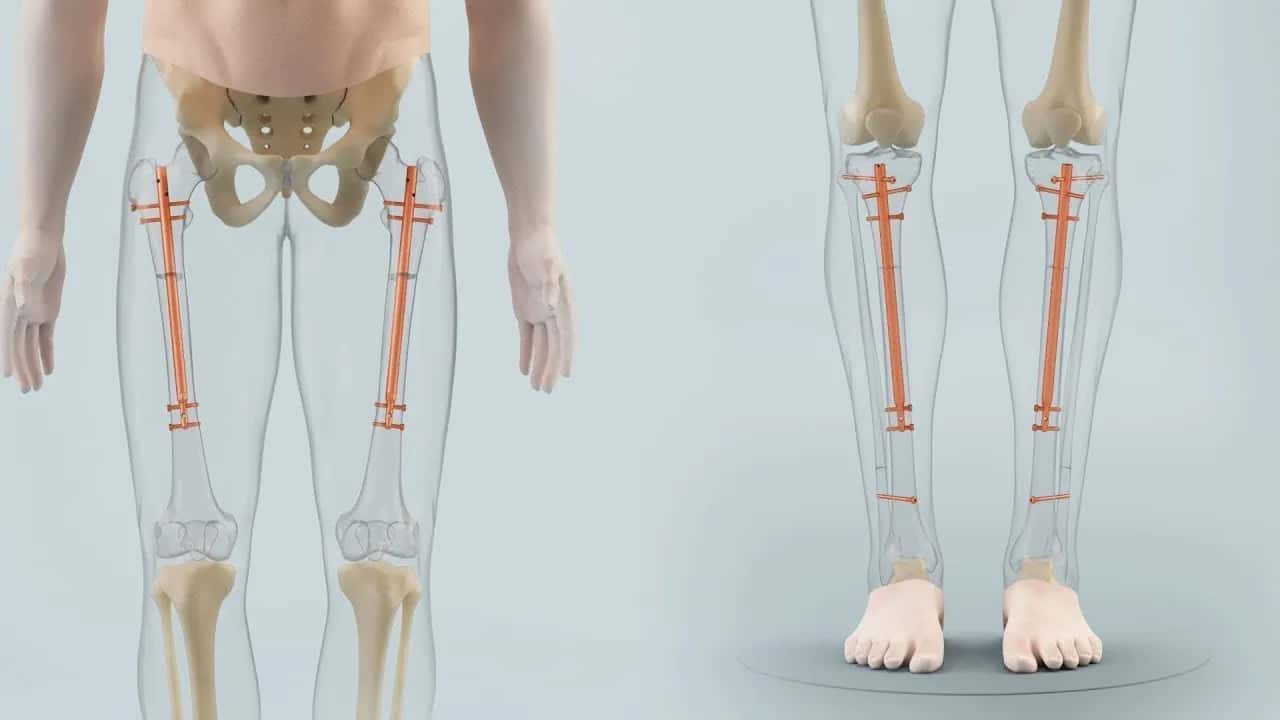


Is There Surgery to Make You Shorter?
Surgery can technically reduce a person's standing height by shortening bones in the legs, but there is no widely established routine cosmetic procedure designed simply to make healthy adults shorter.
Orthopedic surgeons already perform limb-shortening operations for people with significant differences between the lengths of their legs. During these procedures, a section of bone is removed before the remaining segments are brought together and stabilized.
Using the same principle purely for stature reduction is far less common. The operation involves healthy weight-bearing bones, major rehabilitation, and risks that make elective shortening very different from a simple cosmetic procedure.
What Is Height Reduction Surgery?
Height reduction surgery generally refers to bone-shortening surgery performed on the femur or tibia to decrease the length of the legs and therefore reduce standing height.
The established medical version of this operation is used to correct limb-length discrepancy, particularly when one leg is considerably longer than the other. Surgeons shorten the longer limb so the two sides become more balanced.
For someone with equal-length healthy legs, bilateral shortening would mean operating on both sides solely to reduce overall stature. That application remains unusual and requires far more careful consideration than the informal term height reduction surgery suggests.
How Does Bone Shortening Surgery Work?
Bone shortening works by removing a measured section of bone and bringing the remaining ends together so they can heal at a shorter overall length.
The operation is an osteotomy-based procedure. After exposing the selected bone, the surgeon creates controlled cuts, removes the planned segment, corrects alignment if necessary, and stabilizes the remaining bone until healing occurs.
Unlike limb lengthening, there is no gradual distraction phase designed to create new length between two bone segments. The shortening happens during surgery.
The body must then heal the new bone junction while the muscles and other surrounding tissues adapt to the changed limb length.
Which Bones Can Be Shortened to Reduce Height?
The femur and tibia are the main leg bones that can theoretically be shortened because both contribute directly to standing height.
The main possibilities include:
- Femur shortening in the thigh
- Tibial shortening in the lower leg
- Bilateral femur shortening when both legs require equal reduction
- Bilateral tibial shortening in highly selected situations
- Combined procedures only in unusually complex circumstances
- One-sided shortening for genuine limb-length discrepancy
The choice cannot be based only on the amount of height someone wants to lose. Joint alignment, limb proportions, muscles, nerves, blood vessels, and safe bone healing all influence whether shortening is reasonable.
How Much Height Can Surgery Remove?
The amount of height that can safely be removed is limited because shortening a bone also changes the length relationship between bone, muscle, nerves, tendons, and surrounding soft tissues.
Unlike adding height through gradual distraction, shortening removes length immediately during the operation. Large reductions can therefore create excessive soft-tissue redundancy, alter muscle mechanics, and disturb normal limb proportions.
Published discussions of bone shortening describe limits measured in centimeters rather than dramatic reductions in overall stature. Some specialist descriptions mention potential femoral shortening of several centimeters, but this should never be interpreted as a universal cosmetic target.
The medically acceptable amount depends on the individual skeleton.
Why Is Limb Shortening Usually Performed?
Limb shortening is primarily used to correct a meaningful leg-length discrepancy that causes functional imbalance rather than to alter normal adult height.
A significant difference between the legs can affect walking mechanics and contribute to problems involving the hips, knees, ankles, or lower back. Smaller differences are often managed without major surgery, while larger discrepancies may require orthopedic correction.
The purpose of shortening in this setting is therefore functional symmetry.
This is fundamentally different from operating on two equal, healthy legs. In cosmetic stature reduction, the surgeon would intentionally shorten bones that were already functioning at their normal length.
Can a Healthy Adult Get Surgery Just to Become Shorter?
Elective bilateral shortening for a healthy adult who wants to reduce normal height is possible in principle but remains exceptionally uncommon and is not a standard cosmetic orthopedic service.
Several issues make the decision unusually complex:
- Healthy weight-bearing bones must be cut
- Both legs may require surgery
- Bone healing takes time
- Walking can be restricted during recovery
- Muscle mechanics change after shortening
- Nerve injury is possible
- Alignment must remain precise
- Blood clots and infection are surgical risks
- Additional surgery may become necessary
- Psychological expectations require careful assessment
Because the operation offers no functional benefit when leg lengths are already normal, the acceptable risk threshold becomes particularly important.
What Happens During Femur Shortening Surgery?
Femur shortening involves removing a predetermined segment from the thigh bone, bringing the remaining sections together, and securing them in the correct alignment while healing takes place.
The femur is a major weight-bearing bone surrounded by powerful muscles, so millimeters and degrees of alignment matter. Rotation, length, and mechanical axis must remain carefully controlled.
Internal fixation may be used to hold the bone securely as it heals. The exact construct depends on the surgical plan.
Afterward, rehabilitation gradually restores mobility and strength. Although the bone itself has been shortened immediately, functional recovery depends on successful union and adaptation of the entire leg rather than the bone alone.
Can the Tibia Be Shortened?
The tibia can be shortened in orthopedic surgery, particularly when correcting a lower-leg length discrepancy, but tibial shortening introduces its own anatomical and mechanical considerations.
The tibia works together with the fibula, ankle, knee, muscles, nerves, and blood vessels. Changing its length therefore requires careful planning to preserve alignment and normal function.
In cosmetic height reduction, shortening the tibia would also change the proportion between the thigh and lower leg.
That can matter visually as well as mechanically. An operation that reduces height successfully but produces disproportionate legs would not necessarily achieve an acceptable result, which is one reason stature reduction cannot be planned from height numbers alone.
How Is the Bone Stabilized After Shortening?
After a bone segment is removed, the remaining sections need stable fixation so they can unite in the new shortened position.
Orthopedic fixation can involve internal devices such as rods, plates, or screws depending on the bone, osteotomy design, alignment, and surgeon's reconstruction strategy.
The goal is to keep the bone ends accurately positioned while biological healing creates solid union across the surgical site.
Follow-up imaging is important because feeling better does not automatically mean the bone has completely healed.
Weight-bearing restrictions may also change during recovery. Advancing activity too quickly before sufficient bone union develops can increase mechanical stress on both the bone and fixation.
What Are the Main Risks of Height Reduction Surgery?
Height reduction surgery carries the risks of major orthopedic bone surgery, and some complications can affect long-term walking, strength, or limb alignment rather than producing only a cosmetic problem.
Important risks include:
- Delayed bone healing
- Failure of the bone to unite
- Infection
- Nerve injury
- Blood vessel injury
- Blood clots
- Joint stiffness
- Muscle weakness
- Limb malalignment
- Rotational problems
- Persistent pain
- Hardware irritation or failure
- Unequal final leg length
- Need for further surgery
- Dissatisfaction with new body proportions
These risks explain why established bone-shortening procedures are usually reserved for meaningful orthopedic indications.
How Long Does Recovery Take After Limb Shortening?
Recovery after limb shortening takes months rather than days because a major weight-bearing bone must heal before normal strength and unrestricted activity can safely return.
The early phase focuses on pain control, wound care, safe transfers, and protecting the surgical reconstruction. Walking aids may be necessary while weight-bearing remains restricted.
Physical therapy then works on joint movement, strength, walking mechanics, and gradual return to everyday activity.
Bone healing speed differs between individuals, and X-rays help determine when activity can safely progress. Returning to work can therefore happen much earlier for a sedentary occupation than for someone whose job requires prolonged standing, lifting, or physical activity.
Can You Walk Normally After Height Reduction Surgery?
Normal walking can return after successful limb shortening, but gait recovery requires both solid bone healing and adaptation of the muscles and joints to the new limb length.
Immediately after surgery, walking is usually restricted and assisted rather than normal. The patient may need crutches, a walker, or another mobility aid during early recovery.
Once the bone gains sufficient strength, rehabilitation gradually restores loading and movement.
A technically successful reduction still needs good alignment to produce a comfortable gait. Shortening that creates rotational error, unequal lengths, muscle imbalance, or joint problems can affect walking even after the bone itself has healed.
Does Height Reduction Change Body Proportions?
Height reduction surgery changes body proportions because it makes one segment of the legs shorter while the torso, arms, head, and other skeletal dimensions remain unchanged.
Someone who shortens the femurs changes the thigh-to-lower-leg relationship as well as the ratio between leg length and torso length. Tibial shortening creates a different proportional change.
This becomes especially important when both legs already have anatomically normal proportions.
Losing a few centimeters of height may sound simple when expressed as a number, but visually the change occurs entirely in selected bones. Careful planning would therefore need to consider seated height, arm span, thigh length, lower-leg length, and overall body balance.
Can Shortening the Legs Affect Muscles and Nerves?
Shortening a leg bone also changes the mechanical relationship of the muscles, tendons, nerves, and other soft tissues surrounding that bone.
Muscles that previously operated over one skeletal length must adapt to a shorter lever system. Joint mechanics can also change if shortening is excessive or if alignment is not maintained precisely.
Nerves generally tolerate ordinary limb-length correction when surgery is appropriately planned, but nerve injury remains a recognized orthopedic surgical risk.
The challenge is different from limb lengthening, where nerves and muscles are progressively stretched. Shortening removes bone length immediately, which creates a different pattern of soft-tissue adaptation.
Is Height Reduction Surgery Reversible?
Height reduction surgery should be considered effectively permanent because a segment of bone has been surgically removed.
Restoring the original height later would require a separate limb-lengthening procedure rather than simply reversing the first operation.
Limb lengthening itself involves cutting the bone again and gradually separating the segments while new bone forms between them. The process can take several months and requires substantial rehabilitation.
Someone considering elective shortening should therefore approach the decision as a permanent skeletal change.
Temporary dissatisfaction with being tall is a very different problem from a permanent alteration to major weight-bearing bones.
Is Height Reduction Surgery More Difficult Than Height Lengthening?
Height reduction and height lengthening create different orthopedic challenges, so describing one as universally easier can be misleading.
Lengthening gradually separates bone segments over months while new bone and soft tissues adapt to increasing length. Shortening removes a bone segment immediately and requires the remaining ends to heal together at the new length.
Lengthening is well established for limb-length discrepancy and is also offered electively at some specialist centers for stature increase.
Elective bilateral stature reduction has far less routine clinical use. That difference in availability matters because standardized cosmetic pathways, outcome data, and surgeon experience are considerably more limited.
How Is Height Reduction Different From Limb Lengthening?
Height reduction removes bone length during surgery, while limb lengthening gradually creates additional length after an osteotomy by separating bone segments over time.
In stature lengthening, an internal device can slowly increase the distance between the bone sections, allowing new bone to form in the gap. Current specialist programs commonly describe approximately 8 cm of femoral lengthening in one treatment stage.
Shortening follows the opposite mechanical direction but not simply the same process in reverse.
There is no gradual negative lengthening phase. Bone is physically removed, the remaining ends are joined, and the reconstruction heals at the reduced length.
Who Might Be Considered for Limb Shortening Surgery?
Limb shortening is most logically considered when reducing bone length corrects an orthopedic imbalance and offers a meaningful functional benefit.
Potential circumstances can include:
- Significant leg-length discrepancy
- One leg that is structurally longer than the other
- Selected skeletal deformities requiring simultaneous correction
- Certain consequences of abnormal bone growth
- Carefully planned reconstruction after previous orthopedic treatment
- Highly selected situations in which shortening improves symmetry and walking mechanics
For someone with two healthy, equal legs who simply prefers a shorter stature, the risk-benefit calculation is fundamentally different.
A comprehensive orthopedic and psychological evaluation becomes particularly important before permanent alteration of otherwise normal bones.
What Should Someone Consider Before Trying to Become Shorter Surgically?
Someone considering surgery to become shorter should first understand that this is not the height-reduction equivalent of an ordinary cosmetic procedure.
The operation changes the skeleton permanently and can require months of recovery. It can also affect walking mechanics, body proportions, strength, and future orthopedic options if complications develop.
A serious evaluation should examine the motivation for reducing height, whether expectations are stable, how many centimeters are being considered, and what those centimeters mean anatomically.
For most healthy adults, simply wanting to be shorter does not create the same medical justification as correcting a significant limb-length discrepancy. The decision therefore requires an unusually careful balance between a permanent cosmetic goal and substantial orthopedic risk.
- Last updated
- Language
- English
How did you find this article?
This guide compares ACL surgery costs around the world in 2026, including private treatment, graft choices, hospital packages, rehabilitation, insurance, and medical travel expenses.

Botox Treatment for Spasticity is a medical use of botulinum toxin injections to relax selected overactive muscles for a limited time. It is usually considered when muscle tightness, spasms, or stiffness affect comfort, movement, hygiene, caregiving, or daily activities.


This guide explains scoliosis surgery, including when it is needed, spinal fusion, curve correction, recovery, mobility, risks, scars, and long-term results.
Subscribe to the Medifinder newsletter and never miss our latest content.