










Iron Deficiency Symptoms: The Signs Your Body Is Sending You
Have you been feeling more tired than usual lately? Let's take a look at how the signs your body is sending you could be linked to iron deficiency.

- Last updated
- 3 reads
- 5 min read



Do you feel tired even when you wake up in the morning? Do you get out of breath more quickly than before when climbing stairs? Perhaps you've recently noticed that you're shedding more hair. Iron deficiency could be behind these changes that you've been putting down to the demands of everyday life.
Iron, which the body needs for many processes ranging from energy production to oxygen transport, can show itself through a variety of symptoms when levels are insufficient. So, what are the symptoms of iron deficiency, what causes it and how is it treated? Let's take a closer look at the most common questions about iron deficiency.
What Is Iron Deficiency and What Causes It?
Iron is one of the essential minerals the body needs to function properly. It plays a key role in the production of hemoglobin, the protein found in red blood cells that carries oxygen around the body.
Iron deficiency occurs when the body's iron stores fall too low to meet its needs. As the deficiency progresses, hemoglobin production can be affected and iron deficiency anemia can develop. However, not every case of iron deficiency means anemia. Some people may have depleted iron stores even though their hemoglobin levels are normal.
A Closer Look: What Are the Symptoms of Iron Deficiency?
Iron deficiency sometimes progresses silently and may not cause any noticeable complaints at first. However, as the deficiency worsens, symptoms that affect daily life may begin to appear.
The most common symptoms of iron deficiency include:
- Constant fatigue: You may feel unrested even when you get enough sleep.
- Weakness and lack of energy: Everyday tasks may feel more tiring than they used to.
- Pale skin: Paleness may become noticeable, particularly once iron deficiency anemia develops.
- Dizziness and headaches: Some people experience recurring headaches.
- Hair loss: Iron deficiency can be one of the factors contributing to hair loss.
- Heart palpitations and shortness of breath: These may occur during physical activity, especially once anemia has developed.
- Brittle nails: Nails may break easily or change shape.
- Restless legs: You may feel an urge to move your legs, particularly while resting.
It's important to remember that these symptoms can also occur with other health problems, and iron deficiency cannot be diagnosed on the basis of symptoms alone.
The Most Frequently Asked Question: What Causes Iron Deficiency?
A poor diet is not always behind iron deficiency. Sometimes the body doesn't get enough iron, while at other times it can't use the iron it takes in properly or loses iron through blood loss.
Common causes of iron deficiency include:
- Heavy menstrual periods: This is one of the main causes, particularly in women of reproductive age.
- Inadequate iron intake: Eating too few iron-rich foods can contribute to deficiency.
- Pregnancy: The need for iron rises due to increased blood volume and the baby's development.
- Gastrointestinal bleeding: Bleeding from a stomach ulcer or from the intestines can lead to iron loss.
- Absorption disorders: In conditions such as celiac disease, the absorption of iron from food may be reduced.
When iron deficiency is detected in adult men and postmenopausal women in particular, it is extremely important to investigate possible sources of blood loss.
What Helps With Iron Deficiency and What Should You Watch Out For?
What helps with iron deficiency depends on the cause and severity of the deficiency. In mild cases, adjusting eating habits can be beneficial, whereas for more significant deficiencies a doctor may recommend iron treatment. When it comes to diet, the key is not just eating foods that contain iron but also considering how well that iron is absorbed by the body.
Related article: How to Tell If You Have a Vitamin D Deficiency: Symptoms and What You Need to Know
What to Eat for Iron Deficiency: Which Foods Should You Include?
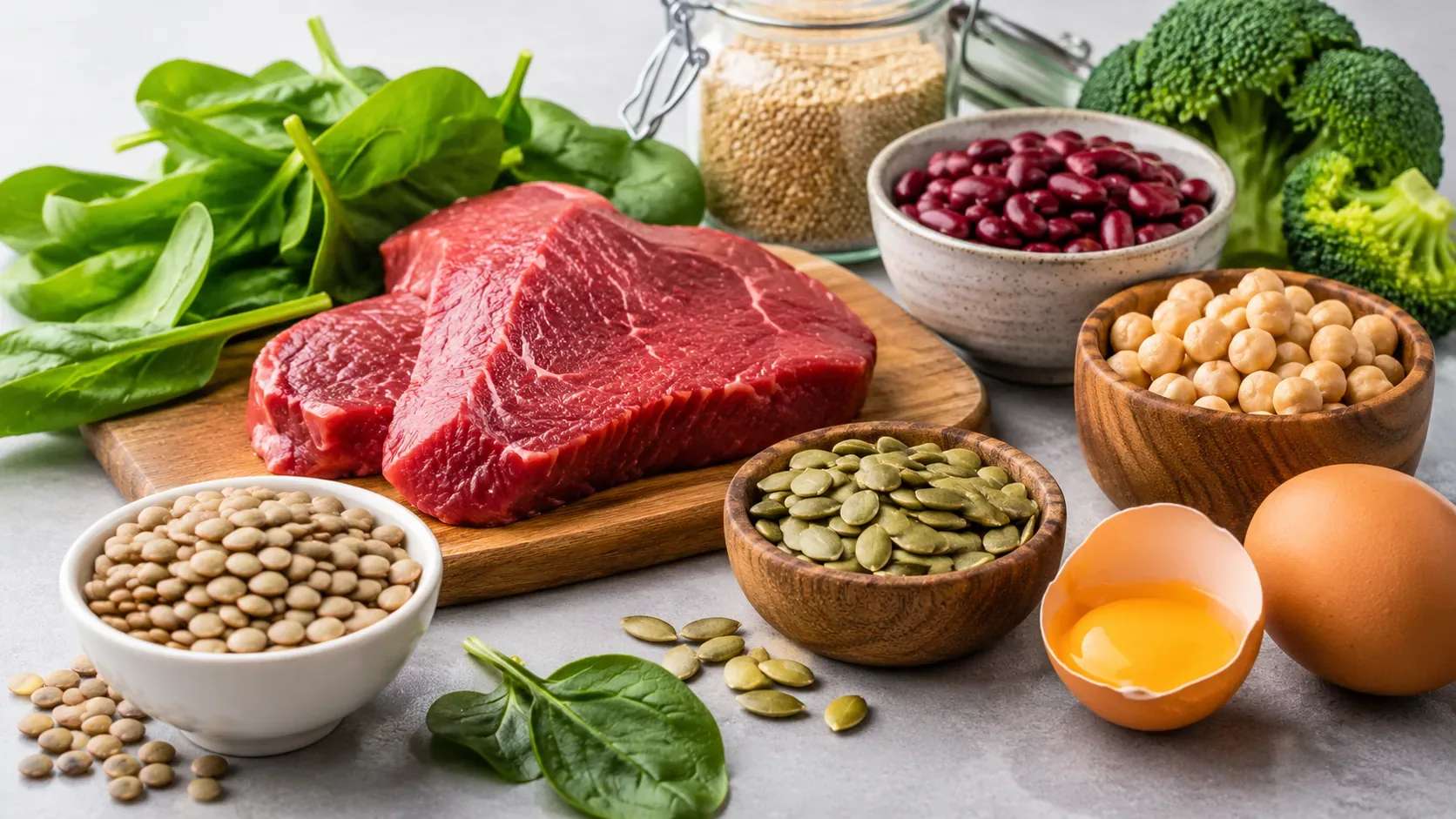
Adding iron-rich foods to your daily meals can help support an adequate iron intake. According to research, the following foods are rich in iron:
- Red meat: Contains heme iron, which the body absorbs more easily.
- Fish and poultry: Animal protein sources that contribute to iron intake.
- Lentils and chickpeas: Legumes that contain plant-based iron.
- Spinach and dark leafy greens: Sources of plant-based iron.
- Pumpkin seeds: An iron-containing food that makes a good choice for snacks.
- Iron-fortified cereals: Can help support your daily iron intake.
A small nutrition tip: Having a salad dressed with lemon alongside a lentil dish can be a good nutritional pairing, because vitamin C helps increase the absorption of plant-based iron. Avoiding tea and coffee at the same time as iron-rich meals can also be beneficial, especially for the absorption of plant-based iron.
How Is Iron Deficiency Treated?
To treat iron deficiency, the cause of the deficiency must first be identified. To do this, a doctor may evaluate the necessary blood tests, particularly a complete blood count and ferritin.
The following approaches may be used in the treatment of iron deficiency:
- Creating a balanced eating plan rich in iron
- Taking iron supplements on a doctor's recommendation when necessary
- Adjusting eating habits that may interfere with iron absorption
- Treating underlying causes such as blood loss or absorption disorders
- Monitoring blood levels at regular intervals
It can take time for iron stores to be replenished. For this reason, it is important to stick to the treatment period recommended by your doctor, even if your symptoms improve.
What Should You Keep in Mind When Taking Iron Supplements?
Iron supplements are one of the most commonly used treatments for iron deficiency. However, not every complaint of fatigue or hair loss calls for iron supplements. In some people, iron supplements can cause nausea, constipation or abdominal discomfort. The dose, timing and duration of treatment should be tailored to each person's needs.
Taking high-dose iron supplements without a doctor's recommendation can be harmful. That's why the deficiency should be confirmed with blood tests before starting treatment.
When Should Iron Deficiency Be Taken Seriously?
If you have complaints such as persistent fatigue that affects your daily life, noticeable hair loss or recurring dizziness, it may be a good idea to see a healthcare professional. In particular, symptoms accompanying iron deficiency such as unexplained weight loss, blood in the stool or heavy bleeding may be a sign of another underlying health problem. Chest pain, fainting or marked shortness of breath at rest require urgent medical evaluation.
Although iron deficiency is common, it isn't always just about diet. An accurate diagnosis is important for finding the cause of the deficiency and planning the right treatment.
Hair loss can be one of the signs of low iron. Learn more in Hair Loss and Iron Deficiency.
- Last updated
- Language
- English
How did you find this article?
We take a closer look at iron-rich foods, foods that boost iron absorption, and everyday nutrition tips.
Why are vitamins D3 and K2 taken together? Let's look at everything you may be wondering about, from their effects on bone health to their possible risks.

Could constant fatigue and muscle aches be linked to vitamin D deficiency? Let's explore the symptoms, causes and foods that contain vitamin D together.
Subscribe to the Medifinder newsletter and never miss our latest content.