










Heart Palpitations When Lying on Your Left Side
Heart palpitations on the left side can reflect position, increased awareness, extra beats, reflux, dehydration or stimulant use.

- Last updated
- 6 reads
- 6 min read
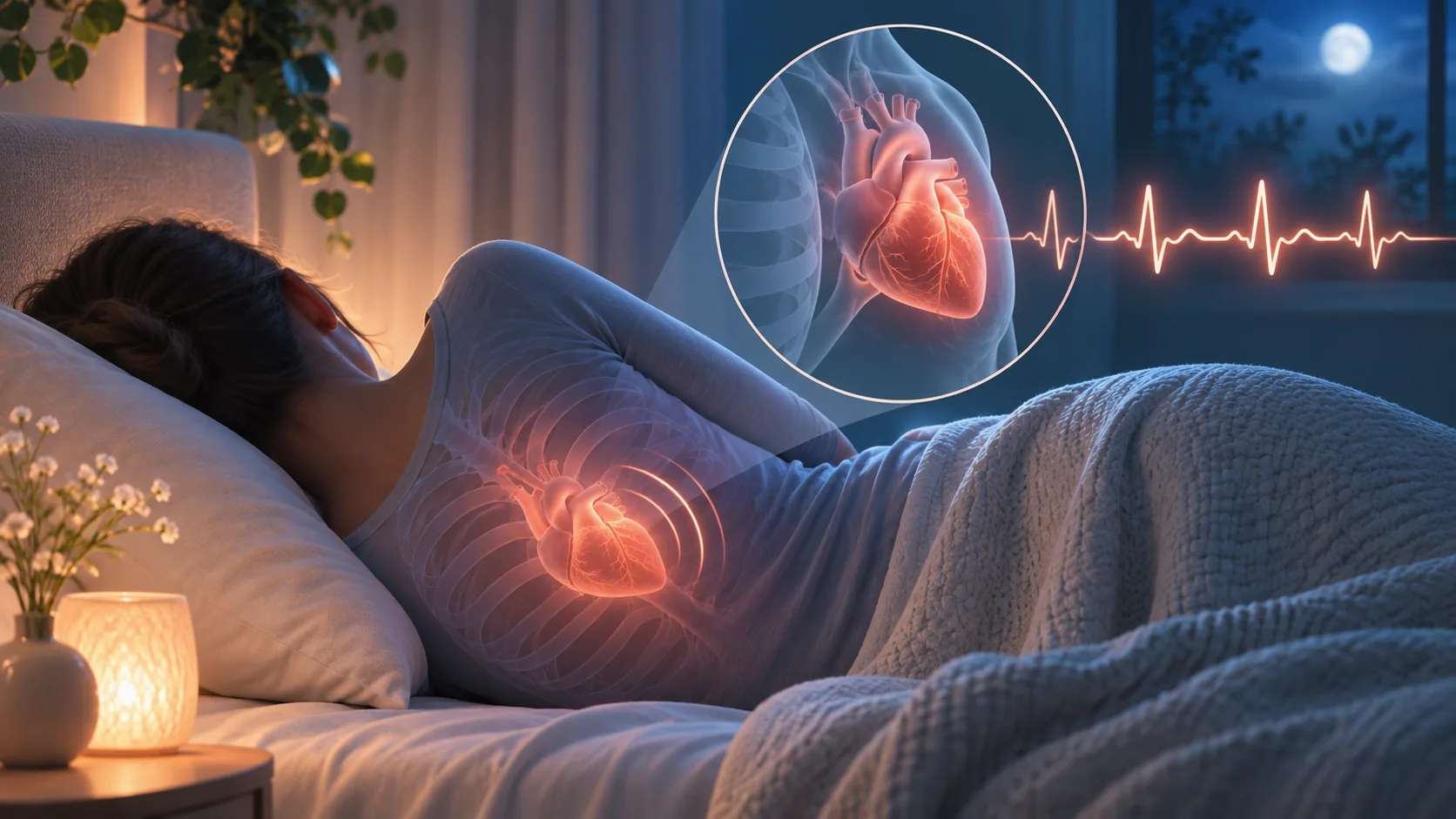


Feeling your heart beat harder, faster or irregularly when you lie on your left side can be startling. In many cases, the heartbeat is not suddenly abnormal; the position simply brings the heart closer to the chest wall and makes normal movement easier to notice. Still, repeated palpitations deserve attention, especially when they appear with pain, faintness, breathlessness or a sustained irregular rhythm.
Why Are Heartbeats More Noticeable on the Left Side?
The heart sits slightly left of the center of the chest. Lying on the left side can place the heart closer to the ribs and mattress, so each contraction may feel stronger or more obvious. The position can also change how the chest wall, stomach and diaphragm press against the heart. Increased awareness does not always mean the heart is beating faster.
What Are Palpitations?
Palpitations are sensations of pounding, fluttering, racing, skipping or extra beats. They may last a few seconds, several minutes or longer. A normal rhythm can feel dramatic when attention is focused on the chest, while an actual rhythm disturbance can also cause a similar sensation. The description, duration and associated symptoms help clarify the pattern.
- Position can make a normal heartbeat easier to feel.
- Stress and quiet bedtime surroundings increase awareness.
- Stimulants, dehydration and poor sleep can trigger extra beats.
- Chest pain, fainting or severe breathlessness needs urgent assessment.
Common Reasons Palpitations Appear in Bed
Increased Body Awareness
At night there are fewer distractions, background sounds and movements. Attention naturally shifts toward internal sensations. A heartbeat that went unnoticed during the day may feel loud when the room is quiet. Anxiety about the sensation can then raise adrenaline and make the beat feel even stronger.
Extra Beats
Premature atrial or ventricular beats can feel like a pause followed by a heavy thump. These isolated beats are common and may become more noticeable when resting on the left side. They can be associated with caffeine, alcohol, stress, illness or lack of sleep. Frequent episodes or a new pattern should be documented.
Reflux and Stomach Pressure
Eating a large meal before bed can distend the stomach and push against the diaphragm. Reflux may create chest sensations that are mistaken for heart rhythm changes. Lying down soon after eating can increase both reflux and awareness of movement in the chest.
Dehydration and Electrolyte Changes
Low fluid intake, vomiting, diarrhea, intense exercise and heavy sweating can alter the body’s electrolyte balance. The heart may feel more forceful or irregular during this period. Diuretics and some medications can also affect fluid and electrolyte levels.
Stimulants and Medication
Coffee, energy drinks, nicotine, decongestants, certain asthma medicines and some supplements can increase heart rate or trigger extra beats. The effect may last into the evening even when the stimulant was used hours earlier. A medication list is useful when the timing of palpitations changes.
Can Sleeping Position Trigger an Arrhythmia?
Position usually changes perception more than it changes the heart’s electrical system. Some people notice palpitations in one position and not another because the heartbeat is transmitted differently through the chest. If an irregular rhythm repeatedly starts in a particular position, lasts longer than a few moments or comes with dizziness, it should be evaluated rather than dismissed as posture alone.
How Can You Tell If the Rhythm Is Irregular?
Place two fingers gently on the wrist and notice whether the beats are evenly spaced. Avoid pressing hard on the neck. A phone recording of the sensation, pulse rate and duration can help describe the event, but consumer devices may miss brief episodes or produce false alerts. Do not rely on a watch reading to rule out a heart problem.
What Can You Try at Home?
Change position slowly, sit upright and take calm breaths. Reduce caffeine, nicotine and alcohol, drink water and avoid heavy meals close to bedtime. A slightly elevated upper body may reduce reflux related sensations. Keep a record of when the palpitations occur, how long they last and what happened before them.
- Note the body position and whether changing sides stops the sensation.
- Record pulse rate if it can be measured comfortably.
- List caffeine, alcohol, exercise, stress and new medications.
- Seek care if episodes become more frequent or severe.
When Are Left Side Palpitations an Emergency?
Call for urgent help when palpitations occur with crushing or persistent chest pain, fainting, severe shortness of breath, new confusion, marked weakness or a sustained very rapid heartbeat. Sudden symptoms with sweating, nausea or pain spreading to the arm, jaw or back also need immediate assessment. Do not drive yourself if you feel faint or unstable.
When Should You Arrange a Routine Check?
Arrange an evaluation for new palpitations that recur, wake you from sleep, last several minutes, occur during exercise or are associated with dizziness. A clinician may review blood pressure, listen to the heart, check blood tests and use an electrocardiogram or ambulatory monitor to capture the rhythm. The aim is to match the sensation with an actual heartbeat pattern.
Could Anxiety Be Part of the Cycle?
Anxiety can increase adrenaline, breathing speed and muscle tension. These changes make the heartbeat stronger and can create a feedback loop: noticing a thump leads to worry, worry raises adrenaline and the next beat feels even more dramatic. Relaxation may reduce the sensation, but anxiety should not be assumed when there are warning symptoms or a persistent irregular rhythm.
Do Hormones Affect Nighttime Palpitations?
Menstrual cycle changes, pregnancy, perimenopause and thyroid disorders can influence heart rate and sensitivity to extra beats. Hot flashes, night sweats and interrupted sleep may make palpitations more noticeable. Tracking the timing of episodes alongside cycle dates and symptoms can reveal a pattern that deserves further review.
How Can You Sleep More Comfortably?
Keep the bedroom cool, avoid stimulants in the afternoon and allow time to digest dinner before lying down. Use a consistent sleep schedule and reduce screen stimulation before bed. If the left side reliably brings on awareness, try the right side or a slightly elevated back position while the pattern is being assessed.
Frequently Asked Questions About Heart Palpitations When Lying on Your Left Side
Is it normal to feel my heartbeat more on the left side?
The heart is close to the left chest wall, so lying on that side can make normal contractions easier to feel. A new, persistent or symptomatic rhythm still deserves attention.
Can lying on the left side cause an irregular heartbeat?
Position usually changes how the heartbeat is perceived rather than causing a new arrhythmia. Repeated irregular episodes should be recorded and assessed rather than attributed to posture alone.
Why do palpitations happen more at night?
Quiet surroundings increase body awareness, while caffeine, reflux, stress and fatigue can influence the rhythm. Bedtime also removes distractions that normally mask brief extra beats.
Should I sleep on my right side if my heart races on the left?
Changing position can reduce awareness and may be comfortable while you track the pattern. It does not replace evaluation when episodes are frequent, prolonged or associated with warning symptoms.
Can reflux feel like heart palpitations?
Reflux and stomach pressure can create chest sensations that feel like fluttering or pounding. Because heart and digestive symptoms can overlap, concerning or unfamiliar symptoms should be checked.
Why the Sensation Can Change From Night to Night
Sleep position is only one part of the evening picture. A late meal, a stressful day, poor hydration, illness or an unusually intense workout can change how the heart feels at bedtime. Even the mattress and pillow can alter pressure across the chest. Comparing several nights is more informative than judging the sensation from one episode.
Pay attention to whether the heartbeat settles when you sit up, breathe slowly or change sides. Note whether the pulse is actually fast or simply forceful. These details help show whether the sensation is positional awareness, isolated extra beats or a rhythm that continues regardless of posture.
Following the Pattern Over Time
Heart palpitations when lying on the left side are often related to the heart’s position near the chest wall and increased awareness at rest. Extra beats, reflux, dehydration, stimulants, hormones and anxiety can add to the sensation. Tracking the rhythm, timing and triggers helps separate a brief positional awareness from a pattern that needs medical evaluation. Chest pain, fainting, severe breathlessness or a sustained rapid rhythm should never be ignored.
- Last updated
- Language
- English
How did you find this article?

A racing heart after a hot shower may reflect heat, dehydration, standing, stress, or an underlying rhythm issue. Learn what helps and which warning signs matter.

Learn why heart palpitations may happen after eating, which food and health factors can contribute, and the warning signs that need urgent attention.
This guide compares varicose vein surgery costs around the world in 2026, including EVLA, radiofrequency ablation, sclerotherapy, phlebectomy, vein stripping, insurance, and travel expenses.
Subscribe to the Medifinder newsletter and never miss our latest content.