






Why Is My Donor Area Still Red After a Hair Transplant?
Is your donor area still red after a hair transplant? Learn how long redness lasts, what causes it and when to seek medical advice.

- Last updated
- 11 reads
- 4 min read
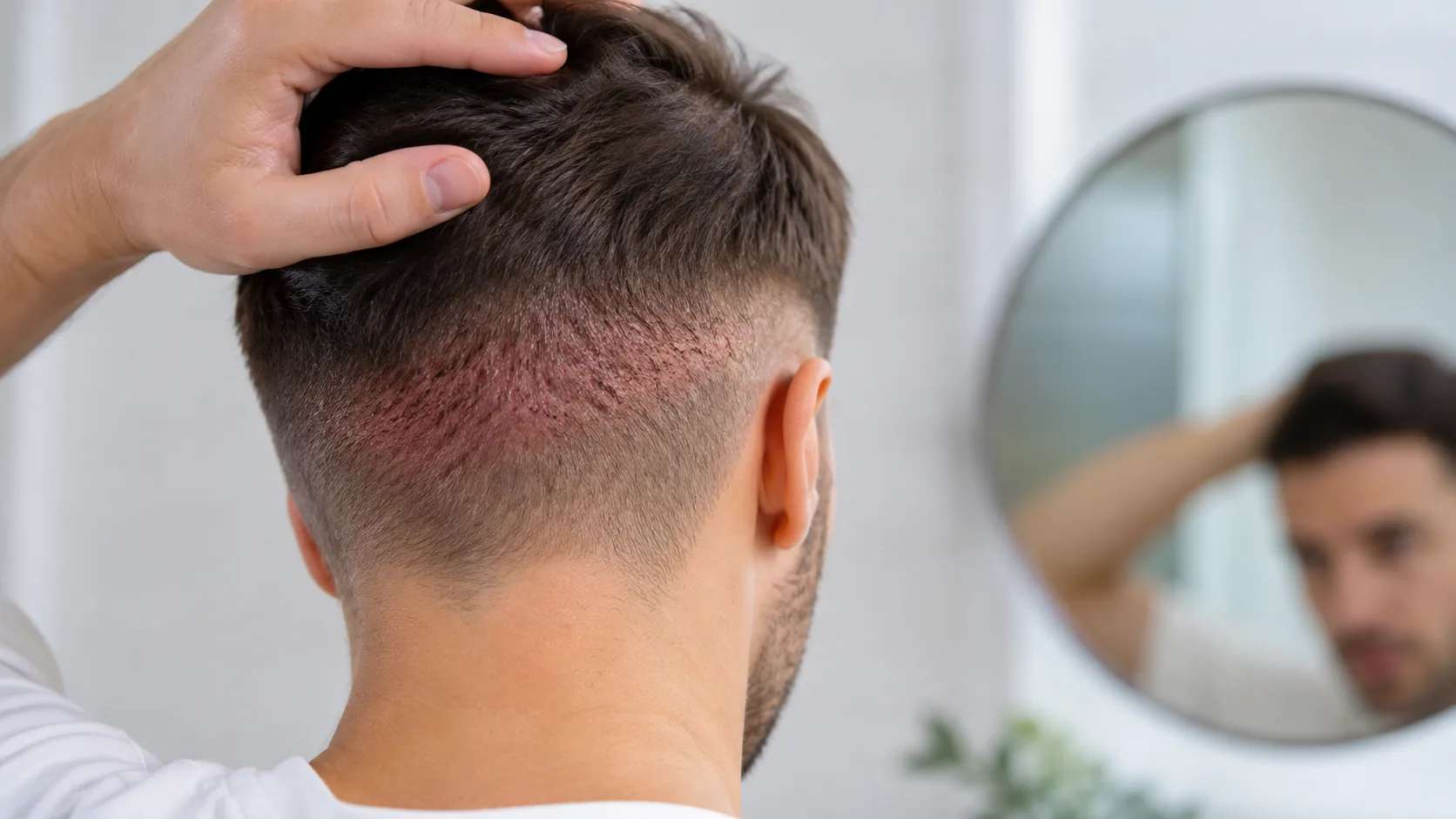


The newly transplanted hair often receives most of the attention during recovery, but the back and sides of the scalp need time to heal too. If your donor area still looks pink or red several days or weeks after a hair transplant, you may be wondering whether something has gone wrong.
Although mild redness is usually part of the healing process, persistent or worsening redness deserves closer attention.
Is Redness in the Donor Area Normal After a Hair Transplant?
Yes, mild redness in the donor area is normal during the early stages of hair transplant recovery, particularly after follicular unit extraction (FUE).
During the procedure, individual hair follicles are removed using small surgical punches. Each extraction leaves a tiny wound that needs time to heal.
The body's natural inflammatory response increases blood flow to the affected area, which can cause redness, mild tenderness and itching.
As the scalp recovers, these symptoms should gradually improve rather than become more pronounced.
How Long Does Donor Area Redness Last After a Hair Transplant?
Donor area redness often begins to fade within the first one to two weeks. However, the exact recovery timeline depends on skin sensitivity, the extent of harvesting and individual wound healing.
The following table provides a general overview rather than a strict recovery schedule.
| Time After Hair Transplant | What You May Notice |
|---|---|
| First 3 days | Redness, small extraction marks and mild tenderness |
| Days 4–7 | Scabbing and occasional itching |
| Days 7–14 | Gradual reduction in redness and crusting |
| Weeks 3–4 | Continued improvement in skin appearance |
| After 1 month | Persistent redness should be discussed with your surgeon |
The most important indicator is whether the redness is gradually improving.
5 Reasons Why Your Donor Area Is Still Red
Persistent redness does not always indicate a complication. Several factors can affect how quickly the scalp returns to its usual appearance.
1. Sensitive Skin
People with sensitive or lighter skin may notice postoperative redness more easily. Even after the extraction wounds have closed, the scalp may retain a slightly pink appearance.
2. Folliculitis
Small red bumps resembling pimples may indicate folliculitis, an inflammatory condition affecting hair follicles.
Folliculitis can develop in the donor area during the weeks following surgery. It may cause tenderness, itching or pus-filled bumps and sometimes requires medical treatment.
3. Irritation From Hair Care Products
Shampoos, alcohol-based products, fragrances and certain topical treatments may irritate a healing scalp.
Introducing new products too early can prolong discomfort and inflammation, particularly if the skin barrier has not fully recovered.
4. Sun Exposure
The donor area can be particularly exposed to sunlight when the hair has been shaved for surgery.
Direct sun exposure may worsen irritation and contribute to prolonged skin discolouration during recovery.
5. Delayed Wound Healing
The number of grafts extracted, existing scalp conditions, smoking and certain medical conditions can influence the healing process.
Persistent redness accompanied by wounds that are not closing, increasing tenderness or changes in skin texture requires professional assessment.
Why Is My Donor Area Still Red After One Month?
Mild residual pinkness after one month does not automatically mean that your hair transplant has been unsuccessful. However, redness that remains pronounced or has not improved should be assessed by your surgeon.
Possible explanations include ongoing inflammation, folliculitis, contact dermatitis or delayed healing.
If the redness disappeared and then returned, it is particularly important to investigate the cause rather than assume it is part of normal recovery.
How Can You Reduce Donor Area Redness After a Hair Transplant?
Taking care of the scalp during recovery can help minimise unnecessary irritation and support natural healing.
-
Wash your scalp gently according to your surgeon's instructions.
-
Avoid scratching, rubbing or picking at scabs.
-
Protect the donor area from direct sunlight.
-
Avoid harsh or heavily fragranced hair products.
-
Do not apply unapproved creams, oils or medications.
-
Attend scheduled postoperative appointments.
Trying multiple products to make redness disappear faster may actually irritate the scalp further.
Can You Apply Cream to a Red Donor Area?
Certain topical products may help relieve dryness or irritation, but the appropriate treatment depends on what is causing the redness.
A moisturising cream may be suitable for dry skin, whereas folliculitis, dermatitis or an infection may require a different treatment.
Antibiotic creams, corticosteroids and other medicated products should not be used without professional guidance.
Even seemingly harmless natural oils can irritate sensitive skin or trigger an allergic reaction.
Is Donor Area Redness a Sign of Infection?
Redness alone does not necessarily indicate an infection. However, certain accompanying symptoms should not be ignored.
Contact your surgeon promptly if you experience:
-
Redness that spreads or becomes more intense
-
Increasing pain or swelling
-
Unusual warmth in the donor area
-
Pus or unpleasant-smelling discharge
-
Fever or chills
-
Darkening skin or wounds that are not healing
Seek urgent medical care if symptoms are severe, spreading rapidly or accompanied by significant illness.
Does Donor Area Redness Affect Hair Growth?
Temporary redness associated with normal healing does not usually interfere with the growth of the remaining donor hair.
However, untreated infections, significant inflammation or excessive follicle harvesting may affect the health and appearance of the donor area.
Redness can also occur alongside temporary postoperative shedding, commonly known as donor area shock loss. These are separate symptoms, and redness alone does not confirm that hair loss is occurring.
Will My Donor Area Ever Look Normal Again?
In most cases, the donor area gradually becomes less noticeable as the skin heals and the remaining hair grows.
FUE does leave small extraction scars, which may become visible when the hair is cut very short. Nevertheless, persistent redness is not something you should simply ignore or attempt to conceal without understanding its cause.
If you have concerns about your recovery or are researching hair restoration procedures, you can explore hair transplant specialists and clinics on MediFinder for professional guidance.
- Last updated
- Language
- English
How did you find this article?
Learn how long donor area numbness lasts after a hair transplant, why it happens and when you should seek medical advice.

Discover five practical ways to reduce excessive hair shedding, protect the scalp, limit breakage and recognize when persistent loss needs attention.
Learn how graft numbers are planned for the hairline, frontal zone, mid-scalp, crown and temples, with practical guidance on density and donor supply.
Subscribe to the Medifinder newsletter and never miss our latest content.