










How Many Grafts Are Needed For Each Hair Transplant Area?
Learn how graft numbers are planned for the hairline, frontal zone, mid-scalp, crown and temples, with practical guidance on density and donor supply.

- Last updated
- 122 reads
- 6 min read
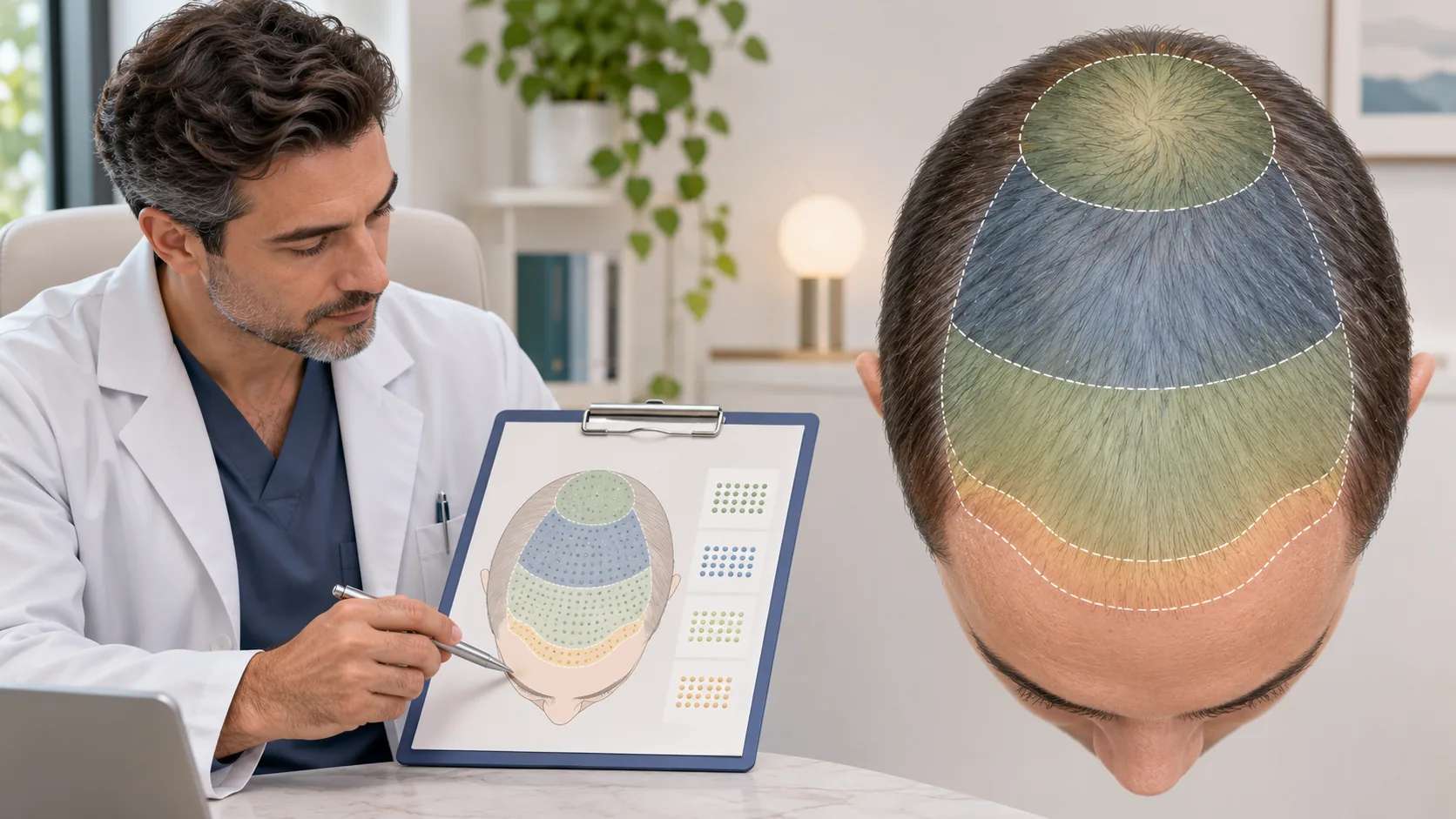


One of the first questions people ask about a hair transplant is how many grafts are needed for each area. The answer is not a single universal number. A natural result depends on the size of the thinning zone, the desired visual density, the quality of the donor hair and the way the hairline is designed. Understanding how grafts are distributed across the scalp makes the planning process easier to follow.
What Is A Hair Graft?
A graft is a small unit of tissue that contains one or more hair follicles. A single graft may hold one, two, three or occasionally more follicles. For that reason, graft count and hair count are not the same measurement. A plan that lists 2,000 grafts may represent considerably more individual hairs depending on the donor area.
Surgeons also consider follicular unit composition. Single-hair grafts are useful at the front edge of the hairline, while two- and three-hair units can create fuller coverage behind it. This arrangement helps avoid a plug-like appearance and allows density to change gradually from front to back.
How Many Grafts Are Used For The Hairline?
The frontal hairline often receives about 800 to 1,800 grafts, although a smaller recession pattern may need fewer and a broad or advanced pattern may need more. The number is influenced by the width of the forehead, the shape of the proposed hairline and how far the corners have receded.
Hairline work requires careful spacing rather than simply placing as many grafts as possible. Fine single-hair units are positioned at the front, with denser groupings gradually added behind them. The angle, direction and irregular rhythm of placement are as important as the total number.
How Many Grafts Are Used For The Frontal Zone?
The area immediately behind the hairline commonly receives around 1,000 to 2,200 grafts. This zone is visually important because it frames the face and connects the delicate hairline to the thicker central scalp. If frontal thinning is limited, grafts can be concentrated on the weakest patches. When the entire front is sparse, the plan may need to spread grafts over a wider surface.
Density should be built in layers. A strong frontal zone with a poorly supported hairline can look abrupt, while a soft hairline without enough density behind it may appear thin under direct light. Balanced distribution is the goal.
How Many Grafts Are Used For The Mid-Scalp?
The mid-scalp may require roughly 800 to 1,800 grafts when it is visibly thinning. This region often acts as a bridge between the frontal area and the crown. If it is ignored, the result can look disconnected when the person looks down or when the hair is parted.
Mid-scalp planning also depends on existing hair. Transplanting into an area with many strong native hairs requires a conservative pattern that protects them. A more open area can accept a denser distribution, but available donor grafts still need to be preserved for future changes.
How Many Grafts Are Used For The Crown?
The crown can need about 1,000 to 2,500 grafts because it is often wide, rounded and affected by a visible whorl. The center of the crown may look dense from one angle but transparent from another, so the distribution has to follow the natural spiral direction.
Crown restoration is usually planned with realistic density in mind. A large crown can consume a substantial part of the donor supply, while a smaller crown may respond well to a focused placement. The crown is also commonly addressed after the frontal frame because the front has a stronger effect on how the face is perceived.
How Many Grafts Are Used For Temples And Corners?
Temple recession may require approximately 300 to 800 grafts in total, depending on whether one or both sides are treated. Temple points are delicate because the hair grows at a flatter angle and blends into sideburns. The placement must be light and irregular rather than a straight block of hair.
Some plans use the available grafts to soften the corners instead of lowering the entire hairline. This can create a meaningful change with fewer grafts and keep more donor hair available for the mid-scalp or crown.
How Many Grafts Are Used For A Full Scalp Plan?
A broad plan involving the hairline, frontal zone, mid-scalp and crown may use approximately 2,500 to 4,500 grafts over one or more sessions. Larger numbers are not automatically better. The donor area has a finite supply, and removing too much can leave visible thinning at the back or sides.
Good planning balances immediate coverage with long-term reserve. A moderate density across several areas can look more natural than very high density in one zone and obvious gaps elsewhere.
What Determines The Number Of Grafts?
Several details shape the estimate: the surface area of thinning, hair caliber, curl or wave, contrast between hair and skin, donor density, follicle grouping and the patient’s preferred hairstyle. Coarser or curly hair can create more visual coverage with fewer grafts, while fine straight hair may require closer spacing to achieve a similar impression.
The pattern of hair loss matters too. Recession at the temples is a different planning problem from diffuse thinning or an isolated crown gap. A stable design should account for the possibility that surrounding native hair may continue to change.
Why Graft Quality Matters As Much As Graft Quantity
Two plans with the same graft count can produce different outcomes if the follicular units are handled differently. Grafts need careful extraction, hydration, storage and placement. Excessive trauma can reduce the number of follicles that grow successfully, making a large numerical estimate less meaningful.
Placement direction also affects the visual result. Hairline units should follow the existing growth pattern, while crown grafts need to respect the whorl. Natural transitions are created by planning density, angle and orientation together.
How Is The Donor Area Protected?
The donor area at the back and sides should be assessed for density and long-term stability. Extraction is spread across the available zone rather than concentrated in one small patch. Preserving a reserve matters because future thinning or a later refinement may require additional grafts.
Short hairstyles can make overharvesting easier to notice. A conservative approach protects the appearance of the donor area and keeps future options open. The goal is not to remove every available follicle in one session.
How To Read A Graft Estimate
Ask whether the quoted figure refers to grafts or individual hairs, which regions are included and how the grafts will be divided. A useful plan should explain the proposed hairline, the priority zones and the expected density. It should also show how the donor supply will be managed.
Clear terminology prevents misunderstandings. A high graft number may sound impressive, but the distribution and survival of those grafts determine the visible result. The most helpful estimate is specific about both quantity and strategy.
Frequently Asked Questions About Graft Numbers
How many grafts are needed for a receding hairline?
A mild recession may need around 800 grafts, while a wider frontal pattern can require 1,500 or more. The shape and width of the desired hairline influence the final estimate.
How many grafts are needed for the crown?
A small crown gap may use about 1,000 grafts, while a broad whorl can require 2,000 or more. Crown planning must follow the natural spiral and preserve donor reserves.
Can 3,000 grafts cover the whole scalp?
Three thousand grafts may provide meaningful coverage across several areas when thinning is moderate. Extensive loss may require prioritizing the frontal frame or planning staged treatment.
Is a higher graft count always better?
Not necessarily. A higher number can reduce the donor reserve and still look unnatural if placement is poorly distributed. Density, angles and long-term planning are equally important.
Are grafts the same as hairs?
No. One graft can contain one or several follicles. The number of hairs is therefore usually higher than the graft count shown in a treatment plan.
Final Perspective
The number of grafts needed for each region depends on area size, existing hair, donor capacity and the visual priority of the plan. Hairline, frontal zone, mid-scalp, crown and temples each require a different placement strategy. A balanced distribution protects natural proportions, uses the donor supply thoughtfully and creates a result that remains convincing as the surrounding hair changes.
- Last updated
- Language
- English
How did you find this article?

Learn how long donor area numbness lasts after a hair transplant, why it happens and when you should seek medical advice.

Discover five practical ways to reduce excessive hair shedding, protect the scalp, limit breakage and recognize when persistent loss needs attention.

A practical guide to insurance exclusions, medical necessity, reconstructive cases and pre-authorization for hair transplantation.

Subscribe to the Medifinder newsletter and never miss our latest content.