










Botox for Chin Dimples: How It Works?
Botox for chin dimples is a non-surgical treatment that relaxes the mentalis muscle to reduce the uneven, orange peel-like texture that can appear across the chin.

- Last updated
- 45 reads
- 13 min read


What Are Chin Dimples and Orange Peel Chin?
Chin dimples are small depressions or irregularities that create an uneven texture across the front of the chin, particularly when the lower facial muscles contract. When several shallow indentations appear together, the surface may resemble orange peel or cobblestones, giving rise to the descriptions orange peel chin and cobblestone chin.
This appearance often becomes more noticeable when someone closes their lips firmly, speaks or makes certain facial expressions. The chin may look comparatively smooth at rest but develop visible puckering as the underlying muscle tightens.
Some people experience persistent dimpling even without deliberate facial movement. In these cases, the appearance may involve changes in skin elasticity and underlying tissue in addition to muscle activity.
Chin dimpling is generally a cosmetic concern rather than a medical problem. However, identifying its cause is essential because different types of chin irregularities do not respond equally to botulinum toxin.
What Causes a Dimpled Chin?
The appearance of chin dimples can develop through several overlapping anatomical and functional factors rather than one universal cause.
-
Overactive mentalis muscle: Repeated contractions of the mentalis muscle pull on the skin covering the chin, creating small depressions that become especially noticeable when the lips press together.
-
Age-related skin changes: Gradual collagen loss, reduced elasticity and changes in subcutaneous fat can make existing chin irregularities more visible, sometimes allowing dimples to remain noticeable even when the face is relaxed.
-
Lip closure strain: Some people rely heavily on the mentalis muscle to bring their lips together, particularly when their dental or jaw relationships make relaxed lip closure difficult.
-
Natural chin anatomy: Inherited differences in skin attachment, tissue distribution and jaw structure can influence the chin surface, although a structural cleft chin differs from the muscular dimpling targeted by Botox.
How Does Botox Smooth Chin Dimples?
Botox works by reducing communication between motor nerves and the targeted muscle. Its active ingredient, botulinum toxin type A, temporarily limits the release of acetylcholine, the chemical messenger responsible for initiating muscle contractions.
In chin treatment, the primary target is the mentalis, a paired muscle that influences the lower lip and the skin over the chin. When this muscle contracts strongly, it can pull the skin into multiple small indentations.
Reducing that contraction allows the overlying tissue to remain more relaxed, which may produce a smoother appearance during speech and facial expressions.
Botox does not fill individual dimples with material or rebuild the skin. Instead, it addresses the muscular activity contributing to their formation.
The greatest improvement generally occurs when visible irregularities are closely associated with mentalis contraction. Deep structural depressions or longstanding skin changes may remain partly visible despite effective muscle relaxation.
How Is Chin Botox Different From Traditional Botox?
Chin Botox and conventional facial Botox rely on the same medication, but the muscles involved and the desired results differ.
Forehead and frown line treatments usually aim to reduce repetitive skin folding in the upper face. Chin Botox focuses on the mentalis muscle, which contributes to lower-lip positioning and the appearance of the chin surface.
This anatomical difference matters because the mouth performs complex movements during everyday activities. Muscles involved in speaking, drinking and controlling the lips lie close to the mentalis, leaving relatively little room for unintended muscle relaxation.
Although the chin is a small treatment area, injection accuracy is particularly important. Excessive weakening can interfere with functions that most people perform without conscious effort.
The objective is therefore not to stop all lower-face movement, but to reduce the contractions responsible for visible dimpling while preserving normal lip function.
Can Botox Treat a Cleft Chin?
A cleft chin and an orange peel chin are different anatomical features, even though both may be described as chin dimples.
A cleft chin typically refers to a central vertical depression or groove that forms part of the individual's natural chin anatomy. The indentation may result from the arrangement of underlying soft tissues and their attachments rather than repeated muscle contractions.
Botox cannot reliably eliminate a structural cleft because relaxing the mentalis does not reposition the tissues responsible for the indentation.
However, someone with a natural cleft may also develop muscular puckering around it. In that situation, Botox could potentially soften the surrounding texture while leaving the central groove largely unchanged.
When the main concern is a fixed indentation rather than movement-related dimpling, treatment options need to address the underlying structure instead of assuming that muscle relaxation will correct it.
Who Is a Good Candidate for Chin Botox?
Chin Botox may be suitable for selected adults whose uneven chin texture results mainly from excessive mentalis muscle activity and who understand the functional importance of the lower lip.
-
People with a puckered chin during facial expressions: If small depressions become prominent when speaking, concentrating or pressing the lips together, relaxing the mentalis may reduce their visibility.
-
Adults with mild muscle-related chin texture: Patients seeking a subtle improvement without adding volume may find the procedure relevant when the chin already has satisfactory projection and overall shape.
-
Individuals with realistic expectations: Suitable candidates understand that Botox improves muscle-related irregularities rather than permanently erasing deep creases, scars or inherited structural indentations.
-
People with comfortable natural lip closure: Those who can close their mouths without significant effort may be better candidates than individuals who depend heavily on mentalis contraction to maintain a lip seal.
How Is Chin Botox Performed?
A chin Botox appointment begins with an assessment of the lower face at rest and during movement. The patient may be asked to close the lips, purse them gently or speak so that the activity of the mentalis muscle becomes visible.
The assessment also considers chin projection, existing asymmetry and whether the lower lip closes comfortably without excessive muscular effort.
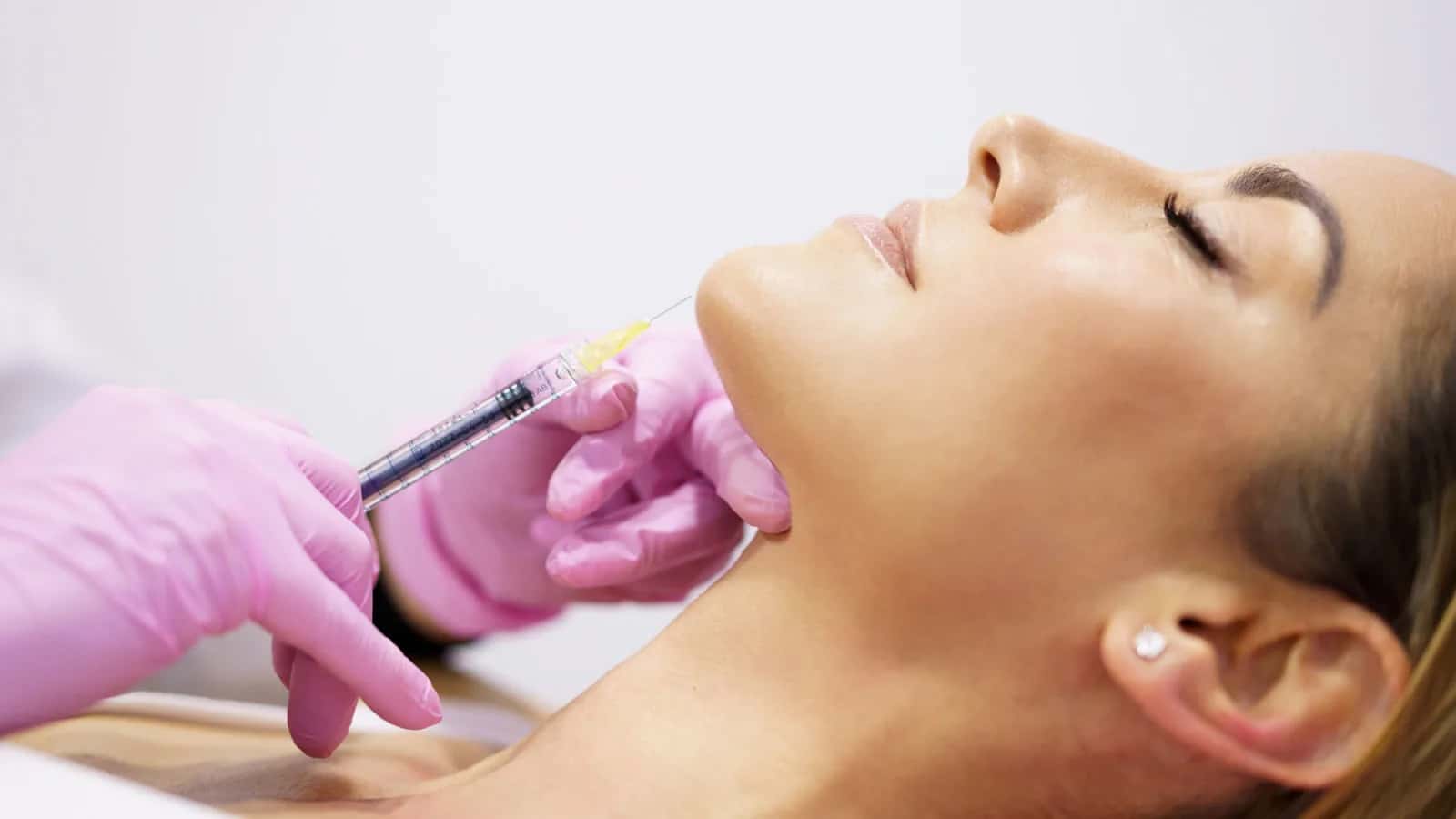
Once the target muscle has been identified, the skin is cleaned and small quantities of botulinum toxin are injected using a fine needle. The injection procedure itself generally takes only a few minutes and does not require surgical incisions.
Temporary pinching, mild tenderness or a small bruise may occur around the injection sites.
The chin does not become smoother immediately because the medication must first reduce the activity of the treated muscle. Normal daily activities can often resume shortly afterward, with sensible precautions around the injection sites.
How Many Units of Botox Are Used for Chin Dimples?
Chin Botox generally involves a relatively small quantity of botulinum toxin compared with treatments targeting larger muscles. However, there is no universally approved cosmetic dosing schedule specifically for mentalis-related chin dimpling.
The appropriate amount must account for the strength of the mentalis muscle, its relationship with the lower lip and the extent of muscular puckering.
Increasing the dose does not necessarily create a smoother or more attractive chin. Excessive relaxation may weaken the ability to control the lower lip, making ordinary mouth movements less comfortable.
Another important consideration is that botulinum toxin brands use product-specific potency units. Numbers associated with one formulation cannot automatically be converted into equivalent doses for another.
A successful treatment aims to reduce unwanted skin puckering while maintaining enough muscular function for comfortable speaking, drinking and lip closure.
When Do Chin Botox Results Become Visible?
Chin Botox results develop gradually because botulinum toxin takes time to influence communication between the nerve endings and the mentalis muscle.
Some patients begin noticing reduced puckering within approximately three to seven days. As the muscle becomes more relaxed, the chin may appear smoother when the lips move or press together.
The full effect is generally easier to evaluate after around one to two weeks. Early improvements may continue developing during this period, making immediate judgments unreliable.
For chin dimples that appear mainly during movement, the change may be more noticeable while speaking or deliberately contracting the chin than when looking at the face at rest.
Consistent before-and-after photographs can help demonstrate differences, particularly when the same facial expression and lighting conditions are used.
How Long Does Botox for Chin Dimples Last?
The effects of chin Botox are temporary. As nerve signaling gradually recovers, the mentalis muscle regains its ability to contract, and the original dimpling may begin returning.
Visible improvement commonly lasts approximately three to four months, although some patients experience shorter or longer responses. Small clinical observations have reported effects extending toward five months in selected individuals.
The duration should not be treated as a guarantee. Muscle activity, the product used and the extent of relaxation can influence how long the chin remains visibly smoother.
When the effect wears off, facial movement usually returns progressively rather than changing overnight.
Botox does not permanently retrain or remove the mentalis muscle. People interested in maintaining their results should therefore consider the temporary nature of treatment before establishing long-term expectations.
Can Botox Improve Deep Chin Creases?
Deep chin creases are more difficult to treat than shallow dimples that appear only during muscular contraction.
The horizontal groove between the lower lip and chin, known as the labiomental crease, is influenced by the shape of the lower jaw, the position of the lower lip and the surrounding soft tissues.
When strong mentalis contractions contribute to its prominence, Botox may soften the appearance of the crease by reducing repeated muscular tension.
However, a deep groove can remain visible because of natural anatomy, volume distribution or age-related tissue changes. Relaxing the muscle cannot necessarily correct those factors.
Similarly, permanent depressions associated with scarring or reduced skin elasticity may respond only partially.
Botox is most appropriately viewed as a treatment for the muscular component of a chin crease rather than a reliable method of eliminating every established indentation.
Does Chin Botox Change Chin Shape or Projection?
Chin Botox can subtly influence the appearance of the lower face, even though the medication does not add physical volume or alter the jawbone.
Strong mentalis contractions may pull the chin skin upward and contribute to a shortened or tightly puckered appearance. When the muscle relaxes, the chin contour can appear smoother and less compressed.
Some people notice a slightly rounder or more relaxed lower-face profile following treatment. This change results from altered muscle tension and tissue positioning rather than structural augmentation.
Botox does not lengthen the jawbone, add forward projection or replace missing chin volume.
Someone seeking a more prominent or defined chin may require a different approach. The expected result should therefore be judged against the actual concern, whether that involves surface texture, contour or skeletal proportions.
Can Chin Botox Affect Smiling, Speaking or Drinking?
The mentalis muscle plays an important role in supporting the lower lip and influencing its movement. Because the muscles surrounding the mouth work closely together, unwanted relaxation can affect functions that extend beyond the appearance of the chin.
If Botox weakens neighboring muscles, a person may notice difficulty controlling the lower lip, changes in smiling or an unfamiliar sensation when speaking.
Excessive mentalis relaxation can also interfere with the ability to maintain a comfortable seal between the lips. In more pronounced cases, liquids may escape from the mouth during drinking, or drooling may occur.
These effects are not inevitable, but they are important reasons to avoid unnecessary muscle weakening.
Individuals who already strain to bring their lips together require particular caution because their mentalis activity may compensate for an underlying dental or jaw relationship.
What Are the Side Effects and Risks of Chin Botox?
Although the treatment involves only a small facial region, chin Botox carries risks related to both the injection itself and the functional importance of nearby muscles.
-
Injection-site reactions: Temporary redness, tenderness, swelling and small bruises may develop around the chin. These symptoms are generally mild and improve as the injection sites recover.
-
Lower-lip weakness: Excessive relaxation may interfere with lip closure, drinking or certain speech movements. This can be especially troublesome when the mentalis already contributes significantly to maintaining mouth closure.
-
Smile asymmetry: If botulinum toxin affects neighboring muscles, particularly those controlling lower-lip movement, the smile may become temporarily uneven or the lower lip may move differently on each side.
-
Rare serious complications: Botulinum toxin products carry warnings about effects spreading beyond the treatment area. Unusual widespread weakness or difficulty swallowing, speaking or breathing requires immediate emergency medical attention.
Is Botox for Chin Dimples FDA Approved?
Botox Cosmetic has established regulatory approval in the United States for selected cosmetic concerns, including frown lines, forehead lines, crow's feet and certain neck muscle bands.
However, Botox injections specifically intended to treat mentalis-related chin dimpling are not included among its FDA-approved cosmetic indications.
This means chin Botox is an off-label application. Off-label use does not automatically establish that a procedure is inappropriate, but its benefits and risks must be assessed using the available clinical evidence rather than assuming they are identical to those of an approved forehead treatment.
Research involving mentalis injections has demonstrated improvements in muscle-related chin wrinkles, although studies are smaller and less extensive than those supporting major approved cosmetic indications.
Patients should understand this distinction before proceeding, particularly because lower-face complications can affect essential mouth functions.
What Should You Avoid After Chin Botox?
The early period after chin Botox should focus on protecting the injection sites and avoiding unnecessary irritation while the medication begins taking effect.
Forceful rubbing, aggressive facial massage and repeated pressure directly over the chin should be avoided immediately after treatment. Gentle washing is generally possible, provided the skin is not scrubbed or manipulated vigorously.
Intense activity may temporarily increase flushing or bruising, so exercise recommendations should be followed during the initial recovery period.
There is no need to repeatedly tighten the chin or purse the lips to make Botox work faster. The medication acts through nerve signaling, and deliberate muscle exercises will not accelerate the final result.
A detailed overview of what not to do after Botox can help distinguish sensible recovery precautions from unnecessary restrictions.
Any unexpected lower-lip weakness, difficulty drinking or persistent facial asymmetry should prompt professional assessment rather than attempts to correct the result through massage.
Can Chin Botox Be Combined With Chin Filler?
Chin Botox and dermal filler address different characteristics of the lower face, which means they may sometimes be considered together.
Botox reduces the activity of the mentalis muscle and can improve movement-related dimpling. Chin filler, usually made from hyaluronic acid, adds volume to selected tissues and may improve projection, definition or specific contour irregularities.
Someone with both an overactive mentalis and limited chin projection may have concerns involving muscle movement and underlying structure.
However, combining injections is not automatically necessary or preferable. Filler does not directly stop muscular puckering, while Botox cannot substitute for additional structural volume.
The article on chin tip filling and its expected results explains how injectable volume enhancement differs from muscle relaxation.
Both treatments have distinct safety considerations, and fillers carry vascular risks that Botox does not share.
How Much Does Botox for Chin Dimples Cost?
The cost of chin Botox generally reflects the product selected, the amount administered and the scope of the treatment.
Because the mentalis is relatively small, treating chin dimples may require less medication than procedures involving larger facial muscles. However, a lower unit requirement does not automatically establish a fixed price.
Some aesthetic services use unit-based pricing, while others charge according to the treatment region. Comparing fees requires understanding whether the quoted amount covers the intended chin treatment and any necessary assessment.
Maintenance costs are also relevant because the effect is temporary. Patients who wish to preserve a smoother chin may consider repeat treatments after the original result fades.
Price should not be the deciding factor when the procedure involves muscles essential for normal mouth movement. Product authenticity, appropriate medical qualifications and attention to lower-face anatomy remain central safety considerations.
How Often Should Chin Botox Be Repeated?
Repeat chin Botox treatments may maintain a smoother appearance when the first procedure provides satisfactory improvement without disturbing normal lip function.
Many patients consider reassessment after several months, as the mentalis gradually regains strength and dimpling begins returning.
However, a fixed schedule is not necessary for everyone. The return of muscle movement, the degree of visible puckering and any previous functional changes should guide decisions about additional injections.
Repeating treatment too frequently may produce unnecessary muscle weakness, especially when the earlier injection has not fully worn off.
The goal should be to maintain an acceptable balance between surface smoothness and comfortable lower-lip movement, rather than attempting to suppress all mentalis activity continuously.
Is Botox for Chin Dimples Worth Considering?
Botox for chin dimples can provide a subtle but noticeable improvement when the uneven surface results primarily from strong mentalis contractions. By reducing the muscle activity responsible for skin puckering, the procedure may create a smoother appearance without surgery or added facial volume.
However, chin dimpling does not always have a purely muscular cause. Structural clefts, acne scars, deep creases and changes in skin elasticity may require different treatment approaches.
The location of the mentalis muscle also makes safety particularly important. Excessive weakening can interfere with lower-lip movement, mouth closure and the ability to drink comfortably.
Before considering treatment, it is important to distinguish a harmless surface concern from a muscle pattern that supports normal oral function.
The most appropriate result is not necessarily a perfectly smooth chin. It is a balanced improvement that reduces unwanted texture while preserving natural expression and comfortable everyday movement.
- Last updated
- Language
- English
How did you find this article?
Many singers, actors, reality stars and influencers have talked openly about getting lip filler, and a growing number have also shared why they later had it dissolved. This guide looks at what 20 of these public figures said about their own lip treatments and what their experiences can teach anyone considering filler.

Filler fatigue describes the point where repeated dermal filler treatments leave a face looking heavier, puffier or less like itself, and it is pushing many people to rethink how they approach injectables. This guide explains what causes it, how to recognize an overfilled face.
Overfilled faces develop when injectable treatments add more volume than the facial anatomy can accommodate naturally, altering contours, proportions and sometimes facial expression.
Subscribe to the Medifinder newsletter and never miss our latest content.