










Jawline Filler
Jawline filler is an injectable contouring treatment that adds structure along the lower face. It can sharpen the mandibular border, support the chin, and soften prejowl hollows. It cannot remove fat, tighten substantial skin laxity, or reduce enlarged masseter muscles.

- Last updated
- 137 reads
- 7 min read



What Is Jawline Filler?
Jawline filler uses injectable material to add temporary support along the lower facial border. Clinicians commonly place filler near the chin, prejowl hollow, mandibular body, and jaw angle. This placement can improve continuity between areas that create the visible jawline.
Hyaluronic acid gels provide immediate volume and attract water within treated tissues. Some products use firmer formulations for structural support near bone. However, filler does not reshape the mandible itself. It also cannot stop aging or prevent future tissue descent. Treatment quality depends on diagnosis, product selection, depth, volume, and symmetry.
What Can Jawline Filler Improve?
Jawline filler can improve selected contour problems by adding volume where structural support appears reduced.
A complete plan may address several connected lower-face zones.
-
It can sharpen a blurred mandibular border.
-
It can fill the prejowl hollow beside the chin.
-
It can strengthen a small or recessed chin.
-
It can improve continuity between the chin and jaw angle.
-
It can camouflage mild structural asymmetry.
-
It can create a squarer or tapered contour through planned placement.
These changes remain optical and volumetric rather than surgical. Results depend on existing bone, fat, skin, and muscle anatomy.
Can Jawline Filler Slim the Face or Remove Jowls?
Jawline filler cannot directly slim the face or remove fat, although contouring may create a slimmer appearance. Enlarged masseter muscles may require neuromodulator assessment rather than added volume. Submental fat may need weight management, fat-reduction treatment, or surgery.
Loose skin may require energy-based treatment or lifting surgery. Filler can soften a prejowl hollow and reduce the visual break around early jowling. However, excessive volume may widen the lower face or make heaviness more obvious. A proper assessment identifies whether the concern involves bone, fat, muscle, skin, or several layers. That diagnosis determines whether filler can produce a balanced result.
Is Jawline Filler FDA-Approved?
Juvéderm Volux XC is FDA-approved for improving moderate to severe jawline definition loss in adults over 21.
The approval covers subcutaneous or supraperiosteal placement within the specified jawline treatment area. FDA approval applies to that product, indication, depth, and patient group. It does not automatically cover every filler marketed for jawline contouring. Volux contains 25 mg/mL hyaluronic acid and 0.3% lidocaine. Clinicians may use other products outside their approved indications. However, those choices require clear consent and product-specific reasoning. Patients should ask whether their proposed filler has approval for the jawline itself.
Why Does Jawline Treatment Often Include the Chin and Prejowl Area?
Effective jawline filler often treats connected lower-face zones rather than one narrow line above the mandible. The pivotal Volux study included the chin, prejowl sulci, mandibular body, postjowl areas, marionette region, and jaw angles. These areas influence how observers perceive one continuous jawline.
A weak chin can interrupt the front of the mandibular contour. Prejowl hollowing can create a visible break behind the chin. Limited jaw-angle definition can reduce structure at the rear. Treating only one segment may exaggerate nearby deficiencies. This explains why complete treatment plans can require several injection sites and different placement depths.
How Much Jawline Filler Is Usually Needed?
Jawline filler volume varies widely because anatomy, treatment area, and desired definition differ.
The FDA pivotal study reported a median initial volume of 4.35 mL. Participants receiving touch-ups used a median additional volume of 2.0 mL. Combined initial and touch-up volumes ranged between 1.0 and 9.3 mL. These figures describe one controlled study and do not prescribe a standard amount. Each Volux syringe contains 1 mL of gel. Small corrections may require less volume than full chin-to-angle contouring. Conservative staging can reduce overcorrection and reveal how tissues respond before further treatment.
How Long Does Jawline Filler Last?
Jawline filler can remain visibly effective for twelve months, although longevity varies between patients.
In the Volux trial, 69.9% of assessed participants remained responders after six months. At twelve months, 61.3% still met the study’s responder definition. A responder showed at least one grade of improvement on both jawline sides. This measure does not mean every participant retained their original post-treatment fullness. Product type, volume, metabolism, anatomy, and later treatments influence persistence. Progressive aging can also alter the surrounding tissues while filler remains present. Therefore, twelve-month results represent study evidence rather than a guaranteed personal duration.
What Is Jawline Filler Recovery Like?
Most early jawline filler reactions improve within two weeks, but some symptoms can last longer.
The Volux clinical study recorded injection reactions in 85.2% of diary participants. Common reactions included tenderness, lumps, pain, swelling, firmness, bruising, and redness. Most reactions remained mild or moderate. However, 35.2% of participants reported at least one reaction lasting between 15 and 30 days. These diary findings included expected recovery symptoms rather than only medical complications. Initial asymmetry may reflect unequal swelling and should not receive immediate correction. Increasing pain, spreading redness, or skin-color changes require faster assessment.
Which Filler Type Is Best for Jawline Contouring?
Hyaluronic acid often suits jawline contouring because it provides immediate support and permits possible enzymatic reduction.
Different gels have different firmness, integration, and lifting characteristics. A highly structured filler may support the chin or mandibular angle. A more flexible product may suit superficial transitions or softer contours. Calcium hydroxylapatite and other materials also appear within lower-face treatment literature. However, hyaluronidase cannot dissolve those non-hyaluronic fillers. Clinicians use hyaluronidase to reduce hyaluronic acid, but FDA has not approved it specifically for filler removal. Product reversibility therefore offers an option, not a guaranteed rescue from every complication.
Why Can Jawline Filler Cause Vascular Complications?
Jawline filler can obstruct blood flow when injected inside a vessel or placed under damaging pressure.
The facial artery crosses the mandibular border just before the masseter muscle. The mental and submental vascular branches also supply nearby lower-face tissues. These vessels vary in course and depth between individuals. Needles and cannulas can both injure vessels or enter unexpected anatomical planes. Vascular occlusion may cause skin ischemia, tissue death, or damage to deeper structures. Rare facial filler complications also include vision impairment and stroke. Anatomical training, slow injection, limited pressure, and careful product placement reduce risk without eliminating it.
Can Ultrasound Make Jawline Filler Safer?
Doppler ultrasound can improve vessel mapping and filler localization, but it cannot make treatment risk-free.
Ultrasound can identify the facial artery near the mandibular border before selected injections. It may also reveal previous filler, unexpected deposits, or altered tissue planes. Real-time imaging can help guide targeted placement or hyaluronidase treatment. A recent anatomical review found ultrasound could visualize facial arteries at mandibular assessment levels consistently. However, results depend on device quality, operator training, and correct interpretation. Imaging cannot replace diagnosis, anatomical knowledge, conservative technique, or emergency preparation. Providers should explain exactly how ultrasound changes their treatment plan.
Which Warning Signs Require Urgent Care?
Unusual pain, skin discoloration, vision changes, or neurological symptoms require urgent assessment after jawline filler.
-
Sudden blanching may indicate reduced blood flow.
-
Increasing pain can signal vascular compromise.
-
Grey, blue, or net-like purple skin requires immediate review.
-
Cool skin or blistering may precede tissue damage.
-
Vision changes, eye pain, or blindness require emergency care.
-
Weakness, confusion, speech difficulty, or severe headache may indicate neurological injury.
-
Fever, discharge, or expanding redness may indicate infection.
Patients should contact emergency services and their injector immediately. Waiting for routine swelling to settle can delay essential treatment.
Can Repeated Jawline Filler Affect the Bone?
Deep hyaluronic acid filler may be associated with localized bone resorption, although the actual risk remains unknown.
A 2025 FDA review identified three device reports and up to sixty published cases. Reported sites included the chin, jaw, midface, and forehead. Clinicians found these changes incidentally during dental X-rays, CT scans, or other imaging. Reported patients generally lacked related symptoms. These observations cannot establish incidence, causation, or clinical importance. However, they challenge assumptions that repeated deep filler has no interaction with underlying bone. FDA also noted that cumulative risks from long-term repeated filler use remain insufficiently established.
Who Is a Good Candidate for Jawline Filler?
Good candidates have suitable anatomy, realistic expectations, healthy treatment sites, and concerns that added volume can address.
Treatment may suit mild structural weakness, prejowl hollowing, asymmetry, or age-related definition loss. It may not suit substantial skin laxity, prominent fat, severe skeletal imbalance, or unrealistic reduction goals. Active infection or inflammation requires postponement. Severe allergies and lidocaine sensitivity can prevent treatment with specific products. A responsible provider should identify the filler, planned volume, injection zones, and expected duration. They should also maintain emergency supplies and explain vascular-occlusion procedures. Comparable photographs should show untreated and treated faces under consistent conditions.
References
-
FDA, JUVÉDERM VOLUX XC – Recently Approved Device
https://www.fda.gov/medical-devices/recently-approved-devices/juvederm-volux-xc-p110033s065 -
FDA, JUVÉDERM VOLUX XC Summary of Safety and Effectiveness Data
https://www.accessdata.fda.gov/cdrh_docs/pdf11/P110033S065B.pdf -
FDA, JUVÉDERM VOLUX XC Directions for Use
https://www.accessdata.fda.gov/cdrh_docs/pdf11/P110033S065D.pdf -
FDA, JUVÉDERM VOLUX XC Patient Information Labeling
https://www.accessdata.fda.gov/cdrh_docs/pdf11/P110033S065C.pdf -
FDA, 2025 Executive Summary on Dermal Filler Safety
https://www.fda.gov/media/188185/download -
Clark NP, et al., Facial Fillers: Relevant Anatomy, Injection Techniques, and Complications
https://pubmed.ncbi.nlm.nih.gov/37780674/ -
Go BC, et al., Using Injectable Fillers for Chin and Jawline Rejuvenation
https://pubmed.ncbi.nlm.nih.gov/37383337/ -
Hong GW, et al., Anatomic-Based Diagnosis and Filler Injection Techniques
https://pubmed.ncbi.nlm.nih.gov/39804055/ -
Rivkin A, et al., Safe and Effective Restoration of Jawline Definition With VYC-25L
https://pubmed.ncbi.nlm.nih.gov/38985546/ -
Pourani MR, et al., Evaluation of Facial Artery Variations Using Doppler Ultrasonography
https://pubmed.ncbi.nlm.nih.gov/40874402/
- Last updated
- Language
- English
How did you find this article?
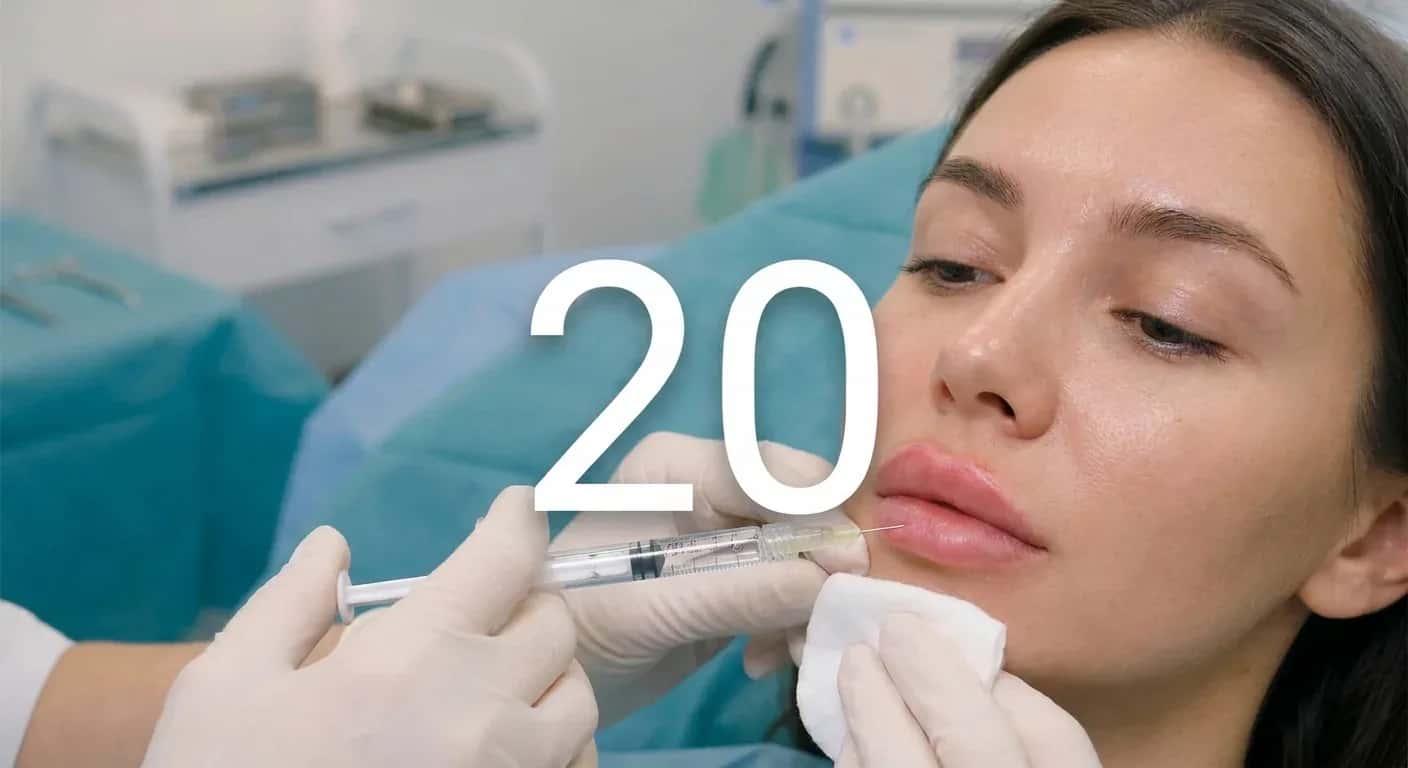
Many singers, actors, reality stars and influencers have talked openly about getting lip filler, and a growing number have also shared why they later had it dissolved. This guide looks at what 20 of these public figures said about their own lip treatments and what their experiences can teach anyone considering filler.


Filler fatigue describes the point where repeated dermal filler treatments leave a face looking heavier, puffier or less like itself, and it is pushing many people to rethink how they approach injectables. This guide explains what causes it, how to recognize an overfilled face.

Overfilled faces develop when injectable treatments add more volume than the facial anatomy can accommodate naturally, altering contours, proportions and sometimes facial expression.
Subscribe to the Medifinder newsletter and never miss our latest content.