






Ironing Laser Hair Removal in Turkey: How Does It Work and Is It Worth It?
Discover ironing laser hair removal in Turkey. Learn how it works, costs, benefits, side effects and differences from traditional laser treatments.

- Last updated
- 18 reads
- 10 min read
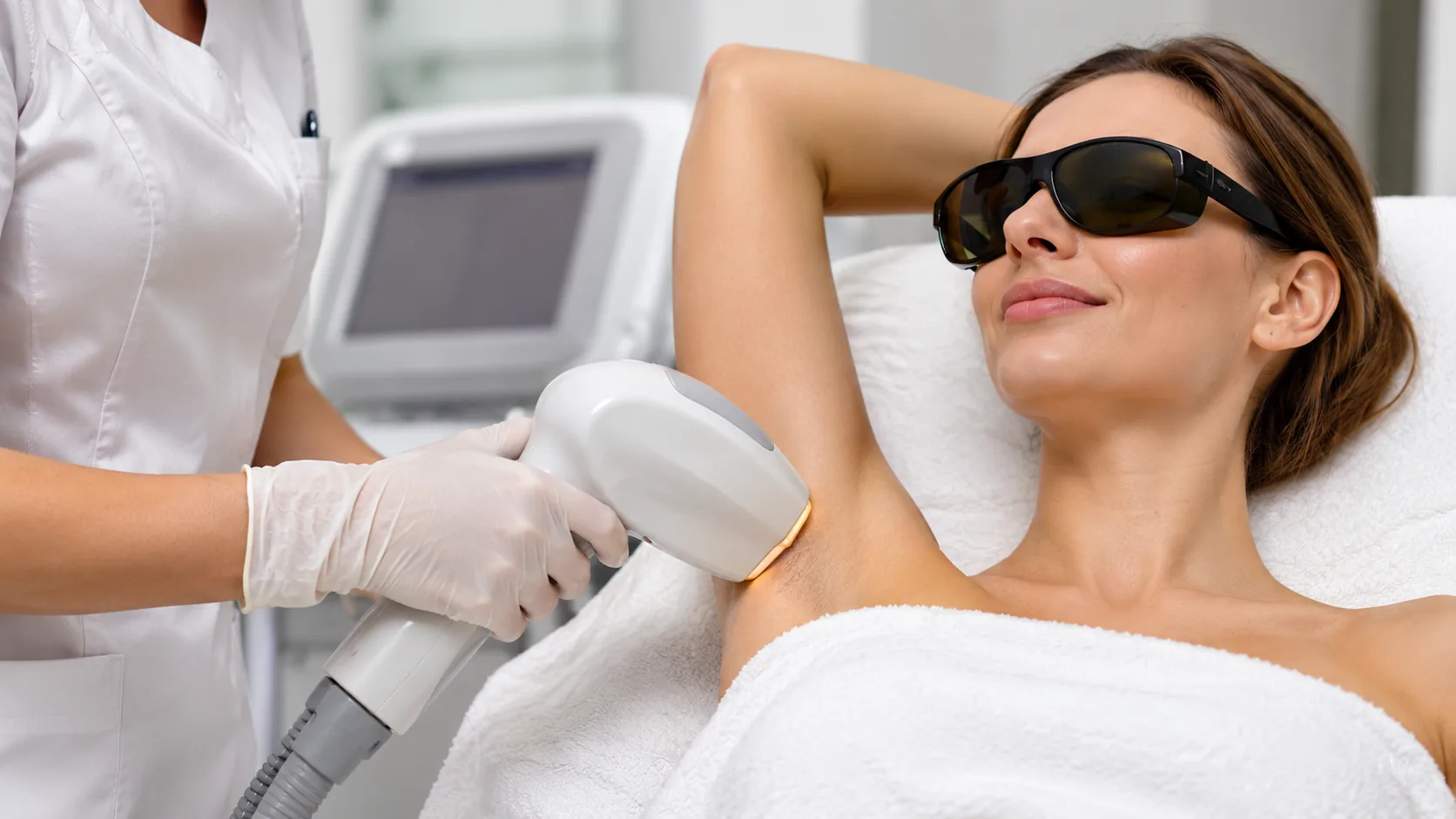


If you've been researching laser hair removal in Turkey, you may have come across a treatment called ironing laser. The name sounds unusual, especially if you're familiar with diode, Alexandrite, or ice laser hair removal.
Despite the name, there's no actual ironing involved. The term comes from the way the laser handpiece moves continuously across the skin, almost like an iron gliding over fabric.
Often advertised as a more comfortable alternative to traditional laser treatments, ironing laser hair removal has attracted interest among people looking to reduce unwanted body hair. But how effective is it, how many sessions does it take, and what should you know before booking treatment in Istanbul or Ankara? Here's what makes this technique different.
What Is Ironing Laser Hair Removal?
Ironing laser hair removal is a technique in which a laser handpiece moves repeatedly across the treatment area instead of delivering isolated pulses to individual spots.
In Turkey, the method is commonly known as ütüleme lazer epilasyon.
It is usually associated with diode laser systems that use an in-motion application technique. Some clinics also describe similar approaches using terms such as SHR (Super Hair Removal) or ice laser.
However, these names don't always refer to identical devices or settings.
The important distinction is that ironing describes how the laser is applied, not a completely separate type of laser.
During treatment, laser energy targets pigment within the hair. The absorbed energy produces heat that can damage the follicle and reduce future hair growth.
Unlike conventional stationary-pulse techniques, the moving method distributes energy through repeated passes over the skin.
How Does Ironing Laser Hair Removal Work?
The procedure usually begins with an assessment of your skin tone, hair color, hair thickness, and treatment area.
Once the appropriate device and settings have been selected, the session generally follows several steps.
1. Preparing the Skin
The treatment area is cleaned, and the hair is typically shaved beforehand.
Depending on the device, a contact gel may be applied to help the handpiece glide across the skin.
Protective eyewear is required during laser treatment.
2. Moving the Laser Handpiece
Instead of treating each small area with a single stationary pulse, the practitioner moves the handpiece continuously over the skin.
Multiple passes deliver controlled laser energy to the treatment area.
The goal is to gradually heat the targeted hair follicles while managing the temperature of the surrounding skin.
3. Cooling the Treatment Area
Many modern diode laser systems incorporate contact cooling.
Cooling can make treatment more comfortable and help protect the skin surface, although it does not eliminate the possibility of burns or other complications.
4. Completing the Session
Treatment time depends on the size of the area.
The upper lip or underarms may take only a few minutes, while larger areas such as the legs or back require longer appointments.
Afterward, temporary redness or mild swelling may occur.
Is Ironing Laser Hair Removal the Same as Ice Laser?
Not exactly, although the terms are sometimes used interchangeably in Turkish clinics.
Ice laser generally refers to systems that use cooling technology to improve comfort during hair removal.
Ironing laser describes the movement of the handpiece across the skin.
Some diode laser platforms combine both features, which explains why patients may encounter the names together.
However, a clinic advertising ice laser or ironing laser is not necessarily using the same equipment as another provider.
The device's actual technology, wavelength, cooling system, and treatment settings matter more than its marketing name.
For a broader explanation of the technologies, read our guide to laser hair removal devices and treatment methods.
Ironing Laser vs Traditional Laser Hair Removal: What's the Difference?
Both methods aim to reduce unwanted hair by targeting hair follicles with light energy.
The main difference lies in the delivery technique.
| Feature | Ironing / in-motion laser | Conventional stationary-pulse laser |
|---|---|---|
| Application | Handpiece moves repeatedly across the skin | Individual pulses delivered to selected spots |
| Energy delivery | Often uses repeated lower-energy pulses | Often uses fewer, higher-energy pulses |
| Sensation | May feel like gradual warmth | Often described as a snapping sensation |
| Cooling | Frequently combined with contact cooling | Depends on the device |
| Treatment results | Can provide lasting hair reduction | Can provide lasting hair reduction |
| Suitability | Depends on device, skin tone, and hair characteristics | Depends on device, skin tone, and hair characteristics |
Some comparative studies of diode laser protocols suggest that in-motion treatment can be less painful than conventional single-pass approaches.
However, this does not mean that ironing laser is automatically more effective, safer, or suitable for everyone.
The practitioner's experience and the device settings remain essential.
Does Ironing Laser Hair Removal Hurt?
One reason people search for ironing laser hair removal is the possibility of a more comfortable experience.
During treatment, patients may feel warmth, tingling, or a mild snapping sensation.
The moving handpiece and cooling system may help reduce discomfort compared with certain traditional laser protocols.
Still, ironing laser hair removal is not guaranteed to be painless.
Sensitivity varies depending on the treatment area, hair density, skin characteristics, and energy settings.
Areas such as the bikini line or upper lip may feel more sensitive than the legs.
If pain is a major concern, discuss the available cooling options and treatment settings during your consultation.
How Many Sessions of Ironing Laser Hair Removal Are Needed?
Most people need multiple sessions to achieve noticeable, long-term hair reduction.
This is because hair follicles pass through different growth phases, and not every follicle responds equally during a single appointment.
The American Academy of Dermatology explains that many patients require approximately two to six laser treatments, although some need more sessions depending on their individual circumstances.
Clinics may recommend a longer course, particularly for certain body areas or patterns of hair growth.
Treatment intervals are often around four to six weeks, but they can vary according to the body area and the clinician's assessment.
The total number of sessions depends on:
-
Hair thickness and color
-
Skin tone
-
Hormonal influences
-
Treatment area
-
Device type and settings
-
Individual response to treatment
Maintenance sessions may be necessary after the initial course.
Is Ironing Laser Hair Removal Permanent?
Laser hair removal can produce long-lasting hair reduction, but complete and permanent removal of every hair cannot be guaranteed.
Some follicles may stop producing visible hair for extended periods, while others may eventually produce new growth.
When hair returns, it is often finer, lighter, or less dense.
Hormonal changes can also influence regrowth, particularly in facial areas.
Patients should therefore be cautious about advertisements promising completely hair-free skin after a fixed number of sessions.
Who Is a Good Candidate for Ironing Laser Hair Removal?
People with dark, coarse hair often respond well to laser hair removal because the treatment targets pigment within the hair.
However, skin tone also influences which laser technology and settings are appropriate.
Modern diode and other laser systems can be used across a range of skin tones when selected and operated appropriately.
Darker skin requires particular care because surrounding skin pigment can also absorb laser energy.
Very light blonde, white, gray, and some red hair generally respond poorly to conventional laser hair removal.
A qualified dermatologist can assess whether the technique is suitable or whether another approach would be preferable.
Which Body Areas Can Be Treated?
Ironing laser hair removal may be used on several areas of the face and body, depending on the device and medical assessment.
Common treatment areas include:
-
Legs and thighs
-
Underarms
-
Arms
-
Back and shoulders
-
Chest
-
Bikini line
-
Upper lip and chin
Larger body areas are often highlighted in marketing for in-motion treatments because the handpiece can be moved continuously over the skin.
However, the appropriate method still depends on the patient's skin and hair characteristics.
Ironing Laser Hair Removal in Turkey: Istanbul vs Ankara
Turkey offers a range of dermatology and medical aesthetics services, including diode laser hair removal.
Patients researching ironing laser treatment often focus on Istanbul and Ankara, although the technique may be available in other cities.
Ironing Laser Hair Removal in Istanbul
Istanbul has numerous private dermatology and medical aesthetics providers offering different laser technologies.
When comparing clinics, check whether the advertised treatment actually uses a diode laser with an in-motion technique.
Ask about the device model, practitioner qualifications, and whether a skin assessment is included.
Ironing Laser Hair Removal in Ankara
Ankara is another city where clinics advertise diode ironing laser hair removal.
Some providers explicitly use the English term ironing laser hair removal when describing their services to international patients.
However, availability and equipment should always be confirmed directly with the clinic.
If you're comparing providers across Turkey, MediFinder also has a list of laser hair removal clinics in Turkey.
How Much Does Ironing Laser Hair Removal Cost in Turkey?
The cost of ironing laser hair removal in Turkey depends on the body area, number of sessions, device, and treatment provider.
Small areas such as the upper lip or underarms are generally priced differently from full-leg or full-body treatments.
Some clinics charge per session, while others offer packages covering multiple appointments.
Several factors influence the total price:
| Cost factor | Why it matters |
|---|---|
| Treatment area | Larger areas generally require more treatment time |
| Number of sessions | A complete course costs more than one appointment |
| Device and technology | Equipment and treatment protocols vary |
| Clinic and practitioner | Professional fees and facilities affect pricing |
| Package inclusions | Consultations and follow-up services may be included or separate |
Published, directly comparable prices for this specific technique are limited. For that reason, a single national average would be misleading.
When requesting a quotation, ask whether the clinic is pricing one session, a multi-session package, or several body areas together.
For international patients, scheduling is particularly important. A complete laser hair removal course usually requires appointments spread across several months, making it difficult to finish during a short holiday in Turkey.
Is Ironing Laser Hair Removal Safe?
Laser hair removal is widely performed, but it is still a medical procedure involving concentrated light energy.
Common temporary effects include redness, swelling, and mild discomfort.
Less common complications can include burns, blistering, pigment changes, infection, and scarring.
These risks may increase when inappropriate settings are used or when treatment is performed without adequate consideration of skin type.
The American Academy of Dermatology recommends choosing a qualified dermatologist experienced in laser treatment.
Before booking, tell your provider about recent tanning, medications, previous skin reactions, and any relevant medical conditions.
What Should You Do Before and After Treatment?
Before Your Appointment
Follow the preparation instructions provided by your clinician.
These may include avoiding tanning, protecting your skin from sun exposure, and shaving the treatment area rather than waxing or plucking.
Your clinician should also review medications and any conditions that may affect treatment safety.
After Your Appointment
Mild redness and swelling may occur, often resolving within a few days.
Avoid unnecessary sun exposure and follow your clinician's skincare instructions.
Cool compresses may help with temporary discomfort.
If you develop significant pain, blistering, or signs of infection, contact your treating clinician promptly.
Frequently Asked Questions About Ironing Laser Hair Removal
What is ironing laser hair removal called in Turkish?
It is commonly called ütüleme lazer epilasyon. The term describes a moving laser application technique often associated with diode systems.
Is ironing laser better than Alexandrite laser?
Not necessarily. Alexandrite and diode lasers use different wavelengths, while ironing describes an application method. The most suitable option depends on skin tone, hair characteristics, and clinical assessment.
Can ironing laser be used on dark skin?
Some diode laser systems may be suitable for darker skin when used with appropriate settings. However, skin type must be assessed carefully because burns and pigmentation changes are possible.
Can men get ironing laser hair removal?
Yes. Laser hair removal is used by both men and women. Common treatment areas for men include the back, chest, shoulders, and neck.
Can I get ironing laser hair removal during a holiday in Turkey?
A single session may be possible, but a complete treatment course generally requires several visits over a period of months. Patients should plan for follow-up appointments before starting treatment abroad.
Is ironing laser the same as SHR?
The terms may overlap, but they are not always identical. SHR describes certain rapid-pulse treatment protocols, while ironing is a popular term for moving the handpiece across the skin.
Does ironing laser work on blonde or gray hair?
Conventional laser hair removal generally works poorly on very light blonde, white, gray, and red hair because these hairs contain insufficient target pigment.
Is Ironing Laser Hair Removal in Turkey Worth Considering?
Ironing laser hair removal may be worth exploring if you're looking for a long-term reduction in unwanted hair and prefer a treatment approach that uses a moving handpiece. Its potential comfort advantages can be appealing, especially when treating larger body areas. However, results depend on much more than the technique's name.
The laser device, skin assessment, practitioner experience, and treatment settings all influence safety and effectiveness. Before choosing a clinic in Turkey, make sure you understand which technology will be used, how many sessions may be necessary, and what the complete treatment plan involves.
You can explore healthcare professionals and treatment providers on MediFinder to research your options.
- Last updated
- Language
- English
How did you find this article?

Compare longevity treatment costs in 2027, including clinic packages, biological age tests and NAD+ therapy prices in Turkey, the USA and beyond.

Explore NAD+ therapy benefits, side effects, anti-aging evidence and IV infusion costs in the USA, UK, Turkey and other countries.

Discover how biological age tests work, their accuracy, costs and what they can reveal about your health and the aging process.
Subscribe to the Medifinder newsletter and never miss our latest content.