










Forehead Filler
Forehead filler adds volume to improve hollows, contour irregularities, and selected static lines. However, it cannot replace Botox for wrinkles caused mainly by muscle movement. No dermal filler has FDA approval for forehead injection in the United States.

- Last updated
- 167 reads
- 7 min read



What Is Forehead Filler?
Forehead filler is an injectable treatment that adds temporary volume beneath selected forehead tissues.
Clinicians may use filler to create a smoother or more convex forehead contour. Treatment can also soften depressions, asymmetry, and certain fixed lines. Most procedures use crosslinked hyaluronic acid because the body gradually breaks it down. The injector selects product firmness and placement depth according to the treatment goal. Deep placement may support broader contour changes. Superficial placement may address carefully selected etched lines. Forehead filler does not reshape the frontal bone permanently. It also cannot stop aging or prevent future volume changes.
What Can Forehead Filler Improve?
Forehead filler can improve volume deficiency, contour irregularities, and lines remaining visible without muscle contraction.
A flat or hollow forehead may appear smoother after carefully distributed volume. Treatment can reduce visible transitions between prominent and recessed areas. It may also camouflage selected depressions caused by aging, anatomy, trauma, or previous procedures. However, filler adds volume rather than tightening skin. It cannot reliably lift heavy eyebrows or remove substantial skin laxity. Excessive filler may create heaviness, uneven reflections, or an unnatural rounded appearance. The clinician should assess the forehead, temples, brows, and upper eyelids together.
Is Forehead Filler Better Than Botox for Forehead Lines?
Forehead filler suits selected static lines, while Botox usually addresses wrinkles caused by muscle contraction.
Dynamic lines appear or deepen when the frontalis muscle raises the eyebrows. Neuromodulators reduce that muscular activity and soften movement-related creases. Static lines remain visible when the forehead rests. Carefully selected superficial filler may support those etched depressions. Some patients require staged treatment involving both approaches. However, weakening the frontalis can lower eyebrow position in susceptible patients. Adding filler can also create irregularities when the diagnosis remains incorrect. Providers should identify movement, volume loss, and skin quality before choosing treatment.
Is Forehead Filler FDA-Approved?
Forehead filler is not FDA-approved, and the FDA recommends against injecting dermal fillers within the forehead.
FDA approval applies to specific products, anatomical areas, depths, and patient groups. Approval for cheeks, lips, chin, or facial folds does not include forehead treatment. Forehead injection therefore represents an unapproved anatomical use in the United States. Off-label use can occur within medical practice, but it requires clear informed consent. Patients should understand that regulators have not established product safety or effectiveness for this location. They should also ask why the provider believes potential benefits justify the area’s vascular risks.
Why Is Forehead Filler Considered High Risk?
Forehead filler carries high risk because several arteries connect directly or indirectly with the ophthalmic circulation.
The supratrochlear and supraorbital arteries travel from the eye region into the forehead. Their branches can occupy different depths as they move upward. Filler entering one artery may travel backward under injection pressure. It can then move toward vessels supplying the retina or brain. Possible consequences include skin necrosis, vision loss, and stroke. Anatomical variation prevents one injection plane from remaining universally safe. A needle or cannula can still enter a vessel despite careful technique.
Can a Small Filler Amount Cause a Serious Complication?
Even a small filler volume may obstruct critical forehead arteries under certain experimental conditions.
Cadaver research estimated relevant arterial capacities at approximately 0.04 millilitres in one investigation. Another study estimated the supratrochlear pathway’s average capacity at 0.085 millilitres. These measurements do not define a safe clinical threshold. They also cannot predict whether a complication will occur during treatment. However, they challenge claims that tiny injections cannot cause serious harm. Small boluses, slow pressure, and careful placement may reduce risk. They cannot guarantee protection against intravascular injection or visual injury.
Can Ultrasound Make Forehead Filler Safer?
Doppler ultrasound can improve vessel mapping and filler placement, but it cannot make forehead treatment risk-free.
Ultrasound can show the supratrochlear and supraorbital arteries before selected injections. It may also identify previous filler, scars, tissue planes, and anatomical variations. Real-time imaging can help clinicians follow a cannula or needle during placement. Ultrasound also supports targeted hyaluronidase treatment after certain hyaluronic acid complications. However, image quality depends on equipment, training, and interpretation. Vessels can move under pressure or remain difficult to visualize. Ultrasound should supplement conservative technique and emergency preparation, not replace them.
Which Filler Type Is Preferred for the Forehead?
Hyaluronic acid is generally preferred because clinicians can reduce it with hyaluronidase when necessary.
Product selection still requires careful consideration of firmness, spread, integration, and treatment depth. A gel suitable for broad structural support may not suit superficial forehead lines. Highly water-attracting products can produce swelling or visible irregularity within thin tissues. Hyaluronidase can dissolve hyaluronic acid deposits during selected corrections and vascular emergencies. However, no hyaluronidase product has FDA approval specifically for removing dermal filler. It also cannot dissolve calcium hydroxylapatite, silicone, polycaprolactone, or permanent materials. Reversibility provides an option, not guaranteed rescue.
How Long Does Forehead Filler Last?
Forehead filler may remain visible for twelve months or longer, but forehead-specific evidence remains limited.
A small study involving ten participants reported measurable improvement through twelve months. Another trial examined superficial facial lines across several areas, including the forehead. That study reported correction lasting through eighteen months for the evaluated product. However, fine-line treatment differs from full forehead augmentation. Product type, injected volume, depth, metabolism, and previous treatments influence duration. Visible improvement also differs from complete product disappearance. Imaging research elsewhere shows hyaluronic acid may remain after cosmetic effects appear reduced.
What Is Forehead Filler Recovery Like?
Forehead filler recovery usually involves temporary swelling, tenderness, bruising, firmness, and minor contour irregularities.
Early swelling can distort symmetry and make the forehead appear overfilled. These changes should gradually improve rather than intensify. One forehead trial involving calcium hydroxylapatite formulations recorded nodules in 3.7% of participants. That result cannot predict risks from every product or technique. Delayed nodules, migration, infection, and inflammatory reactions can appear weeks or months later. Persistent firmness requires assessment before massage or additional filler. Increasing pain, warmth, redness, or skin discoloration needs faster medical evaluation.
Can Deep Forehead Filler Affect the Bone?
Deep hyaluronic acid filler may be associated with localized bone resorption, although incidence and causation remain uncertain.
A 2025 FDA review identified reports involving the chin, jaw, midface, and forehead. The findings followed supraperiosteal filler placement directly above bone. Clinicians usually discovered changes incidentally during imaging performed for unrelated reasons. Reported patients generally lacked related symptoms. The evidence came from medical device reports and published case series. Therefore, it cannot prove filler caused every observed bone change. However, the finding challenges assumptions that repeated deep injections have no long-term structural effects.
Who Should Avoid or Postpone Forehead Filler?
People with active infections, unsuitable anatomy, unresolved medical risks, or unrealistic expectations should postpone forehead filler.
The following factors require careful assessment:
-
Active skin infections, wounds, rashes, or inflamed acne require complete healing.
-
Previous permanent filler can make placement and future correction unpredictable.
-
Earlier forehead surgery may alter vessels, scars, and normal tissue planes.
-
Bleeding disorders or relevant medicines can increase bruising and procedural risks.
-
Pregnancy and breastfeeding lack adequate forehead filler safety evidence.
-
Significant brow heaviness may worsen after added forehead volume.
-
Patients expecting guaranteed safety or permanent results should avoid treatment.
A qualified clinician may decline treatment when potential benefits cannot justify risk.
Which Symptoms Require Emergency Care After Forehead Filler?
Vision changes, severe pain, skin discoloration, or neurological symptoms require immediate emergency assessment.
Patients and providers should recognize these warning signs:
-
Sudden blurred vision, double vision, eye pain, or vision loss requires emergency care.
-
Eyelid drooping or restricted eye movement may indicate ophthalmic involvement.
-
White, grey, blue, or net-like purple skin may signal reduced circulation.
-
Severe or increasing pain can indicate vascular occlusion.
-
Weakness, confusion, speech difficulty, or intense headache may indicate neurological injury.
-
Cold skin, blisters, or rapidly spreading discoloration can precede tissue damage.
Visual complications usually begin immediately and often respond poorly despite treatment.
What Should You Ask Before Getting Forehead Filler?
Patients should confirm the provider’s experience, product choice, imaging strategy, and emergency protocol before treatment.
Important questions include:
-
Why does filler suit this concern better than Botox or another treatment?
-
Is the proposed forehead use FDA-approved?
-
Which product will the provider inject?
-
Can hyaluronidase dissolve that product?
-
Does the clinic keep sufficient hyaluronidase immediately available?
-
Can the provider use Doppler ultrasound for vessel mapping?
-
What happens after sudden visual or neurological symptoms?
-
Who provides emergency support outside normal clinic hours?
Avoid providers promising scarless, risk-free, permanent, or guaranteed results. Keep the product name, batch, volume, date, and injection map.
References
-
FDA, Dermal Fillers: Soft Tissue Fillers
https://www.fda.gov/medical-devices/aesthetic-cosmetic-devices/dermal-fillers-soft-tissue-fillers -
FDA, Dermal Filler Do’s and Don’ts
https://www.fda.gov/consumers/consumer-updates/dermal-filler-dos-and-donts-wrinkles-lips-and-more -
FDA, 2025 Executive Summary on Dermal Filler Safety
https://www.fda.gov/media/188185/download -
Khan TT, et al., An Anatomical Analysis of the Supratrochlear Artery
https://pubmed.ncbi.nlm.nih.gov/27530765/ -
Yi KH, et al., Does Injecting Small Amounts of Fillers Prevent Ophthalmic Artery Occlusion?
https://pubmed.ncbi.nlm.nih.gov/37381604/ -
Trzeciak M, et al., The Depth of Arterial Supply of the Forehead
https://pubmed.ncbi.nlm.nih.gov/39764659/ -
Lee W, et al., Mapping High-Risk Arteries Using Doppler Ultrasound
https://pubmed.ncbi.nlm.nih.gov/39082612/ -
Sigrist R, et al., High-Frequency Ultrasound for Upper-Face Filler Injections
https://pubmed.ncbi.nlm.nih.gov/39202206/ -
Jung JY, et al., Ultrasound-Guided Hyaluronic Acid Augmentation of the Upper Face
https://pubmed.ncbi.nlm.nih.gov/39740068/ -
Huang YL, et al., Forehead Augmentation With High G Prime Hyaluronic Acid
https://pubmed.ncbi.nlm.nih.gov/38274103/ -
Cartier H, et al., Long-Term Performance of Superficial Hyaluronic Acid Filler
https://pubmed.ncbi.nlm.nih.gov/39704133/ -
Scardua N, et al., Supraperiosteal Forehead Filling
https://pubmed.ncbi.nlm.nih.gov/39099032/ -
Mortada H, et al., Ocular Complications After Hyaluronic Acid Injections
https://pubmed.ncbi.nlm.nih.gov/35091771/ -
Foster J, et al., Vision-Threatening Complications of Soft Tissue Fillers
https://pubmed.ncbi.nlm.nih.gov/40167411/ -
Sansome S, et al., Management of Tissue Filler-Induced Vision Loss
https://pubmed.ncbi.nlm.nih.gov/41490283/
- Last updated
- Language
- English
How did you find this article?
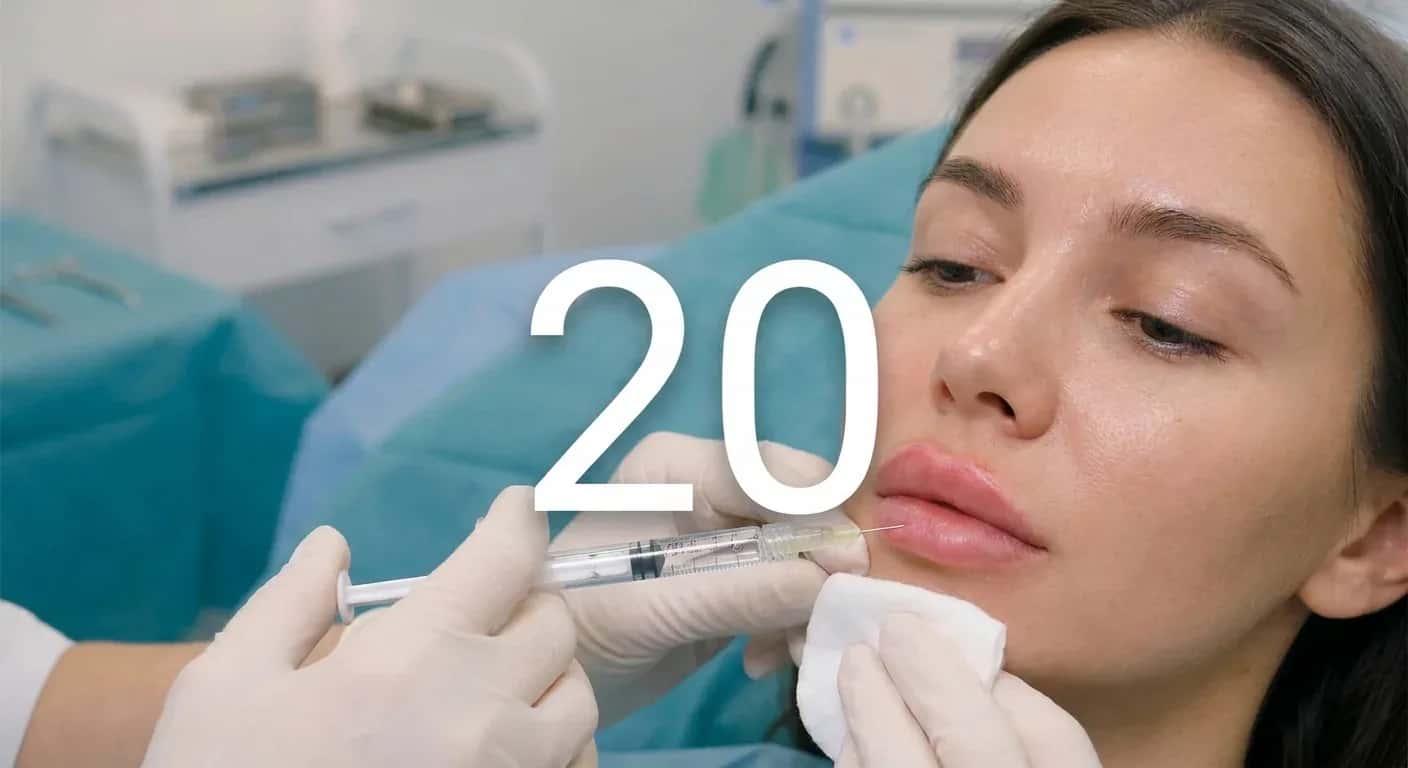
Many singers, actors, reality stars and influencers have talked openly about getting lip filler, and a growing number have also shared why they later had it dissolved. This guide looks at what 20 of these public figures said about their own lip treatments and what their experiences can teach anyone considering filler.


Filler fatigue describes the point where repeated dermal filler treatments leave a face looking heavier, puffier or less like itself, and it is pushing many people to rethink how they approach injectables. This guide explains what causes it, how to recognize an overfilled face.

Overfilled faces develop when injectable treatments add more volume than the facial anatomy can accommodate naturally, altering contours, proportions and sometimes facial expression.
Subscribe to the Medifinder newsletter and never miss our latest content.