










Eating After Sleeve Gastrectomy: 5 Steps to Getting Used to Your New Stomach
How does your diet change after sleeve gastrectomy? Let's look at what to keep in mind as you move from liquids to purées and solid foods, in 5 steps.

- Last updated
- 3 reads
- 4 min read
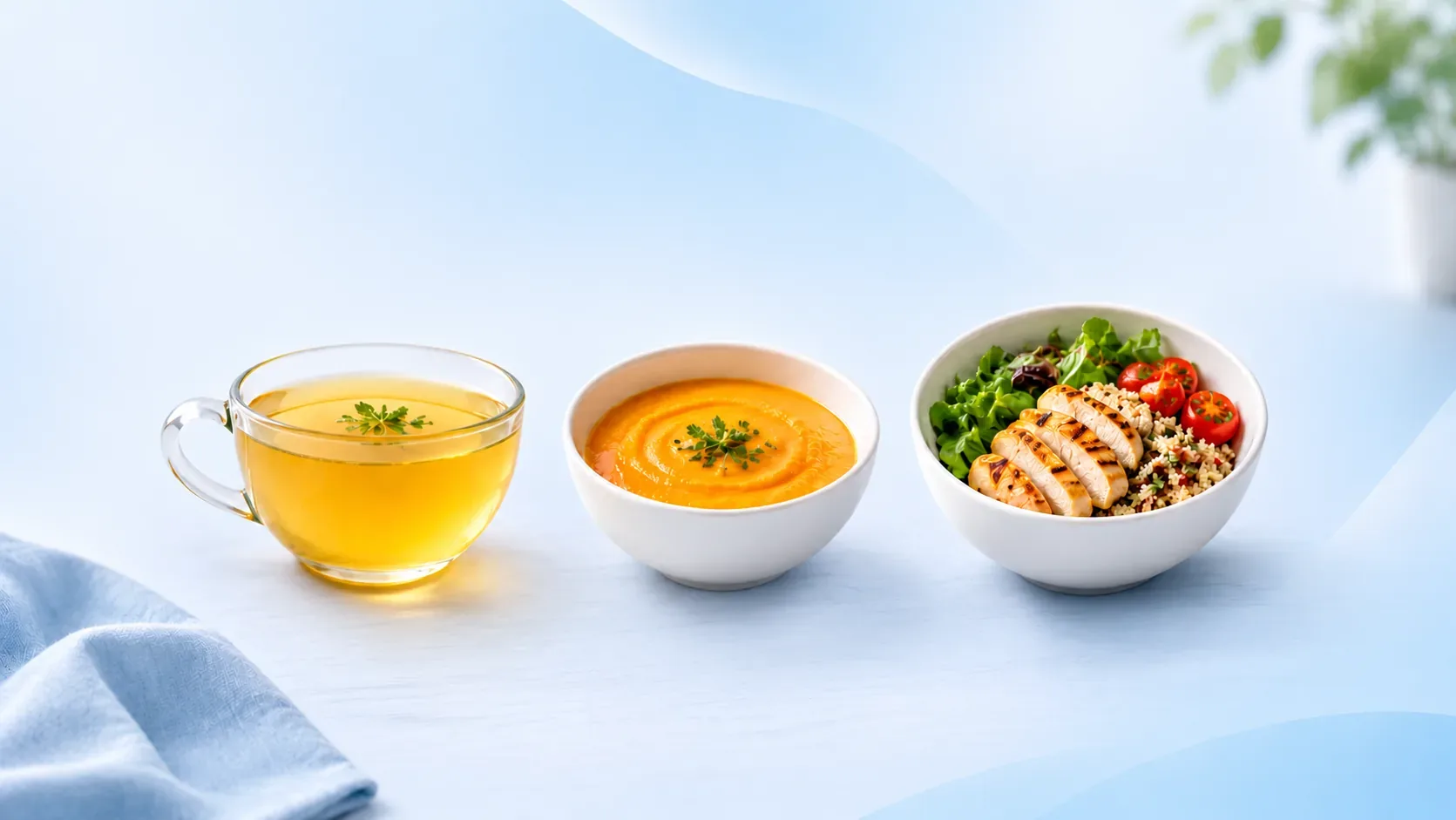


After sleeve gastrectomy, it is not only the size of your stomach that changes, but also your eating habits. A meal that once seemed ordinary is now eaten in smaller portions and at a different pace. What's more, you can't eat just any food right after surgery.
So how does eating after sleeve gastrectomy progress? When do you move on to purées, and when to solid foods? Here are 5 important steps you should know as you adjust to your new eating routine.
1. In the First Days, Sips Come Before Spoonfuls
After surgery, eating usually begins with clear liquids. The goal at this stage is to take in fluids without putting strain on the stomach and to prevent dehydration. As far as the surgical team allows, you can have water, sugar-free clear drinks and strained, fat-free meat or vegetable broth.
After the clear liquid stage, you can move on to full liquids that contain protein. During this period, smooth soups and liquid protein supplements recommended by your dietitian can be used. What matters is not drinking quickly, but taking small sips. The amount of fluid and the timing of the move to the next stage should be decided by your healthcare team. If you'd like to learn how the surgery is performed, who it is suitable for and what to expect during recovery before reading about the eating process, you can also take a look at our guide What Is Sleeve Gastrectomy? Everything You Need to Know from A to Z.
2. The Purée Stage: A Gradual Return to the Table
Once the liquid diet is going smoothly, it's time for foods with a purée consistency. At this stage, it is important that foods are completely smooth. With your dietitian's approval, you can have yogurt, well-mashed eggs and properly prepared vegetable or protein purées.
Three habits stand out during the purée stage:
- Starting with small amounts
- Trying new foods one at a time
- Stopping eating as soon as you feel discomfort
There is no fixed day for moving on to purées. Everyone's rate of recovery and ability to tolerate foods can differ.
3. No Rushing the Move to Solid Foods
The answer to the question What can you eat after sleeve gastrectomy? broadens as recovery progresses. After the purée stage, soft foods are usually tried. Well-cooked fish, eggs and soft-textured protein sources can be considered at this stage. Solid foods are then introduced gradually. However, starting solid foods does not mean going back to your old portion sizes. It is important to take small bites, chew your food thoroughly and pay attention to the feeling of fullness. Some foods may be hard to tolerate at first. That is why variety in your diet should be increased according to how you personally respond.
4. The Big Supporter of Small Portions: Protein
Because you eat less after surgery, the nutritional content of what you eat becomes even more important. In particular, protein after sleeve gastrectomy supports tissue healing and helps preserve muscle mass. Protein sources to include after sleeve gastrectomy include:
- Eggs
- Fish and chicken
- Yogurt and cheese
- Legumes prepared to a suitable consistency
- Protein supplements your dietitian considers necessary
Protein needs after bariatric surgery vary from person to person. For this reason, your daily target and any supplements you use should be determined by your dietitian.
5. The Small but Important Rules of Your New Eating Routine
Eating after sleeve gastrectomy is not only about which foods you eat. How you eat matters too.
Over time, the following behaviors should become habits in your daily life:
-
Eat slowly: Don't rush your meals, and chew each bite thoroughly.
-
Don't neglect fluid intake: Drink the amount of fluid recommended by your healthcare team throughout the day.
-
Be careful with sugary and carbonated drinks: These can cause discomfort or unnecessary calorie intake.
-
Keep monitoring your vitamins and minerals: Take the supplements you need after surgery as recommended by your doctor.
-
Don't skip your follow-up appointments: Your nutritional needs and possible deficiencies can change over time.
If you experience repeated vomiting, are unable to keep fluids down or have increasing abdominal pain, contact your healthcare team without delay.
Getting Used to Your New Stomach Takes Time
Not everyone recovers at the same pace after sleeve gastrectomy. A food that one person can eat comfortably may cause discomfort for someone else. That is why it is important to stick to the program prepared by your surgeon and bariatric dietitian rather than following online meal schedules to the letter.
Eating after surgery goes beyond a short-term diet; it requires reshaping your habits for the long term. If you'd also like to learn more about sleeve gastrectomy and nutritional follow-up after surgery, you can browse healthcare providers offering obesity surgery on MediFinder and compare your options.
This content is for general information purposes only. Post-operative diet stages and individual nutritional needs should be determined by the surgeon and dietitian following the patient.
To learn about other options for managing weight, read What Are the Advanced Treatments for Obesity?
- Last updated
- Language
- English
How did you find this article?

What are the common misconceptions about sleeve gastrectomy? From eligibility criteria and risks to recovery and weight loss, here is everything you want to know.

Gastric balloon or sleeve gastrectomy? Which method might suit you better on your weight-loss journey? Let's take a look at the differences between the two options and the key details together.

Learn five practical ways to slow rapid weight loss, support nourishment, protect muscle and recognize when an unexplained change needs attention.
Subscribe to the Medifinder newsletter and never miss our latest content.