










Do Endometrial Polyps Affect Embryo Implantation?
Endometrial polyps may alter the uterine cavity and affect implantation. Learn how location, inflammation, imaging, and removal can shape embryo transfer planning.

- Last updated
- 11 reads
- 6 min read
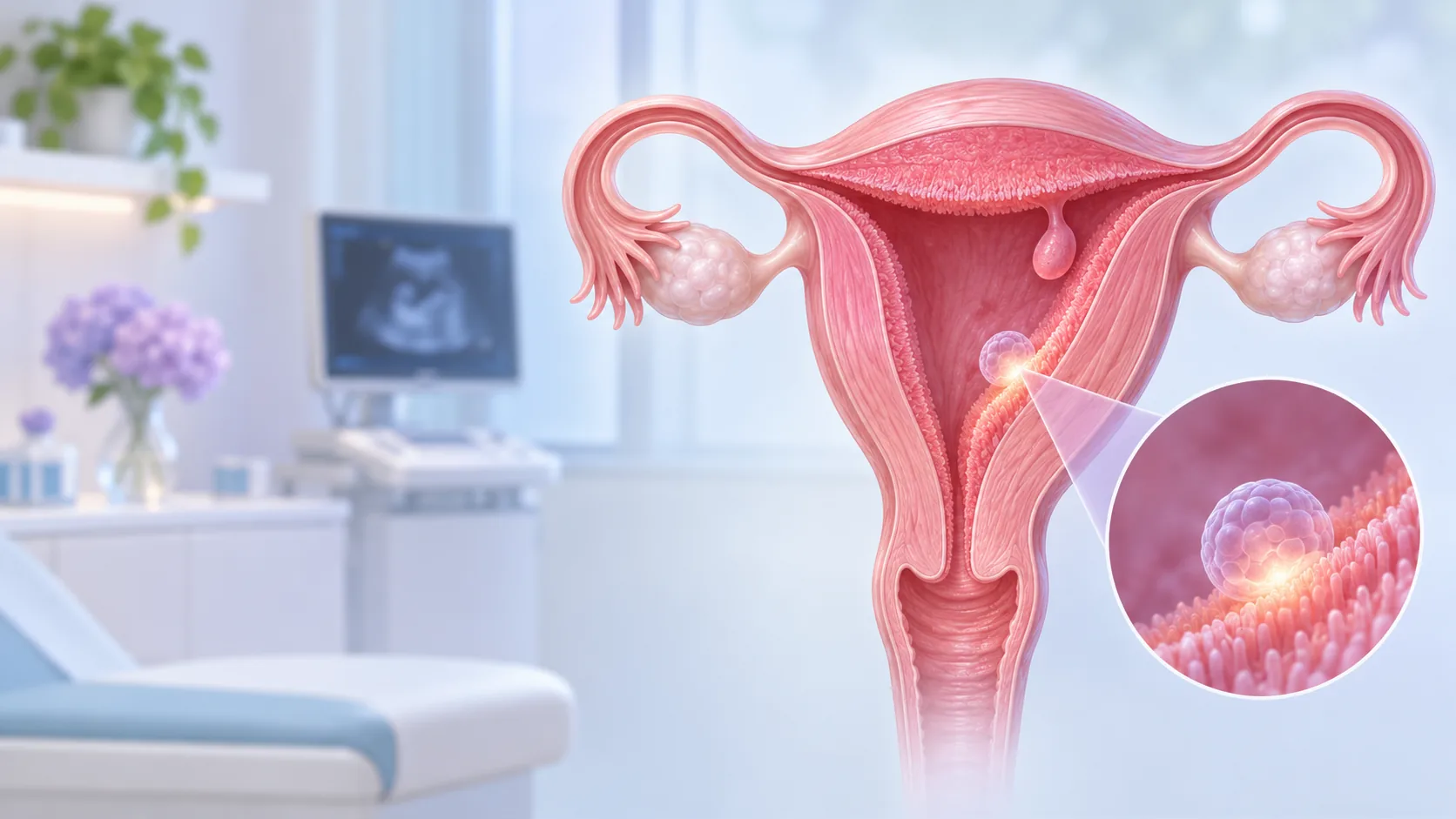


Endometrial polyps are small growths that arise from the lining of the uterus. Some cause bleeding or cramping, while others are found unexpectedly during an ultrasound or fertility evaluation. Because an embryo must attach to the endometrium, a natural question is whether a polyp can interfere with implantation or reduce the chance of pregnancy after transfer.
Do Endometrial Polyps Affect Embryo Implantation?
They can. A polyp may alter the surface where an embryo is expected to attach, create local inflammation, or disrupt the normal pattern of endometrial growth. The effect depends on the polyp’s size, number, location, and relationship to the uterine cavity.
Not every polyp prevents implantation. Some are small and inactive, while others occupy a position that may interfere with the embryo or with the development of a receptive lining. The finding is therefore interpreted in the context of the full fertility history and the appearance of the cavity.
What Is an Endometrial Polyp?
An endometrial polyp is an overgrowth of glands, supporting tissue, and blood vessels from the uterine lining. It may be attached by a narrow stalk or have a broader base. Polyps can be single or multiple and may vary from a few millimetres to a larger lesion that fills part of the cavity.
They are often benign, but their effect on fertility is related to where they sit and how they influence the endometrium. A polyp near the uterine fundus, close to a potential implantation area, may be more relevant than one near the cervix.
How Could a Polyp Interfere With Implantation?
Physical Occupation of the Cavity
A polyp creates an uneven surface in an area that is normally prepared for embryo attachment. If it projects into the cavity, it may reduce the amount of smooth receptive lining available or make contact between the embryo and endometrium less predictable.
Local Inflammation
Polyps can be associated with local inflammatory signals. Implantation requires carefully timed communication between the embryo and the endometrium. Persistent inflammation may disturb that conversation or make the lining less supportive.
Altered Blood Supply
A polyp has its own vascular tissue. This can change the local blood flow pattern within the endometrium and may affect how the surrounding lining develops during the implantation window.
Changes in Hormone Response
Polyps can respond to estrogen and progesterone differently from the surrounding endometrium. This may create an area that matures at a different pace, even when the overall lining thickness looks adequate on ultrasound.
Can Polyps Cause Infertility Without Symptoms?
Yes. Some people have no abnormal bleeding, pain, or noticeable symptoms. A polyp may be discovered during a saline ultrasound, hysteroscopy, or evaluation after an unsuccessful transfer. The absence of symptoms does not prove that the uterine cavity is normal.
When a polyp is found during IVF planning, the important question is whether it changes the environment in which the embryo will be placed. The answer is based on imaging, location, and the timing of the planned cycle.
How Are Polyps Detected Before Embryo Transfer?
A standard ultrasound may show a focal thickening or a small mass, but small polyps can be difficult to distinguish from normal endometrial folds. Saline infusion ultrasound outlines the cavity with fluid and can make a protruding lesion easier to see.
Hysteroscopy allows direct viewing of the cavity through a thin camera. It can identify the size, attachment, and exact position of a polyp. The finding can then be managed during the same procedure when appropriate.
- Transvaginal ultrasound.
- Saline infusion sonography.
- Hysteroscopy.
- Endometrial assessment during fertility monitoring.
Does Removing a Polyp Improve Implantation?
Removing a cavity-distorting polyp may improve the conditions for implantation, particularly when the lesion is larger, symptomatic, or positioned where it could interfere with the embryo. The benefit is related to restoring a smoother cavity and reducing the local disturbance created by the growth.
Improved anatomy does not guarantee implantation because embryo quality, chromosome status, endometrial timing, and many other factors remain important. The purpose of removal is to address one identifiable obstacle rather than promise a specific outcome.
How Are Endometrial Polyps Removed?
Hysteroscopic polypectomy is commonly used because it allows the growth to be removed through the cervix without an abdominal incision. The tissue can be sent for laboratory analysis, and the cavity can be inspected afterward for a smooth result.
Recovery is often brief, but the lining may need time to heal before an embryo transfer. The timing depends on the size and number of polyps, the appearance of the endometrium after removal, and the treatment plan for the cycle.
What If a Small Polyp Is Found During IVF?
A very small polyp may be observed in some situations, especially if it is not distorting the cavity and the transfer is already scheduled. In other situations, removing it before transfer may be preferred because the embryo represents a significant emotional and financial investment.
The decision is not based on size alone. Location, symptoms, repeated implantation outcomes, and whether the finding is definitely a polyp all shape the plan. A suspicious area should be identified accurately rather than dismissed as a minor variation.
Can Polyps Return After Removal?
Polyps can recur after removal, although recurrence is not inevitable. New growth may develop from the endometrium, particularly when hormonal stimulation continues over time. Recurrent bleeding, a new cavity finding, or an unexpected change in the lining may prompt repeat imaging.
Keeping previous procedure records and ultrasound images can make future comparisons easier. A clear cavity at one point does not permanently guarantee that no new polyp will appear later.
Does Polyp Size Always Predict Risk?
Size provides useful context but is not a perfect risk calculator. A small polyp in a critical location may matter more than a larger one attached near an area that does not affect the planned implantation site. Multiple polyps can also create a more irregular surface than one isolated growth.
The relationship between the lesion and the endometrial cavity is therefore more informative than a measurement written alone on a report.
Frequently Asked Questions About Endometrial Polyps and Implantation
Can a small endometrial polyp stop an embryo from implanting?
A small polyp may not prevent implantation, but its position and effect on the cavity determine how relevant it is. Even a modest lesion can be considered carefully before transfer.
Should a polyp always be removed before IVF?
Removal is often considered when the polyp distorts the cavity, causes bleeding, or appears in a location that could interfere with implantation. The decision uses the full imaging and treatment context.
How long after polyp removal can embryo transfer occur?
The lining usually needs time to heal and return to a receptive appearance. Follow-up imaging or cycle planning may be used to confirm that the cavity is ready.
Can an endometrial polyp cause a failed implantation?
It may contribute by altering the cavity or local inflammation, but a failed implantation usually has more than one possible explanation. The polyp is one factor to assess among several.
Can polyps be seen on a routine ultrasound?
Some are visible, while small or flat lesions can be missed. Saline imaging or hysteroscopy may provide a clearer view when the cavity needs detailed assessment.
Preparing the Uterine Cavity for Transfer
Endometrial polyps can affect implantation by changing the physical surface, local inflammation, and hormonal behaviour of the uterine lining. Their presence does not automatically mean that pregnancy is impossible, but a cavity-distorting lesion deserves careful evaluation before an embryo is transferred. Accurate imaging, appropriate removal when needed, and confirmation that the lining has healed can create a more favourable setting for implantation while keeping expectations realistic.
- Last updated
- Language
- English
How did you find this article?
A whistling sound after septoplasty can come from swelling, crusting, dryness, or altered airflow. Learn what it may mean and when it needs review.
Follicles can be visible on ultrasound yet yield no eggs at retrieval. Learn how trigger timing, premature ovulation, follicle biology, and technique may explain the result.
A 3BC embryo grade describes blastocyst expansion, inner cell mass, and trophectoderm appearance. Learn what each part means and how to read the result.
Subscribe to the Medifinder newsletter and never miss our latest content.