










Bad Breath From Tonsil Stones Without a Sore Throat
Tonsil stones can cause persistent bad breath without a sore throat. Learn why they form, how to manage them safely, and which warning signs matter.

- Last updated
- 13 reads
- 6 min read
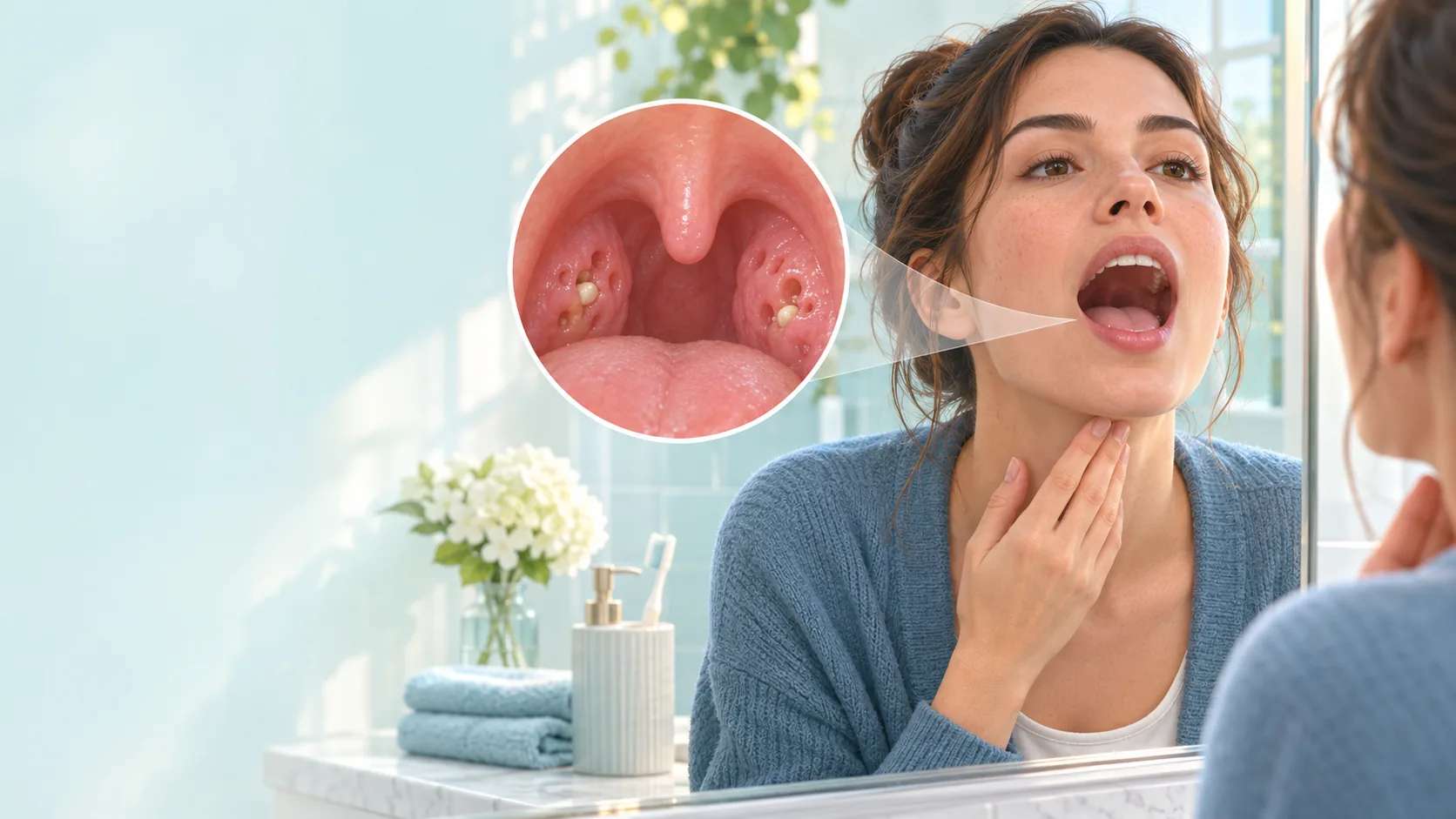


Bad breath from tonsil stones can be embarrassing, especially when there is no sore throat or fever to explain it. You may notice an unpleasant taste, small white particles in the tonsils, or a recurring need to clear the throat. Tonsil stones are collections of mucus, food particles, bacteria, and shed cells that become trapped in the small pockets of the tonsils. They can create a strong odour even when the surrounding throat feels completely comfortable.
What Are Tonsil Stones?
The tonsils contain natural crevices called crypts. These pockets help the immune system sample material entering through the mouth, but they can also collect debris. Over time, the material may become compacted and develop a soft or firm stone-like texture. The surface can harbour bacteria that release sulphur-containing compounds, which are responsible for the characteristic bad smell.
Some stones are tiny and remain hidden deep inside the crypts. Others appear as white or yellow dots on the tonsil surface. A person may have one visible stone, several small stones, or recurring deposits that are noticed only when they cough or swallow.
Why Can Tonsil Stones Cause Bad Breath Without Pain?
Tonsil stones are often localised and do not cause an active infection. They may irritate a single crypt without producing the widespread inflammation that causes a sore throat. The smell comes mainly from trapped bacteria and decomposing debris, not from tissue damage. This is why someone can have persistent halitosis while eating and swallowing normally.
Many people do not feel the stone at all. Others notice a foreign-body sensation, a mild tickle, a cough, or a small lump on one side. The absence of pain does not mean the stone is not contributing to the odour.
Common Signs That Point Toward Tonsil Stones
- Bad breath that returns soon after brushing or using mouthwash
- A persistent unpleasant taste or metallic sensation
- White or yellow dots in the tonsil crevices
- Small particles that come loose after coughing
- A feeling that something is stuck at the back of the throat
- Mild ear discomfort without clear ear disease
These signs can overlap with dental problems, dry mouth, gum inflammation, reflux, or nasal drainage. The pattern matters more than one isolated symptom.
Why the Stones Keep Coming Back
Some tonsils have deeper or more numerous crypts, making them more likely to collect debris. Chronic nasal drainage, mouth breathing, dehydration, and frequent throat irritation can add mucus to the pockets. Food texture and oral hygiene also influence how much material remains after meals. Previous tonsil infections may leave the crypts more irregular, although stones can occur without a history of repeated infections.
Trying to remove a stone with sharp objects can injure the tonsil and cause bleeding. Aggressive scraping may also enlarge irritation and make the area more sensitive. The goal is gentle cleaning and prevention rather than force.
Safe Home Care
Good oral hygiene reduces the amount of bacteria and debris available to collect. Brush the teeth and tongue twice a day, floss between teeth, and drink water regularly. A gentle warm saltwater gargle may loosen surface debris and soothe the throat. An alcohol-free mouth rinse can be useful if it does not cause dryness.
If a stone is clearly visible, a low-pressure water irrigator may help some people, but high pressure can damage the tonsil. Stop if there is pain, bleeding, or swelling. Do not use tweezers, pins, fingernails, or other sharp tools in the crypts.
- Clean the tongue because bacteria can collect on its surface
- Rinse after meals when food tends to lodge in the tonsils
- Stay hydrated to keep mucus less sticky
- Address nasal drainage and mouth breathing when present
- Avoid smoking and vaping, which can worsen odour and dryness
When Bad Breath May Have Another Cause
Not every case of halitosis comes from tonsil stones. Gum disease, cavities, a coated tongue, dry mouth, reflux, sinus drainage, and certain medicines can all create persistent odour. If the tonsils look clear but the smell continues, dental and throat causes should be considered together rather than repeatedly treating the tonsils alone.
A sour taste, morning hoarseness, chronic cough, or burning after meals may suggest reflux. Bleeding gums, loose teeth, or tenderness when brushing point toward oral causes. Thick nasal mucus, facial pressure, or reduced smell may indicate a nasal or sinus contribution.
When to Arrange an Evaluation
Arrange an assessment when stones recur frequently, bad breath persists despite careful oral hygiene, or the tonsils are difficult to inspect. An evaluation is also important for one-sided swelling, repeated bleeding, worsening pain, fever, difficulty swallowing, a neck lump, or unexplained weight loss.
Urgent help is needed for rapidly increasing throat swelling, difficulty breathing, inability to swallow liquids, severe one-sided pain, or a muffled voice with drooling. These features can indicate a problem more serious than a simple tonsil stone.
How Tonsil Stones Are Managed
Small stones may be managed with hygiene, hydration, gentle rinsing, and attention to nasal or reflux triggers. If a stone is larger or deeply embedded, it can be removed carefully with appropriate tools. Recurring problems may lead to a discussion about procedures that smooth the crypts or remove the tonsils, but the decision depends on the frequency, severity, and impact of symptoms.
Frequently Asked Questions About Bad Breath From Tonsil Stones
Can tonsil stones cause bad breath without a sore throat?
Yes. Stones can trap odour-producing bacteria in a tonsil crypt without causing the broad inflammation that creates throat pain.
How can I tell if tonsil stones are causing the smell?
Recurrent odour with white or yellow tonsil particles, an unpleasant taste, or a foreign-body sensation makes tonsil stones more likely, although other causes can coexist.
Should I remove a tonsil stone with a cotton swab?
Only very gentle contact is reasonable, and sharp or forceful pressure should be avoided. Stop immediately if pain or bleeding occurs.
Can gargling prevent tonsil stones?
Gentle gargling may remove loose debris and reduce bacterial build-up. It works best alongside brushing, tongue cleaning, flossing, and hydration.
When is bad breath a warning sign?
Persistent odour with bleeding, one-sided swelling, fever, severe pain, swallowing or breathing difficulty, or a neck lump needs timely assessment.
Understanding the Smell and Taste Cycle
Tonsil stone odour can seem stronger at certain times of day because saliva flow changes during sleep, dehydration, or long periods without eating. A dry mouth allows volatile compounds to remain concentrated, while morning mouth breathing can make the taste more noticeable. This does not necessarily mean that a new stone formed overnight.
Pay attention to whether the smell improves after cleaning the tongue, drinking water, or gently rinsing. Note whether it returns after meals or appears alongside nasal drainage. These details can help separate a stone-related pattern from dental, reflux, or nasal causes.
Reducing Debris in the Tonsil Crypts
Slow, thorough chewing and a water rinse after meals can reduce food particles around the tonsils. Avoid repeatedly poking the crypts because irritation may increase swelling and create more spaces for debris. If mouth breathing is common, improve nasal comfort and bedroom humidity so the throat remains less dry overnight.
Dental and Throat Care Work Together
Because the mouth, nose, and throat share airflow and drainage, treating only one area may leave the odour unchanged. Keep regular dental care, clean removable dental appliances, and mention recurrent tonsil debris during a routine appointment. If gum bleeding or tooth sensitivity is present, those symptoms may be contributing even when a tonsil stone is visible.
Likewise, ongoing nasal drainage can keep feeding the crypts with mucus. Controlling indoor dust, keeping bedding clean, and using gentle saline moisture may reduce the material available to collect. A balanced approach is more useful than repeated attempts to remove stones after they form.
What to Record Before an Appointment
Write down how often the smell occurs, whether it is worse after sleep or meals, how often stones appear, and what improves the taste. Note bleeding, pain, swallowing changes, reflux symptoms, allergies, and any new medicine. A clear timeline helps identify whether the problem is local to the tonsils or part of a wider oral, nasal, or digestive pattern.
Small improvements in hydration, oral cleaning, and nasal comfort can make the odour less intrusive while you monitor the pattern. Avoid sudden aggressive changes that irritate the tonsils.
- Last updated
- Language
- English
How did you find this article?

Crackling sounds in the ear can come from pressure changes, Eustachian tube problems, jaw movement, wax, or middle-ear muscle activity.

Ear pain during chewing can come from the jaw joint, muscles, teeth, throat, or nearby nerves even when the ear is healthy.

A nose can feel blocked without discharge because of swelling, dryness, allergies, position, a deviated septum, or nasal valve narrowing.
Subscribe to the Medifinder newsletter and never miss our latest content.