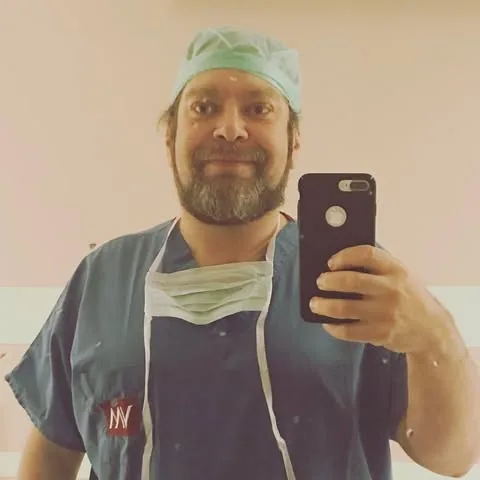







Who Is Dr. Gürler Akınbingöl?
Dr. Gürler Akınbingöl is a plastic, reconstructive and aesthetic surgeon based in Istanbul, Turkey. He was born in Ankara in 1972 and completed his primary education at Polatlı Sakarya Primary School.
He completed his middle and high school education at TED Ankara College and studied medicine at Ankara University Faculty of Medicine between 1990 and 1996.
He then completed his specialist training in Plastic, Reconstructive and Aesthetic Surgery at Başkent University Faculty of Medicine between 1996 and 2003.
After specialization, he worked at Acıbadem Bakırköy Hospital from 2003 to 2007. Since 2007, he has continued his clinical work at his own private practice.
His professional areas include aesthetic, plastic and reconstructive surgery, with a focus on facial, breast and body aesthetics.
Medical Education and Professional Background
Gürler Akınbingöl completed his medical degree at Ankara University Faculty of Medicine in 1996.
He then entered specialist training in Plastic, Reconstructive and Aesthetic Surgery at Başkent University Faculty of Medicine.
He completed his specialist training in 2003 and subsequently worked at Acıbadem Bakırköy Hospital for four years.
Since 2007, he has worked independently at his private practice in Istanbul. His surgical procedures are performed at private hospitals in Istanbul according to the patient's treatment needs.
His professional background includes scientific publications and participation in professional organizations related to plastic and reconstructive surgery.
Which Areas Does Gürler Akınbingöl Focus On?
Gürler Akınbingöl works across plastic, reconstructive and aesthetic surgery. Facial, breast and body aesthetics are among his main clinical areas.
Breast surgery includes augmentation, reduction, lift and selected reconstructive procedures.
Facial aesthetics includes facelift, eyelid surgery, rhinoplasty, nasal tip surgery and lip aesthetics.
Body contouring can include liposuction and selected procedures for localized fat and contour concerns. Gynecomastia is also among his areas of work.
His non-surgical aesthetic services include Botox, lip fillers and other dermal filler applications. FUE hair transplantation is also part of his clinical practice.
Aesthetic and Plastic Surgery Procedures
Aesthetic surgery includes procedures designed to address selected concerns involving the face, breasts and body.
Facial procedures include facelift, eyelid surgery, rhinoplasty and lip aesthetics. Treatment planning takes facial anatomy and individual expectations into account.
Breast surgery can involve augmentation, reduction and lift procedures. Existing breast tissue, chest structure and body proportions influence the surgical approach.
Body contouring can address localized fat and changes in body shape. Liposuction can be considered for selected areas according to individual anatomy.
Reconstructive surgery addresses tissue loss caused by burns, tumors, trauma or other conditions.
Breast Aesthetic and Reconstructive Surgery
Breast aesthetics is an important area of his professional practice. Breast augmentation, breast reduction and breast lift are among the surgical options.
Breast augmentation considers existing breast tissue, chest structure and body proportions. Implant characteristics can be selected according to individual anatomy.
Breast reduction removes selected amounts of breast tissue and skin while reshaping the breast. Physical discomfort related to breast size can also be discussed.
Breast lift reshapes sagging breast tissue. Different techniques can be considered according to tissue characteristics and the patient's goals.
Breast reconstruction focuses on rebuilding breast tissue following breast loss. The appropriate technique depends on the patient's anatomy, medical condition and reconstructive needs.
Rhinoplasty and Nasal Tip Surgery
Rhinoplasty reshapes the nose while considering its relationship with the rest of the face. The nasal bones, cartilage, bridge and tip can all be evaluated.
Nasal tip surgery focuses specifically on the shape, projection, width and angle of the nasal tip.
Facial proportions are important during nasal surgery. The forehead, chin and cheeks can influence the desired nasal profile.
Functional nasal issues may also be assessed. Previous nasal surgery, breathing difficulties and internal structural problems can affect treatment planning.
A detailed examination is important before both primary and revision rhinoplasty.
Eyelid Surgery and Facelift
Eyelid surgery addresses changes involving the upper and lower eyelids. Excess skin, visible fat and tissue laxity can all be evaluated.
The upper eyelid may have excess skin, while the lower eyelid can develop under-eye bags and laxity.
Facelift surgery addresses age-related changes in facial skin and soft tissues. The jawline, cheeks and lower face may all be included in the assessment.
Treatment depends on facial anatomy, skin quality and the degree of tissue change. Each surgical plan is individualized.
Gynecomastia Treatment
Gynecomastia involves increased tissue in the male breast area. Evaluation can include fatty tissue, glandular breast tissue and excess skin.
Some patients have mainly fatty enlargement, while glandular tissue is more prominent in others.
Treatment can include liposuction, surgical removal of glandular tissue or a combination of techniques.
Chest structure and symmetry are considered during treatment planning. The final approach depends on the patient's anatomy and clinical findings.
Lip Aesthetics, Fillers and Botox
Lip aesthetics includes surgical and non-surgical procedures involving lip shape, volume and facial proportions.
Lip fillers can increase or reshape lip volume. The product amount and injection areas depend on the patient's anatomy.
Botox can reduce the appearance of expression-related lines. The forehead, glabella and areas around the eyes are common treatment sites.
Previous fillers and Botox treatments should be discussed before new injections. The new treatment plan depends on existing products, facial anatomy and individual expectations.
FUE Hair Transplantation
FUE hair transplantation involves extracting individual hair follicles from a donor area and implanting them into areas affected by hair loss.
Treatment planning considers the type of hair loss, donor area capacity and size of the recipient area.
The hairline should be planned in harmony with the patient's facial structure. Graft requirements depend on existing hair density and the characteristics of the donor area.
Previous treatments, current medications and the history of hair loss can all be relevant before transplantation.
Skin Cancer and Reconstructive Surgery
Plastic surgery also includes reconstructive treatment for skin cancer, burns, trauma and tissue loss.
After skin cancer surgery, different reconstruction techniques can be used to close or restore the resulting defect. The technique depends on tumor location and the amount of tissue removed.
Burn scars and tissue changes can also require plastic surgical evaluation.
Reconstructive surgery aims to improve the appearance of damaged areas while considering function and tissue structure.
Where Is the Istanbul Clinic Located?
Gürler Akınbingöl sees patients at his private practice in Zeytinlik, Bakırköy, Istanbul. The listed address is Fişekhane Caddesi No. 54/7, 5th Floor.
The clinic provides consultations in plastic, reconstructive and aesthetic surgery. Breast, nasal, facial and body aesthetics are among the main areas.
Eyelid surgery, facelift, lip aesthetics, gynecomastia, hair transplantation and other aesthetic treatments are also part of his clinical work.
The listed telephone numbers are +90 552 669 82 34 and +90 532 253 80 17. Working hours are listed as weekdays from 09:00 to 18:00 and Saturday from 10:00 to 16:00.
What Should Be Prepared Before an Appointment?
Patients attending aesthetic surgery consultations can provide information about previous operations, existing medical conditions and current medications.
For breast surgery, previous procedures and current breast anatomy can be relevant. For rhinoplasty, previous nasal surgery and breathing difficulties should be discussed.
Patients seeking gynecomastia treatment can provide information about when breast enlargement began and previous treatments.
For hair transplantation, the history of hair loss and previous treatments should be discussed. Current medications and existing medical conditions should also be reported.