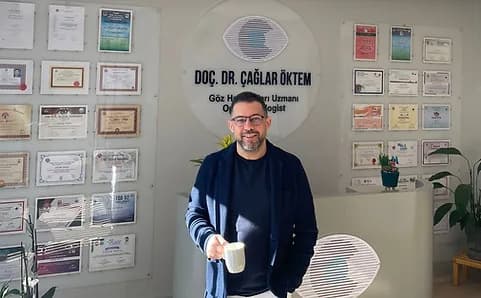










Who Is Assoc. Prof. Dr. Çağlar Öktem?
Assoc. Prof. Dr. Çağlar Öktem is an ophthalmologist based in Manavgat, Antalya, Turkey. He was born in Nevşehir in 1975.
He completed his medical education at Gazi University Faculty of Medicine between 1992 and 2000.
He then completed specialist training in Ophthalmology at Başkent University Faculty of Medicine.
His professional career includes positions at hospitals in Manisa, Osmaniye, Kırşehir and Ankara.
He later worked at Manavgat State Hospital and Alanya Alaaddin Keykubat University Training and Research Hospital.
Since 2024, he has continued his clinical practice at his private ophthalmology clinic in Manavgat.
Medical Education and Professional Background
Çağlar Öktem completed his medical degree at Gazi University Faculty of Medicine.
He completed Ophthalmology specialist training at Başkent University Faculty of Medicine.
His specialist thesis examined the mechanical, immunohistochemical and histopathological effects of different materials in an experimental strabismus surgery model.
After residency, he worked as an ophthalmologist at Manisa Military Hospital.
He later served at Osmaniye State Hospital, Kırşehir State Hospital and several training and research hospitals in Ankara.
His professional career also includes academic and clinical work at Kırşehir Ahi Evran University and Alanya Alaaddin Keykubat University.
Which Areas Does Çağlar Öktem Focus On?
Çağlar Öktem works in ophthalmology and periocular aesthetic surgery. General eye examinations, pediatric eye care, eyelid surgery and brow aesthetics are among his main areas.
His clinical work includes cataract, glaucoma, myopia, hyperopia, astigmatism, dry eye and retinal diseases.
He also evaluates diabetic eye disease, tear duct obstruction, infections and selected eye emergencies.
Eyelid procedures include upper and lower blepharoplasty, brow lift, ptosis surgery, entropion and ectropion surgery.
Non-surgical medical aesthetics such as Botox, HIFU, fillers, PRP and mesotherapy are also listed within his clinical practice.
Diagnosis and Treatment of Eye Diseases
Comprehensive eye examinations are important when evaluating eye diseases. Examination can include visual acuity, intraocular pressure and assessment of the anterior and posterior segments.
Cataract can cause blurred vision, light sensitivity and difficulty seeing in low light.
Glaucoma involves assessment of the optic nerve and intraocular pressure. Regular examinations can be important because early glaucoma may not cause noticeable symptoms.
Myopia, hyperopia and astigmatism can be evaluated for glasses, contact lenses or laser eye treatment.
Dry eye, tear duct obstruction, eye infections and pterygium can also be assessed.
Pediatric and Infant Eye Examinations
Pediatric eye care is important while the visual system is developing.
Children can develop myopia, hyperopia and astigmatism as well as strabismus and amblyopia.
Amblyopia occurs when visual development in one eye is lower than expected compared with the other eye.
Strabismus involves misalignment of the eyes. Examination can assess eye movement, alignment and visual function.
Premature infants may also require specialized retinal examinations.
The examination plan depends on the child's age, development and existing symptoms.
Eyelid and Brow Aesthetics
Eyelid and brow aesthetics is one of the main areas of the clinic.
Upper blepharoplasty can address excess skin and selected fat tissue around the upper eyelid.
Lower blepharoplasty can assess under-eye bags, skin laxity and surrounding soft tissues.
Brow lift focuses on eyebrow position and its relationship with the upper eyelid.
Ptosis surgery can address a drooping upper eyelid when surgical treatment is appropriate.
Eyelid procedures consider both appearance and eyelid function.
When Is Eyelid Surgery Considered?
Eyelid surgery can address anatomical and age-related changes affecting the upper or lower eyelids.
Excess upper eyelid skin can sometimes affect the upper visual field.
Lower eyelid surgery can evaluate under-eye bags, skin laxity and the position of orbital fat.
Entropion and ectropion are eyelid conditions involving inward or outward turning of the eyelid.
Eyelid tumors can also require surgical treatment.
The appropriate procedure depends on the location and characteristics of the eyelid problem.
Brow Lift and Periocular Aesthetics
Brow lift changes the position of the eyebrow and can be considered for selected cases of low or asymmetric brows.
Brow position can influence the appearance and function of the upper eyelid.
In suitable patients, brow lift and upper blepharoplasty can be considered together.
Periocular aesthetic planning considers the eyebrows, eyelids and forehead as parts of the same facial region.
The surgical approach depends on anatomy, tissue characteristics and individual goals.
Laser Eye Treatments and Refractive Errors
Laser eye treatments can be evaluated for refractive errors such as myopia, hyperopia and astigmatism.
Before laser treatment, corneal structure, refractive error, tear film and overall eye health are assessed.
Not every eye is suitable for laser treatment. Detailed examination and measurements are required before deciding on eligibility.
Glasses and contact lenses remain common options for correcting refractive errors.
Treatment selection depends on age, prescription, corneal characteristics and individual expectations.
Retina, Diabetes and Intraocular Treatments
Retinal diseases involve different conditions affecting the retina at the back of the eye.
Diabetes can cause changes in retinal blood vessels and may lead to diabetic eye disease.
Regular eye examinations can help monitor the effects of diabetes on the retina.
Age-related macular degeneration is another retinal condition that can affect central vision.
Intravitreal steroid and anti-VEGF injections can be used for selected retinal conditions.
Treatment depends on the specific disease, retinal findings and overall medical condition.
OCT and Diagnostic Eye Imaging
Optical coherence tomography provides detailed imaging of selected eye structures.
It can be used to evaluate the retina, macula and optic nerve head.
OCT can also help monitor certain eye diseases over time.
Previous and current images can be compared to assess changes.
Imaging is interpreted together with clinical examination and other findings rather than as an isolated test.
Where Is the Manavgat Clinic Located?
Assoc. Prof. Dr. Çağlar Öktem sees patients at his private ophthalmology clinic in Manavgat, Antalya.
The listed address is Bahçelievler Mahallesi, Demokrasi Bulvarı No. 84/6, 2nd Floor, Manavgat.
The clinic provides general eye examinations, pediatric and infant eye care, contact lens and glasses evaluations.
Cataract, glaucoma, retinal diseases, eye infections, dry eye and tear duct problems are also evaluated.
Eyelid and brow procedures include upper and lower blepharoplasty, brow lift, ptosis, entropion and ectropion surgery.
Non-surgical medical aesthetics includes Botox, HIFU, thread lift, fillers, PRP and mesotherapy.
The listed telephone number is +90 532 260 03 20, and the email address is [email protected].
What Should Be Prepared Before an Appointment?
Patients attending an eye examination can prepare information about previous eye surgeries, medications and existing eye conditions.
People who use glasses or contact lenses can bring their current prescription and previous eye measurements.
Patients considering eyelid surgery should mention previous periocular procedures and treatments.
For children, previous eye examinations, glasses and previous diagnoses can provide useful clinical information.
Patients with glaucoma, retinal disease or diabetic eye disease can bring previous examination, imaging and treatment records.