










Pubertal Gynecomastia
This guide explains Pubertal Gynecomastia, including its causes, symptoms, normal duration, diagnosis, treatment options, psychological effects, and situations requiring further medical evaluation.

- Last updated
- 77 reads
- 8 min read
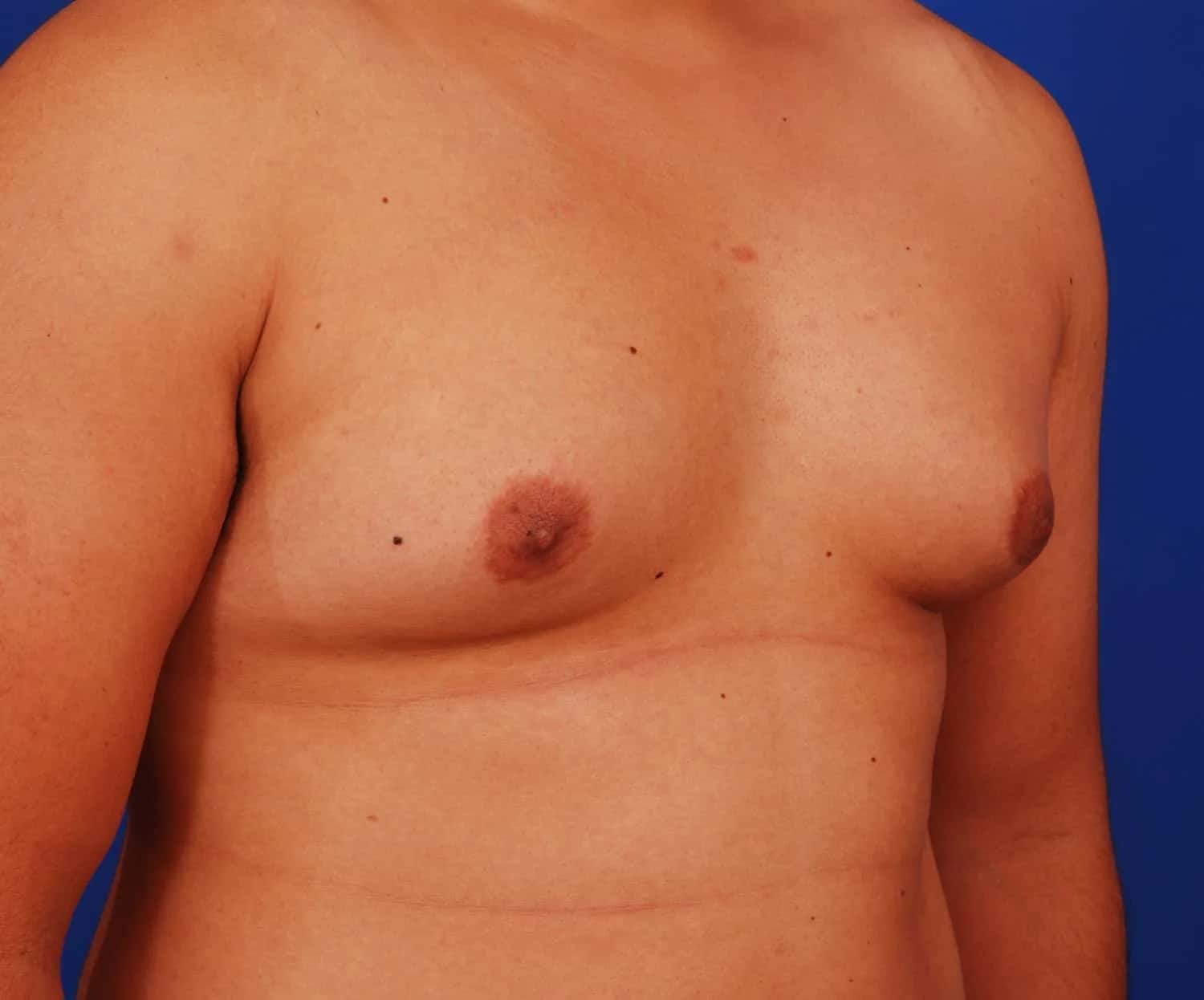


What Is Pubertal Gynecomastia?
Pubertal Gynecomastia is temporary enlargement of glandular breast tissue in adolescent boys caused mainly by changing androgen and estrogen activity during normal puberty.
The tissue typically develops directly beneath the nipple and can affect one or both breasts. It may feel firm, rubbery, or tender, particularly when enlargement begins. Pubertal Gynecomastia is different from chest fat because true gynecomastia involves proliferation of glandular tissue. Most cases represent a normal developmental change rather than a disease. The condition is generally self-limiting, although resolution can take months or several years rather than occurring immediately.
How Common Is Pubertal Gynecomastia?
Pubertal Gynecomastia is common, affecting approximately half of boys during mid-puberty, although reported prevalence varies considerably between studies.
Published estimates range widely because researchers have used different ages, examination methods, and definitions of palpable breast tissue. Recent pediatric imaging literature places prevalence at approximately 30 to 60 percent of adolescent boys. Earlier studies reported ranges from roughly 4 to 69 percent. The condition becomes much less common by late adolescence because most cases regress naturally. Consequently, finding a small amount of glandular breast tissue during puberty is not unusual by itself.
What Causes Pubertal Gynecomastia?
Pubertal Gynecomastia is mainly caused by a temporary imbalance between estrogenic stimulation and androgenic inhibition within developing male breast tissue.
Puberty produces rapid changes in testosterone, estrogen, adrenal hormones, and tissue sensitivity. Breast tissue can temporarily receive relatively stronger estrogenic stimulation during this transition. This does not usually mean the adolescent has abnormally high estrogen. Many boys with Pubertal Gynecomastia have circulating hormone concentrations within expected pubertal ranges. Local breast sensitivity and conversion of androgen precursors into estrogens may also contribute. As hormone relationships stabilize later in puberty, glandular stimulation usually decreases and the breast tissue gradually regresses.
At What Age Does Pubertal Gynecomastia Usually Start?
Pubertal Gynecomastia most commonly begins around ages 13 to 14, although breast enlargement can appear from approximately age 10 onward.
The typical presentation occurs during Tanner stage 3 or 4, when several pubertal hormonal changes are occurring simultaneously. Prevalence then declines during later teenage years. Breast development before puberty deserves more attention because physiological gynecomastia is unusual in prepubertal boys. Likewise, new breast enlargement appearing after normal pubertal development has finished should not automatically be attributed to puberty. Age, pubertal stage, testicular development, medication exposure, and symptom duration therefore help distinguish normal adolescent gynecomastia from another cause.
What Does Pubertal Gynecomastia Feel Like?
Pubertal Gynecomastia usually feels like a firm or rubbery disc of tissue positioned directly beneath the nipple and surrounding areola.
The gland can be small and difficult to notice visually, or large enough to create obvious breast projection. Recently developing tissue may feel tender when touched or compressed by clothing. The borders are generally smoother than those of an irregular breast mass. Chest fat feels softer and spreads more diffusely rather than forming a distinct subareolar structure. One breast can also feel larger than the other during development. A hard fixed mass away from the nipple does not fit the typical pattern and deserves medical assessment.
What Are the Typical Signs of Pubertal Gynecomastia?
Typical Pubertal Gynecomastia produces subareolar glandular enlargement during otherwise normal adolescent development.
-
Firm or rubbery tissue beneath the nipple
-
Enlargement affecting one or both breasts
-
Mild asymmetry between the two sides
-
Temporary nipple or areola projection
-
Tenderness during early development
-
Gradual rather than extremely rapid enlargement
-
Normal progression of other pubertal characteristics
-
No suspicious nipple discharge or skin changes
-
No hard fixed mass away from the nipple
-
Gradual improvement during later adolescence
These characteristics support physiological pubertal development, although examination remains important when the pattern is unusual or symptoms become pronounced.
Can Pubertal Gynecomastia Affect Only One Breast?
Pubertal Gynecomastia can affect only one breast or develop asymmetrically, so one side may become noticeable before the other.
Unilateral enlargement does not automatically indicate an abnormal condition when the palpable tissue is typical and centered beneath the nipple. One breast may also become larger before the opposite side develops. Asymmetry can persist temporarily while the tissue changes during puberty. However, markedly irregular or rapidly progressive one-sided enlargement requires closer assessment. A hard mass away from the areola, nipple discharge, skin changes, or enlarged nearby lymph nodes are different findings and should not simply be assumed to represent normal pubertal gynecomastia.
How Is Pubertal Gynecomastia Different From Chest Fat?
Pubertal Gynecomastia contains enlarged glandular breast tissue, while chest fat or pseudogynecomastia consists mainly of increased adipose tissue without glandular proliferation.
True gynecomastia usually produces a firm, rubbery disc directly beneath the nipple. Pseudogynecomastia feels softer and blends more gradually into surrounding chest fat. Both can occur together, particularly in adolescents with overweight or obesity. This distinction matters because body-fat reduction can decrease pseudogynecomastia but cannot directly remove established glandular tissue. Physical examination generally provides enough information to distinguish the two, although uncertain cases can occasionally require ultrasound evaluation.
How Long Does Pubertal Gynecomastia Last?
Pubertal Gynecomastia usually improves within several months to two years, although some cases require as long as three years for substantial regression.
Clinical guidance indicates that more than 90 percent of physiological pubertal cases resolve spontaneously within approximately 24 months. Other reviews report spontaneous regression in 75 to 90 percent of adolescents over one to three years. This natural course explains why observation is usually preferred immediately after typical gynecomastia appears. Resolution becomes less predictable when enlargement remains unchanged for several years. Long-standing tissue can become more fibrous, making complete spontaneous disappearance less likely than during the early proliferative stage.
Can Pubertal Gynecomastia Become Permanent?
A minority of Pubertal Gynecomastia cases persist into adulthood when glandular tissue fails to regress after the hormonal changes of adolescence have stabilized.
Most adolescent cases disappear naturally, but persistent tissue becomes progressively more fibrous over time. Long-standing glandular enlargement is consequently less likely to regress completely without treatment. Earlier research found persistent gynecomastia in only about 10 percent of boys by age 17. Persistence does not automatically indicate endocrine disease, particularly when normal puberty has otherwise progressed appropriately. However, breast enlargement continuing well beyond the expected observation period may justify reassessment and discussion of treatment when it causes physical or psychological problems.
When Should Pubertal Gynecomastia Be Medically Evaluated?
Pubertal Gynecomastia should be evaluated when its appearance is unusual, development occurs before puberty, or additional symptoms suggest an endocrine, testicular, systemic, or breast disorder.
Medical attention is particularly important for rapid progression, a hard breast mass, nipple discharge, significant skin changes, or testicular enlargement. Delayed or incomplete pubertal development also changes the assessment. Medication, supplement, recreational drug, and anabolic steroid exposure should be reviewed because several substances can cause gynecomastia. Prepubertal breast development deserves investigation because physiological gynecomastia is uncommon before puberty begins. Significant persistent pain or severe emotional distress also provides a reason for clinical evaluation.
How Is Pubertal Gynecomastia Diagnosed?
Pubertal Gynecomastia is usually diagnosed through medical history and physical examination when glandular breast enlargement appears during otherwise normal pubertal development.
Assessment includes the onset, duration, tenderness, medications, supplements, drug exposure, weight change, and family history. Examination evaluates breast tissue, body measurements, Tanner stage, testicular size, and possible testicular masses. The chest is also examined to distinguish glandular gynecomastia from pseudogynecomastia. Extensive testing is unnecessary when development is age-appropriate and examination shows no concerning findings. Ultrasound may be considered when a breast mass cannot confidently be identified as typical gynecomastia through examination alone.
Are Blood Tests Needed for Pubertal Gynecomastia?
Routine blood tests are generally unnecessary for typical Pubertal Gynecomastia when normal puberty is progressing and the history and physical examination reveal no concerning features.
Laboratory investigation becomes more relevant when breast enlargement occurs before puberty, progresses rapidly, or accompanies abnormal pubertal development. Selected testing can include testosterone, estradiol, luteinizing hormone, follicle-stimulating hormone, thyroid markers, prolactin, and human chorionic gonadotropin. Liver or kidney assessment may also be appropriate when symptoms suggest systemic disease. Testing should therefore answer a specific clinical concern rather than automatically screening every adolescent with ordinary physiological gynecomastia.
Can Weight Loss or Exercise Remove Pubertal Gynecomastia?
Weight loss and exercise cannot directly remove true Pubertal Gynecomastia because its defining tissue is glandular rather than ordinary chest fat.
Weight reduction can still improve chest appearance when pseudogynecomastia accompanies the glandular enlargement. Resistance training can strengthen the pectoral muscles and change overall chest proportions, but it does not dissolve the subareolar gland. This distinction prevents adolescents from interpreting persistent glandular tissue as a failure of exercise. Excessive dieting is also inappropriate when normal growth and puberty require adequate nutrition. When breast fullness is mainly caused by fat rather than glandular proliferation, body composition changes can have a more noticeable effect.
Is Medication Used for Pubertal Gynecomastia?
Medication is not routinely recommended for uncomplicated Pubertal Gynecomastia because most cases resolve spontaneously and high-quality evidence for drug treatment remains limited.
Tamoxifen has been studied most extensively and can reduce pain or breast size in selected adolescents with persistent or troublesome gynecomastia. However, available evidence largely comes from observational research rather than large randomized trials. Aromatase inhibitors have produced less convincing results. One randomized study found anastrozole was not significantly more effective than placebo for reducing breast volume. Current guidance therefore favors observation for typical cases and reserves medication discussions for carefully selected situations.
When Is Surgery Considered for Pubertal Gynecomastia?
Surgery is generally considered for persistent Pubertal Gynecomastia after adequate observation when breast enlargement causes significant pain, lasting psychosocial distress, or substantial cosmetic concern.
Current recommendations usually favor waiting until puberty is complete because many cases regress naturally beforehand. Persistent enlargement beyond approximately 12 months can support surgical consideration when symptoms are substantial. Operations usually remove glandular tissue through a small incision around the areola, sometimes combined with liposuction for surrounding fat. Advanced enlargement can require removal of excess skin. Research in adolescents has shown significant improvements in self-esteem and several quality-of-life measures following surgical correction of persistent gynecomastia.
Can Pubertal Gynecomastia Affect Mental Health?
Pubertal Gynecomastia can significantly affect self-esteem, body image, social confidence, and emotional well-being even when the physical enlargement is medically benign.
Adolescence places considerable social attention on physical development, making visible breast enlargement particularly difficult for some boys. Research has identified lower self-esteem and poorer social and mental health measures among affected adolescents compared with male controls. Importantly, psychological impact does not necessarily correspond to physical severity. Even relatively mild gynecomastia can create embarrassment, avoidance of swimming or changing rooms, and concern about peer reactions. Recent research has also examined associations with peer victimization and psychological distress.
Does Pubertal Gynecomastia Increase Breast Cancer Risk?
Pubertal Gynecomastia is a benign condition and is not considered a premalignant change that develops into male breast cancer.
Male breast cancer is extremely uncommon during adolescence, and typical pubertal glandular enlargement follows a completely different clinical pattern. Gynecomastia itself therefore should not be treated as an early form of cancer. Nevertheless, an unusual breast mass should still be assessed on its own characteristics. A hard fixed lump, nipple retraction, suspicious discharge, skin changes, or abnormal lymph nodes should not simply be labeled Pubertal Gynecomastia. The purpose of evaluation is to confirm the expected benign pattern while recognizing uncommon findings requiring another diagnostic pathway.
- Last updated
- Language
- English
How did you find this article?

This page explains how clinics can become more visible across digital channels, reach the right patient audience, and turn that visibility into sustainable patient communication.

This page explains how doctors can use online marketing to increase digital visibility, reach the right patient audience, build trust, and improve communication processes.

This page explains how hair transplant clinics can improve online visibility, trust, content, SEO, patient communication, and conversion processes through MediFinder.
Subscribe to the Medifinder newsletter and never miss our latest content.