










Laminotomy vs Laminectomy
This page explains the difference between laminotomy and laminectomy, why surgeons choose one decompression method over the other, and how the procedures compare in recovery, stability, risks, and expected goals.

- Last updated
- 37 reads
- 10 min read


What Is the Main Difference Between Laminotomy and Laminectomy?
The main difference is how much of the lamina the surgeon removes: a laminotomy creates a smaller opening, while a laminectomy removes a larger portion of the lamina.
Both operations aim to relieve pressure on spinal nerves or the spinal cord, so the basic purpose is similar even though the amount of bone removed differs.
A laminotomy often preserves more of the natural posterior spinal anatomy and may suit a more localized area of compression. A laminectomy creates broader access and decompression when narrowing affects a larger part of the spinal canal.
The better option depends on the anatomy causing nerve compression rather than the procedure name alone.
What Is a Laminotomy?
A laminotomy is a spinal decompression procedure in which the surgeon removes only part of the lamina to create more room around compressed nerves.
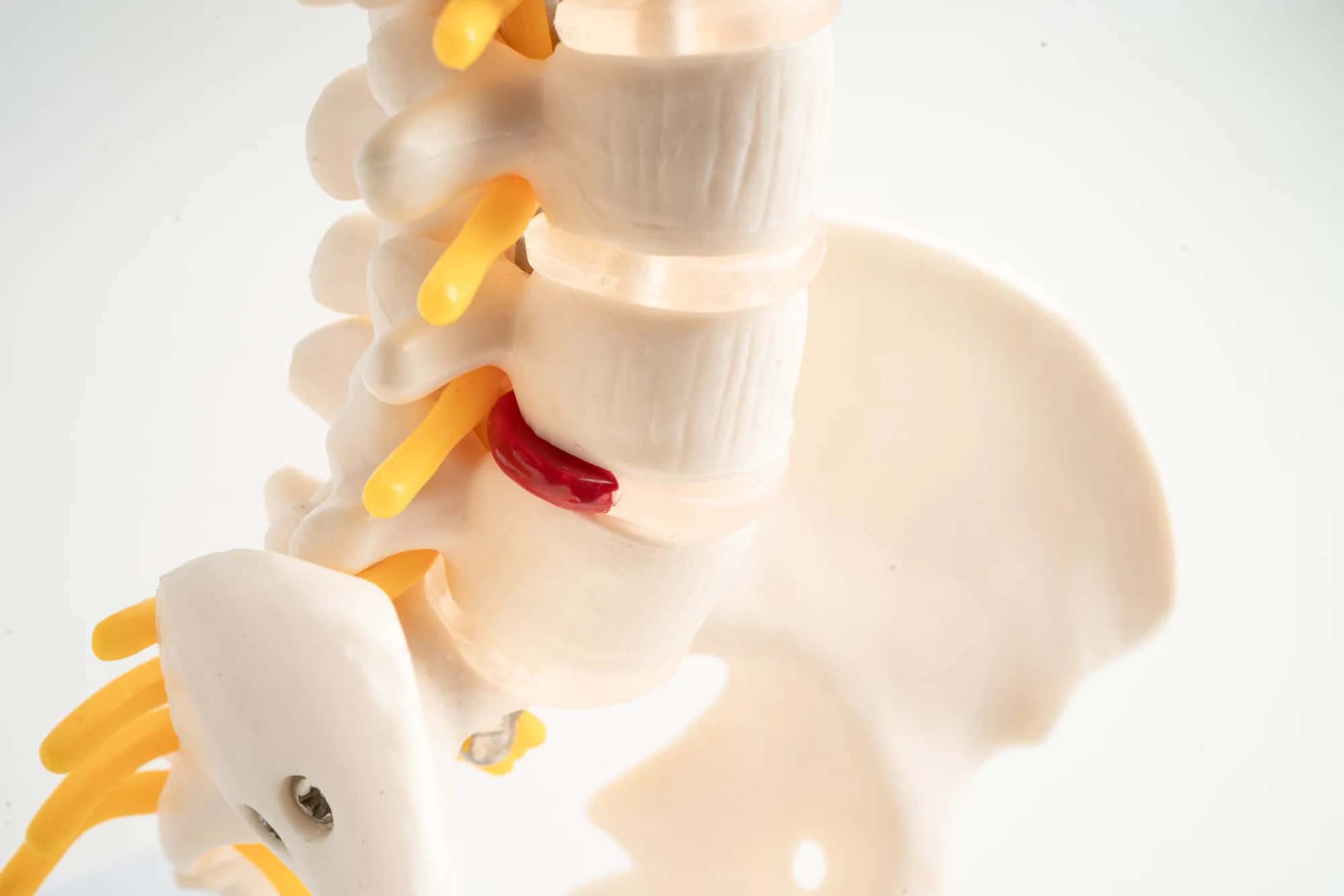
The lamina forms the back portion of a vertebra and helps create the protective arch surrounding the spinal canal. During a laminotomy, the surgeon keeps much of this structure intact while opening the specific area responsible for pressure.
The procedure may also include removal of thickened ligament, small amounts of bone, or other tissue contributing to narrowing.
Because the operation focuses on a limited section, it can be useful when compression is relatively localized and wide exposure is unnecessary.
What Is a Laminectomy?
A laminectomy removes a larger portion of one or more laminae to create wider space within the spinal canal and reduce pressure on neural structures.
Surgeons commonly use this approach when spinal stenosis affects a broader area or when several structures contribute to nerve compression.
Removing more of the lamina creates greater access to the spinal canal, but it also changes more of the supporting anatomy behind the spine. That difference becomes relevant when pre-existing instability, deformity, or extensive bone removal is present.
A laminectomy can be performed in the lumbar, cervical, or thoracic spine depending on the location of the compression.
Why Is the Lamina Removed During Spine Surgery?
The lamina is partially or more extensively removed when bone and surrounding tissues leave too little space for the spinal cord or nerve roots.
Spinal degeneration can gradually narrow the canal. Thickened ligaments, enlarged facet joints, bone spurs, disc changes, and other structural problems may all reduce available space.
Decompression enlarges that space rather than directly treating every degenerative change in the spine.
The procedure therefore focuses on relieving pressure that contributes to leg pain, arm symptoms, numbness, weakness, heaviness, or difficulty walking. It is not simply performed because imaging shows age-related changes.
Which Conditions Can Be Treated With Laminotomy or Laminectomy?
Laminotomy and laminectomy are most often used when structural narrowing compresses the spinal cord or nerve roots and symptoms remain significant despite appropriate non-surgical treatment.
Conditions that may lead to decompression include:
-
Lumbar spinal stenosis
-
Cervical spinal stenosis
-
Bone spurs
-
Thickened spinal ligaments
-
Degenerative joint enlargement
-
Selected herniated discs
-
Foraminal narrowing
-
Nerve-root compression
-
Certain spinal tumors or cysts
-
Compression affecting walking or neurological function
The procedure selected depends on where the compression sits and how much access is required to relieve it safely.
When Is a Laminotomy Usually Considered?
A laminotomy is often considered when the compression can be treated through a smaller bony opening and broad removal of the posterior vertebral arch is unnecessary.
This can occur when one nerve root is compressed by localized stenosis, a disc problem, or a combination of bone and ligament changes. The surgeon may remove only enough bone to reach the affected area and decompress the nerve.
Preserving more of the lamina can be useful when maintaining the existing posterior structures is desirable.
However, limited bone removal only makes sense when it provides enough access to fully address the compression.
When Is a Laminectomy Usually Considered?
A laminectomy is often considered when nerve or spinal cord compression extends across a wider section of the canal and requires broader decompression.
This may occur in advanced lumbar stenosis, multilevel cervical narrowing, or cases where several structures reduce canal space at the same time.
The surgeon removes enough bone to create room around the compressed neural tissue and may treat several levels during one operation.
A wider decompression does not automatically mean a worse procedure. In some anatomical situations, removing too little bone can leave significant compression behind and fail to address the main problem adequately.
Does a Laminectomy Remove More Bone Than a Laminotomy?
A laminectomy generally removes more bone than a laminotomy because the surgeon takes away a larger portion of the lamina rather than creating one smaller opening.
That difference is central to the terminology. Laminotomy describes limited removal, while laminectomy describes more extensive removal of the lamina.
The amount of bone still varies within each procedure. A limited single-level laminectomy and a multilevel laminectomy are not equivalent operations.
The same applies to laminotomy, which can involve one side or several areas. Surgical planning therefore depends on the actual anatomy and number of levels rather than only the operation label.
Is Laminotomy Less Invasive Than Laminectomy?
A laminotomy often preserves more bone and can involve less structural disruption, but the overall invasiveness of surgery depends on more than the amount of lamina removed.
Incision size, muscle dissection, number of spinal levels, surgical technique, and whether additional procedures are performed all change the recovery burden.
A multilevel laminotomy may therefore involve more surgery than a limited single-level laminectomy.
The useful comparison is not simply smaller versus larger. The goal is to achieve adequate decompression while disturbing no more anatomy than necessary.
That balance is one of the main reasons surgeons choose between limited and wider approaches.
Which Procedure Preserves More Spinal Stability?
Laminotomy generally preserves more posterior bone and may preserve more of the natural supporting anatomy, although spinal stability depends on several structures rather than the lamina alone.
Factors that influence stability include:
-
Amount of facet joint removed
-
Number of spinal levels treated
-
Existing spondylolisthesis
-
Degenerative deformity
-
Previous spine surgery
-
Disc and ligament condition
-
Amount of bone removed
-
Pre-existing scoliosis
-
Overall alignment of the spine
A carefully performed laminectomy can remain stable, while a smaller decompression can still contribute to instability when other supporting structures are already compromised.
Can Laminotomy and Laminectomy Be Performed Minimally Invasively?
Both laminotomy and laminectomy can be performed through minimally invasive approaches in selected patients, using smaller working corridors and techniques designed to reduce muscle disruption.
Minimally invasive surgery does not change the fundamental goal. The surgeon still creates enough space to decompress the nerves or spinal cord.
The difference lies mainly in how the surgeon reaches the anatomy. Tubular retractors, smaller incisions, specialized instruments, and magnification may reduce soft-tissue disruption in suitable cases.
Not every spinal stenosis pattern can be treated through the same approach. Extensive multilevel narrowing or complex instability can require broader exposure to achieve safe and complete decompression.
Is Spinal Fusion Needed After Laminectomy?
Spinal fusion is not automatically required after every laminectomy because many patients can undergo decompression without creating clinically significant instability.
Fusion becomes more relevant when the spine is already unstable or when decompression requires removal of structures that contribute substantially to stability.
Examples include significant spondylolisthesis, deformity, certain recurrent problems, or situations where extensive facet removal becomes necessary.
Fusion joins vertebrae together using implants and bone graft material, so it creates a different operation with a different recovery profile.
The decision should therefore come from the stability problem rather than from the laminectomy label itself.
Can Fusion Be Required After a Laminotomy?
Fusion can occasionally accompany a laminotomy when instability already exists, although the limited decompression itself often aims to preserve more of the supporting anatomy.
A patient may have localized nerve compression and a separate structural problem such as unstable vertebral slippage. In that situation, removing less lamina does not eliminate the underlying instability.
The decompression and stabilization questions should therefore be considered separately.
One determines how much space the nerves need, while the other determines whether the spine can remain mechanically stable after treatment. A smaller decompression does not automatically remove the need for stabilization when instability is already present.
How Do Laminotomy and Laminectomy Compare for Spinal Stenosis?
Both procedures can treat spinal stenosis effectively when the amount of decompression matches the location and extent of narrowing.
A localized stenotic area may be accessible through a laminotomy, while broad central canal narrowing may require a laminectomy. Surgeons may also decompress from one side while reaching structures on both sides in selected cases.
The main objective is not to preserve the maximum possible amount of bone at all costs. It is to relieve neural compression without removing unnecessary supporting anatomy.
Symptoms, imaging, spinal alignment, number of affected levels, and evidence of instability all shape that decision.
Which Procedure Is Used for a Herniated Disc?
A limited laminotomy is often sufficient when a surgeon needs access to a lumbar herniated disc that is compressing a nearby nerve root.
The surgeon can create a small opening through the lamina, move carefully toward the affected nerve, and remove the portion of disc responsible for compression. This combination may form part of a microdiscectomy.
A full laminectomy is generally unnecessary when the problem is a localized disc fragment and adequate access can be achieved through a smaller opening.
More extensive decompression may still be needed when disc herniation occurs alongside significant spinal stenosis or other structural narrowing.
What Are the Main Risks of Laminotomy and Laminectomy?
Both procedures share many of the same general surgical and neurological risks because they operate close to the spinal nerves and protective tissues surrounding them.
Possible complications include:
-
Infection
-
Bleeding
-
Dural tear and spinal fluid leakage
-
Nerve injury
-
Persistent numbness or weakness
-
Blood clots
-
Incomplete symptom relief
-
Recurrent nerve compression
-
Postoperative instability
-
Scar tissue around nerve structures
-
Complications related to anesthesia
The probability and importance of each risk depend on the spinal level, extent of surgery, previous operations, overall health, and the anatomy being treated.
How Does Recovery Differ Between Laminotomy and Laminectomy?
Recovery after laminotomy can sometimes be easier because less bone and soft tissue may be disturbed, but procedure size and number of treated levels often matter more than the operation name.
Someone undergoing a small single-level decompression may begin walking shortly after surgery and gradually increase daily activity over the following weeks.
A more extensive multilevel laminectomy usually produces greater muscular soreness and can require a slower return to unrestricted activity.
If fusion accompanies either procedure, recovery changes significantly because the body also needs time for stabilization and bone healing. Return to work therefore depends heavily on occupation and surgical extent.
How Much Pain Is Normal After Decompression Surgery?
Incisional and muscular soreness is common after spinal decompression, while the nerve pain that prompted surgery may improve quickly, gradually, or unevenly.
Some patients notice immediate relief in leg or arm pain but continue experiencing numbness for longer because compressed nerves recover more slowly than mechanical pressure disappears.
Temporary nerve irritation can also cause unusual sensations during the early recovery period.
Severe worsening pain accompanied by new weakness, loss of bladder or bowel control, fever, wound drainage, or rapidly increasing neurological symptoms requires prompt medical evaluation rather than routine observation.
Can Nerve Symptoms Continue After Surgery?
Numbness, tingling, or weakness can continue after successful decompression because nerves that remained compressed for a long period may need considerable time to recover.
Removing the pressure creates the conditions for recovery but cannot guarantee that every damaged nerve fiber will return to normal.
Pain often changes sooner than numbness. Muscle weakness can take longer still, particularly when compression was severe or prolonged before surgery.
Persistent symptoms also do not automatically mean the procedure failed. The postoperative pattern, neurological examination, and imaging findings need to be considered together before determining whether ongoing compression or slow nerve recovery is responsible.
Can Spinal Stenosis Return After Laminotomy or Laminectomy?
Spinal narrowing can recur or develop at the same or neighbouring levels because decompression does not stop the underlying aging and degenerative processes affecting the spine.
Bone growth, disc degeneration, ligament thickening, scar formation, or progressive instability can create new symptoms later.
A smaller laminotomy can sometimes leave more anatomy available for future surgery, but preserving bone does not guarantee that stenosis will never return. A wider laminectomy also does not prevent degeneration elsewhere.
Long-term outcomes therefore depend on both the original decompression and how the surrounding spinal structures change over time.
How Is the Right Procedure Chosen?
The choice between laminotomy and laminectomy depends on how much decompression is required to relieve the affected nerves while preserving enough normal anatomy to maintain a stable spine.
Surgeons usually consider the location of stenosis, number of involved levels, neurological symptoms, spinal alignment, facet joints, previous surgery, and evidence of instability.
A limited opening makes sense when it provides complete access to the compressed area. Broader removal becomes more appropriate when narrowing extends across the canal or several structures need decompression.
The goal is therefore not to choose the smaller operation automatically, but to choose the least extensive procedure that still solves the actual compression problem.
- Last updated
- Language
- English
How did you find this article?
This guide compares endometriosis surgery costs worldwide in 2026, including laparoscopic excision, deep endometriosis surgery, robotic treatment, hospital packages, insurance, and medical travel expenses.

Labiaplasty has become part of that landscape, with clinics in Paris and other French cities offering treatment for both physical discomfort and personal aesthetic concerns.
Subscribe to the Medifinder newsletter and never miss our latest content.