










How Should Hair That Grows Back After Laser Hair Removal Sessions Be Removed?
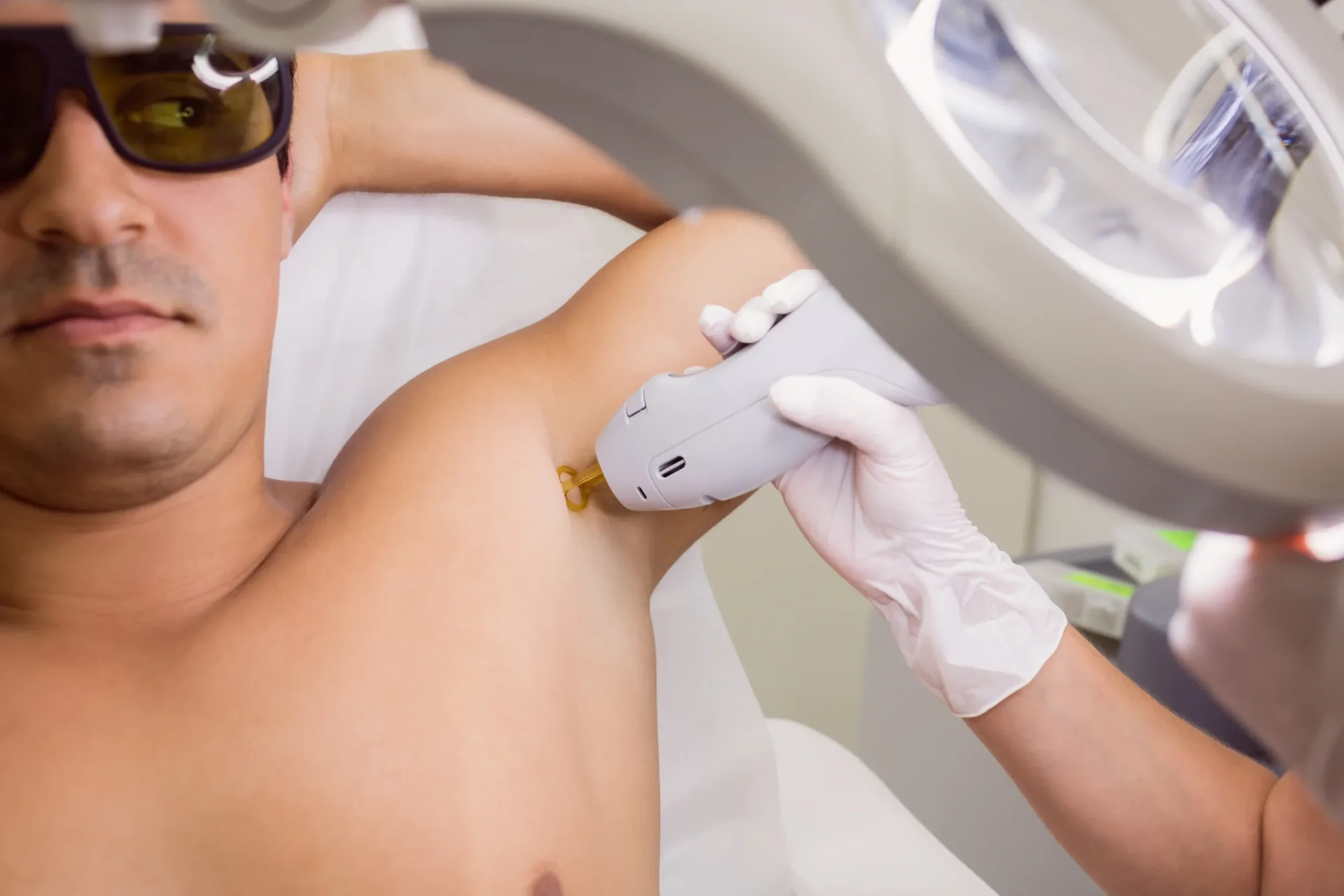
Completing the laser hair removal sessions does not mean that not a single hair will ever grow again in the treated area. A significant reduction in hair may be observed after the sessions, while any remaining hair may become finer, lighter in color, or sparser.

- Last updated
- 52 reads
- 12 min read


Is It Normal for Hair to Grow Back After Laser Hair Removal Is Completed?
Yes, a small amount of hair may grow back over time after completing a laser hair removal treatment course. The purpose of laser hair removal is to achieve long-term hair reduction. However, results naturally vary from person to person.
Some people may see almost no hair for a long time after completing their sessions, while others may notice fine and sparse hairs in certain areas. Changes may be more noticeable in areas that are more sensitive to hormonal influences, particularly the face, chin, and neck.
This does not necessarily mean that the laser treatment was unsuccessful. Comparing the amount of hair before treatment with the amount remaining afterward provides a more realistic assessment.
How Should You Remove Hair After Completing Laser Hair Removal Sessions?
If the main treatment course has been fully completed and no additional laser session is planned in the near future, the remaining hairs can be removed using different methods. However, if a maintenance session may be needed, it may be better to wait before using methods that remove hair from the root.
Methods that can generally be used after completing the sessions include:
-
Shaving can be used: It cuts the hair at the skin surface while leaving the hair follicle in place. It is particularly practical if you may consider a maintenance session in the future.
-
An electric shaver can be used: It can trim sparse hairs at the skin surface.
-
Tweezers can be used: If the treatment course is completely finished and only a few isolated hairs remain, tweezing may be considered. However, it should not be used if another laser session is planned soon.
-
Waxing can be used: It may be an option when no further laser sessions are planned. However, because waxing removes hair from the root, it may not be suitable if you are considering additional laser treatment.
-
An epilator can be used: Like waxing, an epilator removes hair from the root and should therefore be avoided when a laser maintenance session is being planned.
The most practical approach, particularly during the first few months, is to manage new hairs with a razor or trimmer while observing how much new hair develops in the area.
Does Shaving After Laser Hair Removal Make Hair Grow Back Thicker?
The belief that shaving makes hair thicker is very common. However, shaving does not change the structure of the hair follicle. It simply cuts the hair at a blunt point at the skin surface, which can make newly growing hair initially feel harder or thicker.
A similar effect can occur with fine hairs remaining after laser hair removal. Because the hairs no longer have tapered ends after being cut, they may feel coarser to the touch. This does not mean that the follicle itself has become thicker.
Shaving is particularly useful for people monitoring whether they may need a maintenance session after laser hair removal. Because the hair follicle remains beneath the skin, the target structure for a future laser treatment is preserved.
Can You Wax After Completing Laser Hair Removal Sessions?
If the main laser hair removal course has been completely finished and no additional session is planned, waxing can be used. However, if only a few hairs remain after treatment, waxing a large area may not always be necessary.
The most important characteristic of waxing is that it removes hair from the root. If you are considering a laser maintenance session within a few weeks or months, waxing may temporarily remove the hair structure that the laser needs to target.
For this reason, it can be useful to observe whether the new hairs continue growing consistently before returning to regular waxing after laser treatment.
Can You Use Tweezers After Laser Hair Removal?
Tweezers may seem practical for removing a few isolated hairs, particularly on the face, chin, or bikini area. If the sessions are completely finished and no further laser treatment is planned, removing a few hairs with tweezers may be possible.
However, if you are planning a maintenance session, avoiding tweezers is generally more appropriate. This is because tweezers remove the entire hair from the root rather than simply cutting the hair shaft.
For example, if a few new coarse hairs appear on the chin, observing them for a while instead of continuously tweezing them may make it easier to assess the actual amount of new hair growth.
Does Using an Epilator Ruin Laser Hair Removal Results?
It would not be accurate to say that using an epilator after completing laser hair removal reverses the results previously achieved. An epilator mechanically removes the remaining hairs from their roots.
However, this may be a disadvantage if a maintenance session is planned later. Because the hair has been removed from the root, you may need to wait for it to grow back before another laser treatment can be performed.
For this reason, rather than immediately returning to your previous epilator routine after laser treatment, it may be more practical to assess how much hair actually remains. If only a small amount is present, a razor or small trimmer may be sufficient.
Why Do a Few Hairs Grow Back After Laser Hair Removal?
Hair grows in different cycles, and not all hair follicles are active at the same time. This is one reason laser hair removal is performed over multiple sessions. Even after the treatment course has largely been completed, some follicles may become active later.
Hormonal changes can also influence new hair growth. This effect may be particularly noticeable in facial hair. As the body’s hormonal balance changes with age, new hairs may develop in areas where very little hair was previously present.
For this reason, seeing a few hairs after a long period does not always mean that the original hairs have simply grown back.
Does Hair Return to Its Original State After Laser Hair Removal?
After a successful laser hair removal course, it is not generally expected for all hair to quickly return to its original density and thickness. However, some new growth may occur over time.
Remaining hairs may be considerably sparser than they were before treatment. In some areas, the hair may also become finer and lighter in color. Therefore, seeing a few hairs does not mean that the entire effect of laser treatment has disappeared.
If hair density begins to increase noticeably, a follow-up assessment may be appropriate.
Are Maintenance Sessions Necessary After Laser Hair Removal?
It cannot be said that everyone needs regular maintenance sessions at the same intervals after completing laser hair removal. Some people may not require additional treatment for a long time, while others may occasionally benefit from a maintenance session.
The amount of new hair growth is more important than following a fixed schedule. A single hair may not justify treating an entire area again. However, if the number of new hairs in a particular area gradually increases, a maintenance session may be considered.
Hair color and thickness are also important. Very fine and light-colored hairs do not respond to laser energy in the same way as dark, coarse hairs.
How Should Hair Be Removed Before a Maintenance Session?
People planning a maintenance or touch-up session should preserve the hair follicles. For this reason, methods that remove hair from the root, such as waxing, epilating, and tweezing, should be avoided before the appointment.
If you are considering a maintenance session, the following points may be useful:
-
Do not pull hairs out from the root. Waxing, tweezing, and epilating can temporarily remove the hair from the follicle.
-
Use a razor or trimmer. These methods shorten the hair at the surface while leaving the follicle in place.
-
Observe new hair growth. Monitoring the number and distribution of hairs can make it easier to determine whether a maintenance session is needed.
-
Avoid irritating the skin before treatment. Avoid aggressive shaving, intensive exfoliation, or anything that could cause cuts or irritation.
-
Consider recent tanning. If you have recently had significant sun exposure, mention this before treatment.
This approach can also help the practitioner assess the current hair pattern more accurately.
Should Fine Hairs Be Treated Again With Laser?
The hairs remaining after laser hair removal may become very fine over time. In this situation, immediately scheduling additional laser sessions may not always be the most appropriate option.
Because laser systems target pigment, they generally produce a more noticeable effect on dark, coarse hairs. The same response may not be expected from very fine and light-colored hairs.
Therefore, instead of automatically deciding to have several more sessions, it is better to assess whether additional treatment is actually likely to provide a meaningful benefit based on the type of remaining hair.
How Should Hair That Grows Back on the Face After Laser Hair Removal Be Removed?
Because the facial area can be more sensitive to hormonal influences, hair growth after laser treatment may need to be evaluated differently from other areas of the body. New hairs may appear over time, particularly around the chin, under the chin, and neck.
If only a few hairs are present and no further laser treatment is planned, surface-level or root-removal methods may be used according to personal preference. However, if the number of hairs is increasing, continuously removing them with tweezers can make it more difficult to monitor the true extent of new growth.
In this situation, using a razor or facial trimmer for a while may be a more practical way to monitor hair development.
How Should Remaining Hair in the Bikini Area Be Removed?
A few hairs may remain or grow back over time in the bikini area after laser hair removal. If the treatment course has genuinely been completed and no additional laser treatment is planned, different hair removal methods may be used.
However, because the bikini area can be prone to ingrown hairs and irritation, the effect of the chosen method on the skin is also important. Waxing or epilating may increase ingrown hairs in some people, while improper shaving can also cause irritation.
For this reason, the method should be selected according to the individual's skin characteristics. There may be no need to repeatedly irritate a large area simply to remove a few isolated hairs.
What Should You Do If Underarm Hair Grows Back?
Seeing a few new hairs under the arms is one of the changes that may occur after laser hair removal. If the hairs are dark and gradually increasing in number, a maintenance session may be considered.
For a few fine hairs, a razor or electric trimmer may be sufficient. These methods are particularly practical for people who want to keep the option of a future maintenance session open.
Avoid repeatedly shaving the skin aggressively when removing the hairs. Because the underarm area is exposed to friction and sweating, irritation can develop easily.
How Should Remaining Leg Hair Be Removed After Laser Hair Removal?
When hair density on the legs has been significantly reduced after laser treatment, a few scattered hairs may remain. In this situation, treating only the areas that need attention may be more practical than waxing the entire leg.
Shaving provides a quick solution for larger areas. Waxing can also be used if the treatment course has been completely finished. However, if you may have laser treatment again, avoiding regular root-removal methods may be more practical.
If leg hair begins to increase noticeably over time, assessing the reason and whether additional sessions are needed may be more useful than simply changing the hair removal method.
Do You Need to Keep Shaving After Laser Hair Removal?
You do not have to shave for the rest of your life after completing laser hair removal. Shaving is simply one option for managing hairs that remain or grow back.
Once the treatment course is complete and no further laser treatment is planned, you can return to your preferred hair removal method. However, shaving may be more practical during the initial period when a maintenance session is still a possibility.
If the remaining hairs are very sparse, you may not even need a regular shaving routine. Removing them only when necessary may be sufficient.
What Should You Do If Hair Becomes Dense Again?
A few fine hairs appearing after laser treatment is different from a noticeable return of dense hair growth. If hair in the treated area gradually becomes more numerous and thicker, focusing only on the hair removal method may not be sufficient.
Particularly in areas influenced by hormones, such as the face and chin, the reason for new hair growth may need to be assessed separately. If there is an unexpected change in your overall hair growth pattern, seeking a professional evaluation may be appropriate.
If additional laser sessions are planned, shortening the hairs at the skin surface rather than using waxing or tweezers is generally more suitable.
Does Waxing After Laser Hair Removal Increase Hair Growth?
It would not be accurate to say that waxing directly increases the number of hairs. Waxing removes hair from the root and temporarily creates a smooth appearance. However, regularly waxing after laser treatment can make it more difficult to monitor how new hair growth is developing.
In addition, if you decide to have another laser session later, you may need to wait for the hairs to grow back after waxing.
For this reason, surface-level hair removal methods may be more practical initially, particularly for people who have only recently completed their laser treatment course.
Should You Pull Out Hairs After Laser Hair Removal?
It is not necessary to manually pull out hairs that begin shedding during the first few days after a laser session or remove them individually with tweezers. It is generally more appropriate to allow the hairs to complete their natural shedding process.
The situation is different if a long time has passed since the sessions and the treatment course has been completely finished. At that point, the person may use their preferred hair removal method.
The important distinction is whether the laser treatment course is still ongoing or has been completely completed.
How Long Does It Take for Hair to Reduce After Laser Hair Removal?
Laser hair removal results should not be assessed immediately after a single session. Hairs shed over time, and as the sessions progress, changes in the density of new hair growth may become noticeable.
It can also be useful to observe the area for some time after completing the main treatment course. Some areas may remain almost hair-free for a long period, while a few fine hairs may gradually appear in others.
For this reason, rather than immediately scheduling additional treatment for a few remaining hairs as soon as the sessions end, waiting for the true pattern of hair growth to become clear can provide a more accurate assessment.
Does Removing Hair Reverse the Effects of Laser Hair Removal?
Removing remaining hairs with waxing, shaving, or another method after completing the treatment course does not invalidate previous laser sessions. Hair follicles that were affected by the laser do not return to their previous state simply because another hair removal method is used.
The main consideration involves future laser treatments. Methods that remove hair from the root may affect the timing of subsequent laser sessions.
Therefore, shaving is not mandatory for preserving results already achieved. However, it can make planning possible maintenance sessions easier.
How Should You Choose the Right Hair Removal Method?
The method used after completing laser hair removal should be selected according to the amount of remaining hair and whether additional laser treatment may be considered in the future. Someone with only a few fine hairs has different needs from someone experiencing renewed dense hair growth in a specific area.
If very little hair remains, a razor, trimmer, or simple methods targeting individual hairs may be sufficient. If a maintenance session is planned in the near future, methods that remove hair from the root should be avoided.
If no additional laser treatment is planned, different methods, including waxing or an epilator, may be used. However, it is still useful to consider whether the chosen method causes skin irritation or ingrown hairs.
- Last updated
- Language
- English
How did you find this article?

One of the questions most frequently asked by those starting laser hair removal is how often the sessions should be performed. In particular, the fact that hair begins to reappear quickly can lead to the thought: "Would I get faster results if I had the laser treatment sooner?".

Can you go into a pool after laser hair removal? Generally, entering a pool immediately after the procedure is not recommended. This is because the skin surface can become temporarily more sensitive following laser treatment.

If shaving, waxing, or trimming your bikini area feels like a never-ending routine, laser hair removal can offer a longer-lasting alternative. Bikini and Brazilian treatments use targeted light energy to reduce unwanted hair over a series of appointments.
Subscribe to the Medifinder newsletter and never miss our latest content.