










High Sedimentation Rate
This guide explains what a high sedimentation rate means, which conditions can increase ESR, how the result relates to inflammation, and when further evaluation becomes important.

- Last updated
- 40 reads
- 10 min read
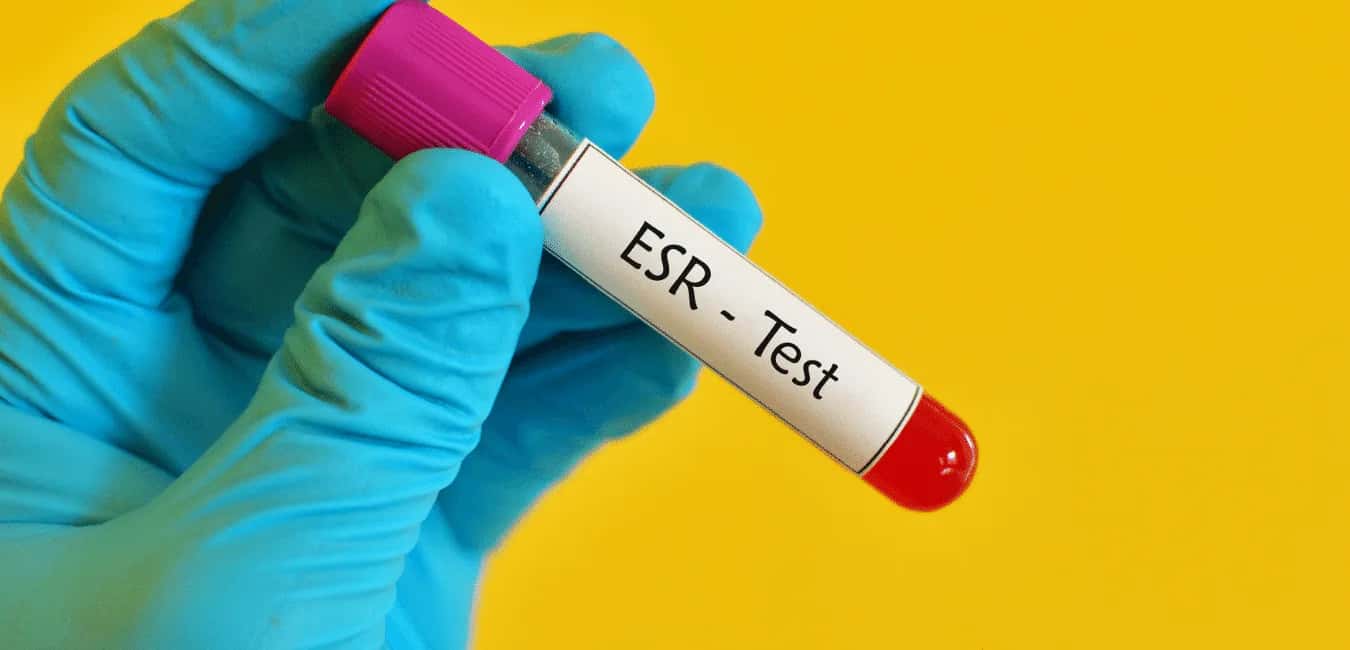


What Does a High Sedimentation Rate Mean?
A high sedimentation rate usually means red blood cells are settling faster than expected, often because inflammation has changed the proteins circulating in the blood. The test is also called ESR, which stands for erythrocyte sedimentation rate.
Inflammation can increase certain blood proteins that encourage red blood cells to form larger clusters. These clusters fall more quickly during the laboratory test, producing a higher ESR result.
A raised value does not identify one specific disease. Infection, autoimmune conditions, anemia, pregnancy, aging, kidney disease, and several other factors can influence the result, so ESR requires clinical context.
What Is the ESR Blood Test?
The ESR blood test measures how quickly red blood cells settle to the bottom of a vertical tube during a defined period. Faster settling produces a higher sedimentation rate and can indirectly suggest increased inflammatory activity.
The test does not measure inflammation itself. Instead, it reflects changes in blood proteins and red blood cell behavior that often accompany inflammatory conditions.
Because many unrelated factors can change sedimentation speed, ESR works best as a supporting test rather than a standalone diagnostic tool. It can help monitor inflammatory disease over time, especially when interpreted with symptoms, examination findings, CRP, blood counts, and other laboratory results.
What Is Considered a High Sedimentation Rate?
A sedimentation rate is considered high when the result exceeds the expected reference range for the individual’s age and sex. Healthy younger adults generally have lower ESR values, while levels can rise gradually with age.
Women may also have slightly higher baseline values than men, and pregnancy can increase ESR without indicating a new disease. Laboratory methods can further influence the reported reference interval.
For this reason, a small elevation carries different significance from a markedly increased result. The trend over time also matters, because a persistent rise may provide more useful information than one mildly abnormal measurement obtained during temporary illness.
What Causes a High ESR?
A high ESR can develop when inflammation, changes in blood proteins, anemia, pregnancy, aging, or certain chronic diseases alter how quickly red blood cells settle. The result therefore has many possible explanations rather than one specific cause.
Common causes include:
-
Bacterial or viral infections
-
Autoimmune inflammatory diseases
-
Rheumatic conditions
-
Anemia
-
Kidney disease
-
Pregnancy
-
Increasing age
-
Some cancers
-
Chronic inflammatory disorders
-
Significant tissue injury
The cause becomes clearer when ESR is interpreted alongside symptoms and other test results. A high value alone cannot determine whether the underlying problem is infectious, inflammatory, hematological, or unrelated to active disease.
Does a High ESR Always Mean Inflammation?
A high ESR does not always mean active inflammation because several noninflammatory factors can increase the rate at which red blood cells settle. Anemia, pregnancy, older age, changes in blood proteins, and certain kidney conditions can raise ESR without a major inflammatory illness.
This limitation explains why ESR is considered a nonspecific test. A mildly elevated result may occur even when no significant inflammatory disease is present.
The clinical importance rises when ESR is markedly elevated or appears alongside fever, persistent pain, unexplained weight loss, joint swelling, or abnormal CRP. Interpreting the full pattern prevents unnecessary conclusions based on one laboratory number.
Can an Infection Cause a High Sedimentation Rate?
Infections can raise the sedimentation rate because the immune response increases inflammatory proteins that change how red blood cells behave in the test tube. Both bacterial and some viral infections can produce an elevated ESR.
The degree of elevation depends partly on the intensity and duration of the inflammatory response. Some severe infections can produce very high values, while mild or early infections may cause only modest changes.
ESR can also remain elevated after the infection begins improving because it responds and normalizes more slowly than some other inflammatory markers. This delayed response makes the test useful for trends but less precise for rapid day-to-day changes.
Can Autoimmune Diseases Raise ESR?
Autoimmune diseases can significantly raise ESR when immune activity produces ongoing inflammation throughout the body or within specific tissues. Conditions affecting joints, blood vessels, connective tissues, or other organs can therefore produce persistent elevation.
The value may rise during periods of active inflammation and decline when disease activity improves. However, ESR does not perfectly match symptoms in every autoimmune condition.
Some people can have active disease with only a modest ESR increase, while others maintain elevated values for unrelated reasons. This is why disease activity should never be judged from sedimentation rate alone, particularly when other inflammatory markers and clinical findings provide additional information.
Can Anemia Cause a High Sedimentation Rate?
Anemia can increase sedimentation rate even when no major inflammatory disease is present because fewer red blood cells can alter how quickly cells settle in the test tube. Changes in red blood cell size and blood composition can also affect the measurement.
This relationship is important because anemia and inflammation frequently occur together. A high ESR in someone with low hemoglobin may therefore reflect both processes rather than a single cause.
A complete blood count helps place the ESR result in context. When anemia is present, the sedimentation rate should be interpreted more cautiously instead of assuming that every increase represents strong inflammatory activity.
Can Cancer Cause a High ESR?
Some cancers can cause an elevated ESR, particularly when they produce inflammation, alter blood proteins, cause anemia, or affect the immune system. However, a high sedimentation rate is not a cancer test and cannot diagnose malignancy.
Most elevated ESR results have explanations other than cancer, especially when the increase is mild. Concern becomes more relevant when marked or persistent elevation accompanies unexplained weight loss, persistent fever, night sweats, anemia, or other significant abnormalities.
Even in these circumstances, ESR only signals that further evaluation may be needed. Diagnosis depends on symptoms, examination findings, imaging, blood tests, and other targeted investigations.
Can a High ESR Cause Symptoms?
A high ESR does not directly cause symptoms because it represents a laboratory finding rather than a disease or harmful substance in the bloodstream. Any symptoms come from the underlying condition responsible for changing the sedimentation rate.
For example, an inflammatory disorder may cause joint pain, stiffness, fever, or fatigue, while an infection may produce chills, localized pain, or other symptoms. Anemia can produce tiredness and shortness of breath.
Some people with mildly elevated ESR feel completely well, especially when age, pregnancy, or another noninflammatory factor explains the result. Symptoms therefore help determine how important the abnormal value may be.
What Does a Sedimentation Rate Over 50 Mean?
An ESR above 50 mm/hour represents a moderate to marked elevation in many adults and usually deserves interpretation alongside symptoms and other laboratory findings. It can occur with infection, autoimmune inflammation, anemia, kidney disease, or other systemic conditions.
The number itself does not reveal which condition is responsible. A result above 50 carries more weight when it appears together with elevated CRP, fever, significant pain, weight loss, or abnormal blood counts.
Previous ESR measurements can also help. A stable chronic elevation has a different meaning from a rapid increase in someone who recently developed new symptoms.
What Does a Sedimentation Rate Over 100 Mean?
An ESR above 100 mm/hour is a marked elevation and more strongly suggests a significant underlying process than a small increase. Severe infection, major inflammatory disease, certain cancers, and significant blood abnormalities are among the possible explanations.
The result still does not identify one diagnosis by itself. Clinical symptoms and additional tests remain necessary because several very different conditions can produce extremely high values.
A markedly elevated ESR deserves timely evaluation, particularly when accompanied by persistent fever, severe pain, weakness, unexplained weight loss, neurological symptoms, or substantial laboratory abnormalities. The complete clinical picture determines the urgency and direction of further investigation.
Can ESR Be High While CRP Is Normal?
ESR can be elevated while CRP remains normal because the two tests respond to inflammation through different biological mechanisms and change at different speeds. ESR is also influenced by age, anemia, pregnancy, and blood protein composition.
CRP tends to rise and fall more rapidly during acute inflammation, while sedimentation rate can remain increased after the inflammatory trigger has started resolving. This difference can create apparently conflicting results.
A high ESR with normal CRP therefore does not automatically indicate an error. The pattern may reflect a noninflammatory influence on ESR, a resolving inflammatory condition, or another clinical situation requiring broader interpretation.
What Is the Difference Between ESR and CRP?
ESR measures how quickly red blood cells settle, while CRP measures the concentration of a specific protein that the liver produces during inflammation. Both tests provide information about inflammatory activity but respond differently.
CRP usually changes more quickly when inflammation begins or improves, making it useful for monitoring short-term changes. ESR often responds more slowly and remains elevated longer.
ESR is also more strongly affected by age, pregnancy, anemia, and blood protein changes. For this reason, clinicians often interpret the two tests together when evaluating possible inflammation rather than assuming that either result independently identifies the underlying condition.
Can Age Affect Sedimentation Rate?
Age can increase sedimentation rate because normal changes in blood proteins and red blood cell behavior occur gradually throughout adulthood. Older adults may therefore have higher ESR values without having a new inflammatory disease.
This effect makes age especially important when interpreting a mild elevation. A value that appears unusual in a young adult may carry less significance in an older person with no symptoms and otherwise normal tests.
Age does not explain every high ESR, particularly when the value is markedly elevated or new symptoms are present. Persistent or substantial changes should still be interpreted within the complete medical and laboratory picture.
Can Pregnancy Increase ESR?
Pregnancy can increase ESR because normal changes in plasma proteins, red blood cell concentration, and blood volume alter the sedimentation process. The value can rise progressively during pregnancy without indicating infection or inflammatory disease.
This physiological change makes standard nonpregnant reference ranges less useful during pregnancy. An elevated result should therefore be interpreted alongside symptoms and other tests rather than viewed automatically as abnormal inflammation.
When infection or another inflammatory condition is suspected during pregnancy, ESR alone provides limited information. More specific clinical findings and complementary laboratory tests usually offer a clearer picture of whether active disease is present.
Can Obesity Affect ESR?
Obesity can be associated with a mildly elevated ESR because excess adipose tissue can contribute to chronic low-grade inflammatory activity. The relationship is particularly relevant when increased body fat accompanies insulin resistance or other metabolic abnormalities.
However, obesity alone should not automatically explain a pronounced rise in sedimentation rate. Markedly elevated values require consideration of other inflammatory, infectious, hematological, or systemic causes.
When ESR is only mildly increased and the person has no significant symptoms, body composition may contribute to the result. Trends in weight, CRP, blood counts, and other metabolic markers can provide additional context.
How Long Does ESR Stay High After an Illness?
ESR can remain elevated for days or even weeks after an illness begins improving because the test changes more slowly than many acute inflammatory markers. Blood proteins responsible for faster sedimentation can remain altered after symptoms start resolving.
This delayed normalization is particularly important after significant infections or inflammatory episodes. A persistently elevated value shortly after recovery does not automatically mean that the illness remains active.
The trend is usually more useful than one isolated follow-up result. A gradual decline supports improvement, while a persistently high or rising ESR combined with ongoing symptoms may justify additional assessment.
When Should a High ESR Be Rechecked?
A high ESR may be rechecked when the initial elevation is unexplained, when symptoms continue, or when the test is being used to follow an inflammatory condition over time. Repeat testing can show whether the value is falling, stable, or increasing.
A mildly elevated result in an otherwise well person may not carry the same urgency as a markedly high value accompanied by fever, severe pain, anemia, or unexplained weight loss.
Repeat ESR should also be interpreted with other findings rather than followed as an isolated target. CRP, blood counts, symptoms, and disease-specific tests often provide more useful context.
How Can a High Sedimentation Rate Return to Normal?
A high sedimentation rate usually falls when the underlying cause improves, because ESR reflects changes produced by inflammation or other factors rather than a condition requiring direct treatment. Treating the cause is therefore more important than lowering the number itself.
When infection resolves or inflammatory disease becomes controlled, the blood protein changes that accelerate sedimentation gradually decrease. ESR may still normalize more slowly than symptoms improve.
If anemia, pregnancy, age-related changes, or another noninflammatory factor contributes, the value may not return rapidly to a typical young-adult range. The goal should remain understanding the cause rather than treating the laboratory number alone.
- Last updated
- Language
- English
How did you find this article?

This page explains how clinics can become more visible across digital channels, reach the right patient audience, and turn that visibility into sustainable patient communication.

This page explains how doctors can use online marketing to increase digital visibility, reach the right patient audience, build trust, and improve communication processes.

This page explains how hair transplant clinics can improve online visibility, trust, content, SEO, patient communication, and conversion processes through MediFinder.
Subscribe to the Medifinder newsletter and never miss our latest content.