










Gynecomastia vs. Chest Fat: How to Tell the Difference
This guide explains Gynecomastia vs. Chest Fat, including tissue differences, appearance, symptoms, weight-loss response, diagnosis, causes, and the treatments used for each condition.

- Last updated
- 118 reads
- 8 min read
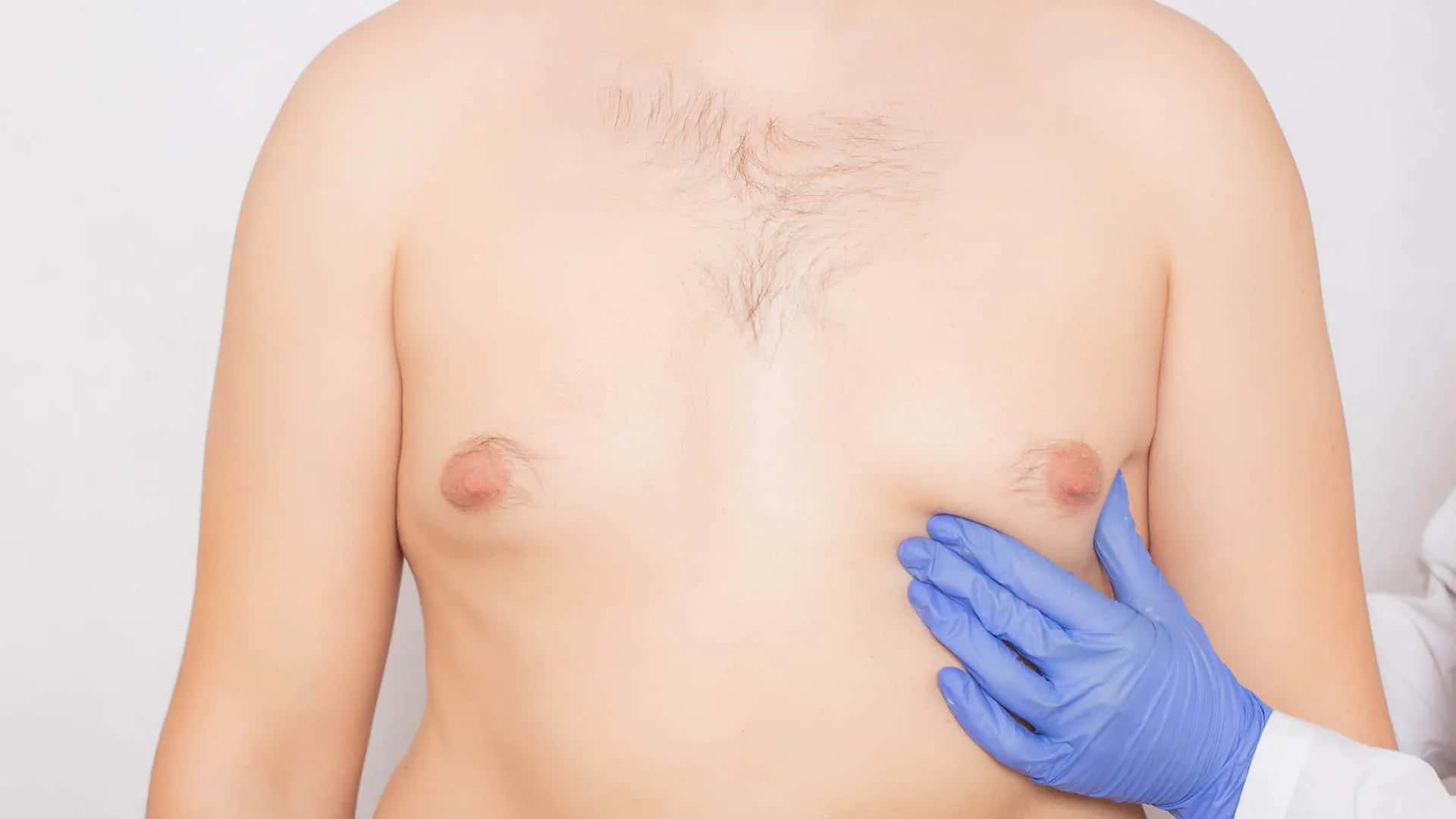


What Is the Difference Between Gynecomastia and Chest Fat?
Gynecomastia is enlargement of male glandular breast tissue, while chest fat is enlargement caused primarily by accumulated fatty tissue without glandular proliferation.
Chest fat is also called pseudogynecomastia or lipomastia. Gynecomastia commonly produces a firm or rubbery area beneath the nipple and areola. Pseudogynecomastia tends to feel softer because adipose tissue accounts for most of the volume. Both conditions can make the male chest appear enlarged, and they can occur together. Visual appearance alone therefore cannot always identify which tissue is responsible for the enlargement.
What Is Gynecomastia?
Gynecomastia is benign enlargement of male breast glandular tissue caused by increased stimulation of breast tissue relative to androgen activity.
The enlarged tissue usually develops beneath the nipple and areola, creating a firm or rubbery disc that can extend outward. Gynecomastia may affect one breast or both, although bilateral involvement is common. Hormonal changes during puberty and ageing are frequent causes. Medications, anabolic steroids, endocrine disorders, liver disease, kidney disease, and other medical conditions can also contribute. Some cases have no identifiable cause after evaluation. Gynecomastia can also produce tenderness or nipple sensitivity, particularly when the glandular tissue is actively developing.
What Is Chest Fat or Pseudogynecomastia?
Chest fat, or pseudogynecomastia, is male breast enlargement caused predominantly by excess adipose tissue rather than proliferation of the breast gland.
It is particularly common in men who are overweight or have gained substantial body fat. The tissue generally feels softer and more diffuse than true gynecomastia. There is usually no distinct firm disc directly underneath the nipple. Because the enlargement consists mainly of ordinary adipose tissue, its size can decrease when overall body fat falls. However, fat distribution is partly genetic, so the chest may remain disproportionately full even after substantial weight loss.
How Do Gynecomastia and Chest Fat Feel Different?
Gynecomastia usually feels like firm or rubbery tissue beneath the nipple, while chest fat tends to feel soft and distributed more evenly across the chest.
During examination, true gynecomastia often produces a palpable disc concentric with the nipple and areola. Pseudogynecomastia does not create the same resistant glandular disc because most enlargement comes from adipose tissue. A person can still have both fat and glandular tissue at the same time, making self-examination less reliable. Long-standing gynecomastia can also become increasingly fibrous, which may make the central tissue feel particularly firm compared with surrounding chest fat.
Do Gynecomastia and Chest Fat Look Different?
Gynecomastia often creates concentrated fullness around the nipple, while chest fat usually causes broader and softer enlargement across the entire male breast area.
True gynecomastia can make the areola project forward because glandular tissue sits directly underneath it. Chest fat often blends more gradually into surrounding fat along the upper chest, sides, and abdomen. However, appearance is not completely reliable because substantial pseudogynecomastia can also produce a rounded breast contour. Similarly, gynecomastia can coexist with excess fat and create widespread fullness. Palpation and clinical evaluation provide more useful information than photographs alone when the distinction remains unclear.
Do Puffy Nipples Mean You Have Gynecomastia?
Puffy nipples can occur with gynecomastia, but nipple projection alone does not prove that enlarged glandular breast tissue is present.
Glandular tissue directly beneath the areola can push the nipple-areolar complex outward and create a dome-shaped appearance. This pattern is commonly associated with mild gynecomastia. Chest fat can also make the nipple area appear fuller, particularly when overall breast volume has increased. Temperature, skin elasticity, and areolar anatomy can further change how prominent the nipple looks. A firm subareolar disc provides stronger evidence of gynecomastia than nipple appearance alone. Clinical examination can determine whether gland, fat, or both contribute to the contour.
Can Weight Loss Get Rid of Chest Fat?
Weight loss can substantially reduce pseudogynecomastia because the enlarged chest consists mainly of adipose tissue that responds to overall fat reduction.
A sustained calorie deficit can reduce fat throughout the body, including the chest. The exact order of fat loss cannot be controlled, so some men lose abdominal fat before chest volume changes noticeably. Significant weight reduction can also leave loose skin after the underlying chest fat decreases. When a firm gland remains beneath the nipple after body fat has fallen, true gynecomastia may be contributing to the remaining projection. Weight loss therefore helps distinguish fat-related enlargement but does not function as a diagnostic test by itself.
Can Weight Loss Get Rid of Gynecomastia?
Weight loss does not directly remove true glandular gynecomastia, although reducing surrounding chest fat can make the overall chest considerably smaller.
The glandular component develops through proliferation of breast tissue rather than simple fat storage. Losing body fat therefore cannot selectively dissolve this tissue. A man with both pseudogynecomastia and gynecomastia may still notice major improvement after weight reduction because the fatty component decreases. However, a residual firm mound beneath the nipple can remain. This distinction explains why some lean men continue to have prominent nipples or localized breast projection despite having very little surrounding chest fat.
Can Exercise Remove Gynecomastia or Chest Fat?
Exercise can help reduce chest fat through overall fat loss, but it cannot directly eliminate established glandular breast tissue caused by true gynecomastia.
Resistance training can build the pectoral muscles underneath the breast tissue and improve the overall chest shape. Cardiovascular exercise and strength training also support energy expenditure and weight management. However, neither method allows the body to remove fat specifically from one chosen chest area. Established glandular tissue also remains independent of muscle development. Consequently, a stronger chest can coexist with persistent gynecomastia. Exercise is most effective for pseudogynecomastia when it contributes to sustainable reduction of total body fat.
Can Lean Men Have Gynecomastia?
Lean men can develop gynecomastia because true glandular breast enlargement does not require obesity or excess overall body fat.
Hormonal changes, medication effects, anabolic steroid use, endocrine disorders, ageing, and idiopathic causes can stimulate glandular tissue in men at any body-fat level. Gynecomastia can actually become more visually obvious in a lean man because less surrounding fat disguises the firm subareolar gland. A low body mass index therefore cannot rule out the condition. When a lean person develops new breast enlargement, evaluation should focus on the tissue itself and any possible underlying trigger rather than assuming body composition explains the change.
Can Someone Have Gynecomastia and Chest Fat Together?
Gynecomastia and excess chest fat can occur together, producing a mixed enlargement containing both glandular and adipose tissue.
This combination is common in men who have gynecomastia and are also overweight. Weight loss can reduce the fatty component while leaving a more obvious gland beneath the nipple. Conversely, weight gain can make previously mild gynecomastia appear considerably larger because additional fat surrounds the existing glandular tissue. Mixed cases are especially relevant when treatment is considered. Liposuction can address excess fat, while persistent glandular tissue may require excision. Treating only one component can leave residual fullness when both significantly contribute to the chest shape.
Can Hormones Cause Gynecomastia but Not Chest Fat?
Hormonal imbalance can directly promote gynecomastia, while ordinary chest fat is primarily part of overall adipose distribution rather than glandular stimulation.
Gynecomastia develops when estrogenic activity becomes relatively stronger than androgen activity within male breast tissue. This can occur during puberty, ageing, hypogonadism, hyperthyroidism, or certain systemic illnesses. Some hormone-producing tumors can also cause breast enlargement. Chest fat can still be influenced indirectly by hormones that affect body composition and metabolism, but that process differs from glandular proliferation. This distinction is why unexplained adult-onset gynecomastia may require investigation even when the person has also gained weight.
Can Medications Cause Gynecomastia?
Several medications and substances can contribute to gynecomastia by altering androgen activity, estrogen activity, hormone production, or breast tissue sensitivity.
Associated substances include some antiandrogens, spironolactone, finasteride, certain heart medications, some psychiatric medicines, anabolic steroids, and several other drug groups. Alcohol and some recreational substances have also been associated with gynecomastia. A medication relationship should be evaluated carefully because stopping prescribed treatment without medical guidance can create greater health risks. The timing of breast enlargement in relation to starting or changing medication can provide useful diagnostic information when assessing new glandular tissue.
How Is Gynecomastia Distinguished From Chest Fat?
Gynecomastia is distinguished from chest fat primarily through medical history and physical examination, with imaging or laboratory testing used when findings require further clarification.
During examination, firm concentric tissue beneath the nipple supports gynecomastia, while diffuse soft fat supports pseudogynecomastia. Evaluation may also include body weight, testicular examination, medication history, hormone-related symptoms, and the duration of enlargement. Imaging is not routinely necessary when the clinical findings clearly indicate benign gynecomastia or pseudogynecomastia. When examination is uncertain or suspicious, ultrasound or mammography can help characterize the tissue and exclude another breast mass.
What Signs Need Medical Assessment Instead of Assuming Chest Fat?
Certain findings require medical assessment because they are not typical features of uncomplicated chest fat or routine symmetrical gynecomastia.
-
A hard or fixed breast lump
-
A mass located away from the nipple
-
New nipple discharge
-
Nipple retraction
-
Dimpling or unusual skin changes
-
Enlarged lymph nodes near the armpit
-
Rapid unexplained breast enlargement
-
Significant one-sided change
-
Persistent or increasing breast pain
-
A new testicular lump or swelling
These findings do not automatically indicate cancer, but they require proper assessment rather than self-diagnosis based on body fat.
How Is Chest Fat Treated?
Chest fat is primarily treated through overall fat reduction, while persistent localized fat can be addressed with liposuction when body weight is stable.
Nutrition and physical activity can reduce pseudogynecomastia when the chest enlargement reflects excess overall body fat. Resistance training can improve pectoral development, but fat loss still occurs according to whole-body energy balance. If a localized fatty chest remains after stable weight reduction, liposuction can remove selected subcutaneous fat. Liposuction works particularly well when enlargement is predominantly fatty and skin elasticity is adequate. It cannot reliably remove a substantial firm gland beneath the nipple.
How Is Gynecomastia Treated?
Gynecomastia treatment depends on its cause, duration, symptoms, and tissue composition, with observation, treatment of underlying causes, or surgery used when appropriate.
Pubertal gynecomastia frequently resolves naturally, making observation appropriate in many adolescents. Adult cases may require investigation for medication effects, hormonal disorders, or systemic illness. Treating an identified cause can prevent further glandular stimulation. Long-standing fibrous gynecomastia is less likely to regress spontaneously. Persistent cases causing discomfort or aesthetic concern can be treated surgically. Glandular tissue generally requires excision, while accompanying chest fat can be removed with liposuction during the same procedure.
Is Surgery Different for Gynecomastia and Chest Fat?
Surgery differs because chest fat may be treated with liposuction alone, while true gynecomastia often requires gland excision or combined excision and liposuction.
Liposuction removes adipose tissue through small access incisions and can reshape a chest dominated by excess fat. Firm glandular tissue does not respond to suction in the same way, so direct surgical removal may be needed. Mixed cases commonly use both methods to create a smoother transition between the areola and surrounding chest. Advanced enlargement with substantial loose skin can require additional skin removal or nipple repositioning. The surgical plan therefore follows the actual tissue composition rather than chest size alone.
- Last updated
- Language
- English
How did you find this article?

This page explains how clinics can become more visible across digital channels, reach the right patient audience, and turn that visibility into sustainable patient communication.

This page explains how doctors can use online marketing to increase digital visibility, reach the right patient audience, build trust, and improve communication processes.

This page explains how hair transplant clinics can improve online visibility, trust, content, SEO, patient communication, and conversion processes through MediFinder.
Subscribe to the Medifinder newsletter and never miss our latest content.