










Do Hair Growth Medications Sold in Pharmacies Work?
Hair growth medications sold in pharmacies work for some people, but they do not provide the same results for every type of hair loss. Click now for detailed information.

- Last updated
- 191 reads
- 7 min read


Do Hair Growth Medications Sold in Pharmacies Work?
Hair growth medications sold in pharmacies work for some people, but they do not provide the same results for every type of hair loss. To achieve real benefits from these products, the cause of hair loss, the active ingredient used, the duration of regular use, and the condition of the hair follicles should all be evaluated together. Especially in male pattern and female pattern hair loss, minoxidil and certain prescription treatments are more commonly discussed; however, the phrase “hair growth medication” often creates greater expectations than reality.
Many people experiencing hair loss first go to a pharmacy and examine the sprays, serums, shampoos, and tablets on the shelves. This is completely normal because hair loss affects not only appearance but also daily self confidence. However, there is an important distinction here: not every hair product sold in pharmacies is a medication. Some are licensed drugs, some are dermocosmetic products, and others are supportive care products. Choosing a product without understanding this difference may lead to both time and financial loss.
Why Is It Wrong to Choose a Product Without Knowing the Cause of Hair Loss?
Hair loss does not occur for a single reason. Genetic predisposition, hormonal changes, iron deficiency, low vitamin D, thyroid disorders, stress, rapid weight loss, the postpartum period, strict diets, scalp diseases, and certain medications may all contribute to hair loss. For this reason, before asking “Which is the best hair growth medication?”, the question “Why is the hair falling out?” should first be answered.
In male pattern hair loss, recession of the hairline, thinning at the crown, and miniaturization of the hair strands are generally observed. In female pattern hair loss, widening of the hair part and diffuse thinning at the crown are more common. Although the products used for these two conditions may appear similar, the treatment approach varies from person to person.
There are also temporary types of hair loss. Intense stress, high fever, surgery, childbirth, strict dieting, or low blood values may cause temporary excessive shedding. In such cases, the hair follicles are not completely lost; the problem is generally related to disruption of the hair cycle. In this type of situation, correcting the underlying cause is usually more effective than simply using a hair growth spray.
Hair Growth Products Containing Minoxidil
One of the most commonly recognized active ingredients when discussing hair growth medications sold in pharmacies is minoxidil. Minoxidil is a topical treatment that may help slow hair loss and support hair growth in some people. It is one of the best known options used for male and female pattern hair loss. Clinical sources state that minoxidil may be beneficial especially in early stage hair loss; however, it should not be expected to completely restore an area that has already become fully bald.
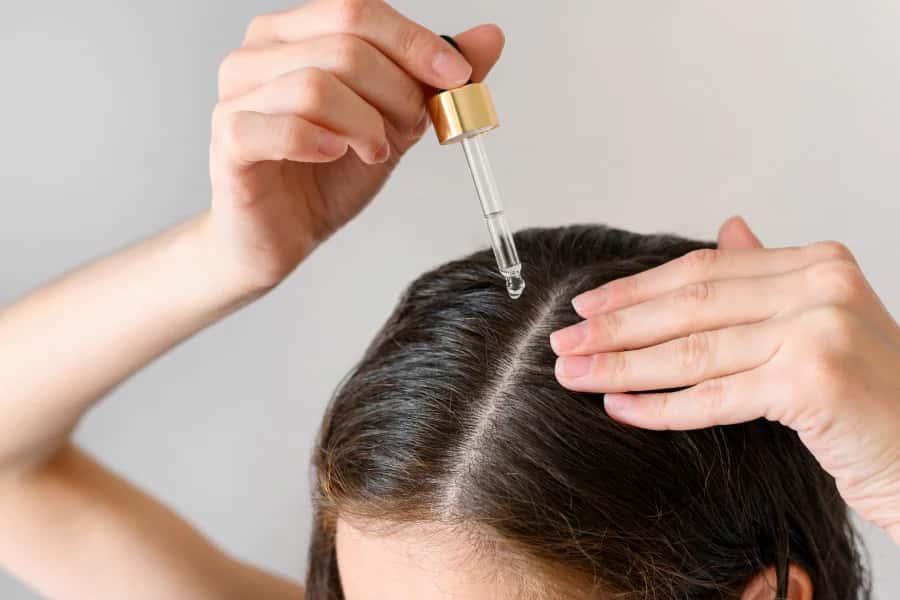
Minoxidil is generally available in solution, spray, or foam form. The product is applied directly to the scalp. The important point here is that the medication must reach the scalp, not only the hair strands. A product sprayed onto the hair without reaching the scalp will not provide the expected effect.
Patience is extremely important when using these products. During the first weeks, hair shedding may appear to increase. In some users, this is associated with weaker hairs shedding as a new growth cycle begins. However, if intense itching, redness, burning, flaking, or unwanted facial hair growth occurs, the method of use should be reviewed. Side effects such as scalp irritation and unwanted hair growth in areas where the product comes into contact may occur with minoxidil products.
Finasteride and Prescription Hair Loss Treatments
Finasteride is one of the prescription treatments used for male pattern hair loss. It works by reducing the formation of the hormone called DHT, which may weaken hair follicles. For this reason, it is mainly evaluated for male pattern hair loss. Finasteride is not suitable for everyone and should not be started without medical supervision.
This treatment is generally used to slow hair loss, preserve existing hair, and increase hair density in some individuals. However, expectations should remain realistic. Finasteride does not grow hair overnight. It takes several months to evaluate its effects, and it also requires regular use. In scientific studies, minoxidil and finasteride are among the treatments most commonly evaluated for effectiveness in male pattern hair loss.
The use of finasteride in women requires special evaluation. It is especially unsuitable for women who may become pregnant. Therefore, using a medication simply because it is recommended by others may be risky. Prescription products for hair loss should be planned according to the person’s age, gender, health condition, medications being used, and type of hair loss.
Do Hair Growth Shampoos Really Grow Hair?
Shampoos marketed against hair loss are also commonly sold in pharmacies. These products cleanse the scalp, may make the hair appear fuller, and may support the scalp’s oil and dandruff balance. However, shampoos should not be expected to create a medicinal effect at the level of the hair follicle because they remain on the scalp for a short time before being rinsed away.
Hair loss shampoos are not completely useless. Especially when there is an oily scalp, dandruff, itching, or buildup around the hair roots, the right shampoo supports the hair care routine. A healthier scalp may also make it easier to apply other products effectively. However, expecting entirely new hair growth from shampoo alone is generally unrealistic.
At this point, product claims should be read carefully. The phrase “against hair loss” is not the same as “hair growth medication.” A shampoo may help strengthen the hair strands, reduce the appearance of breakage related shedding, or make the hair appear fuller. However, it should not be considered in the same category as medications designed to control genetic hair loss.
How Effective Are Hair Serums, Ampoules, and Vitamins?
Hair serums, ampoules, and vitamin supplements sold in pharmacies represent a broad category of products. Some of these products may contain peptides, botanical extracts, caffeine, biotin, niacinamide, or amino acids that support the scalp. With regular use, they may help the hair appear more vibrant, well cared for, and stronger.
Vitamin and mineral supplements may provide meaningful benefits only if a deficiency exists. For example, deficiencies in iron, vitamin B12, vitamin D, or zinc may increase hair loss. However, if blood levels are already normal, randomly taking supplements may not produce the expected results. In some cases, unnecessary supplement use may even create other problems.
For this reason, not every “hair strengthening” product sold in pharmacies should be viewed as a hair growth medication. Serums and ampoules may provide supportive care, improve the appearance of the hair, and complement an anti hair loss routine. However, if genetic hair loss is progressing, it is not correct to consider these products as the sole primary treatment.
When Are Results Seen?
The most difficult part of using hair growth medications is the waiting period. Hair grows slowly, and it takes time for hair follicles to enter a new growth cycle. Therefore, expecting clear results within a few days or weeks after starting a product is unrealistic. With products such as minoxidil, several months of regular use are generally required before noticeable effects can be evaluated; some sources emphasize at least six months of consistent use.
During this process, taking progress photos may be helpful. Photos taken once a month under the same lighting and from the same angle allow changes to be assessed more objectively. Because when looking in the mirror every day, it becomes harder to notice small improvements. Hair shedding may have decreased, hair strands may have thickened, or thinning at the crown may have become less noticeable.
If the product is discontinued before it has enough time to work, results cannot be achieved. On the other hand, continuing to use a completely ineffective product for months without proper evaluation is also not correct. Regular use, patience, and dermatological assessment when necessary are the foundations of this process.
What Happens When Use Is Stopped?
One of the most overlooked topics regarding hair growth medications is treatment continuity. Especially in genetic hair loss, the products used do not completely eliminate the tendency toward hair loss. As long as they are used, they support the hair follicles, slow shedding, and may increase hair density in some individuals.
When use is discontinued, the underlying process causing hair loss may continue. In this case, the gained density may decrease again within a few months. Therefore, before starting treatments such as minoxidil or similar therapies, the possibility of long term use should be understood. The expectation of “using one bottle and permanently regrowing hair” often leads to disappointment.
This does not mean the products are ineffective. A more accurate statement would be: some hair growth medications work when used regularly and long term, but continuity is necessary to maintain the effects.
What Should Realistic Expectations Be From Hair Growth Medications?
The expected results from hair growth medications are often confused with the dramatic results seen in hair transplant advertisements. However, medications generally aim to preserve existing hair, support thinning hair strands, and stimulate new growth in some areas. Their effect may be limited in areas that have been completely bald, shiny, and hairless for a long time.
The best results are generally achieved in the early stages. If the hair strands have started thinning but the follicles have not completely disappeared, the likelihood of responding to treatment is higher. For this reason, instead of waiting for years after noticing hair loss, early evaluation is important.
In addition, rather than trying to solve everything with a single product, hair care should be approached as a whole. Balanced nutrition, adequate protein intake, care products that do not irritate the scalp, controlling conditions such as dandruff or eczema, and regular follow up all support treatment success.
- Last updated
- Language
- English
How did you find this article?

A current medicine list helps you see everything you take in one place, from prescriptions to vitamins, drops, inhalers, and occasional pain relievers. It can make appointments smoother, reduce confusion at the pharmacy, and give caregivers or emergency contacts clearer information when they need it.


Nausea can come from motion sickness, stomach irritation, migraine, pregnancy, medications, infections, anxiety, surgery, or medical treatments, so the “best” option depends on the cause. This guide explains the main types of Nausea Medicine, how over the counter nausea medicine differs from prescription antiemetics.

Nausea can come from many places: motion sickness, stomach bugs, migraine, medications, pregnancy, surgery, digestive conditions, and more. Antiemetic medication can help, but the best choice depends on the cause, severity, timing, medical history, and whether vomiting is putting someone at risk of dehydration.
Subscribe to the Medifinder newsletter and never miss our latest content.