










Adipomastia: Causes, Symptoms, Diagnosis and Treatment
This guide explains adipomastia, including its causes, symptoms, differences from gynecomastia, diagnosis, weight-loss response, liposuction, skin removal, and long-term management.

- Last updated
- 48 reads
- 9 min read
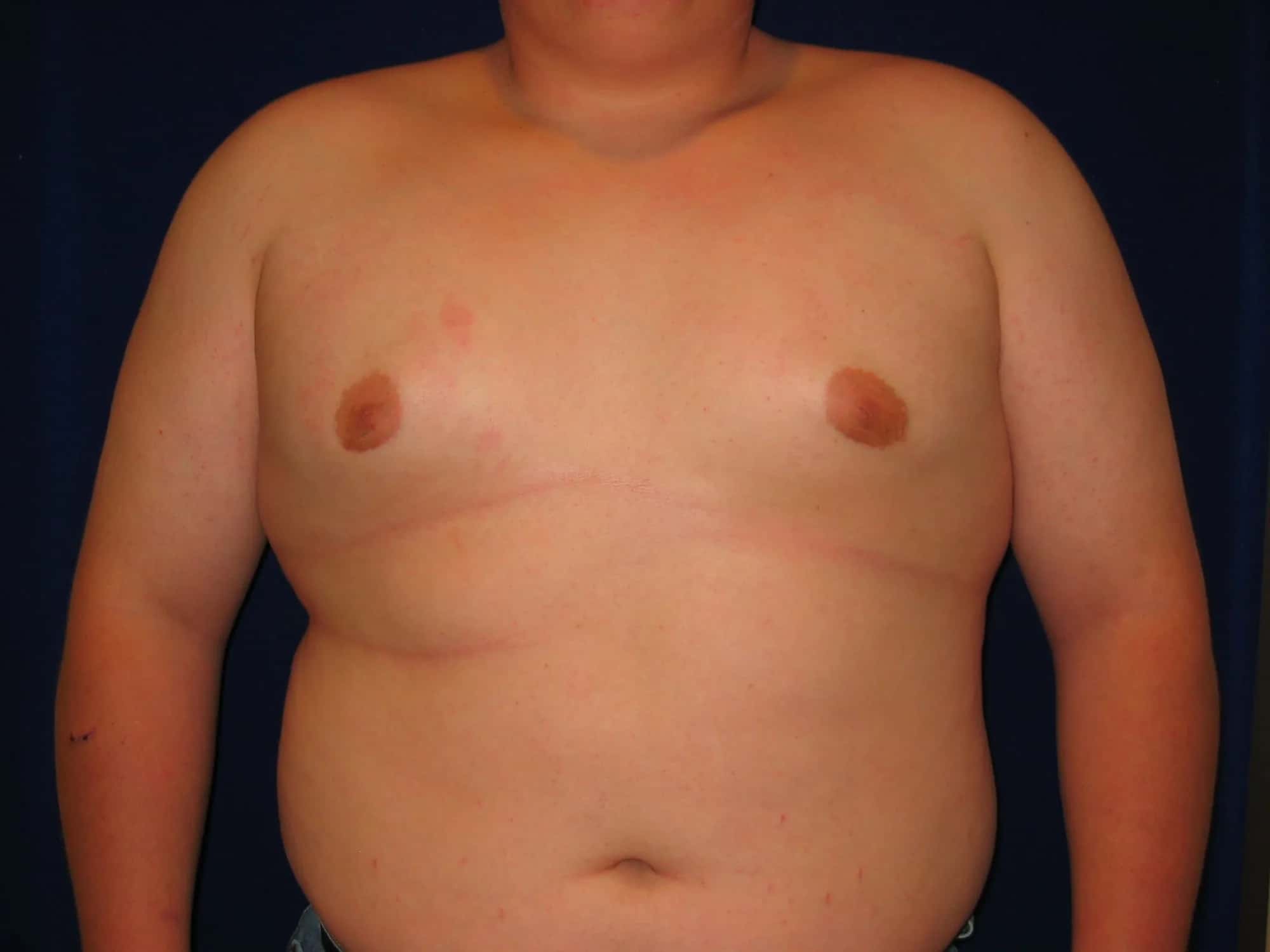


What Is Adipomastia?
Adipomastia is male breast enlargement caused predominantly by excess fatty tissue rather than abnormal growth of glandular breast tissue.
The condition is also commonly described as pseudogynecomastia or lipomastia. Enlargement is usually soft, diffuse, and distributed across the chest instead of forming a distinct glandular disc underneath the nipple. Adipomastia frequently accompanies increased body fat, although it can also occur in men without generalized obesity. The distinction matters because fatty and glandular enlargement respond differently to treatment. Weight management and liposuction can reduce adipose tissue, whereas established glandular gynecomastia may require direct tissue excision.
Is Adipomastia the Same as Pseudogynecomastia?
Adipomastia and pseudogynecomastia generally describe the same condition: male breast enlargement produced mainly by excess adipose tissue without significant glandular proliferation.
Lipomastia is another term frequently used for this presentation. The terminology distinguishes fatty enlargement from true gynecomastia, which involves benign proliferation of glandular breast tissue. Adipomastia can be bilateral and symmetrical, although body-fat distribution can create visible differences between the two sides. It should not automatically be considered a hormonal breast disorder because the enlarged volume may consist almost entirely of ordinary fat. Identifying the dominant tissue helps determine whether weight reduction, liposuction, or another approach is appropriate.
What Is the Difference Between Adipomastia and Gynecomastia?
Adipomastia consists primarily of chest fat, while gynecomastia contains enlarged glandular breast tissue concentrated beneath and around the nipple.
During examination, gynecomastia commonly feels like a firm or rubbery disc centered beneath the nipple-areola complex. Adipomastia usually feels softer and more diffuse because adipose tissue accounts for the enlargement. Both conditions can exist together, creating a chest containing substantial fat and glandular tissue. This mixed presentation is important because liposuction can remove fat but may leave a firm gland behind. Accurate distinction therefore influences both diagnosis and the choice of surgical technique.
What Causes Adipomastia?
Adipomastia develops when excess fatty tissue accumulates in the male chest, usually as part of individual body-fat distribution or overall weight gain.
Genetics influence where the body preferentially stores fat, so some men develop noticeable chest fullness even when other areas remain relatively lean. Obesity commonly increases the amount of adipose tissue across the chest, but pseudogynecomastia is not restricted to people with obesity. Age-related changes in body composition can also make chest fat more noticeable. After substantial weight changes, residual fat may combine with stretched skin and create persistent breast-like contouring even after overall body weight has fallen considerably.
Does Obesity Cause Adipomastia?
Obesity can contribute strongly to adipomastia because increasing total body fat often increases subcutaneous fat stored across the male chest.
The relationship is not absolute, since men without obesity can also accumulate disproportionately more fat in the chest. Likewise, not every man with obesity develops obvious pseudogynecomastia. Increased body weight can also coexist with true glandular gynecomastia, making the visible enlargement a mixture of fat and gland. This distinction becomes clearer after meaningful weight reduction in some patients. The fatty component can decrease while persistent subareolar glandular tissue remains, revealing that both conditions were present before weight loss.
What Are the Symptoms of Adipomastia?
Adipomastia usually produces soft, diffuse chest enlargement without the distinct firm subareolar gland that characterizes true gynecomastia.
-
Soft fatty fullness across one or both breasts
-
Enlargement that blends gradually into surrounding chest fat
-
Greater chest volume during periods of weight gain
-
Reduced fullness after overall fat loss
-
A breast-like chest contour without a firm central gland
-
Possible skin looseness after major weight loss
-
Possible nipple projection caused by surrounding fat
-
Frequent bilateral and relatively symmetrical enlargement
Pain and pronounced nipple tenderness are less characteristic of uncomplicated adipomastia and may justify evaluation for glandular or other breast conditions.
What Does Adipomastia Feel Like?
Adipomastia usually feels soft and compressible because the enlarged male breast contains predominantly fatty tissue rather than a concentrated glandular mass.
The tissue generally blends into surrounding chest and upper-body fat without forming a clear border around the nipple. True gynecomastia feels different because palpation can reveal a firmer disc positioned concentrically beneath the nipple-areola complex. Mixed cases can contain both textures, with soft peripheral fat surrounding a more resistant central gland. Self-examination can suggest which component is dominant, but clinical palpation remains more reliable when the distinction will influence treatment or when an unusual lump is present.
Can Adipomastia Cause Puffy Nipples?
Adipomastia can make the nipples appear puffy because surrounding chest fat can push the nipple-areola complex outward even without substantial glandular enlargement.
However, persistent localized projection directly beneath the nipple can also indicate true gynecomastia. Visual appearance alone cannot reliably distinguish these conditions because fat, glandular tissue, skin elasticity, and nipple anatomy all influence chest shape. A soft chest with diffuse fullness is more consistent with adipomastia, while a firm central disc supports glandular gynecomastia. Some men have both components, which can produce pronounced nipple projection despite substantial surrounding fatty tissue. Examination is therefore more informative than judging nipple appearance from photographs alone.
Can Weight Loss Reduce Adipomastia?
Weight loss can reduce adipomastia because the enlarged chest consists primarily of adipose tissue that can decrease as total body fat falls.
The amount of improvement varies because the body does not remove fat from every region at the same rate. Some men retain noticeable chest fat after losing substantial abdominal or waist fat. Major weight loss can also leave stretched skin, creating persistent breast-like folds despite a significant reduction in fatty volume. In these cases, further weight loss may not fully correct the chest contour. Persistent firm tissue beneath the nipple after fat loss can also indicate coexisting gynecomastia rather than adipomastia alone.
Can Exercise Get Rid of Adipomastia?
Exercise can help reduce adipomastia when it contributes to overall fat loss, but chest exercises cannot selectively remove fat from the male breast area.
Resistance training can develop the pectoral muscles and improve the underlying shape of the chest. Cardiovascular activity can also support energy expenditure and long-term weight management. Neither method controls the exact location from which stored fat is mobilized. Consequently, a man can develop stronger pectoral muscles while retaining a disproportionate layer of chest fat. Exercise is most useful when combined with sustainable nutrition and overall body-fat reduction rather than being treated as a targeted method for removing chest fat alone.
How Is Adipomastia Diagnosed?
Adipomastia is usually diagnosed through medical history and physical examination showing diffuse fatty enlargement without a palpable glandular disc beneath the nipple.
Examination evaluates breast symmetry, tissue consistency, nipple appearance, skin changes, and the location of any palpable mass. True gynecomastia produces firm glandular tissue centered beneath the nipple-areola complex, whereas adipomastia is predominantly soft. Typical pseudogynecomastia usually does not require imaging when the clinical examination is clear. Further investigation becomes appropriate when the findings are uncertain, a discrete mass is present, or symptoms do not fit the expected pattern of benign fatty enlargement.
Is Ultrasound Needed to Diagnose Adipomastia?
Ultrasound is not routinely required when physical examination clearly shows typical adipomastia, but imaging can help when the tissue pattern or a breast lump is uncertain.
Ultrasound of pseudogynecomastia typically demonstrates lobules of adipose tissue without the glandular patterns associated with true gynecomastia. Imaging becomes more important when clinical examination cannot confidently distinguish benign enlargement from another breast mass. In younger men with an indeterminate palpable mass, ultrasound can be an appropriate initial investigation. Older men with uncertain or suspicious findings may require mammography or other imaging according to the clinical presentation. Routine imaging adds little when examination clearly demonstrates uncomplicated pseudogynecomastia.
Can Adipomastia Remain After Major Weight Loss?
Adipomastia can remain after major weight loss when residual chest fat combines with stretched skin and downward displacement of the nipple-areola complex.
Men who lose substantial amounts of weight can develop a different chest problem from ordinary weight-related fatty enlargement. Much of the excess fat may disappear, yet redundant skin can remain across the chest and lateral torso. The nipple can also sit lower than its previous position. Research on post-weight-loss pseudogynecomastia describes these cases as involving variable residual fat, skin excess, and altered nipple position. This anatomy may require more than simple additional weight reduction to restore a flatter male chest contour.
How Is Adipomastia Treated?
Adipomastia is treated by reducing the fatty component through weight management or liposuction, with skin-removal procedures added when substantial loose tissue remains.
Weight reduction is a reasonable first approach when chest enlargement accompanies excess overall body fat. A persistent localized deposit can later be treated surgically when body weight has become stable. Liposuction is particularly suited to adipose-dominant enlargement because a cannula can remove excess subcutaneous fat through small access points. Patients with major skin redundancy after weight loss may require excision and chest lifting instead. Treatment therefore follows fat volume, skin quality, and nipple position rather than chest size alone.
Does Liposuction Work for Adipomastia?
Liposuction can effectively treat adipomastia when excessive fatty tissue is the main cause of chest enlargement and significant loose skin is not present.
A cannula is introduced through small incisions to remove subcutaneous chest fat and create a flatter transition across the pectoral region. Because adipomastia does not contain substantial fibrous glandular tissue, liposuction alone may provide adequate correction. The situation changes when a firm gland is present beneath the nipple, since suction may leave that tissue behind. Combined gland excision and liposuction can then be necessary. Large amounts of loose skin can similarly limit what fat removal alone can achieve.
When Is Skin Removal Needed for Adipomastia?
Skin removal may be required when adipomastia is accompanied by substantial chest sagging, large skin folds, or a low nipple position after major weight loss.
Liposuction reduces volume but does not remove a large envelope of redundant skin. Men who have lost considerable weight can therefore remain with hanging chest tissue after most excess fat has disappeared. Surgical approaches may combine liposuction with tailored skin excision and repositioning of the nipple-areola complex. More extensive procedures create longer scars than liposuction alone, but they address anatomical problems that suction cannot correct. The amount and location of remaining skin therefore become central to operative planning after massive weight loss.
Can Adipomastia Come Back After Treatment?
Adipomastia can become noticeable again if remaining chest fat cells enlarge after significant weight gain, even after successful weight reduction or liposuction.
Liposuction permanently removes selected fat cells from the treated area, but it does not prevent the remaining adipocytes from increasing in size. Substantial future weight gain can therefore change the chest contour again. Ageing and changes in skin elasticity can also affect appearance over time. Maintaining a relatively stable body weight provides the best opportunity to preserve the result of fat-reduction treatment. When residual glandular tissue contributes to renewed nipple projection, the issue may represent mixed gynecomastia rather than recurrent adipomastia alone.
When Should Male Breast Enlargement Be Medically Assessed?
Male breast enlargement should be medically assessed when it is new, unexplained, distinctly one-sided, firm, fixed, painful, or associated with nipple or skin abnormalities.
A hard mass outside the typical subareolar region requires particular attention. Nipple discharge, nipple retraction, skin dimpling, enlarged nearby lymph nodes, or a rapidly changing lump also warrant evaluation. These findings do not automatically indicate malignancy, but they are not typical features of uncomplicated adipomastia. When physical examination cannot confidently distinguish pseudogynecomastia from another breast condition, imaging can help characterize the tissue. Suspicious lesions may require direct tissue sampling rather than continued observation.
- Last updated
- Language
- English
How did you find this article?
Liposuction has become part of a more open conversation about cosmetic surgery, with celebrities discussing everything from subtle body contouring to difficult recoveries and results they later regretted. These 20 public figures have personally acknowledged undergoing liposuction, offering different perspectives.
Many actors, models, musicians and television personalities have spoken openly about having rhinoplasty, some for cosmetic reasons and others to repair an injury or improve their breathing. This guide looks at what 20 of these celebrities said about their own nose surgery and what their experiences can teach anyone.
Several well-known musicians, reality stars and influencers have spoken openly about having a Brazilian butt lift, and many of them have also shared regret, reduction surgery or difficult recoveries. This guide looks at what these celebrities said about their own procedures and what their experiences can teach anyone.
Subscribe to the Medifinder newsletter and never miss our latest content.