









Best Hair Transplant Turkey Clinics: What Does This List Cover?
A list of the best hair transplant clinics in Turkey should not be treated as a universal ranking that applies equally to every patient. Hair transplantation is a personalised medical procedure, and the most suitable clinic will depend on individual circumstances.
A patient with mild recession may require a different approach from someone with advanced hair loss. Hair thickness, scalp condition, age, family history and donor density can all affect the treatment plan. Some patients may be suitable for a single procedure, while others may need a conservative strategy designed around future hair loss.
For that reason, a useful clinic list should consider several factors rather than focusing on one feature. These include the qualifications of the medical team, the physician’s involvement, the methods available, the quality of consultation, the transparency of the pricing and the standard of postoperative care.
The strongest clinics are usually those that explain both the possibilities and the limitations of treatment. They do not promise identical results for every patient, and they do not present a high graft number as the only measure of success. Instead, they create a plan that protects the donor area while aiming for natural density and balanced coverage.
What Makes a Hair Transplant Clinic Stand Out?
The best hair transplant clinics in Turkey generally combine medical competence with clear communication. A modern building and polished website may create a positive first impression, but they do not reveal how the operation is planned or who performs its most important stages.
A reliable clinic should be transparent about the medical professionals involved in the procedure. Patients should know who will examine the scalp, design the hairline, extract the grafts, create the recipient sites and supervise implantation.
The clinic should also provide a realistic assessment of donor capacity. Removing too many grafts from the back and sides of the scalp may create visible thinning that cannot easily be corrected. Responsible planning protects the donor region instead of treating it as an unlimited source of hair.
Strong clinics also take time to understand why the patient is experiencing hair loss. Not every type of hair loss should immediately be treated with surgery. A proper consultation may include questions about medical history, previous treatments, medications and the progression of thinning.
The Importance of Physician Involvement
Hair transplantation is usually performed by a team, but the role of the physician can vary considerably between clinics. In some centres, the doctor leads the consultation and remains closely involved throughout the operation. In others, much of the procedure may be delegated to technicians.
Patients should ask direct questions about who will perform each stage. It is reasonable to request the name and qualifications of the physician before paying a deposit. Clinics should also explain how many procedures the medical team manages in one day.
A high number of daily operations does not automatically mean that a clinic provides poor care. However, it may affect how much attention each patient receives. If one doctor is expected to supervise several procedures at the same time, patients should understand what that supervision involves in practice.
Hairline design is one area where medical judgement and aesthetic experience are especially important. A technically dense transplant may still look unnatural if the hairline is too low, too straight or unsuitable for the patient’s age and facial proportions.
FUE, DHI and Other Hair Transplant Techniques
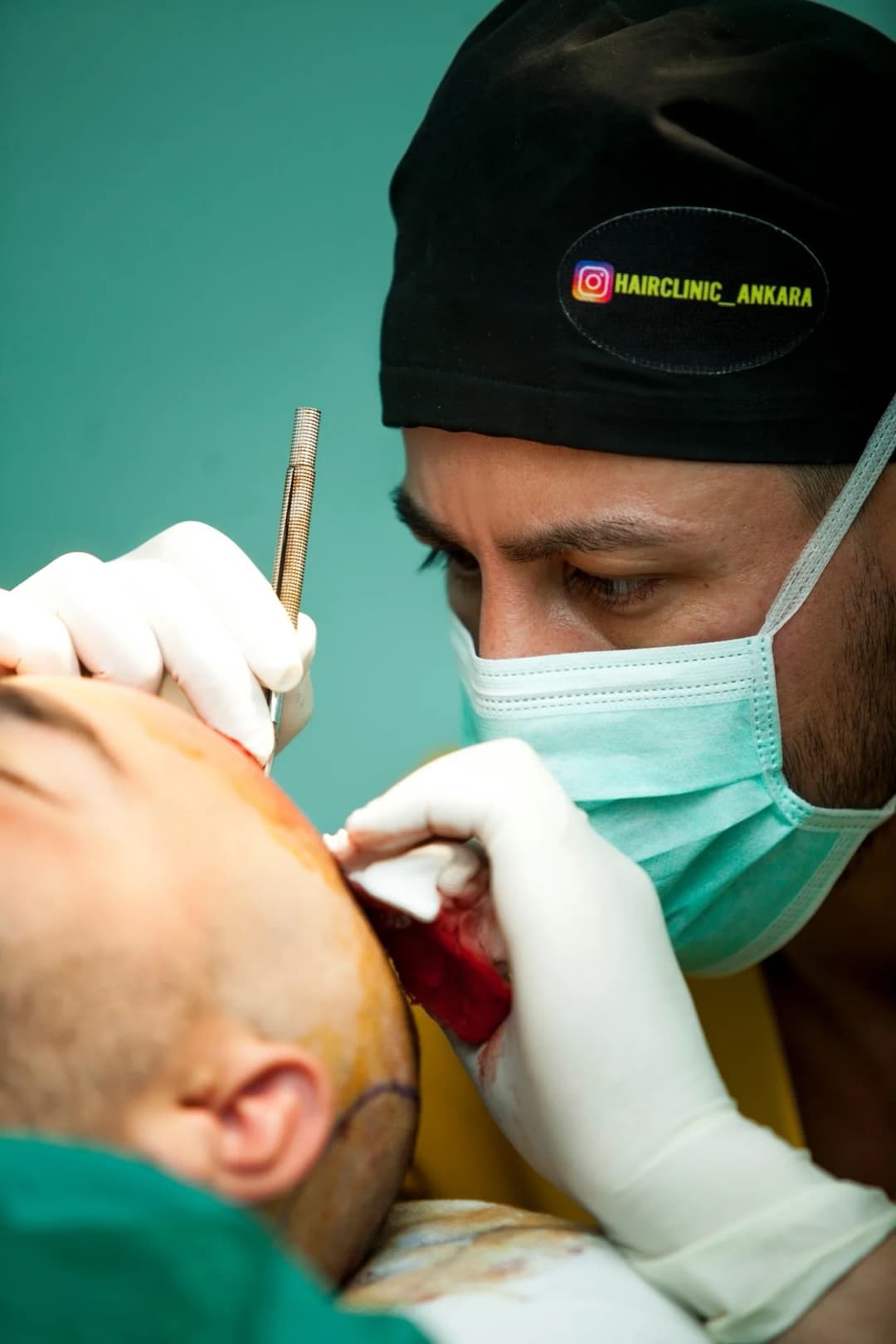
FUE and DHI are among the most frequently promoted hair transplant techniques in Turkey. Both methods generally involve removing follicular units individually from the donor area, but they differ in the way grafts may be placed into the recipient region.
In a conventional FUE procedure, channels are prepared before the grafts are inserted. DHI commonly refers to implantation with a specialised pen-shaped device. Some clinics also use terms such as sapphire FUE, referring to the type of blade used during channel creation.
Marketing descriptions can make one technique sound universally superior to another. In reality, the result depends on much more than the name of the method. Graft handling, extraction quality, placement angle, donor management and team experience all play major roles.
A trustworthy clinic should recommend a technique based on the patient’s condition rather than offering the same package to everyone. The size of the recipient area, the presence of existing hair and the desired density may influence which approach is most practical.
Why Donor-Area Planning Matters
The donor area is one of the most valuable elements of a hair transplant. It usually includes the hair at the back and sides of the scalp, where follicles tend to be more resistant to common patterns of hair loss.
Although these follicles can be relocated, the donor supply is limited. Once grafts have been removed, they do not grow back in their original location. Poor extraction planning can leave patchy areas, visible thinning or an uneven appearance.
The best hair transplant clinics in Turkey assess the donor region carefully before recommending a graft number. They consider hair calibre, density, scalp visibility and the possibility of future procedures. A conservative approach may sometimes produce a better long-term result than using the maximum number of grafts in one session.
Patients should be cautious when clinics provide an exact graft estimate after seeing only a few photographs. Images can support an initial assessment, but an in-person examination often provides a clearer understanding of donor quality and scalp condition.
Natural Hairline Design and Graft Placement
A natural-looking hair transplant is not simply a matter of placing as many grafts as possible. The design must suit the patient’s age, facial structure and expected pattern of future hair loss.
Natural hairlines are rarely perfectly straight. They usually include subtle irregularities and gradual changes in density. Single-hair grafts are commonly preferred at the front, while grafts containing more hairs may be placed behind them to create volume.
The angle and direction of implantation also affect the final appearance. Hair that is placed too upright or in an inconsistent direction may remain noticeable even after it grows. Careful planning is particularly important around the temples, crown and transition zones.
A good consultation should include a discussion about hairline height and shape. Patients should have the opportunity to review the proposed design rather than seeing it for the first time immediately before surgery.
How to Review Before-and-After Results
Before-and-after photographs can be useful, but they should be examined carefully. Lighting, styling, hair length and camera angle can significantly change the appearance of density.
Ideally, images should show similar lighting and positioning. Wet hair in the “before” image and dry, styled hair in the “after” image may create an exaggerated contrast. Results photographed from only one angle may also hide weaknesses in the donor or crown area.
Patients can ask to see cases that resemble their own hair type and level of loss. A clinic that mainly presents mild hairline cases may not necessarily have the same experience with advanced baldness or corrective surgery.
Video results can sometimes provide a more realistic view because they show movement, several angles and changes in lighting. Long-term examples are also valuable, as early growth does not always reflect the final appearance.
Hair Transplant Prices in Turkey
Hair transplant prices in Turkey vary according to the clinic, physician, technique, graft requirement and services included in the package. Some clinics charge by the graft, while others offer a fixed price for the full procedure.
International packages may include accommodation, airport transfers, medication, translation support and the first hair wash. Patients should request a written breakdown so they can see exactly what the quoted price covers.
The lowest price is not automatically a sign of poor quality, just as the highest price does not guarantee the best result. However, unusually cheap offers deserve careful investigation. Patients should check whether the procedure takes place in an authorised medical setting and whether qualified professionals will be present.
A deposit policy should also be clear. Before making a payment, patients should understand the cancellation conditions, refund rules and any circumstances that could change the final cost.
Consultation and Communication
Communication before the operation often reveals how a clinic handles patient care. A detailed consultation should involve more than exchanging photographs with a sales representative.
The clinic should ask about the patient’s age, medical history, medications, previous procedures and pattern of hair loss. It should also explain the likely number of sessions, the limitations of the donor area and the expected timeline.
Patients should be cautious when they receive immediate guarantees without a proper assessment. Statements such as “100 per cent success,” “permanent density” or “completely pain-free” may create unrealistic expectations.
Clear communication is equally important for international patients. Travel arrangements can make follow-up more complicated, so the clinic should explain how postoperative questions will be handled after the patient returns home.
Aftercare and Recovery Support
A professional clinic should provide detailed aftercare instructions. Patients need guidance on washing, sleeping position, exercise, sun exposure and scalp care during the early recovery period.
The first few days may involve redness, tenderness, swelling or small crusts around the implanted follicles. Clinics should explain which changes are expected and which symptoms require medical attention.
Follow-up should not end once the patient leaves Turkey. Reliable providers usually offer a clear contact route for questions and request progress photographs at different stages.
Hair growth takes time. Temporary shedding can occur before new growth begins, and density generally develops gradually. Clinics should explain this timeline honestly rather than encouraging patients to judge the outcome too early.
Questions to Ask Before Booking
Before selecting a clinic, patients may wish to ask who will perform each stage of the procedure, how the donor area will be assessed and why a particular technique has been recommended.
It is also useful to ask how many patients are treated each day, what happens if the estimated graft number changes and whether follow-up consultations are included.
Patients travelling from abroad should confirm the name and location of the medical facility rather than relying only on a brand name used for marketing. They should also check what assistance is available if a medical issue occurs after returning home.
The quality of the answers matters as much as the answers themselves. Clear, consistent explanations usually indicate a more organised approach than rushed or evasive responses.
Why Do International Patients Research Hair Transplant Clinics in Turkey?
International patients research Turkish clinics because of provider availability, travel connections, packages, and possible price differences. Multilingual coordinators can simplify communication before and after treatment. Many providers also have experience arranging care for overseas patients.
Clinics may advertise FUE, DHI, sapphire, FUT, or unshaven approaches. Some packages include accommodation, airport transfers, medicines, and translation. These conveniences do not establish medical quality or clinical suitability.
Are All Hair Transplant Clinics in Turkey the Same?
No, clinics differ in qualifications, staffing, protocols, patient volume, medical oversight, and postoperative care. Doctor participation may range from full involvement to limited supervision. Team experience and surgical planning can also vary.
Facilities may follow different sterilization, anaesthesia, graft-handling, and emergency protocols. Similar marketing language can hide important clinical differences. Patients should verify each clinic independently.
Who Can Perform Hair Transplantation in Turkey?
Permitted professional roles depend on current Turkish healthcare regulations and individual qualifications. Patients should identify the doctor responsible for diagnosis, planning, surgery, and complication management.
Nurses, technicians, and assistants may have different permitted duties. Their exact roles should be explained before treatment. Current authorization should be verified with the clinic and relevant authorities.
Why Does Doctor Participation Matter?
Doctor participation matters because diagnosis and surgical planning require clinical judgment. The doctor may assess candidacy, donor capacity, miniaturization, and future hair loss.
Medical responsibilities may include hairline design, anaesthesia planning, recipient-site decisions, and complication management. A doctor’s website profile does not prove direct participation. Patients should request written confirmation of the doctor’s role.
Which Parts of the Procedure Will the Doctor Perform?
Patients should confirm which professional performs every surgical stage before booking. These stages include consultation, hairline design, anaesthesia, extraction, recipient-site creation, and implantation.
The doctor’s role in postoperative review and complication management should also be clear. Verbal descriptions can change between sales and treatment teams. Written confirmation provides a more reliable comparison.
What Qualifications Should a Hair Transplant Doctor Have?
A hair transplant doctor should have verifiable medical credentials and relevant surgical hair restoration experience. Medical registration and specialty information should be independently checked where possible.
Relevant experience includes donor management, hairline planning, graft distribution, and complication treatment. Continuing education and professional accountability also matter. No specialty title alone guarantees a successful result.
How Can Patients Check Whether a Clinic Is Licensed?
Patients should request the clinic’s registered legal name, address, authorization details, and responsible doctor. They should confirm where the procedure will physically occur.
Verification should cover the healthcare licence, professional registration, anaesthesia arrangements, and emergency-transfer plan. A clinic’s trading name may differ from its registered provider. Hotel rooms and ordinary offices are unsuitable surgical settings.
What Happens During a Reliable Hair Transplant Consultation?
A proper consultation evaluates hair-loss diagnosis, donor capacity, medical suitability, and long-term planning. The clinician should review family history, previous treatments, medicines, medical conditions, and expectations.
Scalp examination should assess donor density, hair calibre, colour, curl pattern, and miniaturization. Miniaturization means progressive thinning of existing hair follicles. The consultation should also consider future loss and alternative treatments.
Photograph-based quotations may remain provisional until an in-person examination. Consultation should not focus only on graft numbers and price.
How Should a Clinic Assess the Donor Area?
Donor assessment should examine density, stability, follicular-unit quality, and safe extraction capacity. The donor area usually includes suitable scalp regions around the back and sides.
A follicular unit is a natural group containing one or several hairs. A graft may contain one follicular unit or selected tissue containing follicles. Graft count and hair count are therefore different measurements.
Assessment should consider previous extractions, scalp condition, miniaturization, and future surgery needs. Donor hair is limited. Aggressive extraction may cause permanent thinning and visible irregularity.
How Should a Clinic Design the Hairline?
Hairline design should reflect age, facial proportions, donor limits, and future hair-loss patterns. Temple recession, hair direction, and natural irregularity should influence planning.
An excessively low hairline may consume limited grafts. It may also appear less suitable as the patient ages. One standard template cannot suit every face or donor supply.
How Do Clinics Estimate Graft Numbers?
Clinics estimate graft numbers using recipient-area size, density goals, donor capacity, and hair characteristics. Existing hair, calibre, colour contrast, and curl pattern can affect visual coverage.
Crown involvement, previous surgery, hairline position, and future loss also influence planning. More grafts do not automatically produce a better result. Very large promises require careful clinical explanation.
Which Hair Transplant Methods Do Turkish Clinics Offer?
Turkish clinics commonly advertise FUE, DHI, sapphire, FUT, robotic-assisted, and unshaven approaches. Some terms describe extraction, while others describe implantation or recipient-site creation.
Technique selection should follow diagnosis, donor assessment, and long-term planning. A marketing label should not replace clinical reasoning.
What Is FUE Hair Transplantation?
FUE removes individual follicular units from the donor area using small extraction tools. FUE means follicular-unit extraction.
The method creates many small extraction wounds rather than one linear incision. These wounds may leave visible changes, especially after aggressive harvesting. FUE should not be described as scarless.
What Is DHI Hair Transplantation?
DHI usually describes graft implantation with pen-shaped implanter devices. The grafts are commonly extracted using an FUE approach.
DHI may change how recipient sites and placement are performed. However, it is not automatically more suitable for every patient. Planning and team skill remain more important than the label.
What Is Sapphire FUE?
Sapphire FUE usually refers to sapphire blades used during recipient-site creation. It does not describe a separate follicle-extraction method.
The follicles are generally removed using FUE. Results depend on hairline planning, graft handling, site creation, and implantation quality. Blade material alone cannot determine the outcome.
What Is FUT Hair Transplantation?
FUT removes a strip of donor scalp for follicular-unit dissection. FUT means follicular-unit transplantation.
The surgical team separates follicular units from the removed strip. The donor area may retain a linear scar. FUT may still be considered for selected patients.
What Is an Unshaven Hair Transplant?
An unshaven transplant keeps selected donor or recipient hairs longer during treatment. It may reduce visible shaving for some patients.
However, the approach can increase technical complexity and procedure time. It may not suit large graft requirements. Suitability depends on hair length, treatment area, and team experience.
What Is Robotic-Assisted Hair Transplantation?
Robotic systems may assist selected extraction or planning stages. They do not replace clinical judgment or responsible medical supervision.
A clinician must still assess diagnosis, donor capacity, hairline design, and treatment limits. Device availability does not prove superior outcomes. Operator experience and patient selection remain essential.
How Should Patients Compare FUE and DHI Clinics?
Patients should compare medical planning rather than branded technique names. Important factors include candidate selection, doctor involvement, donor protection, and hairline design.
Graft handling, team experience, hygiene, follow-up, and complication management also matter. FUE describes extraction, while DHI usually describes implantation. Choosing a clinic should come before choosing a marketing label.
What Clinical Standards Should a Hair Transplant Clinic Follow?
A clinic should provide licensed facilities, sterile practice, accurate records, and accountable medical supervision. Patient identity, history, medicines, allergies, and consent should be checked before surgery.
Instruments, single-use materials, and infection-control procedures require proper management. Staff should monitor vital signs and document administered medicines. Emergency equipment and trained personnel should remain available.
Patients should receive written discharge instructions and follow-up access. Accreditation can support research but cannot guarantee individual quality.
Why Are Hygiene and Sterilization Important?
Proper hygiene and sterile technique reduce infection and contamination risks. Hair transplantation creates many small wounds in donor and recipient areas.
Patients may ask about hand hygiene, room preparation, surface cleaning, and single-use supplies. Instrument processing should follow applicable clinical standards. Hygiene claims should be supported by visible procedures and facility policies.
How Many Patients Should a Clinic Treat Each Day?
No single daily patient number defines a safe clinic. Capacity depends on staffing, doctor supervision, operating rooms, and follow-up resources.
Very high volume may reduce individualized planning or doctor availability. Patients should ask how many surgeries occur simultaneously. They should also confirm how many cases the responsible doctor oversees.
What Is a Hair Mill?
A hair mill describes a high-volume operation with limited individualized medical involvement. The term should be used cautiously and not applied without evidence.
Possible warning signs include sales-led consultations, unclear doctor roles, and identical hairline designs. Other signs include large graft promises, limited assessment, and weak follow-up. High volume alone does not automatically prove unsafe practice.
What Warning Signs Should Patients Notice?
Guaranteed growth, unclear credentials, and pressure to pay immediately require caution. Unlimited graft claims and surgery without proper medical consultation also deserve scrutiny.
Other concerns include unclear doctor identity, no donor assessment, and treatment outside licensed facilities. Refusing to disclose team roles or complication policies is another warning sign.
One concern does not automatically prove misconduct. However, several unresolved concerns may justify choosing another provider.
Can Online Reviews Identify a Good Clinic?
Online reviews can reveal communication patterns but cannot confirm clinical competence. Reviews may be fake, incentivized, selectively published, or written too early.
Short-term reviews cannot show mature growth, donor depletion, or delayed complications. Patients should compare several independent platforms. Reviews should support credential checks rather than replace them.
What Can a Hair Transplant Package Include?
Packages may include consultation, blood tests, surgery, local anaesthesia, medicines, and aftercare products. Some clinics also include the first wash and follow-up appointments.
International packages may provide translation, airport transfers, and hotel accommodation. Patients should request an itemized quotation. Hotels and transfers do not demonstrate surgical quality.
Are Unlimited Graft Packages Reliable?
Truly unlimited graft packages are unrealistic because donor capacity has biological limits. Safe extraction depends on density, hair characteristics, previous surgery, and future needs.
Overharvesting can cause permanent donor thinning and visible patchiness. Patients should request an estimated range with clinical reasoning. More grafts do not automatically provide better coverage.
Should Patients Pay a Deposit Before Consultation?
Deposit policies vary, but terms should be transparent before payment. Patients should verify the registered recipient, currency, refund conditions, and cancellation rules.
The written policy should explain date changes, included services, and additional fees. An invoice should identify the clinic or registered provider. Transfers to unidentified personal accounts require caution.
What Follow-Up Should a Clinic Provide?
Follow-up should monitor wound healing, donor recovery, growth, shock loss, and possible complications. Early guidance should cover washing, swelling, redness, and infection warning signs.
Later reviews may assess hair growth, donor appearance, medicines, and long-term photographs. Patients should know who answers medical questions after departure. Communication should remain available beyond the sales coordinator.
How Should Clinics Manage Complications?
Clinics should provide clear medical pathways for complications and urgent concerns. Patients should receive the responsible doctor’s contact route and emergency instructions.
Management may involve infection assessment, bleeding control, allergy treatment, or wound review. Delayed healing, donor problems, and poor growth may require additional evaluation. Hospital referral should remain available when necessary.
Patients should understand financial responsibility for unexpected treatment or revision. A complication does not automatically indicate negligence.
What Risks Should Clinics Explain Before Surgery?
Informed consent should cover surgical, donor-area, and aesthetic risks. Common effects include pain, swelling, bleeding, numbness, crusting, and temporary shock loss.
Other risks include infection, folliculitis, scarring, poor graft growth, and donor depletion. Folliculitis means inflammation around hair follicles. Shock loss describes temporary shedding after surgery.
More serious concerns include necrosis, asymmetry, unnatural hairlines, and incorrect growth direction. Continued native hair loss may alter the result. Revision surgery may become necessary.
When Should Patients Contact the Clinic Urgently?
Worsening pain, discharge, fever, or significant skin changes require prompt assessment. Spreading redness, severe swelling, or delayed healing should also be reported.
Uncontrolled bleeding, darkening skin, breathing difficulty, or allergic symptoms need urgent attention. Severe bleeding or breathing problems require immediate local medical care. Patients should not rely only on remote messaging during emergencies.
How Should International Patients Plan a Clinic Visit?
International patients should allow time for consultation, surgery, recovery, and postoperative review. Online pre-assessment can help planning but cannot replace examination.
Travel plans should include the first wash, flight timing, hotel location, and transport. Translation, payment methods, records, and insurance limitations also need confirmation.
Patients should arrange local emergency access and remote follow-up after returning home. Hair transplantation should not be treated as an ordinary holiday activity.
Can Patients Fly After a Hair Transplant?
Flight timing depends on swelling, wound care, comfort, and planned clinic reviews. Cabin dryness may increase scalp discomfort during longer journeys.
Head contact, overhead storage, and luggage handling can create practical risks. No universal waiting period suits every patient. Individual advice should come from the treating doctor.
What Questions Should Patients Ask Hair Transplant Clinics?
Patients should confirm credentials, team roles, donor planning, costs, risks, and follow-up before booking.
- What is the clinic’s registered medical name?
- Where will the operation take place?
- Who is the responsible doctor?
- What is the doctor’s specialty?
- Who will perform the consultation?
- Who will design the hairline?
- Who will administer anaesthesia?
- Who will extract the grafts?
- Who will create recipient sites?
- Who will implant the grafts?
- How many patients will the doctor supervise that day?
- How was donor capacity assessed?
- Why was this graft range recommended?
- How is future hair loss considered?
- What risks apply to this case?
- What happens if complications develop?
- What follow-up is included?
- What is the revision policy?
- What does the quotation include?
- Who provides medical support after returning home?
How Can Patients Compare Clinic Quotations?
Clinic quotations should be compared by medical scope rather than total price alone. Patients should compare the responsible doctor, facility, team roles, and proposed method.
Estimated graft ranges, anaesthesia, testing, medicines, and follow-up may differ. Accommodation, transfers, cancellation terms, and revision policies also affect value. Similar prices can represent very different care models.
How Can MediFinder Support Clinic Research?
MediFinder can support structured research into doctors, clinics, hospitals, locations, and treatment categories. Users may compare listed profiles, services, and communication options.
These details can help patients create a shortlist and prepare consultation questions. However, licences, qualifications, prices, and suitability require independent verification. MediFinder does not diagnose hair loss, rank clinics, or guarantee outcomes.