Hair loss can affect personal style, confidence, and quality of life. Medication and non-surgical therapies may help some people slow further thinning, but these treatments cannot always restore visible density in areas where follicles have stopped producing hair. A hair transplant offers another option by moving healthy follicles from a donor area to thinning or bald areas.
Turkey has become one of the most widely considered destinations for surgical hair restoration. Patients researching FUE Hair Transplant Turkey clinics can find providers offering hairline restoration, crown transplantation, beard transplants, eyebrow procedures, revision surgery, and combination treatment plans.
FUE has become particularly popular because it avoids the long linear donor scar associated with strip surgery. However, FUE remains a surgical procedure. It creates many small extraction scars, requires careful donor management, and cannot provide unlimited grafts.
The best treatment plan depends on the cause and stage of hair loss, donor density, hair characteristics, scalp health, age, previous procedures, medical history, and long-term expectations. A qualified doctor should evaluate these factors before recommending surgery.
What Is an FUE Hair Transplant?
FUE stands for follicular unit excision. Many clinics still describe it as follicular unit extraction, but the International Society of Hair Restoration Surgery adopted the term “excision” to reflect the surgical nature of the procedure more accurately.
During FUE, the surgical team removes individual follicular units from a donor area, usually at the back and sides of the scalp. Each follicular unit contains a natural group of approximately one to four hairs. The team then prepares and implants these grafts into recipient sites in areas affected by hair loss.
Unlike FUT, FUE does not require the surgeon to remove a strip of scalp tissue. It therefore avoids one long linear scar. However, it does not provide scar-free surgery. Each removed follicular unit leaves a small circular wound that heals as a tiny scar. These marks may become visible when a clinic overharvests the donor area or when a patient wears the hair extremely short.
How Does the FUE Procedure Work?
The process begins with a medical consultation. The doctor examines the scalp, evaluates the pattern of hair loss, measures donor density, and reviews the patient’s medical history. The clinic may use scalp photography, magnification, density measurements, or trichoscopy to support the assessment.
The doctor must also identify the cause of hair loss. Male and female pattern hair loss may respond well to transplantation in suitable patients, while nutritional deficiencies, hormonal conditions, autoimmune disorders, active scalp disease, and some forms of scarring alopecia may require further investigation.
On the day of surgery, the team usually trims or shaves the donor area. Some clinics offer partial-shave or long-hair FUE for selected patients, but these approaches may take longer and may not suit large sessions.
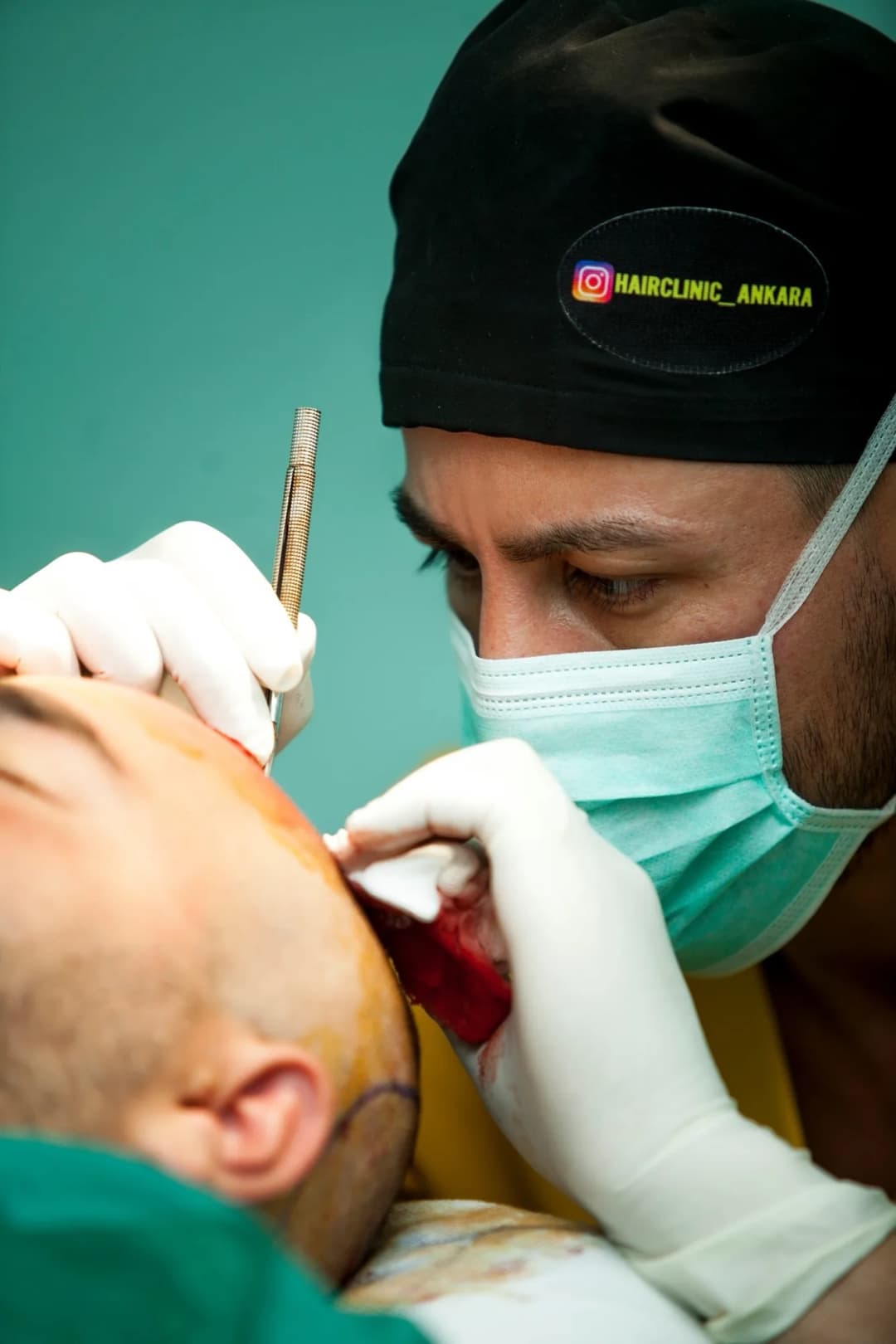
The medical team applies local anaesthesia before harvesting. The doctor or appropriately qualified surgical professional uses a small circular punch to score the skin around each selected follicular unit. The team then removes the graft and stores it under controlled conditions until implantation.
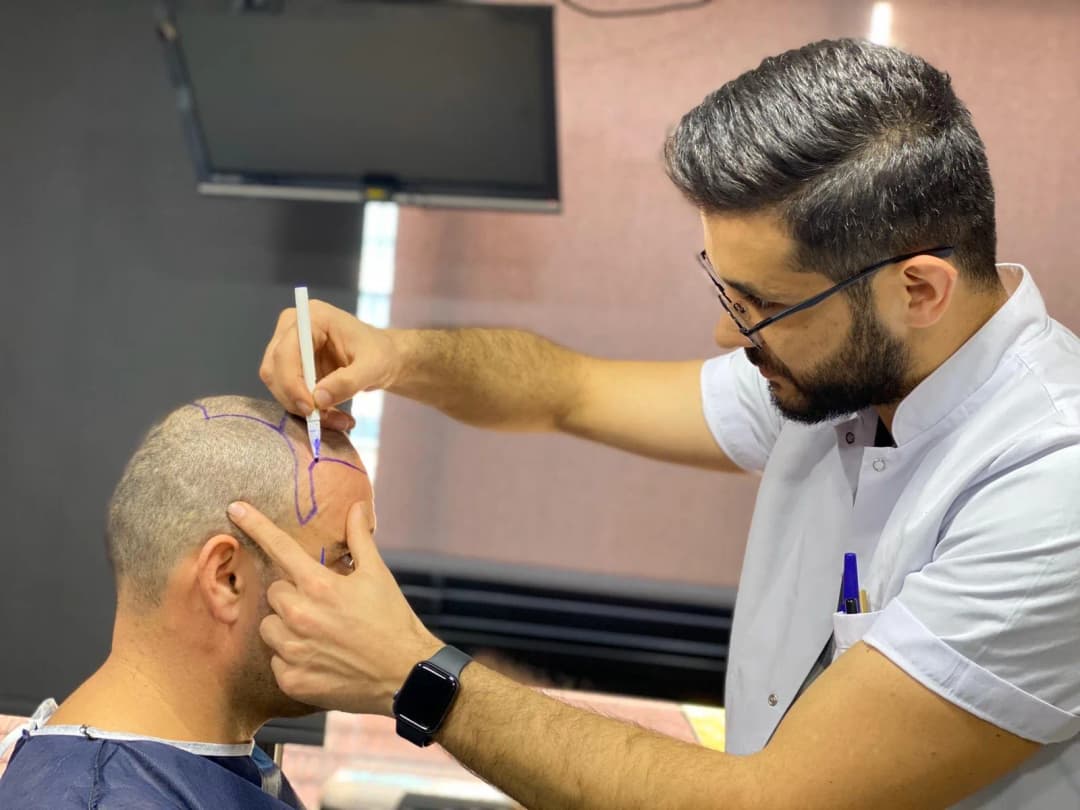
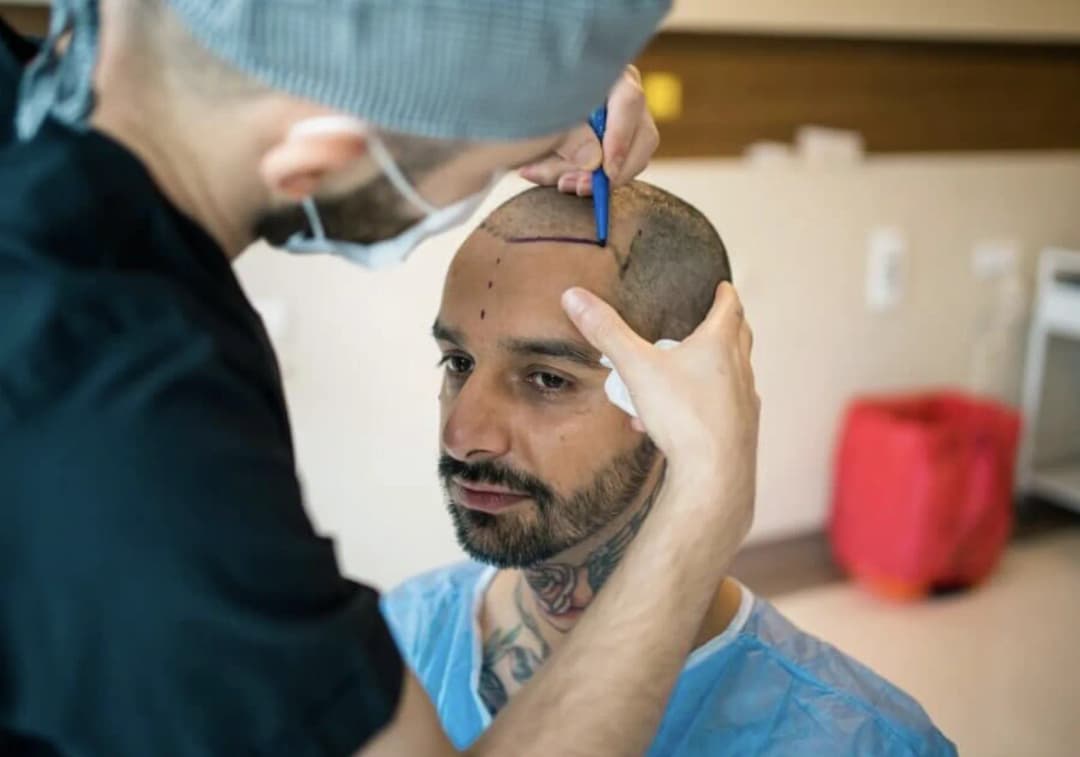
The surgeon designs the hairline and creates recipient sites according to the planned direction, angle, spacing, and density. The team places the prepared grafts into these sites. Single-hair grafts commonly help create a softer hairline, while grafts containing several hairs can add density behind it.
Manual FUE, Motorised FUE, Sapphire FUE, and DHI
Patients may see several names while comparing FUE Hair Transplant Turkey clinics. These terms often describe the instruments or implantation method rather than completely different types of hair transplantation.
With manual FUE, the practitioner controls the punch by hand. Motorised systems use powered instruments to assist follicular-unit removal. Robotic systems can support selected parts of harvesting in suitable patients. The ISHRS states that no single FUE method works best for every patient because the doctor must adapt the technique to individual hair and scalp characteristics.
“Sapphire FUE” generally refers to the use of sapphire blades when creating recipient channels. The follicles still come from the donor area through FUE harvesting.
“DHI” usually describes implantation with a pen-like implanter. Clinics may place grafts directly with the device instead of first creating all recipient sites with a separate blade. DHI does not represent a separate source of donor hair; the clinic normally still obtains the grafts through FUE.
Patients should focus less on branded terminology and more on diagnosis, surgeon involvement, donor management, hairline planning, graft handling, and realistic treatment goals.
How Does FUE Differ from FUT?
Both FUE and FUT move follicular-unit grafts from a donor area to areas affected by hair loss. The main difference lies in how the team obtains the grafts.
FUE removes follicular units individually with small circular punches. FUT removes a narrow strip of hair-bearing scalp, which technicians divide into individual grafts under magnification. The surgeon then closes the FUT donor incision with stitches or staples.
FUE may offer several advantages:
-
It avoids one long linear donor scar.
-
It can suit patients who prefer shorter hairstyles.
-
It may involve less tightness around a donor incision.
-
It can allow harvesting from selected scalp areas.
-
It may suit patients with limited scalp flexibility.
-
It can sometimes use beard or body hair as an additional donor source.
FUT may provide a high number of grafts while preserving more of the donor surface for future sessions. It can also allow patients to keep more hair around the donor area unshaved.
Neither method automatically produces a more natural result. The surgeon’s planning, graft distribution, hairline design, donor selection, and implantation technique play a major role in the final appearance.
Who May Be a Suitable Candidate for FUE?
FUE may suit adults who have a clearly diagnosed and reasonably stable pattern of hair loss. Candidates also need enough healthy donor hair to support the planned restoration.
Potential candidates may include people who:
-
Have male or female pattern hair loss
-
Have sufficient donor density at the back or sides of the scalp
-
Prefer to avoid a linear FUT scar
-
Regularly wear a short hairstyle
-
Need restoration of the hairline, temples, mid-scalp, or crown
-
Want beard, moustache, or eyebrow restoration
-
Need a limited revision after an earlier transplant
-
Have realistic expectations about density
-
Understand that existing hair loss may continue
-
Can follow all recovery instructions
Hair thickness, curl, colour contrast, and the number of hairs within each follicular unit can affect the appearance of coverage. Two patients who receive the same number of grafts may therefore achieve different visual results.
A suitable patient should understand that transplantation redistributes existing follicles. It does not create an unlimited new supply of hair. The doctor must protect the donor area because removed follicles do not grow back in their original locations.
Who May Not Be Suitable for FUE?
FUE may not suit patients with insufficient donor density, unstable hair loss, or a condition that affects follicles throughout the scalp.
A doctor may postpone or advise against surgery when the patient has:
-
Active scalp infection or inflammation
-
Rapid or unexplained hair shedding
-
Diffuse thinning in the donor area
-
Untreated scarring alopecia
-
A medical condition that affects healing
-
A serious bleeding disorder
-
Unrealistic density expectations
-
An unsuitable or depleted donor area
-
A history of poor wound healing
-
An inability to follow aftercare instructions
Very young patients may also require cautious planning because their future hair-loss pattern remains difficult to predict. Creating an excessively low or dense hairline can consume grafts that the patient may need later.
Smoking and nicotine can affect circulation and wound healing. Patients should disclose all medication, supplements, chronic conditions, and previous procedures before treatment. They should never stop prescribed medication without medical instructions.
What Does FUE Recovery Involve?
Patients normally leave the clinic after the team completes the procedure and monitors the early recovery. Temporary redness, swelling, tenderness, tightness, numbness, and small scabs may develop in the donor and recipient areas.
The grafts remain vulnerable during the early healing period. Patients must avoid rubbing, scratching, pressure, and accidental impact. The clinic should provide written instructions covering washing, sleeping position, exercise, sun exposure, hats, medication, and return to work.
The NHS advises patients to handle transplanted grafts carefully during the first two weeks. Many transplanted hair shafts fall out during the following weeks, but this expected shedding does not necessarily mean that the follicles have failed.
New hair usually appears gradually over several months. Patients should not assess the final result too early because growth, thickening, and maturation continue over an extended period. Existing non-transplanted hair may also continue to thin after surgery.
What Are the Possible Risks?
FUE carries potential risks, including bleeding, infection, swelling, prolonged redness, numbness, folliculitis, poor graft growth, visible scarring, uneven density, and an unnatural hairline.
Overharvesting can leave the donor area thin, patchy, or visibly scarred. Removing too many grafts from one zone may create permanent cosmetic damage and reduce the options for future surgery.
Some transplanted grafts may not survive. Patients can also experience temporary shedding of existing hair around the treated area. Continued natural hair loss may eventually create gaps between transplanted and non-transplanted hair.
Hair transplant surgery is generally safe when a qualified and experienced physician performs it, but healing and graft growth remain partly unpredictable. No responsible clinic should guarantee complete graft survival or a specific level of density.
Why Choose Turkey for an FUE Hair Transplant?
Turkey offers a large selection of clinics specialising in hair restoration. Patients can compare providers offering standard FUE, partial-shave procedures, beard-to-scalp transplantation, revision surgery, and combined medical treatment.
Many providers also offer multilingual coordinators, online assessments, interpreters, hotel arrangements, airport transfers, medication, and post-operative communication. These services can make travel easier, but they should never replace direct access to the doctor responsible for the procedure.
Competitive pricing represents another major advantage. However, patients should compare the full package rather than the headline price. Some quotations may exclude blood tests, medication, extra grafts, accommodation, aftercare, or treatment for complications.
Turkey’s Ministry of Health maintains lists of healthcare facilities and facilitators authorised to serve international health-tourism patients. Patients should check the provider’s current status before making a payment or travelling.
What Should Patients Check Before Choosing a Clinic?
Patients comparing FUE Hair Transplant Turkey clinics should investigate who performs each surgical stage. FUE is a surgical procedure, even when a clinic describes it as minimally invasive.
The ISHRS has warned about hair transplant surgery performed by unlicensed or inadequately supervised personnel, which can lead to infection, scarring, donor damage, poor growth, and serious complications.
Important questions include:
-
Who will diagnose the cause of hair loss?
-
Who will design the hairline?
-
Who will administer local anaesthesia?
-
Who will excise the follicular units?
-
Who will create the recipient sites?
-
How many patients does the team treat each day?
-
How will the clinic measure donor density?
-
How will the surgeon prevent overharvesting?
-
Why does the doctor recommend the proposed graft number?
-
What does the package include?
-
Who provides aftercare after the patient returns home?
-
What happens if graft growth remains poor?
Patients should speak directly with the treating doctor rather than relying entirely on a salesperson or coordinator. They should also request a written treatment plan, total price, medical records, aftercare instructions, and emergency contact details.
Final Considerations
FUE can restore hair in selected patients without creating the long linear scar associated with FUT. It may suit people with stable hair loss, a strong donor area, realistic expectations, and a preference for shorter hairstyles.
However, FUE is not scarless, and it cannot provide unlimited grafts. Poor planning or aggressive harvesting can permanently damage the donor area and reduce future treatment options.
Turkey offers experienced hair restoration teams, competitive packages, convenient travel connections, and services for international patients. Patients should prioritise accurate diagnosis, qualified medical involvement, conservative donor management, natural hairline design, and reliable follow-up care.
The best FUE Hair Transplant Turkey clinics create a long-term plan rather than focusing only on the highest possible graft number. They protect the donor area, explain the limitations of surgery, and design a result that remains balanced as the patient’s natural hair loss continues.